A toothpaste company has quietly killed the entire market research industry and nobody is talking about it.
Colgate published a paper showing you can predict real purchase intent by simply asking LLMs to roleplay customers.
And this is beyond insane.
If you ask an AI, "Rate this product from 1 to 5," it gives safe, middle-of-the-road garbage.
So researchers invented a method called Semantic Similarity Rating (SSR).
Instead of asking the AI for a number, they asked it to roleplay.
They gave the LLM a demographic profile. They showed it a product concept. And they asked it to write down its raw, unfiltered thoughts.
Then, they used a semantic model to translate those written thoughts into a numerical score.
The results are staggering.
Tested against 57 real personal care product surveys and 9,300 human responses, the synthetic consumers hit 90% of human test-retest reliability.
They perfectly mirrored how different age brackets and income levels react to price changes.
And they provided detailed, qualitative feedback that was deeper and more critical than what actual humans wrote.
This destroys the economics of traditional market research.
You don't need to wait a month to see if a product will sell.
You can simulate 1,000 hyper-targeted customer interviews overnight.
You can A/B test pricing across every demographic instantly.
En los países que lograron mejorar la ciudad para las personas, en las puerta de los centros educativos restringieron la circulación de automóviles.
En Montevideo lo promovemos, los dejamos parar en doble o triple fila.
Por ciudades amigables con las personas y el ambiente.
Wenn ihr Tempo 30 wollt, baut die Straße so, dass man da freiwillig 30 fährt. Eine breite Gerade und am Anfang ein Schild. Was glaubt ihr, woran sich die Leute orientieren?
“Las izquierdas hemos sido demasiado moralistas en los últimos años, esa crítica es cierta. Hay que entrar a confrontar y discutir desde el respeto porque desde el moralismo no vamos a ganar”
Muy buen cierre de @AdaColau con Jordi Wild.
En la recién iniciada revisión del Plan de Ordenamiento Territorial, esta problemática debería ocupar un lugar central en el análisis, en la formulación de estrategias sistémicas, en la definición de objetivos y metas y en la asignación de recursos.
El plan de 1998 se quedó en el enunciado de grandes principios, como "reequilibrar la ciudad", sin estrategias reales y sin una asignación de recursos acorde a la gravedad del problema.
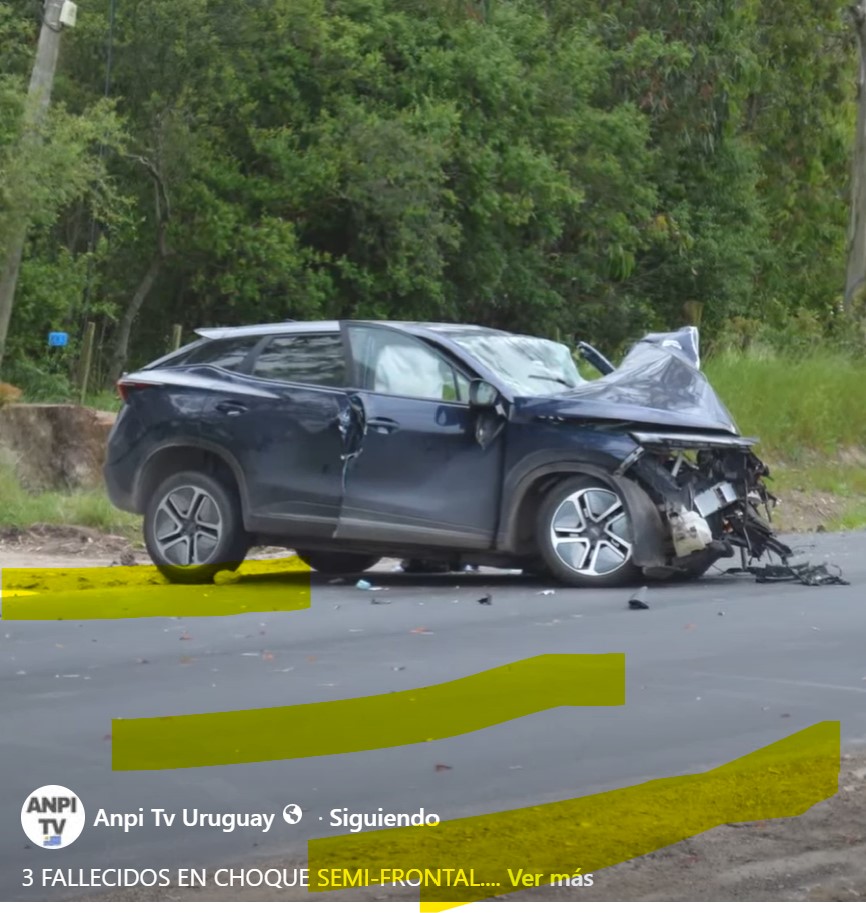
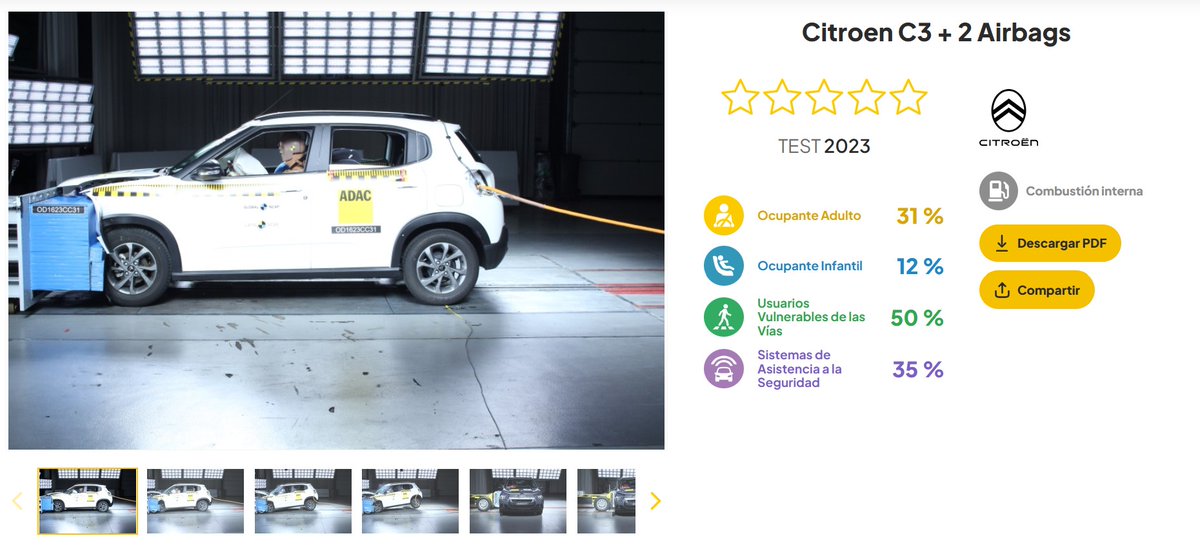
@Subrayado Mueren en un siniestro, los 3 que viajaban en un vehículo 0 estrellas! Ley que exige 0 km + seguros se aprobó en 2019, y no se reglamentó, por lo que se venden vehículos de baja seguridad. El otro auto, en algunas de sus versiones es un 5 estrellas (se probó versión Europea).
#ÚltimaHora Yoani Sánchez, secuestrada por la policía política en La Habana #Cuba
https://t.co/tAns94L5xd La directora de #14ymedio pudo avisar a la Redacción con un escueto mensaje
James Talarico responds to AOC calling woke 1.0 crazy, policing people's language is performative politics, and it stops you from building a coalition
“I do think that there was a rise in performative politics in people who are more concerned about using the right words, usually determined by academia”
“Those are unifying values that we all agree on.”
“But when you start policing people's language, when you start judging people because they're not up on the right terminology, you're no longer building a coalition to address those real problems”
“you're performing a kind of politics that's about your own intellectual and emotional needs and not about actually making change.”
w/ @jamestalarico
This contentious interchange between the NY Times and @GinaHinojosaTX was truly amazing. Hinojosa offered one of the best explanations of populism I've ever seen. Her comments were a total rejection of Corporate Dems' neoliberal formula. Her Texas victory is a game changer.
Gemini
Prompt: “Desde el punto de vista de arquitectura urbana, ¿qué opinas de este cartel publicitario?”
Desde el punto de vista de la arquitectura urbana y el diseño del espacio público, este cartel publicitario (un mupi o soporte de publicidad exterior instalado en la acera) presenta varios conflictos y aspectos críticos en su relación con el entorno histórico y peatonal:
Obstrucción de la accesibilidad y el flujo peatonal: La acera es relativamente angosta y el cartel ocupa una porción significativa de su ancho útil. Esto reduce la sección libre para el tránsito peatonal y dificulta la accesibilidad universal (especialmente para personas en sillas de ruedas, carritos de bebé o con movilidad reducida), obligándolas a esquivarlo o invadir parcialmente la calzada.
Conflicto con el patrimonio arquitectónico: El soporte publicitario está adosado o muy próximo a una fachada de valor patrimonial e histórico (con balcones de herrería y carpinterías tradicionales). Su diseño moderno, retroiluminado y comercial contrasta de manera agresiva con la escala, los materiales y la estética de la arquitectura circundante, compitiendo visualmente con la lectura de la fachada histórica.
Contaminación visual y saturación del espacio: En un espacio público consolidado y de proporciones íntimas —como esta calle o pasaje angosto—, la adición de elementos verticales opacos fragmenta la perspectiva urbana. En lugar de enriquecer la experiencia del transeúnte, genera ruido visual que obstaculiza la apreciación de los detalles urbanos y paisajísticos del lugar.
En resumen, aunque estos soportes suelen buscar la viabilidad financiera del mobiliario urbano a través de la publicidad, en este contexto específico afecta negativamente la ergonomía de la acera y desentona con la identidad del paisaje histórico.
Since childhood, I've seen the world as wholes. Systems rather than products. Constellations rather than planets. Soil rather than single trees. My education followed that instinct across a divide, moving from the medical sciences to architecture, between growing and making. Somewhere in between, I came to believe that when everything we make can be grown, design becomes ecology. I named that belief Material Ecology, and for a decade at the MIT Media Lab, my team, the Mediated Matter Group, set out to build it. We almost never designed something without first inventing the technology to make it. We spun pavilions with silkworms, printed glass at furnace heat, and made architectural skins from shells and apple peels, designed to return to the soil at the end of their use. Then, around 2020, the things humans make began to outweigh all living matter. Design was no longer a matter of style, but of consequence. "Mediated Matter: Design and Invention in the New Biological Age" gathers that work, and the conviction behind it: that we don't have to choose between nature and human endeavor. That we can design to add to life. Two decades after coining the term, we're finally building what it described: shoes grown as plants, masterplans grown as ecosystems, and more.
The book is out now. With deep gratitude to MIT Press and Thames & Hudson for bringing it into the world with such care.
MIT Press: https://t.co/psgKxyXowq Thames & Hudson: https://t.co/zuBrFa4LSe Amazon: https://t.co/ctaI4kDNsY