Drawing attention to the #privacy issues associated with #RFID schemes: “Analyzing the Privacy of a #Healthcare RFID #Authentication Protocol” by AM Nica, Ș. Gheorghiță. ACSIS Vol. 41 p. 117–124; https://t.co/Mw6q4IAe80
Reviewing #AI and #ML technologies that have been used to describe, analyze and predict the mechanics of cells: “Integrating Artificial Intelligence Techniques in #CellMechanics” by M. Naeem, M. Fiorino, P. Addabbo, A. Coronato. ACSIS Vol. 41 p. 105–110; https://t.co/3nHnYxi7Sc
Proposing enhancements to GNN-specific few-shot learning technique for the toxicity prediction task: “#ToxicMoleculeClassification Using #GraphNeuralNetworks and #FewShotLearning.” by B. Mehta, K. Kothari, R. Nambiar, S. Shrawne. ACSIS Vol. 41 p. 105–110; https://t.co/U5PQXJ9eFp
Integrating data sources, models, and tools to forecast #wateravailability: “#PredictiveSystem of the #WaterDeficit Analysis for the Black Sea Lowland (an example of the Kherson Region)” by L. Kuzmych, Y. Kyrylov, M. Voloshyn. ACSIS Vol. 41 p. 95–104; https://t.co/cXB98zMFFC
@FedCSIS AI-powered early Parkinson’s detection research from FedCSIS 2020 has now reached 49 citations in Scopus.
Authors: R. Damaševičius, O. Abayomi-Alli, R. Maskeliūnas, A. Abayomi-Alli.
Read the full paper:
https://t.co/o6TrwNKmeS
Investigating the differences in #OJAs and their impact on the transferability of #NLP: “Exploring Linguistic and Cultural Differences in Online Job Advertisement Analysis for NLP Applications” by K. Krüger, L. Grüner. ACSIS Vol. 41 p. 83–94; https://t.co/mscnzFHfeT
Combining data from local weather stations with global forecasts and reanalysis data: “Combining Local and Global #WeatherData to Improve Forecast Accuracy for #Agriculture” by F. Koutenský, J. Pihrt, M. Čepek, et al. ACSIS Vol. 41 p. 77–82; https://t.co/4EIG3xiNvu
Studying heuristic algorithms for job shop scheduling problems: “#JobShopScheduling with #IntegerProgramming, Shifting Bottleneck, and Decision Diagrams: A #ComputationalStudy” by Brannon King, Robert Hildebrand. ACSIS Vol. 41 p. 69–76; https://t.co/YaIiedhD5b
Analyzing the types of changes in APIs and using this analysis to build a detailed model that shows the relationships between #API consumers and providers: “Towards #EvolvableAPIs through #OntologicalAnalysis” by N. Jíša, R. Pergl. ACSIS Vol. 41 p. 61–68; https://t.co/HltBe9cw2N
@MarekBolanowski In general, Riga is a cool city! Interesting mixture of cultures and languages and..... Riga Black Balsam. We know that young people do not smoke, do not drink... but for those about to ROCK! Riga Black Balzam RULEZ!
@FedCSIS 2026 participants: planning your stay in Riga?
Check the list of recommended hotels near the venue, including special discounted rates for attendees: https://t.co/Ut8MkFglvB
Note: participants arrange accommodation individually.
#FedCSIS2026#Riga#Conference
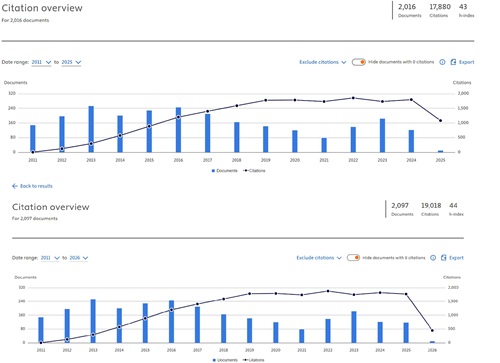
Very Promising numbers for @annals_csis - 2000 citations more during just 4 month. All volumes are open source, see our website https://t.co/1PFYyRljze
Title and abstract of FedCSIS 2026 keynote presentation of Professor Prodan, Radu, from Department of Computer Science, University of Innsbruck, Austria (https://t.co/DkIsWdgMf1) is available here (this is hot of the press news ;-): https://t.co/zM9Njnlrsz
Exploring the performance of #GBDT under a #FSL schema in order to provide strong baselines: “Gradient Boosting Trees and #LargeLanguageModels for #TabularData Few-Shot Learning” by Carlos Huertas. ACSIS Vol. 41 p. 53–59; https://t.co/6nfYbN49EY
If you come and you like what you see, please (1) follow us (the conference series) and (2) give us a like and re-share to your time line. Let us build a community. We do not comment on politics / religion / celebrities. Just science ;-)