Next week, we’re going deep on privacy in a brand new X Space.
The why, the how, and the what-ifs - decrypted by three incredible guests.
Save the date!
Join us today for our bi-weekly Community Meet-Up!
@toxicwaifudcl will share an update on the current status of the Regenesis Grants Program Season 1 and walk through the new DAO Council & Regenesis Labs RFI process for community questions💫
📍regenesislabs.dcl.eth
⏰7PM UTC
I’ve had the privilege of seeing this on my phone for the past year.
Today, I’m incredibly happy to say it’s finally where it should have been for years: in the palm of our users’ hands.
@decentraland is now live on iOS
@Cryp_tino for the @arbitrumdao_gov Security Council!
After succesfully passing the nominee selection phase now the actual election is taking place.🦾
Voting power decays until May 3rd so $ARB counts now more than ever!
Thanks to everyone who supported me in the nominee selection phase 🙏
The Member Election has been live since Sunday! Full voting power till April 19th, then it linearly decays till May 3rd.
The sooner you vote, the more it counts!
Would really appreciate your support 🫡👇
Today is my last day at @SEEDGov .
Two years inside the Arbitrum ecosystem went by fast, and I’m leaving with a lot of gratitude and a lot of lessons learned.
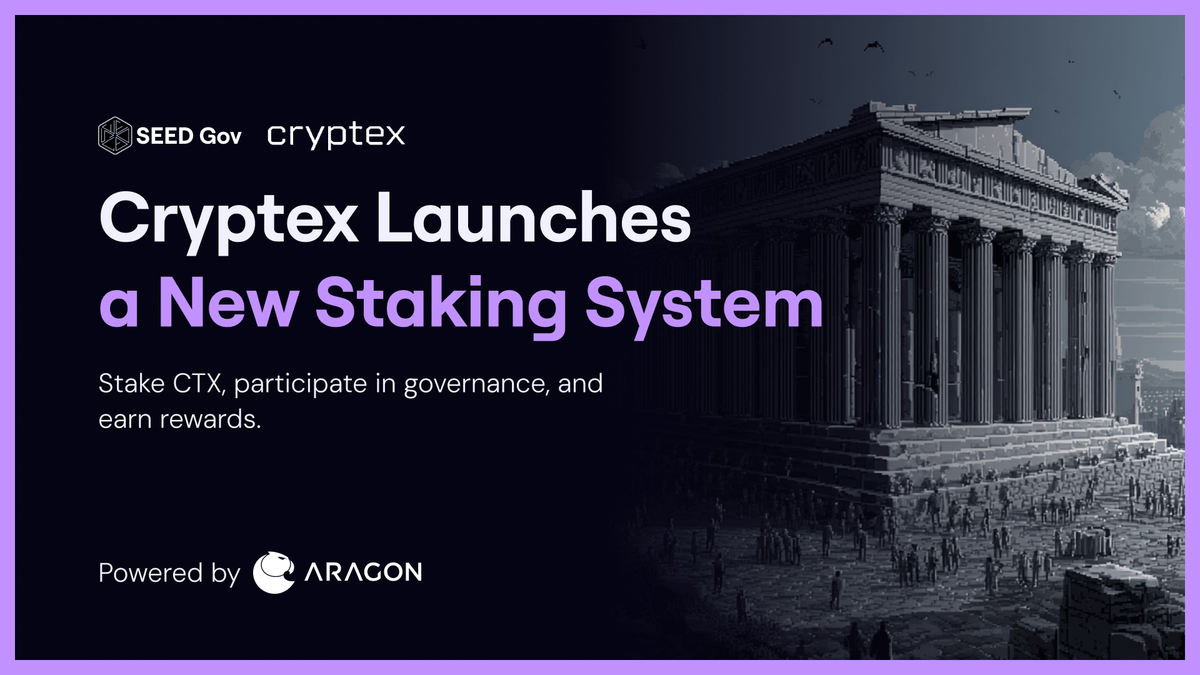
📢 @CryptexFinance launches a new staking system on @AragonProject.
CTX holders can now stake their tokens, participate in DAO governance, and earn rewards.
Here’s what you need to know 👇
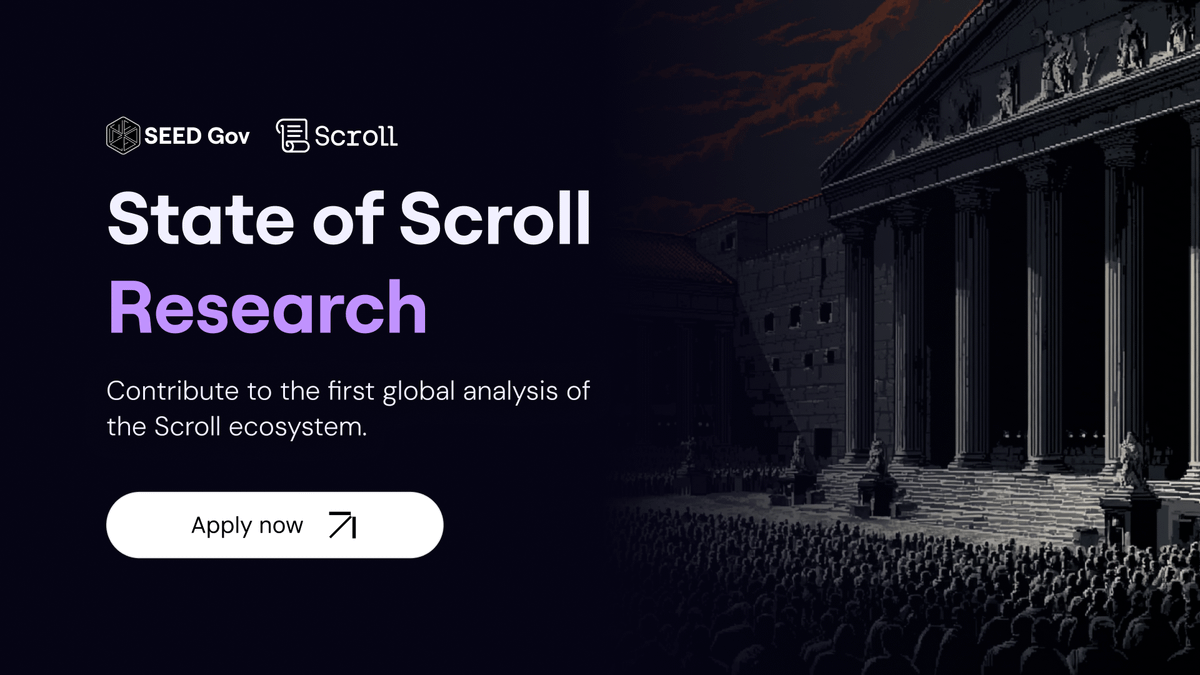
📢 Introducing State of Scroll Research
The first pilot of Scroll DAO’s Delegates Contribution Program (DCP).
We’re looking for researchers, analysts, and storytellers who want to help map and analyze the @Scroll_ZKP ecosystem globally.
Apply now. 🧵👇
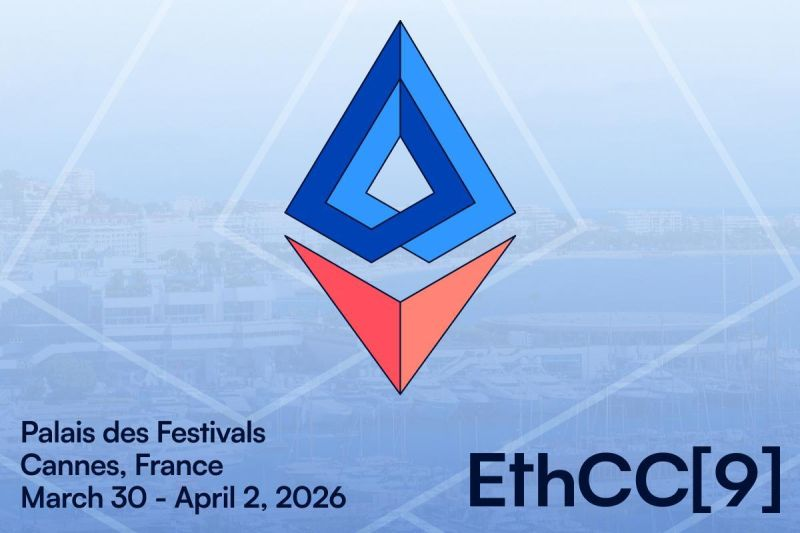
I’ll be attending @EthCC from March 30 to April 2.
I’m looking to connect with people working in Legal Tech, regulation , tokenization, RWA, GovTech and organizational decision-making processes, fintech, DeFi -TradFi convergence, and BD & growth in LATAM.
Let’s talk, let’s meet!
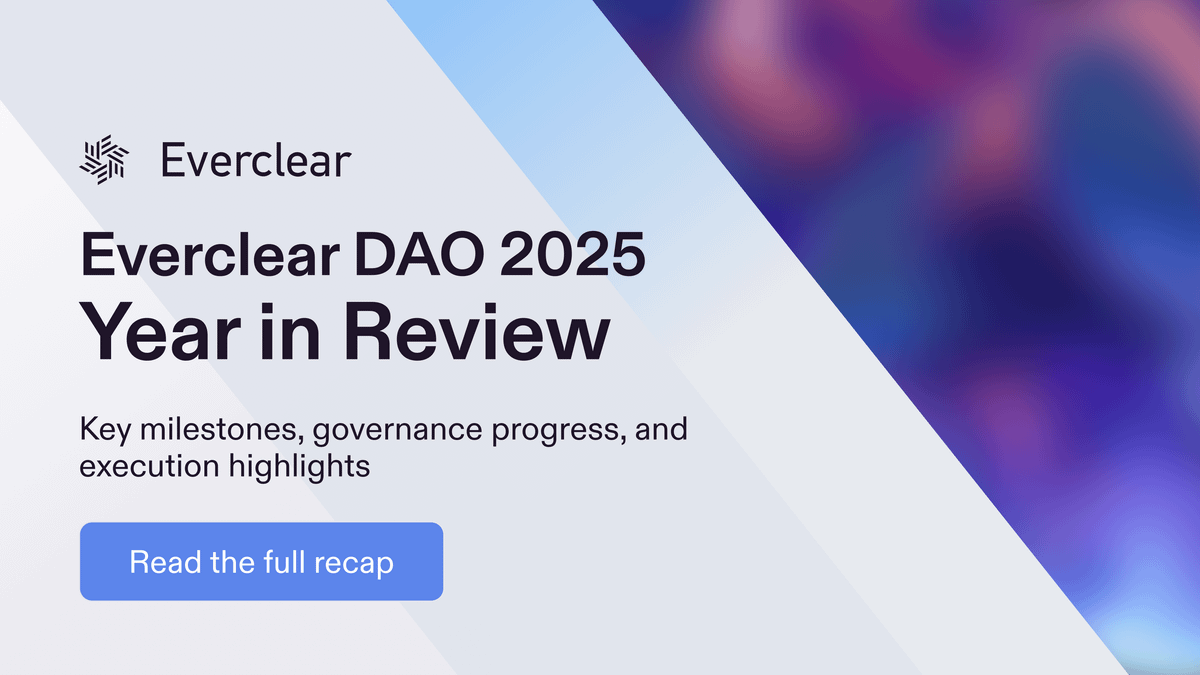
These are the main milestones of @EverclearOrg DAO in 2025.
A year focused on strengthening governance, optimizing processes, and consolidating a more robust structure to support the protocol’s growth.
Here’s a recap 🧵👇
For a long time, one of the most critical components of participatory democracy has been largely managed by nation-states.
This component is the census: the basic question of who is entitled to vote.
For citizens, communities and organizations, making a legitimate collective decision becomes almost impossible without access to a trusted mechanism for defining eligibility.
In practice, this means that most democratic processes depend on authorization, institutional control, and centralized registries.
Today, voter censuses are treated as closed systems.
As a result, governments are effectively the only actors able to run decision-making processes with formal guarantees. Not because they are the only legitimate organizers, but because they control the list.
The usual justification is privacy.
And this concern is valid: sensitive personal data must be protected.
But this model did not emerge because it was ideal, it emerged because, until recently, we lacked the tools to prove eligibility without exposing identities.
That constraint no longer exists.
It is now possible to verify voting rights without revealing who you are, to prove inclusion without collecting personal data, to establish legitimacy without relying on a central authority.
From a technical perspective, there are no fundamental reasons left for censuses to remain fully closed systems. Viable alternatives now exist that avoid pervasive data collection while preserving trust and integrity.
This opens a new space where citizens, communities, and organizations can run large scale, legitimate decision-making processes while preserving privacy, integrity, and trust.
The question, then, is no longer whether this is feasible, it is whether institutions and societies are prepared to explore governance models that distribute responsibility and trust more broadly.
The census is no longer just a list, it’s becoming infrastructure.
Stay tunned @davinci_vote@vocdoni@selfxyz
📣 We’re kicking off the year with the first 2026 Community Call of @EverclearOrg DAO.
🗓️ January 29th | 14:00 UTC
On this call, we’ll cover:
🔹 Protocol updates (Foundation)
🔹 Community Leadership Incentivization H1 2026
🔹 Delegates Dashboard Pitch
🔹 GTF updates
A key space to align on priorities and governance for the year ahead. 🧵👇
📣 SEED Gov is the new Governance Facilitator for @Scroll_ZKP
Following the approval of the new Governance Framework, we will lead the operational transition of governance in Scroll DAO:
day to day coordination, proposal facilitation, program execution, and stewardship of the decision making process.
2025 was a seismic year for DAOs:
- Uniswap realigned the DAO with Labs
- Jupiter paused governance for 6 months
- Scroll shut its DAO
Indeed, DAOs are governed by a few. Incentives for delegates dry out, and many are closing shops.
On a flip side, value accrual to tokens increased
- Lido adopted a buyback framework
- Uniswap burnt $600M in UNI & turned fee switch on
- Fluid & Aave both turned on buy backs
- Cow Protocol increased solver profitability
Intern cooked on this one!
📣 Token House Participation and Incentives Report
Season 8 was @Optimism quietest season to date.
Participation dropped by ~45%.
But the DAO did not stall.
So what is actually changing?
📣 SEED Gov officially opens its new delegation on @CryptexFinance.
Cryptex is a DeFi platform focused on digital indexes and onchain financial products, designed to scale and operate with institutional-grade standards.
If you hold CTX and trust our work, we invite you to delegate with us 👇