I am passionate about my role as a cognitive-behavioural therapist, helping clients take steps toward recovery and positive, lasting changes in their lives.
A client avoided ERP for three years because she thought it meant being thrown into her worst fear on day one. It doesn't work like that. ERP is a gradual hierarchy you set the pace for. The scary picture in your head is the delay, not the treatment. 🧠
"I tried therapy before, but I don't think they really knew OCD." I hear that almost weekly. Before your first session, ask: do you use ERP, and how do you handle mental compulsions? If the answer is vague, that tells you something. 🧠
A client sat with a harm-themed intrusive thought for eleven months before saying it out loud. Not because they didn't trust me. Because OCD convinced them that speaking it would make it real. The thoughts that stay hidden longest are the ones ERP most needs to hear. 🧠
“What If I’m Bad?” Understanding Feared Self OCD, Guilt and Shame
When OCD turns a thought or mistake into a verdict about who you are, guilt and self-punishment can become compulsions.
Read more: https://t.co/838UWEEsi1
#OCD#ERP#IntrusiveThoughts
A client spent two years in "OCD therapy" where her therapist never once asked her to resist a compulsion. She thought that was normal. It isn't. NICE guidelines are explicit: first-line treatment is CBT with ERP. You're allowed to hold your therapist to that standard. 🧠
Rising anxiety in early ERP isn't the treatment failing. It's the mechanism working. Your brain can't update its threat response until it meets the thought without the compulsion. The climb before the fall is the learning. 🧠
A bad week is not a relapse. But OCD will try hard to convince you it is.
A lapse is a temporary wobble around stress. A relapse is a sustained return to the old pattern. Treat a lapse like a relapse and the reassurance-seeking comes rushing back. 🧠
"Response prevention" doesn't mean blocking the thought or preventing the feared outcome. It means not doing the thing that feels helpful. The check, the mental review, the 2am Googling. Those feel like the solution. They're the fuel. That inversion is why ERP works. 🧠
Habituation is your nervous system finally deciding a familiar discomfort isn't an emergency. In ERP we don't force the anxiety down. We let it rise and fall without rituals. Relief is what a compulsion gives you. Resolution is what habituation does. 🧠
A client spent two years in therapy for OCD. Her therapist never once mentioned ERP.
Before you book that first session, ask directly: "Does your CBT include structured Exposure and Response Prevention?" The answer matters more than kindness or credentials. 🧠
Your anxiety doesn't have to drop for ERP to be working. The old habituation model said fear had to fade. Craske's inhibitory learning shows what matters is staying with the discomfort, compulsion absent. Anxiety present, compulsion absent. That's the work. 🧠
#Intrusivethoughts about harming your baby can feel terrifying, but in perinatal and postpartum #OCD, they are unwanted, distressing and not a sign of danger.
Learn how OCD differs from postpartum psychosis and how treatment can help:
https://t.co/1abwHdfnXU
#MentalHealth
"Pure O" isn't pure. The compulsions are just mental: reviewing, reassurance-seeking, neutralising a bad thought with a good one.
Quick test: did it resolve the doubt, or only bring relief before it came back louder? Relief means you were compulsing. 🧠
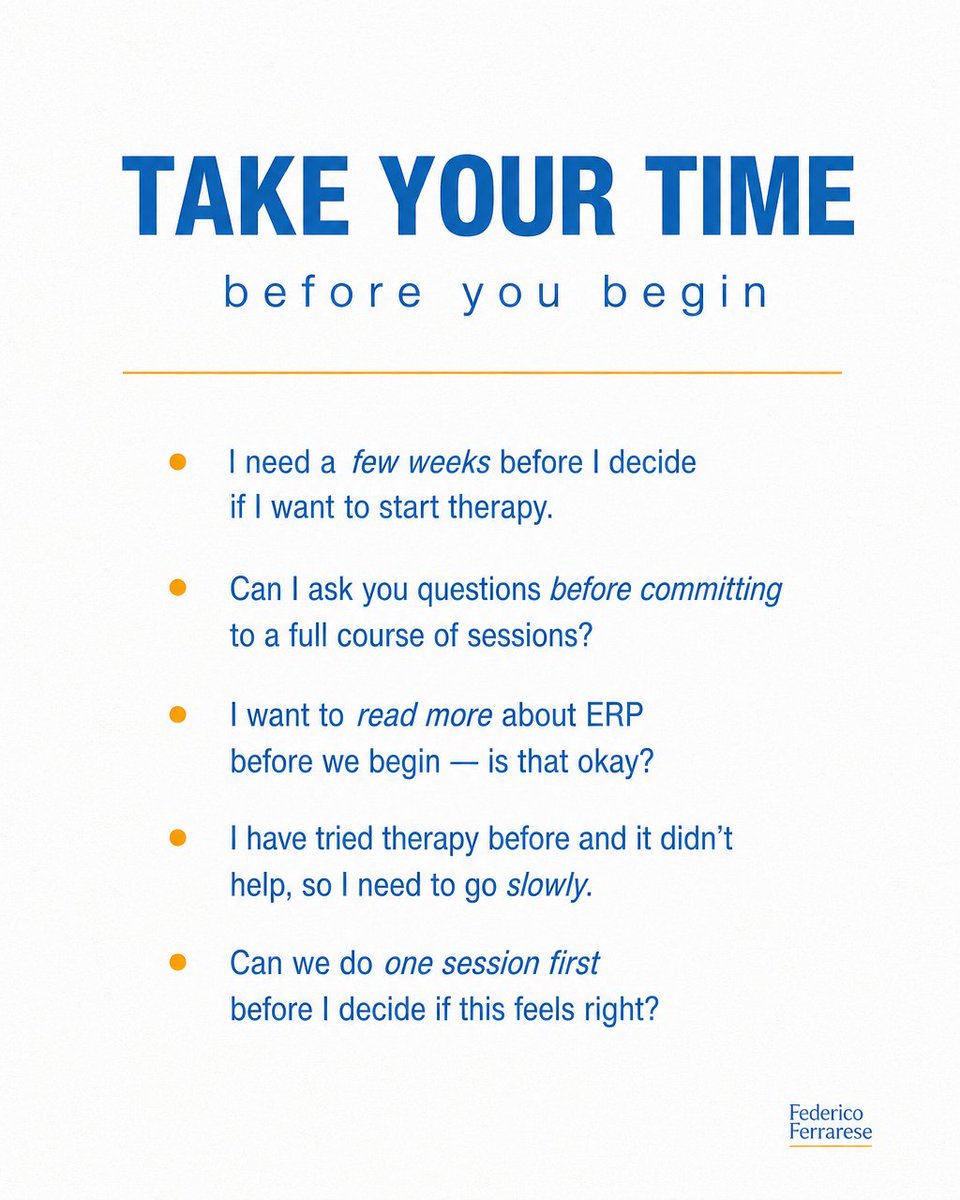
A client once told me they'd researched OCD treatment for three years before booking their first session. They apologised for taking so long. They hadn't. Choosing carefully isn't avoidance, and it isn't choosing never. Whenever you're ready is the right time. 🧠
The ritual worked. So why does the fear come back louder tomorrow?
Because the moment of relief is the exact moment OCD learns the fear was worth resolving. That's not failure. That's negative reinforcement doing its job.
Mid-exposure, a client says "I need to do the ritual." I don't say "you can do it" or "the anxiety will pass." Both put attention on the feeling, exactly where OCD wants it.
I say: "Notice the urge. You don't have to act on it. This is where learning happens." 🧠
Is it OCD or am I actually gay?
SO-OCD is not about discovering a “hidden truth”. It is about compulsive doubt, checking, reassurance-seeking, and the need for certainty that never sticks.
Learn more here: https://t.co/qP6EX64eLN
#SOOCD#OCD#ERP#IntrusiveThoughts
ERP isn't being marched toward your worst fear and told to white-knuckle through it. It's learning to sit with uncertainty until your brain stops treating it as a threat. Small distinction on paper. Enormous in practice. 🧠
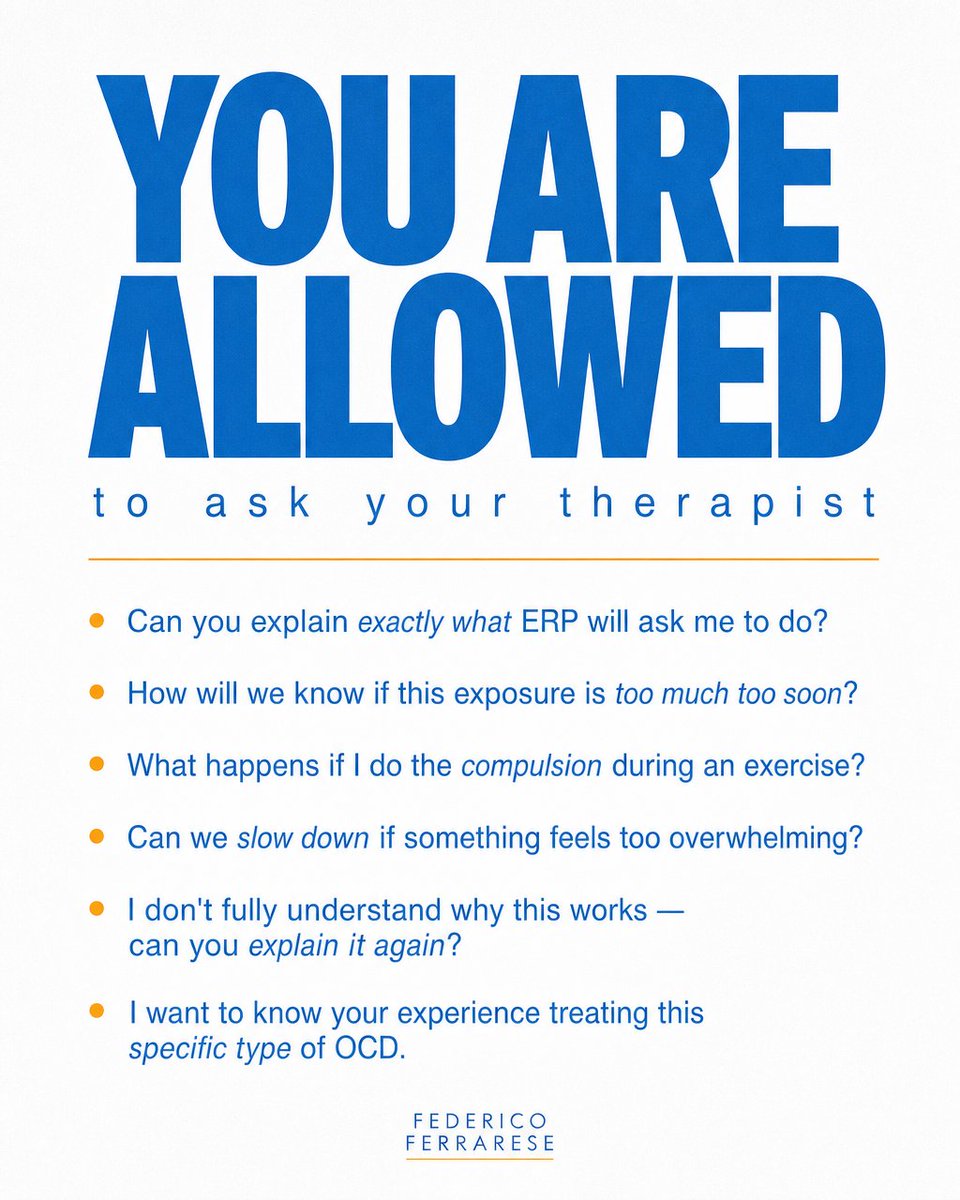
"What exactly will you ask me to do in ERP?" Most clients are too embarrassed to ask, worried it makes them seem resistant. Asking is the process. A therapist who can't translate ERP into language you actually understand isn't doing their job.