„Okupovaný Doněck jsme ostřelovali schválně sami."
👽 „Na nezákonných operacích v Donbasu a Krymu se od roku 2014 podílely jak GRU tak i FSB."
👽 ,V Doněcku se prováděly false flag operace, vyhrožovalo se civilistům, vraždili se civilisté, v civilních oblastech se kladly nášlapné miny, které způsobily mnoho úmrtí, včetně dětí. Samotné město Doněck ostřelovali separatisté."
👽 „To vše kvůli obvinění ukrajinské armády z násilí proti ruskému obyvatelstvu na východě země.“
⚠️Plukovník ruské armády, který emigroval ze země, vypovídá k Mezinárodnímu soudu v Haagu.
⚠️Slova, která by si měl přečíst v Česku každý. (Kromě ruských kolaborantů, tam už je to jedno)
https://t.co/vupwIlb1uw
Fiți atenți ce au făcut polonezii în lupta împotriva dezinformărilor. Sunt curios ce părere aveți.
Așa cum ați văzut, atacul din Cracovia a dus la deversarea a tone de fake news pe rețelele sociale.
Doar că polonezii au ceea ce se numește Biroul Central pentru Combaterea Criminalității Cibernetice, în poloneză CBZC.
Ofițerii CBZC monitorizează rețelele sociale și îi caută apoi pe cei care publică falsuri.
Biroul anunță astăzi printr-un comunicat că a reținut 6 persoane. Motivul? Publicau fake news pe rețelele sociale.
Persoanele reținute au între... 15 și 36 de ani. Comunicatul de presă mai spune că e vorba de 5 cetățeni polonezi și unul ucrainean.
Toți cei 6 au recunoscut că au publicat informații false. Ofițerii au vrut să afle de ce?
Cea mai întâlnită explicație e că a fost o glumă.
„În mediul online apar mesaje menite să provoace haos, panică și dezinformare. Creatorii acestora exploatează tragedia pentru a atrage atenția”, spune comunicatul Biroului.
Ofițerii pentru Combaterea Criminalității Cibernetice mai spun că vor reacționa la fiecare minciună pe care o văd online și îl vor căuta pe cel care o distribuie.
De asemenea, au venit și cu un avertisment pentru cei care cred că se pot ascunde. Spun că „anonimatul pe internet este doar o iluzie, iar autorul UNEI ASTFEL DE POSTĂRI trebuie să se aștepte la consecințe legale grave”.
Dar nu este totul.
Karolina Galecka, purtătoarea de cuvânt a Ministerului de Interne din Polonia spune că au fost arestate alte 5 persoane.
Știți ce au făcut? Glorificau fapta atacatorului pe rețelele sociale.
Nu doar rețelele sociale sunt monitorizate, ci și presa. Societatea poloneză este bulversată de declarația făcută în direct de directorul televiziunii Republika. Această televiziune spune despre sine că „promovează valorile patriotice, familiale și civice”.
Directorul televiziunii, Tomasz Sakiewicz, era în Piața din Cracovia și a spus în direct că în timpul atacului nu era niciun polițist. Asta pentru că toți au fost duși la Tribunalul Constituțional în Varșovia. Asta în timp ce în chiar spatele lui, în timp ce vorbea, era un polițist. Mai mult, după cum știți, alți polițiști și-au riscat viața ca să-l oprească pe atacator.
Ca urmare a acestei declarații, CNA-ul polonez a primit foarte multe sesizări și va face o anchetă, iar o companie a anunțat că își retrage publicitatea de la Republika.
(Vitalie Cojocari / FB)
Russia could replace Ukraine at the next Ice Hockey World Championship. The aggressor gets welcomed back, and the country it invaded could lose its place.
If Russia is allowed to return, Finnish players and management must boycott the whole competition.
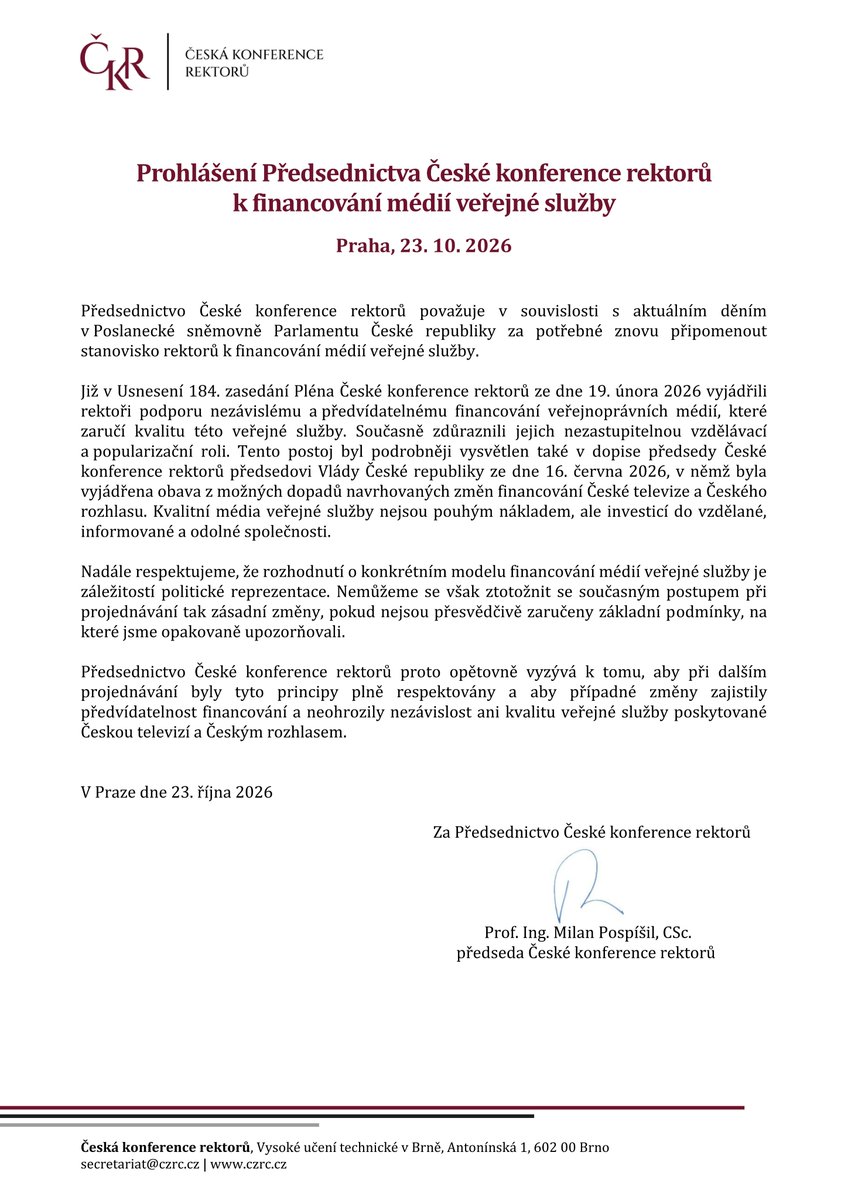
Prohlášení Předsednictva České konference rektorů
k financování médií veřejné služby
Praha, 23. 10. 2026
Předsednictvo České konference rektorů považuje v souvislosti s aktuálním děním v Poslanecké sněmovně Parlamentu České republiky za potřebné...
https://t.co/FKzc5wuvh4
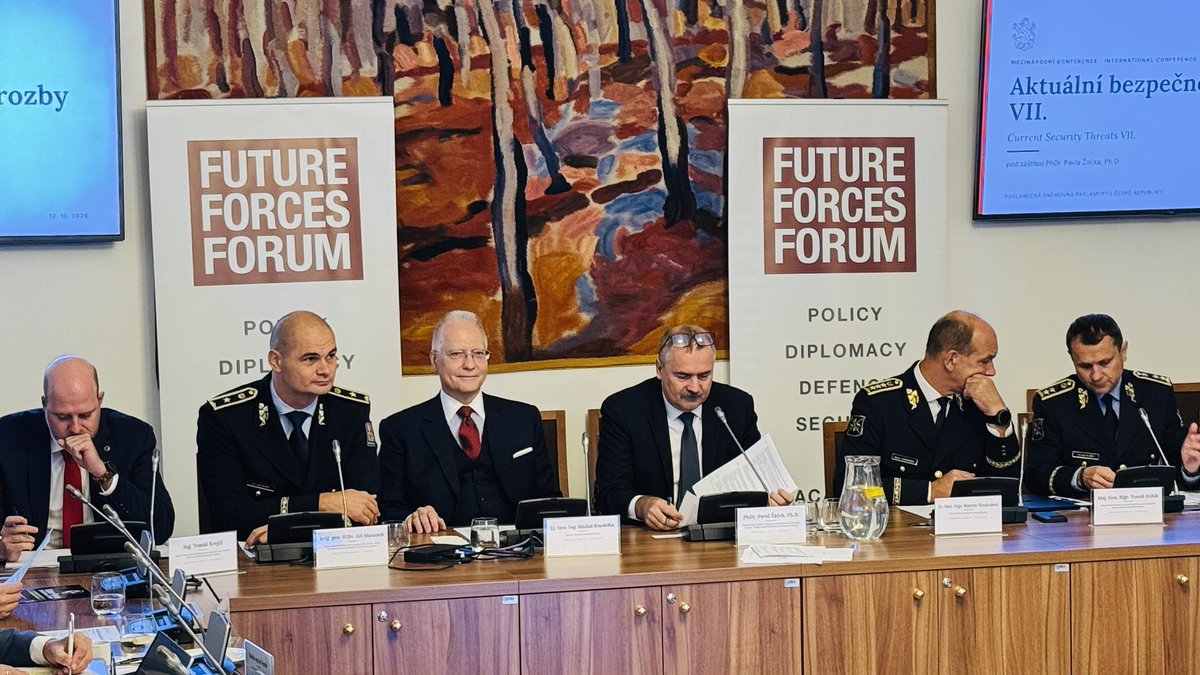
Nepochybuji, že šéf BIS ví, co může veřejně říkat a co ne. A o tom, že situace je vážná a hrozba ze strany Ruska reálná, mluvit musíme. Naší bezpečnosti totiž neprospívá ani šíření paniky, ale ani zastírání problému. Veřejnost si zaslouží korektní, věcné informace.
Ředitelé evropských zpravodajských služeb v posledních dnech veřejně varují před hrozící eskalací ruské hrozby i mimo Ukrajinu. Proč k takto výjimečnému kroku přistoupili? To dnes v Poslanecké sněmovně vysvětloval ředitel BIS Michal Koudelka:
“Teď tady máme další velmi důrazné varování amerických partnerů a ve
stejné době zaznívají z Ruska opět hlasy, že ruské obyvatelstvo v pobaltských zemích je utiskováno, že
NATO z Pobaltí ohrožuje Rusko. Tenhle scénář už známe a teď prostě nechceme a nemůžeme mlčet. Když dojde v Evropě k sabotážnímu útoku s jasnou ruskou stopou na cíl spojený s pomocí Ukrajině tak jako se to mělo stát v Lipsku, už nebudou Rusové moci říct my to nebyli, protože my říkáme celému světu, víme, že to plánujete.
Když dopadne ruský dron nebo raketa na sklad zbraní v nějaké evropské zemi a Rusové budou říkat, že to byl omyl, chyba navigace apod., tak my říkáme celému světu: víme, že
právě tohle je váš plán. A když začnou Rusové hromadit vojska u hranic s
některou z pobaltských zemí a říkat, že jde pouze o cvičení, tak my říkáme
celému světu, nevěříme vám a jsme připraveni se bránit a zvítězit. A právě proto, že to říkáme takhle jasně z pozic ředitelů evropských
zpravodajských služeb, tak
zužujememe Rusům možnost ovlivnit část světové veřejnosti a získat ji na svojí stranu.”
On this day—October 12, 2000
The Ramallah lynching.
Two Israeli reservists took a wrong turn. Yossi Avrahami, a 38-year-old toy salesman, and Vadim Nurzhitz, a 33-year-old truck driver, were heading to their unit near Beit El in a civilian Ford Escort. They took a wrong turn and ended up in Palestinian Authority-controlled Ramallah.
PA police stopped them, but instead of turning them around, the officers took them to the police station in el-Bireh. Rumors spread that Israelis were being held there, and more than 1,000 Palestinians descended on the station and began calling for their execution.
They stormed the station, found the two Israelis and began beating, stabbing, and mutilating them. Aziz Salha later described entering the room: “We were in a craze to see blood … I saw an Israeli soldier sprawled on the floor … a knife lodged in his back … I removed the knife and stabbed him … I put my hand over his mouth … to strangle him.”
He then walked to the window, hands and shirt soaked in blood, and waved at the baying crowd below. An Italian television crew captured it, and broadcast the images to the world. One of the bodies was thrown from that same window, and the mob immediately started stomping on and beating him. The other man was shot and set on fire. Once they were unrecognizable as humans, the crowd dragged their bodies through the streets to Al-Manara Square for an impromptu celebration.
British photographer Mark Seager arrived in time to see a body being hauled by the feet, lower half on fire, head “a pulp, like a red jelly.” He reached for his camera, but the mob stormed him with punches. They smashed his equipment and shouted, “no picture.” He later wrote: “It was the most horrible thing that I have ever seen and I have reported from Congo, Kosovo, many bad places … There was such hatred … It was murder of the most barbaric kind. When I think about it, I see that man’s head, all smashed. I know that I’ll have nightmares for the rest of my life.”
A Palestinian police officer, Raed Sheikh, later admitted he took an iron pipe into the room and struck one of the still-living Israelis across the body and head. “The soldier began making a grunting noise.”
This was not “resistance.” It was a deliberate, ecstatic, public slaughter of two Israeli men who had taken a wrong turn, carried out in broad daylight by a Palestinian mob.
The image of Salha’s bloody hands became a defining photograph. Salha was later arrested, convicted of murder, sentenced to life, released in the 2011 Gilad Shalit deal, and finally killed in an Israeli strike in Gaza in 2024.
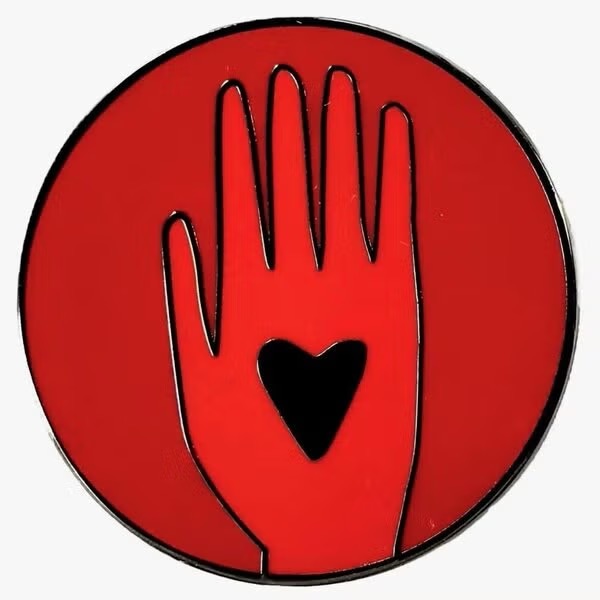
Decades later, Hollywood celebrities and other professional virtue-signalers put on red hand pins. They call it a “ceasefire” symbol. To anyone who lived through October 2000 or who otherwise knows anything about the history of the conflict, those pins are not ambiguous. They are a stylized recreation of the exact gesture a murderer used to show a cheering crowd the blood of the Jews he had just helped butcher. The useful idiots who wear them either do not know, or they do know and have decided the image is aesthetic. Either way, it is a disgrace.