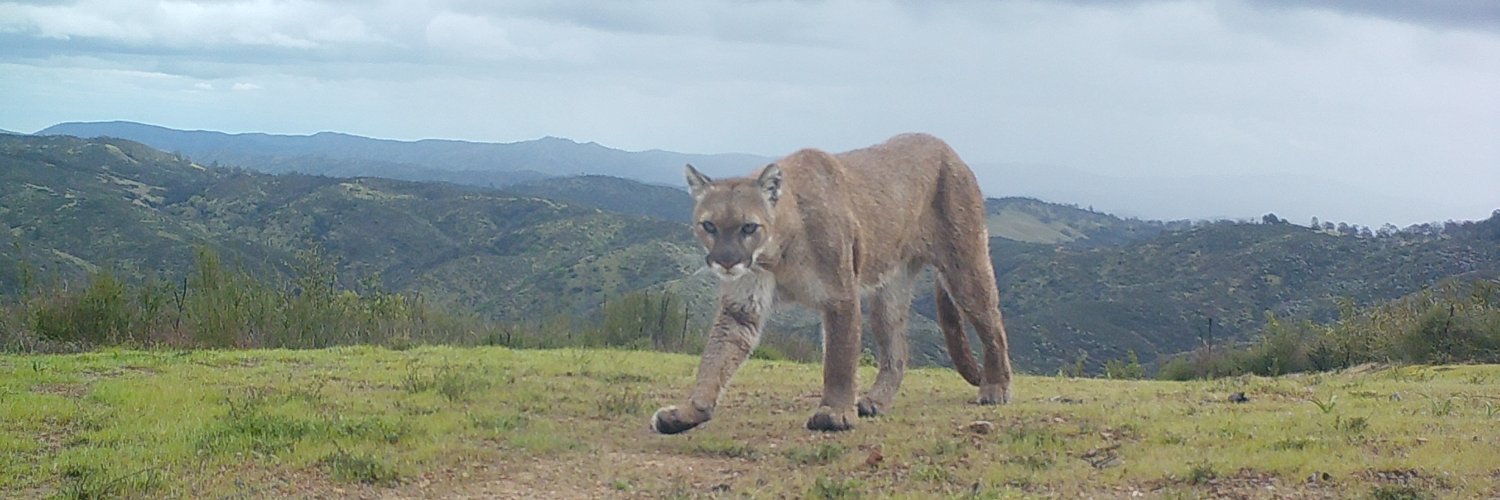
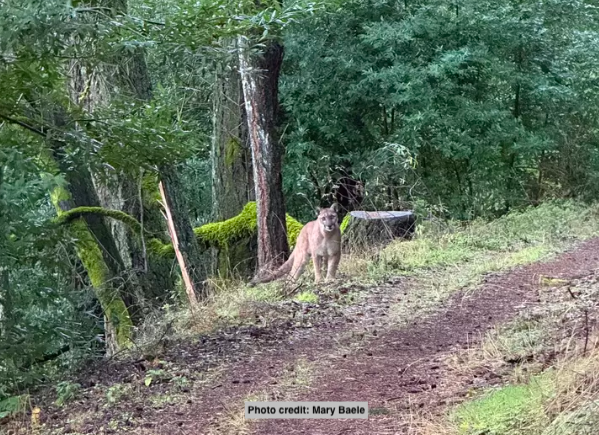
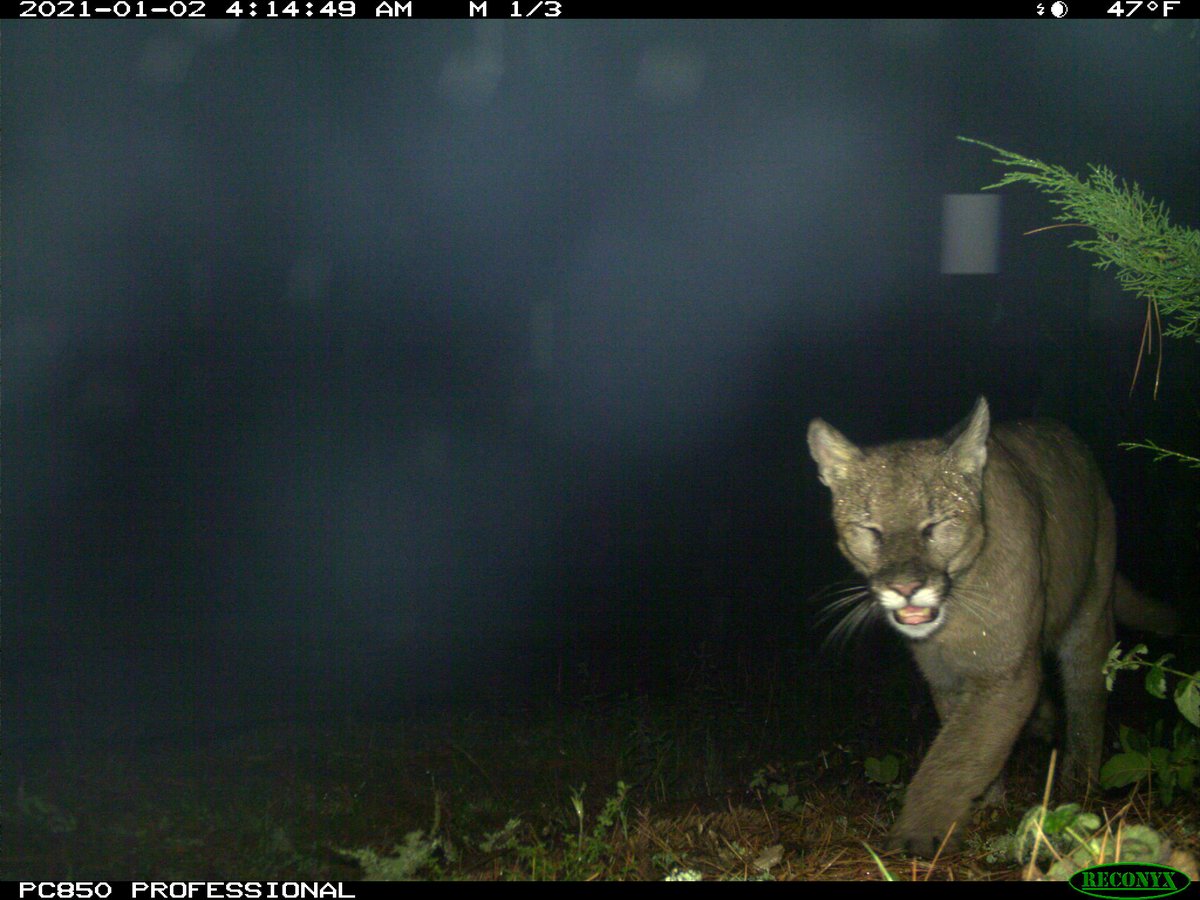
Earlier this week, a hiker came upon two mountain lions on a Wunderlich County Park trail. Mountain lions prefer to avoid people. Here, the hiker noted that neither cat showed aggression towards her and the smaller one ran away while the larger watched her walk past. Like most, this encounter was uneventful, but as the Bay Area is mountain lion country, it’s important to remember what to do if you see one- Never approach. Do not run. Do not bend down. If they approach, make noise and make yourself look big.
If you see a mountain lion (or bobcat), let us know! Submit your sighting to our public sightings map. https://t.co/7rLR0YePoC
Read more about the encounter at Wunderlich & see the hiker's video of her sighting:
https://t.co/z5aGpddJJq
#sanmateocounty #bayarea #mountainlion #wildlife #coexistence
What is the greatest danger to pumas? A new study using data from pumas in Alberta, Canada reminds us that it’s us- people. Hunting, trapping, removing ‘problem’ individuals involved in human-wildlife conflict, vehicle collisions, and incidental trapping were all cited as causes of death. While hunting of pumas is prohibited in California, they face similar threats here. These large carnivores would rather steer clear of human-dominated areas but expansion of human development and encroachment into their habitat is making it harder for them to do so, putting their survival at risk.
Learn more about the Alberta study: https://t.co/NG2jUTDiyo
Learn about pumas at California's urban-wildland interface: https://t.co/iu9Sdson82
#mountainlion #wildcat #alberta #wildliferesearch
Japan’s only two native wild cats, the Tsushima leopard cat and the Iriomote cat, live nowhere else but their home islands of Tsushima and Iriomote. They're solitary, elusive, and mostly nocturnal and crepuscular, so they are rarely seen.
Both are critically endangered, and there are fewer than 100 individuals thought to remain for each species. Habitat loss, vehicle collisions, declining prey, and diseases from domestic cats threaten their survival. Zoo breeding programs and local roadkill prevention campaigns are part of efforts to save these threatened species.
Read more about these cats on our website
🐱 https://t.co/VZnmwtXp5M
#japan #wildcat #endangered #smallcat
Today is National Hiking Day! We can all be responsible hikers and help foster human-wildlife coexistence when we spend time in nature. How? stay on marked trails (helps minimize disturbance to wildlife and vegetation), keep dogs leashed and on-trail so they don't disturb wildlife, and be sure to respect park access hours. Most hiking trails go through wildlife habitat, so by following these rules, you are helping to prevent human-wildlife conflict.
#hiking #nationalhikingday #humanwildlifecoexistence #wildlife
Meet the acrobat with saber teeth!
Clouded leopards are classified as small cats and weigh only ~ 25 to 50 lbs. But they have 2 inch canines (approx the same size as a tiger's!), ankles that rotate nearly 180 degrees, allowing them to climb down trees headfirst, and a lineage older than any other living cat.
Less than 10,000 clouded leopards remain in the wild, as they're threatened by habitat fragmentation and zoonotic diseases.
Check out our latest Substack, where we explore what makes this species an evolutionary marvel and how our Bhutan Wild Cat Health Project is working to protect them.
👉 https://t.co/5U3ikqzAeS
#bhutan #cloudedleopard #evolution #smallcat
Pumas also had to weather the storms from this past weekend! This video comes to us from Bay Area resident, Ryan. It shows a puma family group navigating the urban edge amidst the extreme weather that recently hit the West Coast. During such intense weather events, animals like pumas may hunker down and limit their movement.
Community observations like this are vital to understanding how pumas navigate fragmented landscapes. If you see a puma, let us know! Submit your sighting to our public sightings map to help inform ongoing conservation and coexistence efforts:
https://t.co/7rLR0YePoC
#mountainlion #california #weather #bayarea #wildilfe
Our Bhutan Wild Cat Health project spans 4 of the nation's largest protected areas to survey the habitats of all 9 wild cat species. Our team in Bhutan has deployed nearly 400 camera stations to better understand how wild cats are affected by human encroachment and free-roaming dogs.
As the elevation gradient shows, each zone tells a different story:
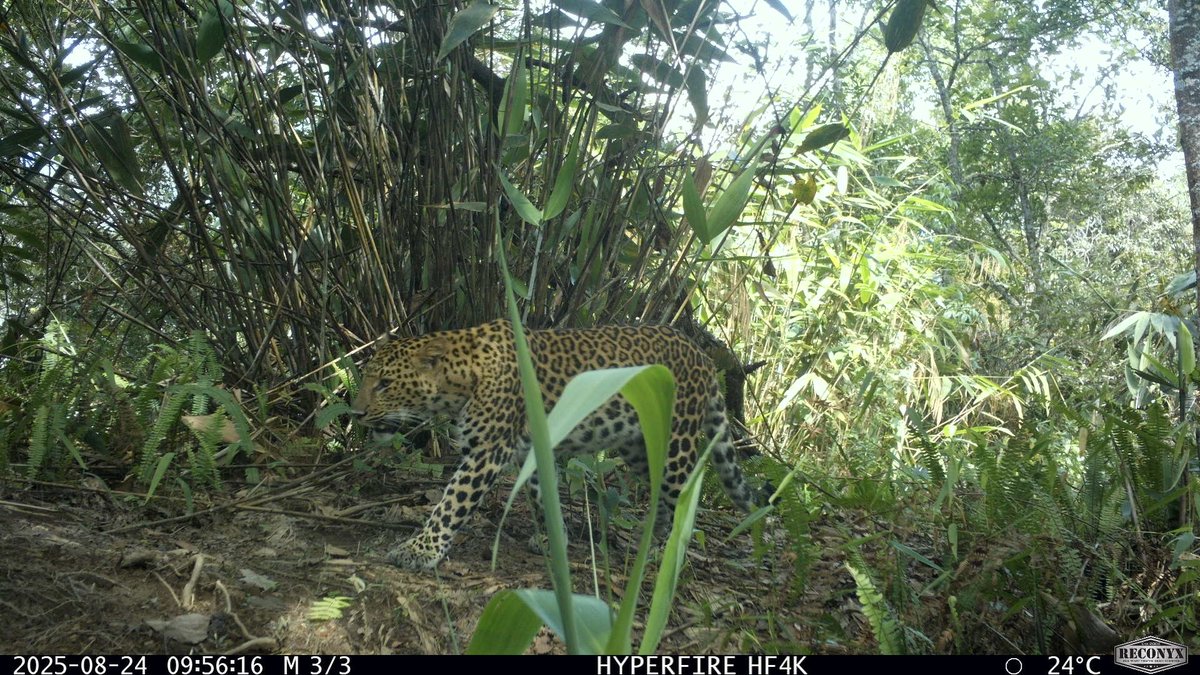
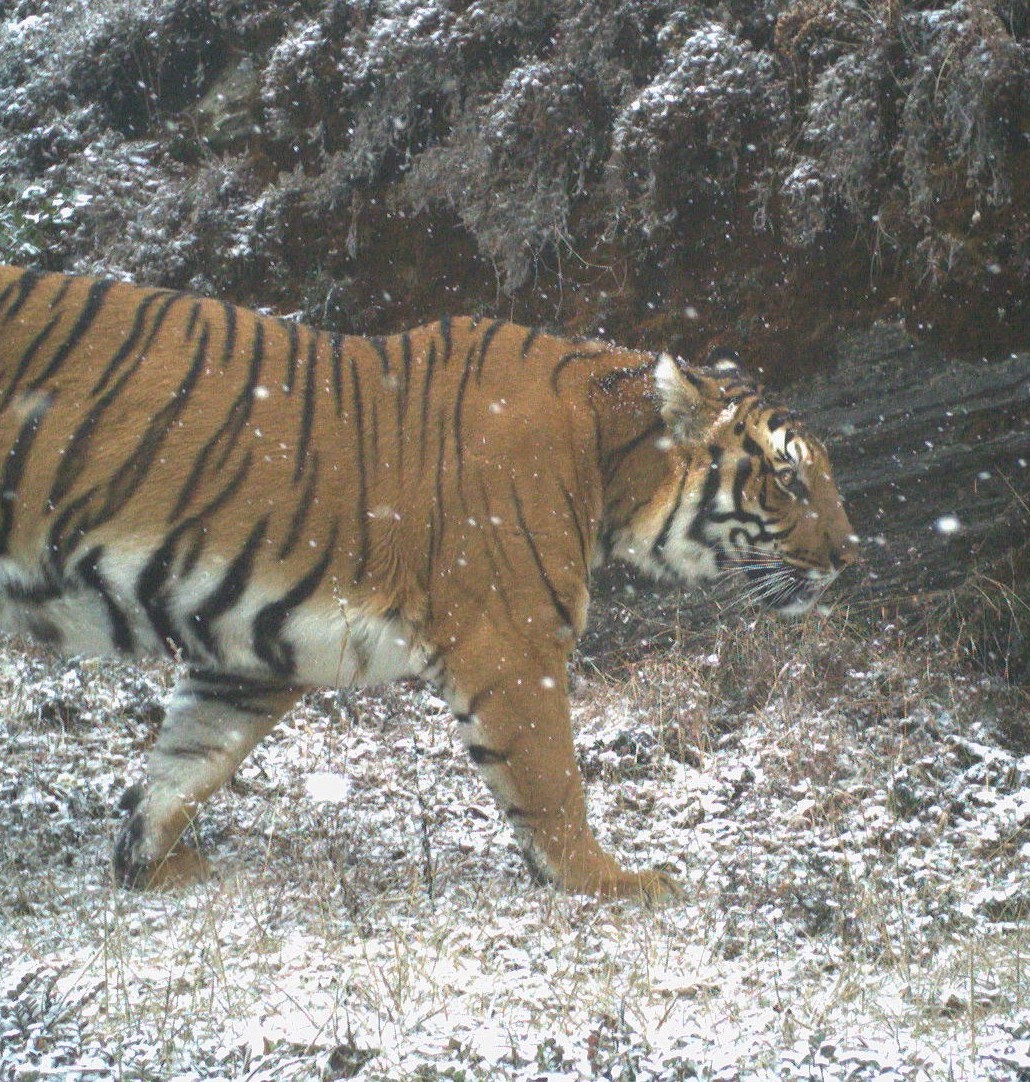
Jigme Singye National Park is in the lowlands. Here, we find tigers, common leopards, Asian golden cats, leopard cats, marbled cats, and clouded leopards.
At mid-elevations, such as the Thimpu Forest Division, we've detected leopard cats, Asian golden cats, and marbled cats.
Finally, at higher elevations (Jigme Dorji & Wangchuck Centennial National Parks), the jungle gives way to snowy mountains, and here, we've detected all 9 wild cat species, including snow leopards and Pallas's cats.
By surveying this elevational gradient, our data will provide insights into how these carnivores adapt across changing landscapes.
Learn more!
https://t.co/KkqYzCK5hB
#bhutan #asia #wildliferesearch #cameratrap #wildcat
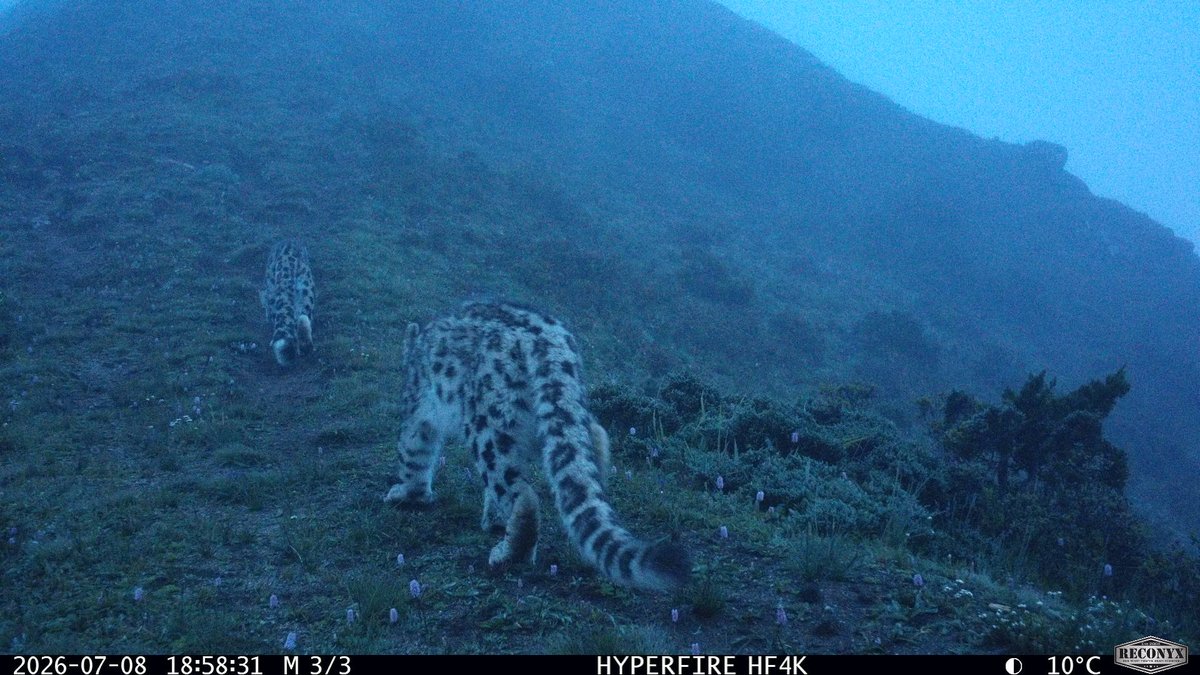
Snow leopards fall under China’s Highest Nationally Protected status and are listed as Vulnerable by the IUCN. As in our Bhutan study area, researchers in China are using camera traps in Nainang Valley to study these elusive cats, identifying 40 individual snow leopards from the images. In Felidae’s Bhutan Wild Cat Health Project, camera traps are helping identify areas used by snow leopards and where they’re at risk from disease transmission. Our research in Bhutan, along with work elsewhere in snow leopard range, helps advance our overall understanding of snow leopard ecology, and to inform evidence-based conservation strategies.
Learn about our Bhutan work: https://t.co/KkqYzCK5hB
Read about the snow leopards in China:
https://t.co/3ccgqJYd4I
#bhutan #china #snowleopard #cameratrap #wildcat
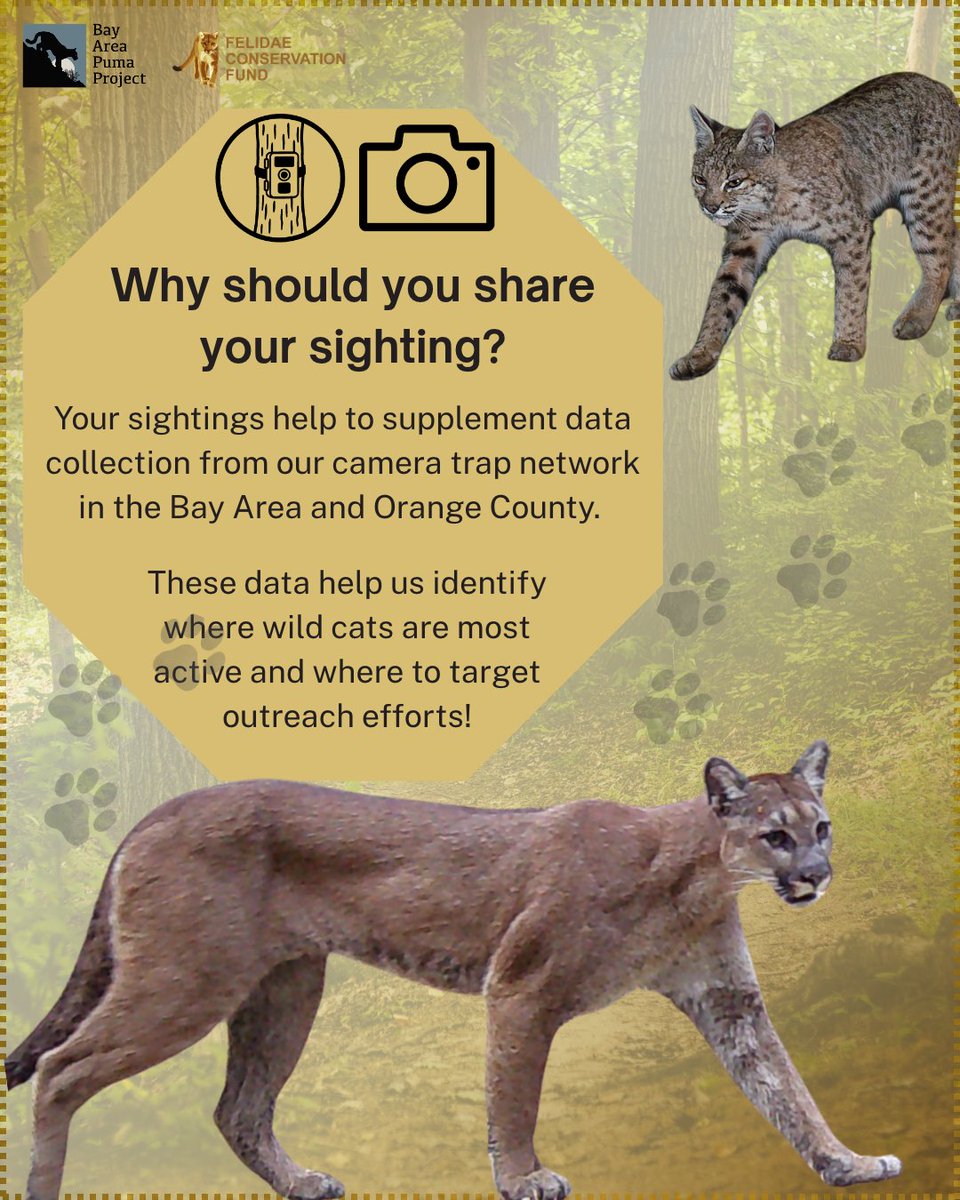
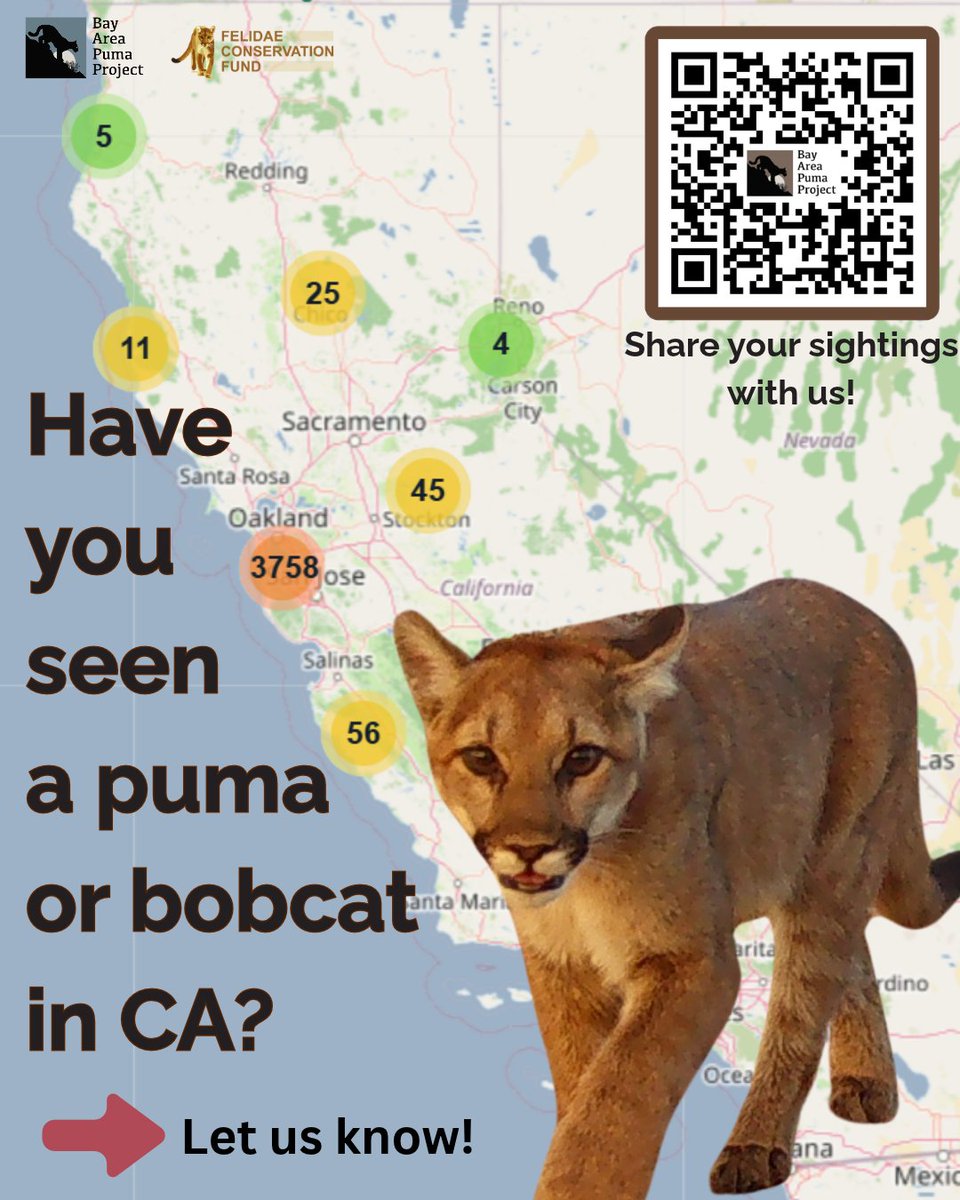
Have you seen a puma or a bobcat in California? if so, please let us know! You can share your sightings with our public sightings map on https://t.co/0Ui3iHaS7A. Sightings from citizen scientists like YOU help us collect data outside of our camera trap network and to better understand wild cat activity at the urban-wildland interface.
If you've seen either species, let us know! If you can include an image or video, that's even better!
https://t.co/7rLR0YePoC
#wildlife #citizenscience #communityscience #wildcat
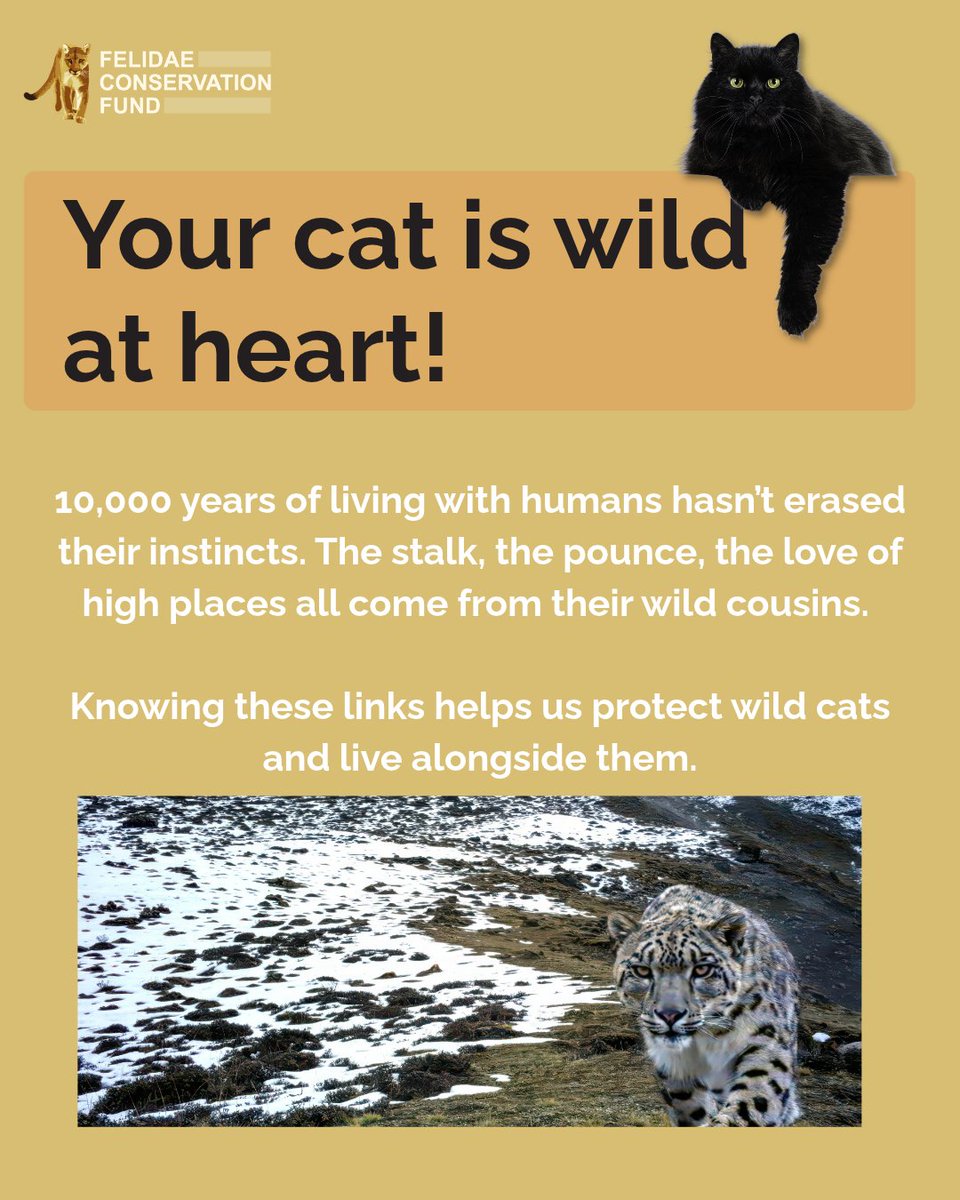
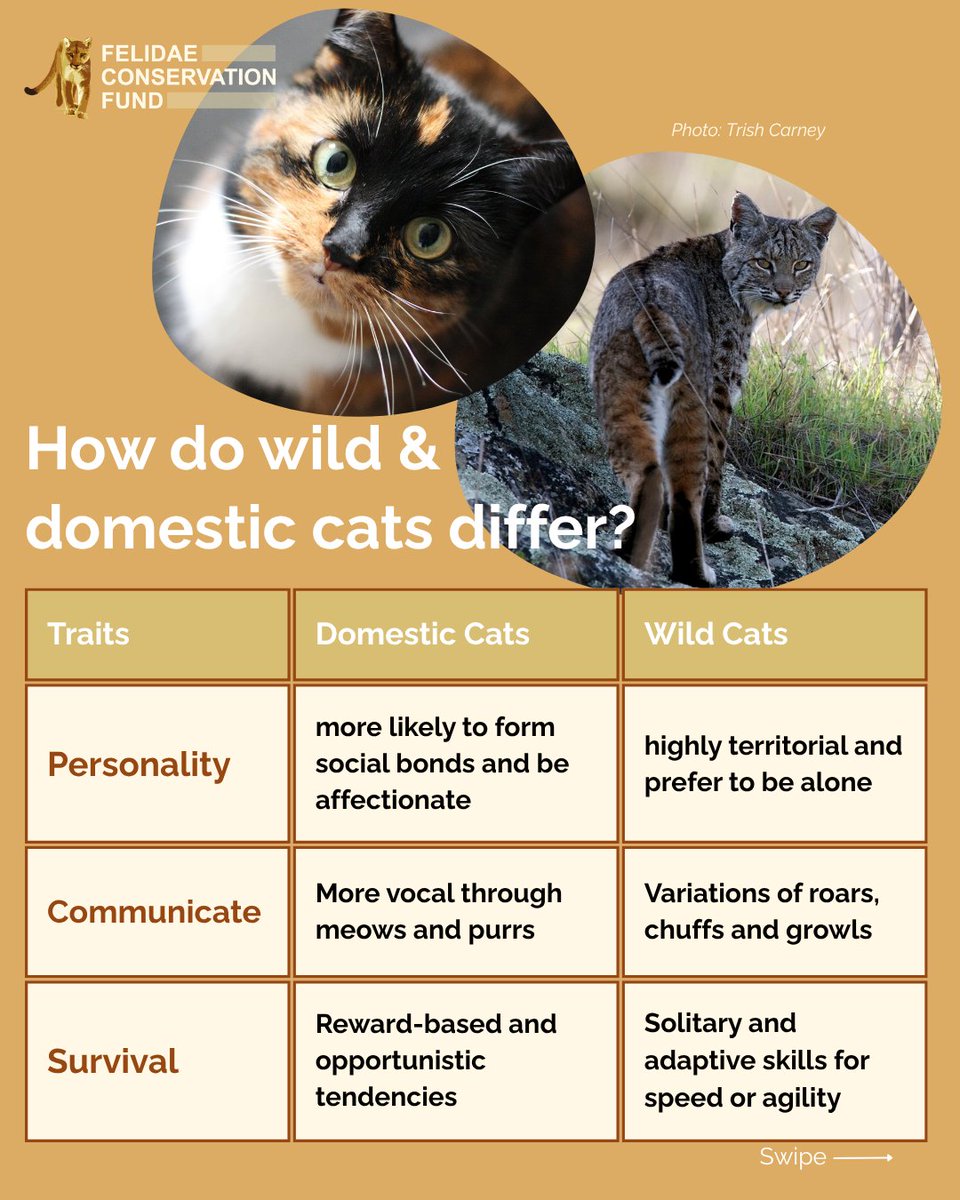
How similar are house cats to wild cats? They share many of the same traits and hunting instincts but 1000s of years of selective breeding have produced the docile domestic cats that we call our pets. Meanwhile, their wild cousins have retained those independent survival skills.
Understanding these traits helps us appreciate why protecting wild cats and their habitats matters. 🐱
Swipe to learn more and head to https://t.co/iu9Sdson82 to learn about the wild cat species we study!
#biology #wildcat #wildlife #bigcat
Researchers in Nepal are testing lab versions of wild cat scents, like urine, to prevent attacks on livestock by leopards and tigers. The work is still ongoing and they’re trying to understand the conditions under which the scents may be effective- so far there has been a 20-30% decrease in wild cat occurrences around livestock. It’s hoped that, with more research and when combined with other preventative methods, this new strategy could help reduce human-wildlife conflict, helping ranchers with a challenge they have faced for a long time.
Nepal is trying artificial cat scents to deter them? Read more! https://t.co/qBEd4QqZsh
Read about our work with these big wild cats! https://t.co/iu9Sdson82
#nepal #wildcat #conservation
#ranching #research #leopard #Tigers
Jaguars are remarkably adaptable. Their range stretches across South America, from the Pantanal wetlands and the Amazon rainforest to Brazil’s caatinga, and the genetics of this species are shaped by that vast, varied landscape. Their genetic diversity is at risk from habitat fragmentation. Roads and agricultural land cut through their range, impeding jaguar movement and making it harder to find mates. For wide-ranging species like jaguars, connectivity between habitats is therefore crucial to their survival. Camera traps are helping researchers study jaguar activity across the landscape, helping to identify core areas and priority areas for conservation.
Read about the Jaguars of South America:
https://t.co/FdVNRWpT6S
#jaguar #bigcat #connectivity #panthera
A Canadian lynx has been spotted in northern New Mexico after almost 25 years! This species is typically found further north, in Canada and Alaska, so it's rare to see them in NM. They're listed as threatened under the US Endangered Species Act, despite reintroduction efforts. Canada lynx are largely found in spruce-fir forests, where their main prey, snowshoe hares, also live. But today, these forests are being harvested for timber and also for hazardous fuel removal fuel, with likely negative consequences for lynx numbers. It's hoped this sighting in northern NM will help inform state and federal management of Canada Lynx.
Learn more: https://t.co/GxuWl2i4Dh
#canadianlynx #newmexico #wildcat #conservation
As of this year, Thailand became the first Southeast Asian country to increase its wild tiger population. What was once as low as 148 individuals in the wild in 2022, boomed to 210 individuals in 2026!
You want to know how they did it? Wildlife education in local schools, community awareness on co-existence strategies, and reintroducing native prey (endangered wild cattle and deer) to prevent attacks on livestock. Thailand has even introduced the “Big Cat Band,” where music brings rangers and community members together to understand their conservation efforts!
Learn more about Thailand's Co-Existence Strategies here:
https://t.co/x8s95duTG4
Read how Felidae is working to help native tigers in Bhutan!
https://t.co/KkqYzCK5hB
#thailand #conservation #tigers #education #bhutan
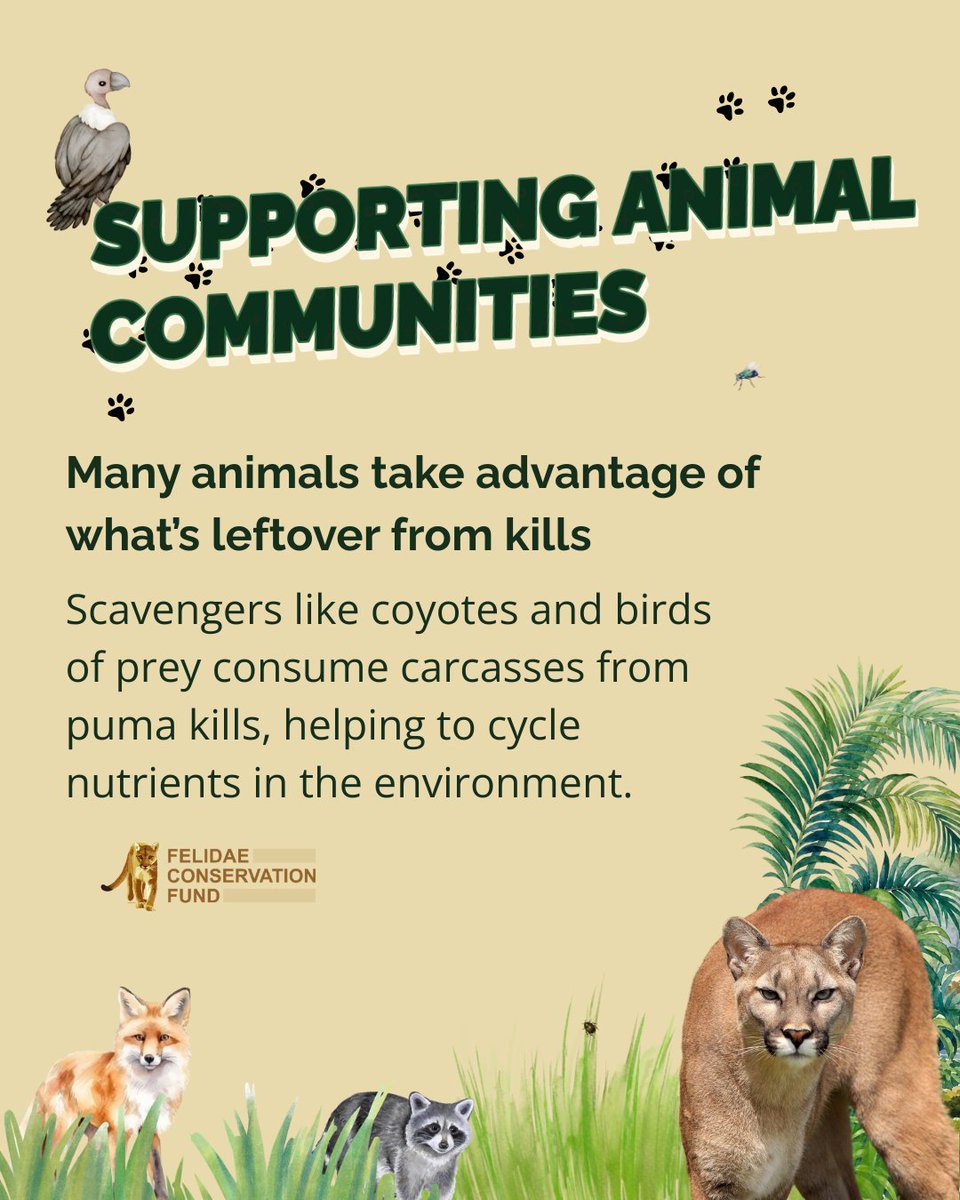
It’s World Ecology Day! Pumas are apex predators, and across their range, they directly and indirectly interact with hundreds of species, including herbivores, other carnivores, scavengers, and more! Keystone predators like pumas help maintain ecosystem health by preventing the spread of disease. Eg. preying on deer prevents the spread of lyme disease. A single puma’s home range is ~40-200 square miles, so protecting their habitat also benefits countless other species they share their home with. We track puma activity across California, helping us better understand how they navigate urban edge habitats.
Learn more at https://t.co/iu9Sdson82
#worldecologyday #puma #bobcat #wildliferesearch #conservation #california
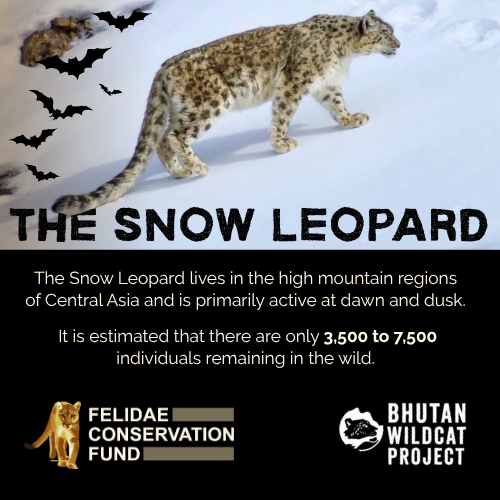
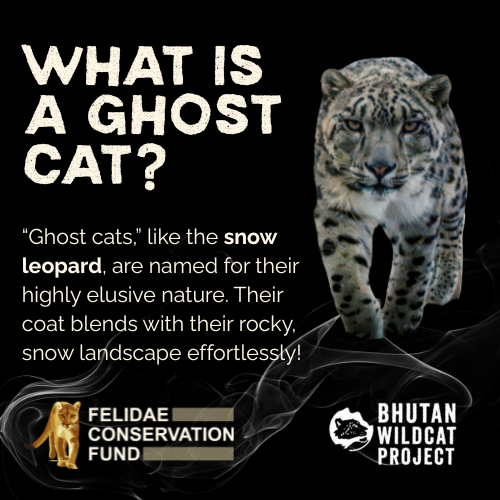
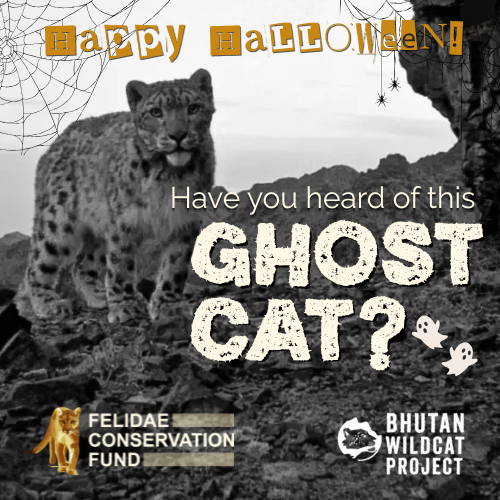
In the spirit of Halloween, we’re celebrating another Ghost Cat. Snow leopards are known as “ghost cats of the mountains”. In Bhutan, we study snow leopard activity and health via scat surveys and camera traps. This helps to better understand how they're affected by urban encroachment and free-roaming dogs. Snow leopards are hard to see in person as they camouflage exceptionally well with their snowy landscape in some of the harshest conditions on earth. This species is threatened by habitat fragmentation, prey loss, and hunting.
Learn more about our work in Bhutan: https://t.co/KkqYzCK5hB
#snowleopard #wildcat #conservation #asia #Bhutan
Although rodent population control is important to public health, the use of chemical rodenticides can have devastating effects on wild felids like bobcats and pumas. In California, over 90% of tested pumas and 85% of tested bobcats showed traces of exposure to second generation rodenticides in their bodies. This can compromise animal immune and reproductive health. Alternatives to rodent control include improved waste management and rodent fertility control methods.
Learn more: https://t.co/H7avHuwh0x
#rodenticide #bobcat #puma #mountainlion #california
It's not spooky season without a ghost! 👻
Here at Felidae Fund, we're especially interested in ghost cats. One of these is the puma aka mountian lion aka cougar. Pumas are ghost cats because they are elusive and are pretty good at avoiding human encounters, despite ongoing encroachment of their remaining habitat. Like ghosts, pumas are most active in the evening and nighttime hours, which also helps them avoid people. To learn about puma behavior, we use camera traps. They help us monitor wildlife activity 24/7 across the Bay Area and in southern CA as well.
Help us keep track of ghost cat sightings- if you see a puma, let us know!
👉 https://t.co/m6scgDWVy9
#wildcat #wildlife #mountainlion #california #halloween
California’s bobcats need your voice, and public comments close this Sunday - Nov 1.
About 62,000 bobcats live in California (CDFW draft plan). They’re already facing rodenticide poisoning and shrinking habitat. If hunting returns on top of that, their numbers could drop fast.
This isn’t just about a pelt. Losing one bobcat can mean life or death for her kittens, and those losses add up across the whole population. Years of conservation work could unravel if we stay quiet.
Here’s how to help:
📧 Email [email protected] before Nov 1
✏️ Subject line: California Bobcat Conservation and Management Plan
💬 Tell them, in your own words, why California’s bobcats matter to you
Want the full story? Read our breakdown on Substack: https://t.co/xw72CmH3iL
#CaliforniaBobcats #ProtectBobcats #BobcatHunting #WildlifeConservation #CaliforniaWildlife #SpeakForWildlife #BayAreaBobcatProject
Good news! India’s tiger population has more than doubled in the past two decades, reaching nearly 3,700 animals, while conservation efforts have also supported growing populations of Asiatic lions, rhinos, and elephants. However, this conservation success brings new challenges. As tiger populations recover, encounters with people may increase, leading to human-wildlife conflict. Connectivity between remaining tiger habitats is more important than ever, so that tigers can safely move through their territories and hunt native prey. This is crucial for coexistence, a challenge that also guides Felidae’s own work to conserve wild cats and protect their health.
Read more: https://t.co/rTYdL6gLI3
#tiger #bigcat #india #conservation #wildlife