👏 We had the honor of recognizing the very best in medical imaging informatics at SIIM26. Each year, SIIM Honorary Awards celebrate individuals whose leadership, innovation, and professional achievement have shaped this field, and this year's class is extraordinary:
🥇 Gold Medal of the Society Marc Kohli, MD, FSIIM — University of California, San Francisco
🏆 Dr. Joe Gitlin Award Brad Erickson, MD, PhD, FSIIM — Mayo Clinic, Rochester
🏆 The Dr. Ruth Dayhoff Award for the Advancement of Women in Medical Imaging Informatics Elizabeth Krupinski, PhD, FSIIM — Emory University
🌟 Early Career Achievement Award Academic Bardia Khosravi, MD, MPH, MHPE — Yale School of Medicine
🌟 Early Career Achievement Award Industry Alexis Laugerette, MSc — Siemens Healthineers
🎓 Educator Award Jay Crawford, DHA, CIIP — Mosaic Clinical Technologies
💡 Imaging Informatics Innovator Award Academic George Shih, MD, MS — Weill Cornell Medical Center
💡 Imaging Informatics Innovator Award Industry John Paulette, MS — HOPPR
#ImagingInformatics #HealthIT #EnterpriseImaging #SIIMAnnualMeeting #MedicalImaging
This is a new paradigm for interacting with Claude that is significantly more "inline" with all the other human activity org-wide. Once you do all of the under the hood engineering work to make this "just work" (e.g. across tools, integrations, compute environments, memory, security, etc.), Claude basically joins the team in a seamless way - you can talk to it as you would talk to a person and it can help with a very large variety of workloads.
Imo this is the 3rd major redesign of LLM UIUX. The first paradigm was that the LLM is a website you go to, the second was that it is an app you download to your computer. This third one is that it is a self-contained, persistent, asynchronous entity with org-wide tools and context, working alongside teams of humans. It really takes a while to wrap your head around it, but it works and it is awesome.
🤯 Midjourney -- yes, the AI image company -- just shipped a brand new type of imaging machine. 🤯
- 100x faster than an MRI.
- 10x cheaper.
Full body scanned in 60 seconds instead of an hour in a tube. Ultrasound based, MRI-level resolution.
And it's real -- not a concept, a working machine. You step into a shallow pool of warm water, a ring of half a million sensors sends sound through your body from every angle, and ~60 seconds later you have a 3D map of your insides down to a fraction of a millimeter. No radiation, no tube, no lying still.
They're not even building it as a hospital machine -- they're building a spa. The scan is a side-effect of a place you'd want to hang out anyway.
Lastly, it is built by 9 people. NINE PEOPLE.
You can just do things.
🤯 Midjourney -- yes, the AI image company -- just shipped a brand new type of imaging machine. 🤯
- 100x faster than an MRI.
- 10x cheaper.
Full body scanned in 60 seconds instead of an hour in a tube. Ultrasound based, MRI-level resolution.
And it's real -- not a concept, a working machine. You step into a shallow pool of warm water, a ring of half a million sensors sends sound through your body from every angle, and ~60 seconds later you have a 3D map of your insides down to a fraction of a millimeter. No radiation, no tube, no lying still.
They're not even building it as a hospital machine -- they're building a spa. The scan is a side-effect of a place you'd want to hang out anyway.
Lastly, it is built by 9 people. NINE PEOPLE.
You can just do things.
Generative foundation models can remove visual artifacts on X-rays through realistic image inpainting, but they can obscure subtle, clinically relevant features and introduce latent bias. @FelipeMatsuoka@eduardomjfarina@UNIFESP_Rad@unifesp@ddiunifesp
https://t.co/ehk0qh3kxh
This dataset contains 3597 MR Images (MRI) of the head acquired in one of 3 possible planes (axial, sagittal, coronal) and one of 7 sequence types (T1, T1Gd, T2, FLAIR, b1000, ADC map, SWI).
https://t.co/9GlAq9ZHx3
O 4º Desafio de #IA da #SPR traz uma nova proposta: usar #NLP para interpretar laudos de #mamografia e prever categorias #BIRADS.
Uma iniciativa que conecta tecnologia, ciência e prática clínica na #Radiologia. Saiba mais e participe!⬇️
https://t.co/OotGYdaW1s
Judging by my tl there is a growing gap in understanding of AI capability.
The first issue I think is around recency and tier of use. I think a lot of people tried the free tier of ChatGPT somewhere last year and allowed it to inform their views on AI a little too much. This is a group of reactions laughing at various quirks of the models, hallucinations, etc. Yes I also saw the viral videos of OpenAI's Advanced Voice mode fumbling simple queries like "should I drive or walk to the carwash". The thing is that these free and old/deprecated models don't reflect the capability in the latest round of state of the art agentic models of this year, especially OpenAI Codex and Claude Code.
But that brings me to the second issue. Even if people paid $200/month to use the state of the art models, a lot of the capabilities are relatively "peaky" in highly technical areas. Typical queries around search, writing, advice, etc. are *not* the domain that has made the most noticeable and dramatic strides in capability. Partly, this is due to the technical details of reinforcement learning and its use of verifiable rewards. But partly, it's also because these use cases are not sufficiently prioritized by the companies in their hillclimbing because they don't lead to as much $$$ value. The goldmines are elsewhere, and the focus comes along.
So that brings me to the second group of people, who *both* 1) pay for and use the state of the art frontier agentic models (OpenAI Codex / Claude Code) and 2) do so professionally in technical domains like programming, math and research. This group of people is subject to the highest amount of "AI Psychosis" because the recent improvements in these domains as of this year have been nothing short of staggering. When you hand a computer terminal to one of these models, you can now watch them melt programming problems that you'd normally expect to take days/weeks of work. It's this second group of people that assigns a much greater gravity to the capabilities, their slope, and various cyber-related repercussions.
TLDR the people in these two groups are speaking past each other. It really is simultaneously the case that OpenAI's free and I think slightly orphaned (?) "Advanced Voice Mode" will fumble the dumbest questions in your Instagram's reels and *at the same time*, OpenAI's highest-tier and paid Codex model will go off for 1 hour to coherently restructure an entire code base, or find and exploit vulnerabilities in computer systems. This part really works and has made dramatic strides because 2 properties: 1) these domains offer explicit reward functions that are verifiable meaning they are easily amenable to reinforcement learning training (e.g. unit tests passed yes or no, in contrast to writing, which is much harder to explicitly judge), but also 2) they are a lot more valuable in b2b settings, meaning that the biggest fraction of the team is focused on improving them. So here we are.
Tesla self-driving saves a lot of lives – the statistics are unequivocal.
That doesn’t mean it’s perfect, of course.
Even when we improve safety 10X, saving 90% of the million lives lost in auto accidents every year, Tesla will still get sued for the 10% who did die. The 90% who are still alive mostly won’t even know that Tesla saved them.
Nonetheless, it is the right thing to do.
“A friend left a party at 9:30 on a Saturday. Not tired. Not sick. He wanted to get back to his agents.
Nobody questions it anymore. Half the room is thinking the same thing. The other half are probably checking the progress of their agents. At a party”
https://t.co/sywQom2wAa
The Checklist for AI in Medical Imaging addresses #AI applications that include classification, segmentation, and reconstruction of medical images
https://t.co/XUVb3iB43u #MachineLearning#Radiomics#ArtificialIntelligence
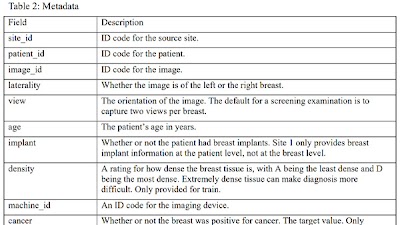
New data resource with 4-view 2D mammograms and corresponding BI-RADS assessment, breast density, machine ID, and proof of benign or malignant outcome https://t.co/vWFmsCOKOL @FelipeKitamura@haritrivedimd @emoryradiology #breast#BreastRad#cancer