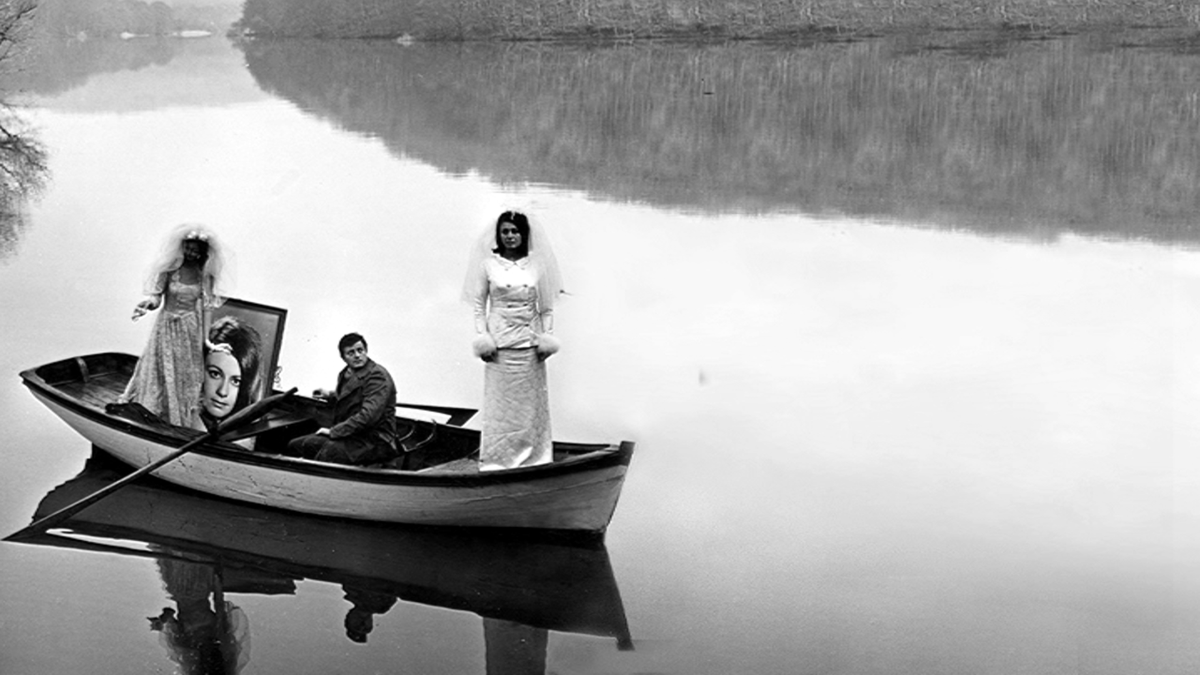
One of the greatest films ever made, Time to Love remains a hidden gem for Western audiences. The film tells the story of a man who falls in love not with a woman, but with her photograph, and insists on preserving that distance rather than being with her. He insists that he is in love with the image, not her.
In the age of AI, Time to Love feels not only uncannily prescient but strikingly relevant. It anticipates a cultural logic in which images are no longer secondary to reality but become primary objects of desire. It is both a metaphysical allegory and a critique of modern subjectivity’s retreat into representation, long before such concerns became central to contemporary visual culture.
What might sound like an eccentric premise is treated with remarkable seriousness by Metin Erksan, who strips the narrative down to its conceptual core and builds a precise meditation on love, perception, and the autonomy of the image.
I still remember how I was blown away the first time I saw the film. What strikes me most in Metin Erksan’s direction is its austere control, the way he builds meaning through stark compositions while quietly refusing psychological realism, at times recalling Michelangelo Antonioni, Robert Bresson, and Alain Robbe-Grillet in its distance and conceptual clarity. It remains a film with few real equivalents, singular in both its form and its ideas.
Kafka y Pessoa fueron burócratas, Gramsci estuvo en prisión, Ajmátova memorizaba sus poemas, Eliade, Cioran y Ionescu emigraron y cambiaron de idioma, a Lorca lo asesinó la dictadura. Ninguno tuvo una beca para escribir, y escribían.
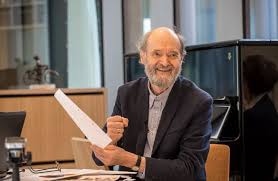
A very happy 90th to Arvo Pärt, creator of unearthly beauty which has brought us such joy and comfort...
"I could compare my music to white light which contains all colours. Only a prism can divide the colours and make them appear; this prism could be the spirit of the listener."