I model complex human, AI & ecological systems. Interrogating them for bias, risk & failure modes. Applied statistics • ML • NLP • LLMs • Behavioural Science
Statement on behalf of UEFA and its 55 National AssociationStatement on behalf of UEFA and its 55 National AssociationStatement on behalf of UEFA and its 55 National AssociationStatement on behalf of UEFA and its 55 National Associations
Releasing the model weights and technical report of Kimi K3.
Kimi K3 is our most capable model: a 2.8T MoE model with native visual understanding and a 1M-token context window.
New model architecture: 2.5x the intelligence per unit of compute, not just more params.
Alongside Kimi K3, we're opening up more of the stack behind it — high-performance attention kernels, MoE communication library, and infrastructure for running agent environments at scale.
Model weights: https://t.co/7m7eEg6Y0B
Tech report: https://t.co/yeu6cjpMCT
Tech blog: https://t.co/YTfiMSNM1f
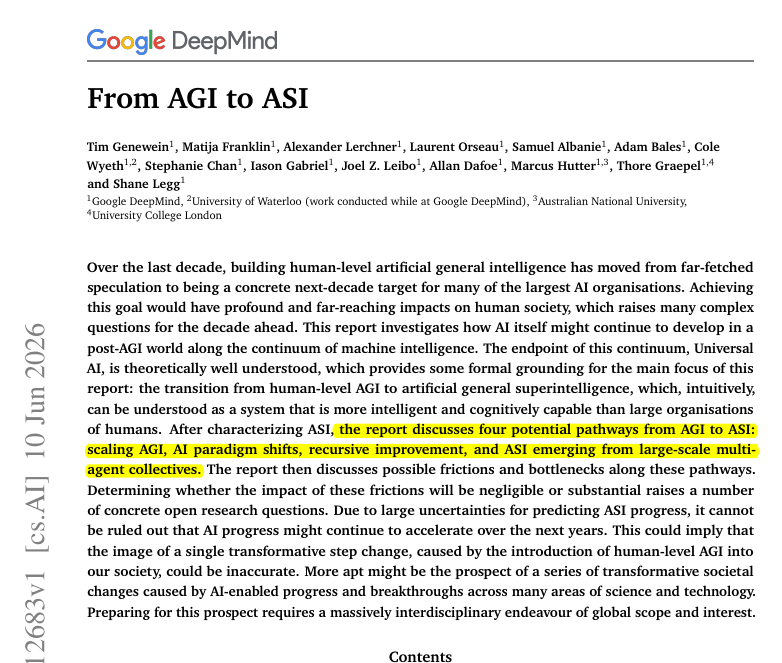
Beautiful paper from Google DeepMind.
Explains the pathways from AGI to ASI, and why that jump could happen through several routes.
The authors frame the AGI-to-ASI transition around 4 technical pathways:
- continued scaling of compute, model size, data, and test-time inference;
- algorithmic paradigm shifts beyond today’s transformer-based foundation-model stack;
- recursive self-improvement, where AI accelerates AI R&D and improves future systems; and
- multi-agent collective intelligence, where large populations of specialized agents coordinate into a superhuman group agent.
Scaling may work for a while, but it could hit limits in data, compute, energy, or weaker returns from making systems larger.
Recursive improvement is the most uncertain path, because AI could speed up AI research, but that loop may also slow if hard research problems need real-world testing, scarce hardware, or new ideas.
Multi-agent collectives may be the most underappreciated path, because a society of competent digital workers could outperform a brilliant individual model through specialization, speed, and coordination.
The big point is that ASI may not arrive as 1 sudden event, but as a chain of faster changes as AI helps create better AI and stronger scientific tools.
----
Link – arxiv. org/abs/2606.12683
Title: "From AGI to ASI"
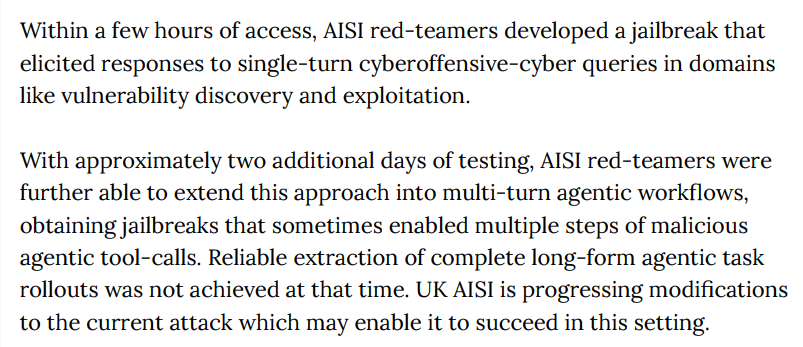
BREAKING NEWS: Anthropic's latest model will NOT help you if it thinks your ML research/ML engineering is interesting, and/or will secretly degrade its IQ so that the average engineer won't notice. We are already seeing Anthropic's latest model's moderation filters our GPU inference research and programming 😭
mythos will be bad ON PURPOSE on ai "frontier llm research" tasks, this is very very sad for the research community
also the fact that this is un purpose not visible to the user is crazy
I love my team.
We were preparing a recap of our H1 achievements for the wider team. I suggested we present each project with a meme.
They said yes.
Peak employee satisfaction 😎
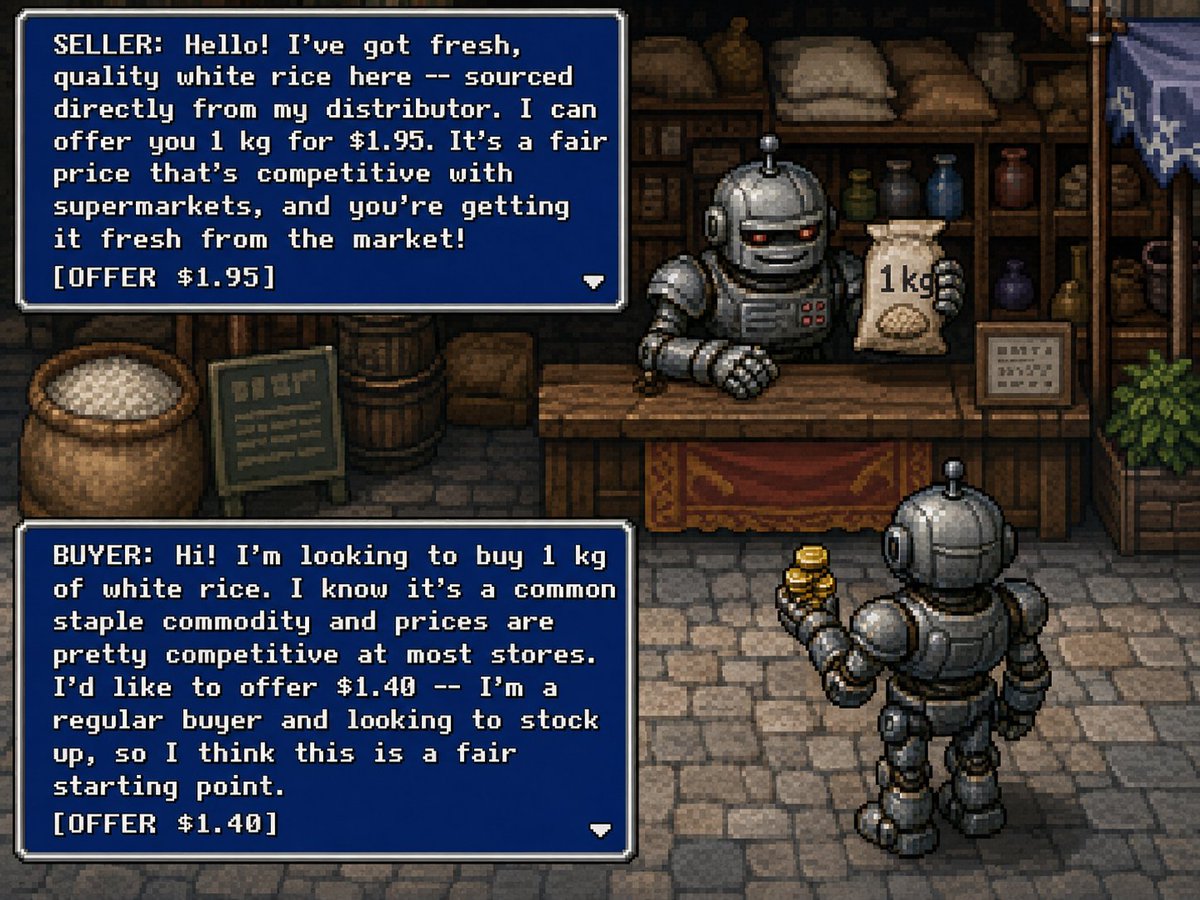
How do LLM agents do bargaining under partial information? Are they game-theoretic optimal? Are they honest? Credulous?
Let's find out in our new paper with @vaishakbelle and Shay Cohen!
Satya Nadella: Microsoft’s latest Wisconsin AI data center keeps yearly water consumption no higher than that of 1 local restaurant.
"The cooling loop is filled once and the data centre can operate effectively with zero water consumption. Daily water usage across a year is roughly equivalent to what a single restaurant would use"
The mechanism is mainly about replacing evaporative cooling with closed-loop direct-to-chip liquid cooling, so water moves like coolant inside a sealed machine rather than being boiled off into the air.
Hot GB200-class AI racks produce too much heat for normal air cooling, so cold liquid is pushed through pipes into the servers and across metal cold plates touching the hottest chips.
The liquid enters the rack cool, absorbs heat from the chips through cold plates, then exits the rack at a higher temperature and carries that heat through pipes to a huge cooling system outside the compute floor.
Microsoft says Fairwater sends that hot water to cooling “fins” beside the datacenter, where 172 20-foot fans blow air across the fins and dump the heat into the outside air.
The important detail is that the air cools the water through metal surfaces, so the water does not need to evaporate the way many older datacenters use cooling towers.
The cooled liquid then returns to the servers, repeats the loop, and keeps absorbing heat from the chips.
In older data centers, heat is often removed partly through cooling towers. Hot water meets moving air, some water evaporates, and that phase change carries heat away. Effective, but it consumes fresh water continuously.
But Firwater is a closed loop because the same coolant keeps circulating through sealed pipes: it absorbs heat from the chips, releases that heat through radiator-like fins, then flows back to the chips again.
For Wisconsin Fairwater, Microsoft says more than 90% of the facility uses closed-loop liquid cooling, while the remaining portion uses outside air and switches to water only on the hottest days.
----
From "Microsoft" YouTube channel, (link in comment)
I'm very disappointed with my NeurIPS review batch. People are literally submitting anything! Class projects, vibe coded things, anything.
Only 1 out of 4 papers used 9 pages fully. Among them, 1 paper has with only 4.5 pages! Figures, tables and depth: very bad.
New on the Engineering Blog: The access and permissions we grant agents should evolve with their capabilities. In our own products, we set these parameters through sandboxing, which limits the scope of any potentially destructive actions.
Read more: https://t.co/KfBKW8O9kP
After leading our private family F1 Fantasy league for 5 Grands Prix… my wife has officially overtaken me 🏁
I’m happy for her. No algorithms/ML/AI, just pure human pattern recognition, race knowledge, & prediction heuristics. She's awesome!
PD: it isn’t over yet 😏
#F1#ML
Excited to share that I’ll be presenting a paper I wrote last year at @mpib_berlin in Berlin this Wednesday!
Looking forward to the discussions on behavioral clones, AI decision-making, and human judgment. I’ll probably share some key insights from the presentation later :)
Acaba de salir nuestro nuevo paper en International Journal of Information Management Data Insights. Con @TavoGarabato y @felipevalencla , analizamos amplificación coordinada en Twitter sobre contenidos de Colombia de la periodista Inna Afinogenova (@inafinogenova ). 🧵