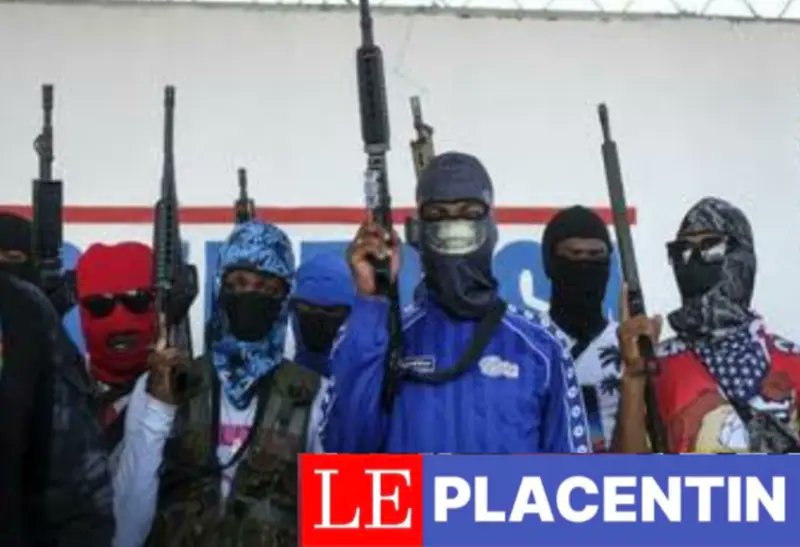
Three gang leaders, Lanmo Sanjou (400 Mawoso), Jimmy "BBQ" Cherizier (Viv Ansanm gang coalition spokesperson) and Jeff “Gwo Lwa” Larose (Canaan gangs) left Port au Prince for Sodo (Saut-d'Eau) to enjoy the festivities of the Vyèj Mirak (miracle of the Virgin Mary) festival.
In this video released on Haiti's social media, they joke about their popular support and control of the capital with the deadly Lanmo Sanjou adding, "The miracle of the Virgin Mary for Viv Ansanm gives us the possibility to create more miracles."
Many Haitians are reacting by questioning how they are able to travel freely throughout the country without the intervention of @pnh_officiel.
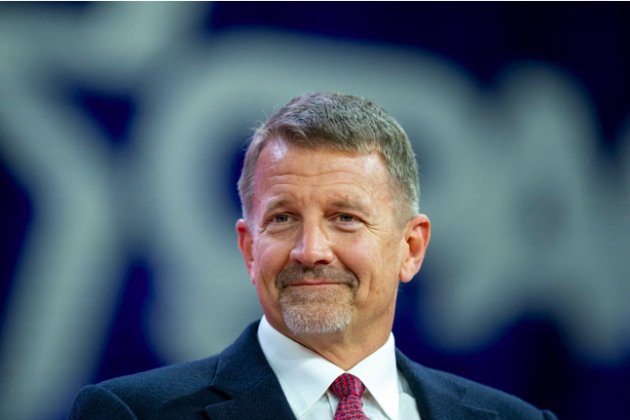
Erik Prince, founder of Blackwater Worldwide and ally, hired by the Haitian government to suppress gangs
According to the New York Times, in recent months, the Haitian government has hired American contractors, including Prince, to work on a covert operations group aimed at deploying drones to kill gang members, security experts said. Prince's team has been using the drones since March, but authorities have yet to announce the destruction or capture of a single high-value target.
The founder of Blackwater Worldwide has signed a contract to confront criminal groups that have killed civilians and seized control of vast swathes of territory, according to senior Haitian and U.S. government officials and other security experts familiar with Prince's work in Haiti.
Security experts said Prince was also looking for Haitian military veterans to hire and deploy to Port-au-Prince. He is expected to send up to 150 mercenaries to Haiti this summer. He recently sent a large stockpile of weapons to the country, according to two experts, according to a report published in The New York Times on Wednesday, May 28, 2025.
The Haitian government is awaiting the arrival of arms shipments and additional personnel to intensify its fight against gangs.
U.S. officials have said they are aware of the Prince's collaboration with the Haitian government. But the full terms of the agreement between the Haitian government and the Prince, including the amount of his fee, are unknown.
This NYT article is based on interviews with a dozen people closely following the situation in Haiti. All but one spoke on condition of anonymity because they were not authorized to publicly discuss sensitive security matters.
Rod Joseph, a Haitian military veteran and owner of a Florida-based security training company, said he has been in talks with Prince since late last year to provide staff for his contract.
Joseph, who trained Haitian police in the use of surveillance drones, said Prince gave him the impression his plans were under the auspices of the U.S. government, but then they came directly under the authority of the Haitian government.
He claimed that Prince told him he planned to send Salvadoran infantrymen to Haiti with three helicopters to participate in attacks against gangs.
Prince has a long history of military intervention abroad, and some of his operations have ended badly. Blackwater has faced legal problems due to its work for the US military in places like Iraq, including a 2007 incident in which its employees killed 17 civilians in Baghdad.
"The doors are open. All possibilities must be considered," Haitian Minister of Economy and Finance Alfred Métellus told the Haitian newspaper Le Nouvelliste last month. "We are looking for all Haitians, all foreigners with experience in this field who want to support us, who want to support the police and the army, to unblock the situation."
https://t.co/qpUC1Y0IkU
It's just another day counting stacks for the gangs in Haiti.
Money from the international community fills government coffers while Viv Ansanm stacks its cash in safes throughout the capital.
Everyone else is caught in the middle of the giant money machine, goes hungry, and sleeps in the dirt. The gangs know you can't eat promises of democracy and reform.
Dominican traders held to ransom by Haitian gangs at the border
Dominican traders operating in the border areas with Haiti are being forced to pay heavy ransoms to Haitian armed gangs in order to continue their business. This was revealed by Iván García, president of the Dominican Federation of Traders (FDC), in an exclusive interview with the Dominican channel Digital Quince, reported this Friday by the Haitian news agency AlterPresse.
According to García, some merchants pay up to $20,000 a month to these armed groups to guarantee the safety of their Haitian customers and maintain their access to Dominican markets near the border. "The merchants are being held hostage by groups that control certain Haitian territories," García said.
This situation illustrates the growing influence of gangs in Haiti, particularly in border areas where the state is struggling to assert its authority. It also fuels concerns among Dominican economic and political actors, who are calling for increased security and international aid.
https://t.co/jrzZjoOcAP
Government Inaction: Gas Suppliers Prepared to Stop Deliveries to Haiti
Companies that supply the Haitian government with gas are threatening to shut down completely if authorities do not take concrete steps to resolve the current crisis.
This threat comes at a time when armed groups now control a large part of Port-au-Prince and are carrying out a series of acts that paralyze the economy and fuel supplies. Previous blockades of the Varreux oil terminal by these groups had already caused fuel shortages, the shutdown of many essential services, and a worsening of the humanitarian situation.
Despite the government's recent adoption of a new budget to strengthen security, the resources remain insufficient given the scale of the challenges. Gas companies fear for the safety of their employees and facilities, and their ultimatum highlights the urgent need for an effective government response to the situation.
https://t.co/6WBpNC7vLO
May 10, 2025, marks one year since Gressier fell under control of the gangs and out of the reach of the state
It has been exactly one year since the western Haitian commune of Gressier fell under the control of the armed gang known as "103 Zonbi." This takeover was accompanied by extreme violence: massacres, systematic looting, arson, and a chilling silence from the Haitian authorities.
Since May 2024, armed groups have extended their control over more than half of the municipal territory, imposing their law through terror. Residents have been forced to flee, their homes burned, their property looted, and local businesses completely destroyed. In July 2024, the gangs burned and then demolished the Gressier police station, a symbolic act that marked the complete collapse of public authority in the region.
Attempts to respond by the Haitian National Police (PNH) have been rare and ineffective. Two armored vehicles were destroyed by the attackers: one on May 27, 2024, the other on February 22, 2025. Meanwhile, SWAT officer Dorcé Sudery succumbed to his injuries on September 10, 2024, after being seriously injured during a clash with the gangs.
Due to a lack of government presence, no official assessment of gang losses has been established. Since July 2024, National Route 2 has been blocked, making land connections with the South impossible. Only the sea or steep paths allow access to other departments at considerable risk.
The humanitarian consequences are disastrous. Thousands of displaced people now live in precarious conditions in Léogâne, Petit-Goâve, Aquin, and beyond. Without stable shelter or access to essential services, they survive in general indifference. Gressier, once a vibrant town, has become a ghost town, ignored by the authorities, the media, and humanitarian organizations.
Even the rare police operations from Léogâne toward neighborhoods like Santo or La Colline have failed to restore a semblance of security. Insecurity and fear reign supreme. The goods looted in Gressier are being sold in Carrefour, in full view of everyone.
Yet, despite this year of occupation and suffering, hope remains among the displaced. Many dream of returning home, rebuilding from the ruins, and reviving a community that, though scarred, still lives on in the memory of its children.
https://t.co/8d7IGYyWJa
Citizen'Report: UPDATE
🆘🆘🆘 for Tirivyè Artibonite
Monday, April 28, 2025, 6:30 pm,
The area of the Zòn dofouno in Tirivyè is under heavy fire from the bandits of Gran Grif/Savyen. Several people have already died from bullets, a dozen others have been injured by bullets, the Tirivyè hospital is overwhelmed by what is happening. @pnh_officiel@PrimatureHT@PresidenceHT
NOTE: First video images from the hospital show many seriously injured and bleeding. The floor is covered in blood as a small and overtaxed medical team can barely keep up with tourniquets and it appears some amputations are being performed without anesthesia. Where are the Salvadoran emergency medical units and helicopters? The @MSSMHaiti should be out in the field treating the wounded citizen brigade members and police.
Port-au-Prince is becoming more and more Balkanized!
(1 of 2)
Resembling a Hollywood action movie, the daily lives of Port-au-Prince's residents are marked by gruesome scenes worthy of special effects. Under fire, neighborhoods fall, day by day, under the control of heavily armed bandits: residents become vagrants. Some take refuge in camps. Others are forced to live with the outlaws. In this grim atmosphere, no one is spared, not even babies or the elderly, whom humanity recognizes as vulnerable.
For nearly four years, the Haitian capital has been fragmenting, making everyone who lives there a stranger. Expanding rapidly, the gang map changes from one moment to the next, making it difficult to grasp. In the blink of an eye, criminals have annexed a large amount of territory. Currently, more than 85% of Port-au-Prince is under their control. According to the IOM, more than a million people have been forced to abandon their homes, exacerbating the already acute humanitarian crisis.
About a month ago, Carrefour-Feuilles, one of the country's largest slums, was the target of yet another gang attack. The few neighborhoods housing civilians were emptied of their occupants. Thus, the bandits are advancing toward strategic areas like Pacot, Avenue Christophe, and Turgeau. Moreover, the eleven faculties of the State University of Haiti have closed their doors, seeking new addresses. Other private and state institutions have also emptied the premises, deemed deadly.
As for the Turgeau area, where the country's only two mobile phone companies are located, which also provide internet services, fear is setting in. Given the repeated attacks by bandits, many people fear that the area will be taken over by criminals, which would affect almost all communications in the country. Faced with this situation, law enforcement is being urged to act to prevent the country from descending into total chaos.
Who arms whom and why?
Since the rise of gangs in Haiti, several political and economic figures have been sanctioned by countries such as Canada, the Dominican Republic, and the United States. Former senior government officials are on the sanctions lists. One case in particular has not gone unnoticed by the public: that of Michel Joseph Martelly, former president, accused not only of financing individuals but also of arming them to further his political agenda.
Published in October 2023, a UN report revealed that the former president was the instigator of the “Base 257” gang, whose goal was to nip in the bud any movement calling for his resignation as president. The document, the work of a group of experts, reports the financing of criminal gangs based in Ti Bwa, Village-de-Dieu, and Grand-Ravine, with the aim of extending his influence over these neighborhoods.
The man who claimed to be a "legal bandit" [Michel Martelly] was sanctioned by the United States for the above-mentioned acts. Despite the sanctions, the Haitian justice system is struggling to take action against him, while former MPs Prophane Victor and Alfredo Antoine are in the hands of the courts for their collusion with gangs that are causing so many families in Haiti to mourn.
Transnational crime?
In February 2024, an agreement was signed between Washington and Port-au-Prince to officially establish the Transnational Criminal Investigation Unit (UTEC) to address urgent security needs. While there has been no news of this unit more than a year later, Leslie Voltaire and Fritz Alphonse Jean, two members of the Presidential Transitional Council, appear to be seeking to raise the issue of insecurity beyond Haiti's borders.
https://t.co/5tptYj5NMB
Haiti-insecurity: SOS messages sent from Pacot
Automatic gunfire was heard in several locations in the town of Pacot, located in the municipality of Port au Prince.
Images circulating on social media show acts of arson against several houses in the area.
Another private residence was set on fire this Sunday morning in the Pacot area by bandits, report local residents who are sending out an SOS to the security forces.
The situation remains very tense, with armed men from the "viv ansanm" gang coalition sowing terror and driving out the civilian population, while nine presidential advisers terrorize the public treasury.
With no development projects and no concrete action to restore security on the national territory, more than 1 million Haitians have been forced to leave their homes under threat from armed gangs.
Principal FM
[email protected]
https://t.co/dXaNVW9ejx
Is the city of Port-au-Prince salvageable or repairable?
Last night, unable to sleep, I spent hours watching videos in which the most disgusting desolation was unleashed.
Let's start with my neighborhood, Carrefour-Feuilles, known for its historical resistance to oppression. Currently, the situation is critical; there is significant loss of life and property. The street has suffered considerable damage in violent clashes involving gangs. These gangs have dug significant holes in the middle of a bridge whose two ends are obstructed by piles of debris. This makes it extremely difficult for even cats to get through.
Looking closely at the video, it appears that some groups seem to have developed a particular expertise in the art of blocking roads. These acts of disruption and vandalism are carried out with a precision that cannot be attributed to amateurs. It would be relevant for journalists, in interviews with Tilapli and his lieutenants, to inquire about the possible existence of an institution in the 3rd constituency dedicated to the systematic learning of such destructive skills.
On the other hand, the gangs manage to dig passages of several kilometers inside the houses emptied of their occupants without ever having to set foot in the street. They break down the walls of the houses using steel pickaxes to create corridors that serve as hiding places and retreats when they confront the public forces. A friend told me how the armed men turned his 4-story house into a gigantic ammunition depot.
All along the slab road, the video shows houses partially or totally destroyed by fire, even trees are consumed by the flames. Only a few stray dogs move around in this tropical jungle marked by solitude and silence. These animals seem to involuntarily become the new masters of the place.
This morning, I watched a video of the rue d'Ennery, which I know well, and it became unrecognizable. The friend who shared this video on Facebook says that he grew up in this neighborhood. It is obvious that he is deeply affected by these changes, even though I am not a psychologist. I also feel sadness when I observe the transformations of places such as the Saintus crossroads, the Avenue Fouchard and the Route des Dalles.
Then I looked at images probably captured by a drone or satellite, showing a large part of the capital of the Republic of Haiti in ruins. These images reveal the extent of the damage caused. The situation is extremely serious.
When I was five years old, my mother took me to Port-au-Prince. The first neighborhood I stayed in was 5th Avenue Bolosse, and I attended the "Juan Vazquez" school for a year located in "Gran-Ravine". Afterwards, I joined the Duval Duvalier National School, previously called Valcius Estinval, located in "Portail Léogâne". I continued my studies in drama at the National Theater of the Bicentennial under the supervision of Hervé Denis, Robert Bauduy, Gerard Rezil and Lobo.
The Sylvio Cator Stadium, the temple of Haitian football, was like a second home for me.
The Champ-de-Mars, growing up, was my favorite place. It is there that I learned to ride a cabrouet, a motorcycle and a bicycle. It is also in this place all flowered with all the plants and all the birds where I spent favorite time with my mother when I was little and growing up later with my precious "tiboubout". The Champ-de-Mars is also where I learned to fight every December 24 and 31 against young people from other neighborhoods of Port-au-Prince.
During the carnival, we faced the "grimo" of Pétionville all along the rue Capoix to the rue St Honoré, especially in front of the legendary "Rex Theatre". Not to mention the Oxide Jeanty kiosk where we played crazy games of football endlessly!
At the Champ-de-Mars, there were three movie theaters: Rex Theater, Triumph, Paramount. Capitol, the middle-class cinema was nearby. Being a movie lover, I frequented this area regularly to watch a movie, play football, ride a bike or motorcycle, or take my loves for a walk.
I know these areas by heart and a part of me still lives there. This is how I come to ask myself this pertinent question: is Port-au-Prince salvageable or repairable?
Joel Leon
Update: Mibale/Trianon
Terrorist death squad 400 Mawozo, a part of gang federation Viv Ansanm, are holding nearly 100 souls hostage to use as human shields.
In exchange for keeping them alive, they are also forcing them to repair and paint small sections of town to shoot propaganda videos.
People in hiding nearby report late night drunken parties and sporadic gunfire throughout the night and early morning. We are also told that the last police offensive took a heavy toll on their numbers, but Gwo Jeff managed to reinforce them.
Witnesses also report the gangs have created an armed corridor to the Dominican border where trucks regularly pass through at night with supplies.
Is the government of Dominican Republic aware of this? Would this not require the cooperation of corrupt elements within the army and the police?
Emergency situation in Hinche, Belladères and Lascahobas
A serious threat currently looms over the municipalities of Hinche, Belladères, and Lascahobas in the Central Plateau. According to the National Police Union (SPNH-17), armed gangs are planning to invade these areas, plunging the population into fear and uncertainty.
Panic movements and mass displacements of families have already been observed, particularly in Lascahobas, following rumors of attacks and growing insecurity in the region.
Police authorities are calling for joint operations between the police and the army to regain control, shut down gang funding channels and secure the border, which has become a major route for smuggling arms and ammunition.
The situation remains very tense and the civilian population is particularly vulnerable to the expansion of armed groups in the Center department.
https://t.co/po4LUU02cN
Security in Kenscoff: PNH and MSS deny possible tensions, but doubts persist
While critical voices question the coordination between the Haitian National Police (PNH) and the Multinational Security Support Mission (MSS), a joint statement published this Monday, April 21, 2025, attempts to reassure public opinion: "The MSS does indeed support the PNH in the fight against armed gangs," the document states.
In an explosive context marked by the death of three soldiers in Kenscoff and the constant expansion of territory controlled by armed gangs, this statement aims to deny accusations of disorganization and lack of cohesion within the security forces. The text assures that the PNH and the MSS "work in perfect synergy" on all fronts, including in the commune of Kenscoff.
A discourse of unity that risks failing to convince.
These official statements struggle to obscure the realities on the ground, where testimonies from residents and former police officers regularly point to a lack of coordination, delayed interventions, and a confused division of responsibilities between local and international units.
"If this synergy really exists, why do gangs advance so easily? Why do police bases fall without resistance?" asks an independent security analyst. Promises of "solid relations" between PNH and MSS commanders appear to be diplomatic backfire rather than the reflection of a truly effective operational plan.
A crying need for concrete results
Despite declarations of intent, the population expects visible results: a tangible reduction in insecurity, recaptured and secured areas, and a real capacity to prevent attacks, rather than responding to them after the fact. The situation in Kenscoff, long spared, has become a symbol of the state's retreat and the current limitations of the security response.
Faced with growing concern, the authorities must move beyond lip service. Because as long as gangs continue to spread terror despite the presence of multinational forces, doubts will persist about the true effectiveness of this cooperation.
Roubens Vil
[email protected] https://t.co/ZHvroJe2XY
Look and compare the governments of Ariel Henry, Garry Conille and now Alix Didier Fils-Aimé.
What they have in common is prioritizing filling paid government positions over protecting the people. The longer they stay in power the larger their government grows and the budget swells. They then turn around and use this to hustle more money and support from the "international community" even as more people die and gangs continue to take and hold new territory. The more successful the gangs the better it is because it justifies asking for even more money and placing even more people in paid government positions. It's as if they think sheer numbers and a rising personnel budget are representative of a functioning bureaucracy even as the people die, starve and live in the streets or the woods.
Where does this all lead? To a government so large that only a foreign military occupation will be able to save it "in the name of democracy." The government and the gangs both win as the bloodletting drags on.
The gangs win as they move money out of the country for their eventual retirement or "reintegration." The cartels win as their foreign partners rake in billions of untraceable CASH every year. The government wins because the longer it drags on the more time they have to fill their pockets.
And finally, everyone wins (except the people and Haiti's sovereignty, the point really) when foreign troops land to save the burgeoning government. Then more money will be poured into their coffers for elections and developing the "stability" required for an exit strategy for the foreign troops.
The longer this drags on the clearer the scam becomes.
Stay tuned. A more detailed analysis is forthcoming.
Terror in Mirebalais: Gangs force the population to work for them
A harrowing video currently circulating on social media highlights an extremely serious situation in Mirebalais. The images and testimonies contained in this video confirm that armed groups, described by residents as "smoking terrorists," exercise brutal and inhumane control over the local population. These gangs force residents into abject forced labor, subjecting them to arbitrary and inconsistent "rules" under the constant threat of death or massacre.
The video reveals that the influence of these groups extends beyond the imposition of exhausting tasks. Any attempt to escape is met with extreme violence, with those attempting to flee being hunted down and executed without mercy. The population of Mirebalais is thus trapped in a system of exploitation where survival depends on total and enforced obedience to the dictates of these criminals.
This chilling visual testimony adds an even darker dimension to the crisis gripping the region. Beyond the violence and widespread insecurity, this situation constitutes a fundamental attack on human dignity. Men, women, and potentially children are reduced to a form of modern-day slavery, deprived of their freedom and their most basic rights. The dissemination of this video on social media has sparked a wave of outrage and concern.
The international community and relevant authorities are now faced with clear evidence of the urgency of the situation. It is imperative that concrete and immediate measures be taken to free the people of Mirebalais from this terrifying grip and to bring those responsible for these barbaric acts to justice. In the face of such atrocities, silence is no longer an option; action is imperative.
https://t.co/tFFtdwsEIE
Starlink déploie Direct-to-Cell : l’option qui pourrait rendre les communications en Haïti fiables 24 heures sur 24 et 7 jours sur 7
- https://t.co/ltCsSoj2Zx
Un “budget de guerre” pour la sécurité, la frontière et le social. La Transition agit avec courage pour protéger, stabiliser et reconstruire. #Ayiti#CPT#Budgetdeguerre
Kenscoff: Women used as bait trap police officers, one missing and five injured
On the night of April 11-12, 2025, in Kenscoff, a trap set by women manipulated by armed bandits cost the Haitian National Police dearly. According to PNH deputy spokesperson Lionel Lazarre, five officers were shot and injured, and another is missing after being seduced and ambushed.
The incident occurred overnight in the town of Godet, in the commune of Kenscoff. Women, used as spies by an armed gang, seduced a group of police officers and led them away from their vehicles and their mission. According to PNH deputy spokesperson Lionel Lazarre, the officers, under their spell, were caught off guard while spending the night with the women. The gang, well-informed, took the opportunity to launch a lightning attack.
The attack left five police officers with gunshot wounds, while another remains missing. The attackers also stole service weapons and other important equipment. The PNH high command was quick to denounce this behavior as irresponsible, announcing the opening of an investigation to shed light on the matter and identify the internal failings that led to such a fiasco.
Beyond the humiliation inflicted on the institution, this episode highlights the increasingly audacious strategies of armed groups to disorganize the police, and reveals the urgent need for more rigorous supervision and increased vigilance within the police force.
[email protected]
🔴Urgent Haiti : 33 hommes lourdement armés sont signalés entre Tiburon et Les Anglais. Selon un rapport officiel, ils planifient d’attaquer la prison des Cayes et des commissariats, sous la direction de Guy Philippe. La PNH Sud demande renforts et munitions. #SkandalNews


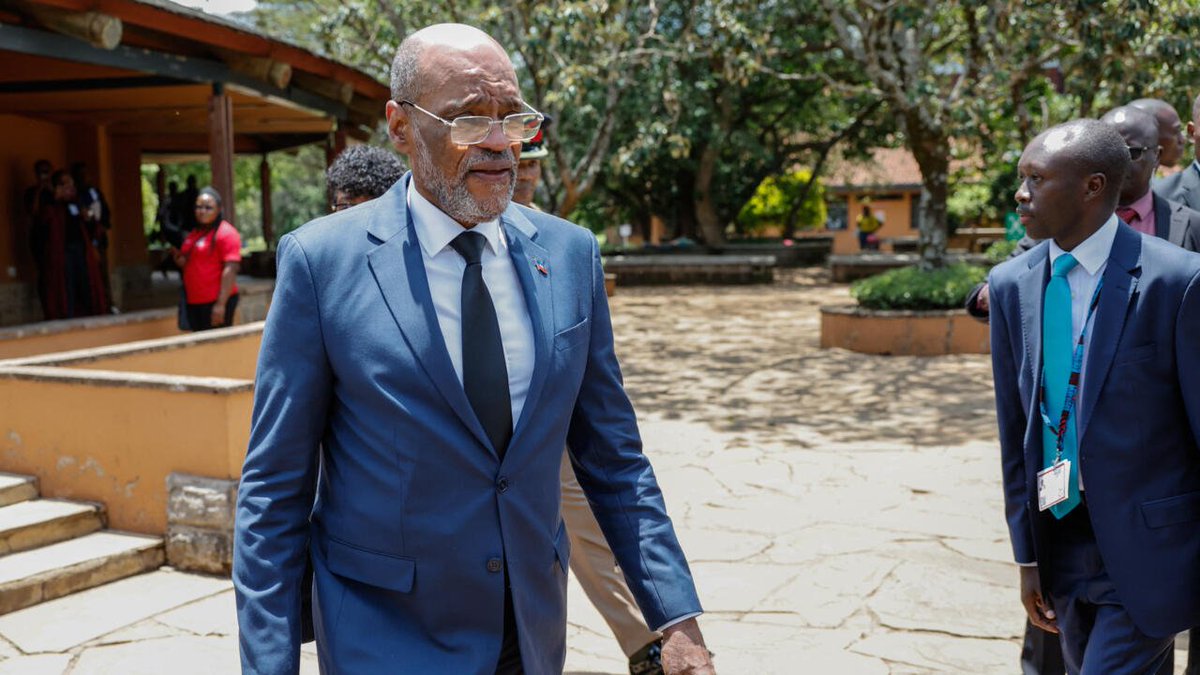
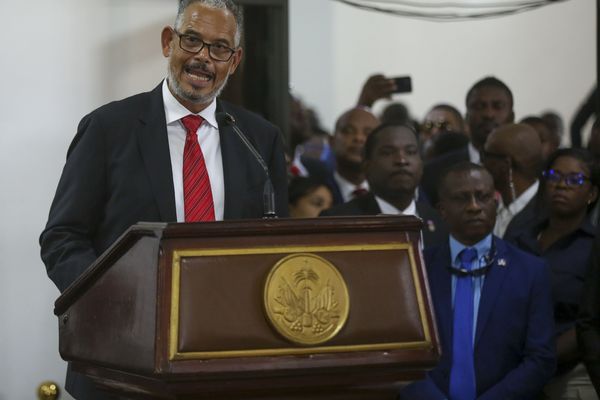




![HaitiInfoProj's tweet photo. Port-au-Prince is becoming more and more Balkanized!
(1 of 2)
Resembling a Hollywood action movie, the daily lives of Port-au-Prince's residents are marked by gruesome scenes worthy of special effects. Under fire, neighborhoods fall, day by day, under the control of heavily armed bandits: residents become vagrants. Some take refuge in camps. Others are forced to live with the outlaws. In this grim atmosphere, no one is spared, not even babies or the elderly, whom humanity recognizes as vulnerable.
For nearly four years, the Haitian capital has been fragmenting, making everyone who lives there a stranger. Expanding rapidly, the gang map changes from one moment to the next, making it difficult to grasp. In the blink of an eye, criminals have annexed a large amount of territory. Currently, more than 85% of Port-au-Prince is under their control. According to the IOM, more than a million people have been forced to abandon their homes, exacerbating the already acute humanitarian crisis.
About a month ago, Carrefour-Feuilles, one of the country's largest slums, was the target of yet another gang attack. The few neighborhoods housing civilians were emptied of their occupants. Thus, the bandits are advancing toward strategic areas like Pacot, Avenue Christophe, and Turgeau. Moreover, the eleven faculties of the State University of Haiti have closed their doors, seeking new addresses. Other private and state institutions have also emptied the premises, deemed deadly.
As for the Turgeau area, where the country's only two mobile phone companies are located, which also provide internet services, fear is setting in. Given the repeated attacks by bandits, many people fear that the area will be taken over by criminals, which would affect almost all communications in the country. Faced with this situation, law enforcement is being urged to act to prevent the country from descending into total chaos.
Who arms whom and why?
Since the rise of gangs in Haiti, several political and economic figures have been sanctioned by countries such as Canada, the Dominican Republic, and the United States. Former senior government officials are on the sanctions lists. One case in particular has not gone unnoticed by the public: that of Michel Joseph Martelly, former president, accused not only of financing individuals but also of arming them to further his political agenda.
Published in October 2023, a UN report revealed that the former president was the instigator of the “Base 257” gang, whose goal was to nip in the bud any movement calling for his resignation as president. The document, the work of a group of experts, reports the financing of criminal gangs based in Ti Bwa, Village-de-Dieu, and Grand-Ravine, with the aim of extending his influence over these neighborhoods.
The man who claimed to be a "legal bandit" [Michel Martelly] was sanctioned by the United States for the above-mentioned acts. Despite the sanctions, the Haitian justice system is struggling to take action against him, while former MPs Prophane Victor and Alfredo Antoine are in the hands of the courts for their collusion with gangs that are causing so many families in Haiti to mourn.
Transnational crime?
In February 2024, an agreement was signed between Washington and Port-au-Prince to officially establish the Transnational Criminal Investigation Unit (UTEC) to address urgent security needs. While there has been no news of this unit more than a year later, Leslie Voltaire and Fritz Alphonse Jean, two members of the Presidential Transitional Council, appear to be seeking to raise the issue of insecurity beyond Haiti's borders.
https://t.co/5tptYj5NMB](https://pbs.twimg.com/media/Gpl0hUdakAAYMph.jpg)