🌪️ ANOTHER tornado in New Mexico!
This landspout tornado was spotted south of Animas in the bootheel Tuesday afternoon.
If confirmed, this would be only the 3rd documented tornado in Hidalgo Co. since 1950 & the first ever recorded in Oct.
📹 Daniel Antonio
#NMwx@NWSElPaso
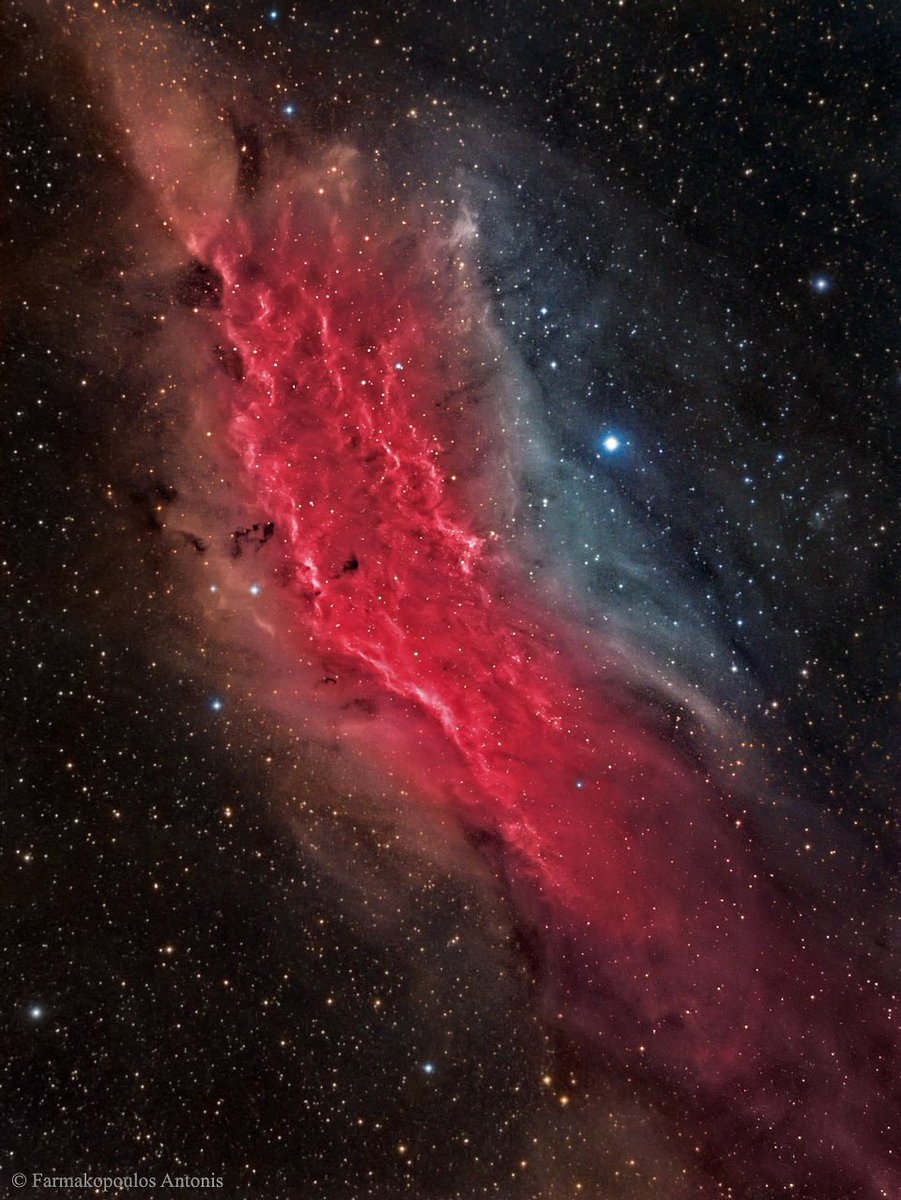
📷 The California Nebula NGC 1499 A classic emission nebula around 100 light-years long. Drifting through the Orion Arm of the spiral Milky Way Galaxy, this cosmic cloud by chance echoes the outline of California on the west coast of the... https://t.co/MxbF7p0hLM
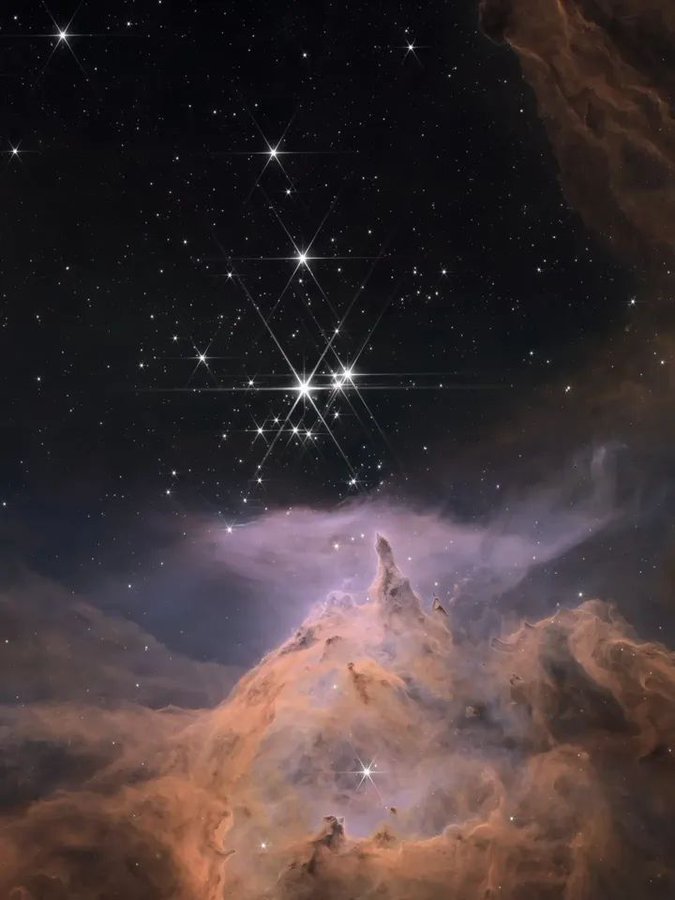
Deep in Scorpius, about 5,500 light-years away, a newborn star cluster is tearing its nursery apart.
Pismis 24 sits in the heart of the Lobster Nebula (NGC 6357), packed with some of the hottest, heaviest young stars in the nearby Milky Way. The standout is Pismis 24-1: once billed as a single monster of a star, it turned out to be a tight multiple system. Two of its members still weigh in around 74 and 66 times the mass of the Sun — among the most massive stars we can study up close.
Their radiation and hurricane-force winds slam into the surrounding gas and dust, carving cavities, ridges, and towering walls. Webb’s Near-Infrared Camera cuts through much of that dust and turns the hidden landscape into a riot of orange, red, blue, and green — not true visible colors, but mapped infrared wavelengths that reveal structure the eye could never see.
This is why the image matters. Massive stars live fast and rewrite their neighborhoods. In Pismis 24, astronomers can watch stellar birth, the upper limits of star mass, and the way young giants sculpt the interstellar medium — all in one glittering, violent scene.
Picture credit: George Hatfield / JWST