The WHO Cardiovascular Disease Risk (Non-Laboratory-Based) in a Selected Brazilian Population: Percentiles of Distr… https://t.co/KK06abMau6 We have to set an adequate CVD risk score for Brazilians! We're not there yet! @fernando_cesena@PauloLotufo@MBittencourtMD
Artigo analisou mais de 54.000 atendimentos de indivíduos de 40 a 75 anos que realizaram avaliações de saúde de rotina de 2010 a 2020 para avaliar o risco de doença cardiovascular aterosclerótica em percentis da distribuição por sexo e idade.
Leia em: https://t.co/aa8DhGor4d
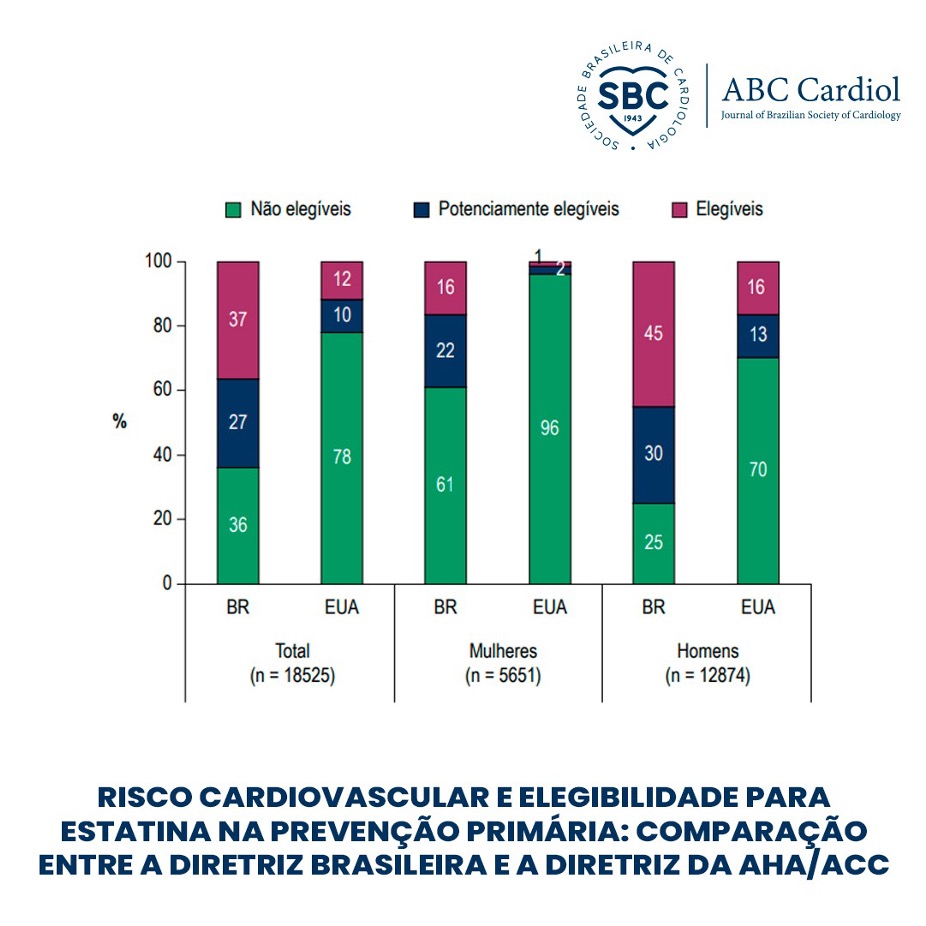
Artigo de 2020 da ABC Cardiol comparou a categorização de risco cardiovascular e a elegibilidade à terapia com estatina estabelecidas segundo a diretriz brasileira ou a diretriz da AHA/ACC em pacientes em prevenção primária.
Leia em: https://t.co/rqIBVwYFwH
Determining Percentiles of Atherosclerotic Cardiovascular Risk According to Sex and Age in a Healthy Brazilian Population https://t.co/a0mI3w1jgN One of the greatest challenges is to stratify ASCVD risk in young adults, why not use age and sex percentiles? @fernando_cesena
Hepatic steatosis also independently impaired metabolic normalization in individuals with obesity.
We found sex differences with a higher predisposition to adiposity-induced dysmetabolism in females.
Main findings:
45% of individuals with metabolically healthy obesity (MHO) converted to dysmetabolism over 3 years of follow-up.
Hepatic steatosis predicted transition from MHO to dysmetabolism independently of other factors, including BMI or waist circumference.
"The findings support the hypothesis that TRLs (especially medium and larger subparticles) may induce a low-grade inflammatory environment that involves leukocyte activation and is captured by GlycA, but not hs-CRP."
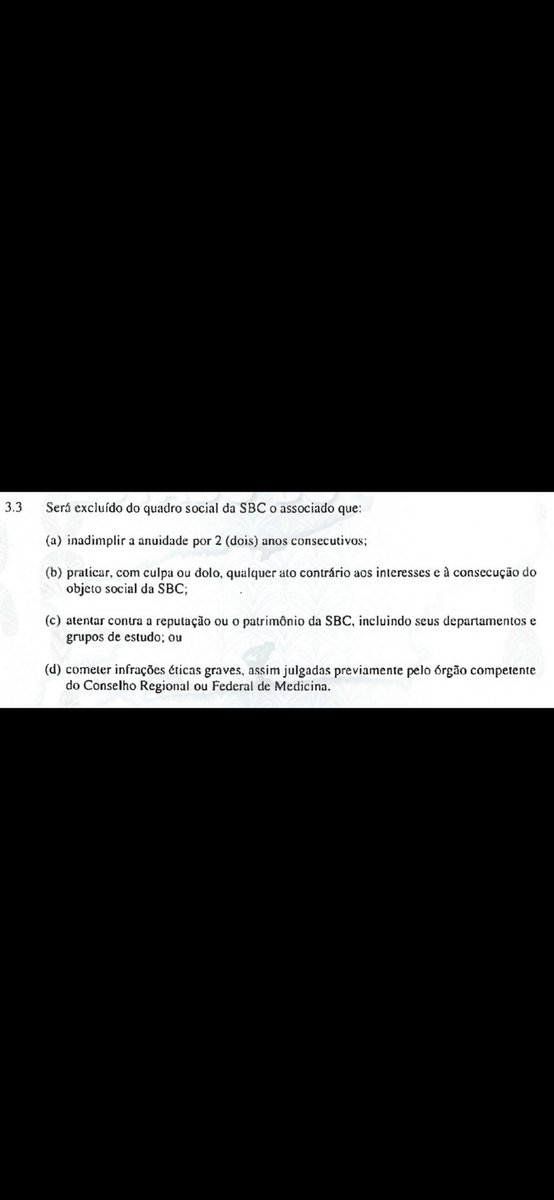
Marcelo Queiroga precisa ser expulso da Sociedade Brasileira de Cardiologia. O presidente do Conselho Federal de Medicina não fará nada, mas a cardiologia brasileira deve agir!
The burden of ischaemic heart disease in Brazil from 1990 to 2019. A project coordinated by Profs Antonio Ribeiro and @glauciamoraeso1 . Have a look at this #ESCAbstract on the #ESCCongress Research Gateway https://t.co/Rb9jjo8AKV via @escardio
Really glad the read the insightful thoughts of @johnwmcevoy in this editorial commenting our recent publication on new Hypertension guidelines and the role of diastolic BP.
@fernando_cesena@rauldsf_santos
https://t.co/StPlDL8LtB
Relato de sucesso na edição de genes PCSK9 e ANGPTL3 em primatas. ⬇️LDL-c 59% em 2 semanas, ⬇️TG 64%. Promissor, potencial para controlar níveis lipídicos com 1 injeção na vida, mas segurança é o grande ponto de interrogação.
Proof-of-concept for an entire new way to treat heart attack:
a gene editing medicine,
administered once in life,
safely turn off a gene -->
permanently lower cholesterol or triglycerides
A ‘Cure for Heart Disease’? A Single Shot Succeeds in Monkeys https://t.co/xwmekswwah
Os modelos epidemiológicos "erraram" por não prever adequadamente a evolução da COVID-19?
A utilidade deles não é em "prever o futuro", mas em reduzir a incerteza e em informar melhor a tomada de decisão.
Minha perspectiva em:
https://t.co/zeB9R2D5fP
Inspirado em publicação do Eur Heart J do início do ano: The year in cardiology: cardiovascular prevention: The year in cardiology 2019. https://t.co/NvjcHOvUt8
Destaques da Cardiologia Preventiva publicados em 2019. Abordagem “ABC” da Johns Hopkins Ciccarone Center for the Prevention of Cardiovascular Disease.
Summarizing 2019 in CV Prevention Using the Hopkins Ciccarone Center for the Prevention of CVD’s ‘ABC’s Approach😊 #CiccaroneCenter🥍🏏⛳️🎾🏃♀️ https://t.co/V2j8T8XFvs