Our paper “Why are learned indexes so effective?”, coauthored by G. Vinciguerra and F. Lillo, has been accepted at @icmlconf 2020. Here, we provide a mathematical proof of the outstanding space improvements of the PGM-index over traditional indexes (https://t.co/TV3ImBKowR).
@jltsiren @cHHillee@JeffDean@melanie_kirsche Cool! Hadn’t seen that one. Sapling is more specialized but I would put it into the same (extended) family of ideas
"Network #open ai gruppi di ricerca interessati a studiare il Covid con lenti diverse. Perché il Covid tocca tutti gli ambiti: famiglie, agricoltura, imprese, operai, natura, cultura" @ilariacapua
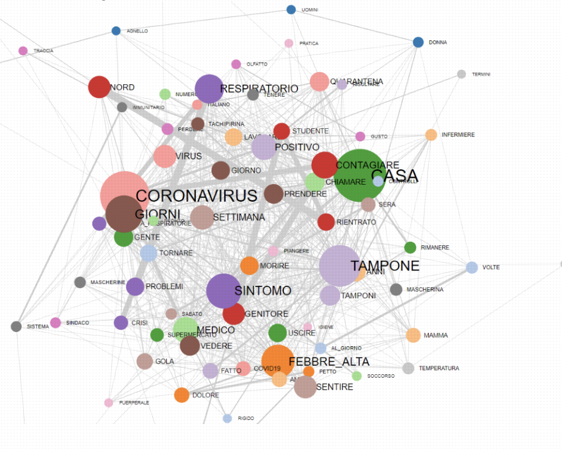
Se possiamo dare una mano con la #TextAnalysis, noi ci siamo! Vero @FerraginaTeach?
@unipisa has signed an agreement with the @EBU_HQ to the development of the #EuroVOX, the European digital platform with information in all languages ➡️https://t.co/sD5SXHYkR2
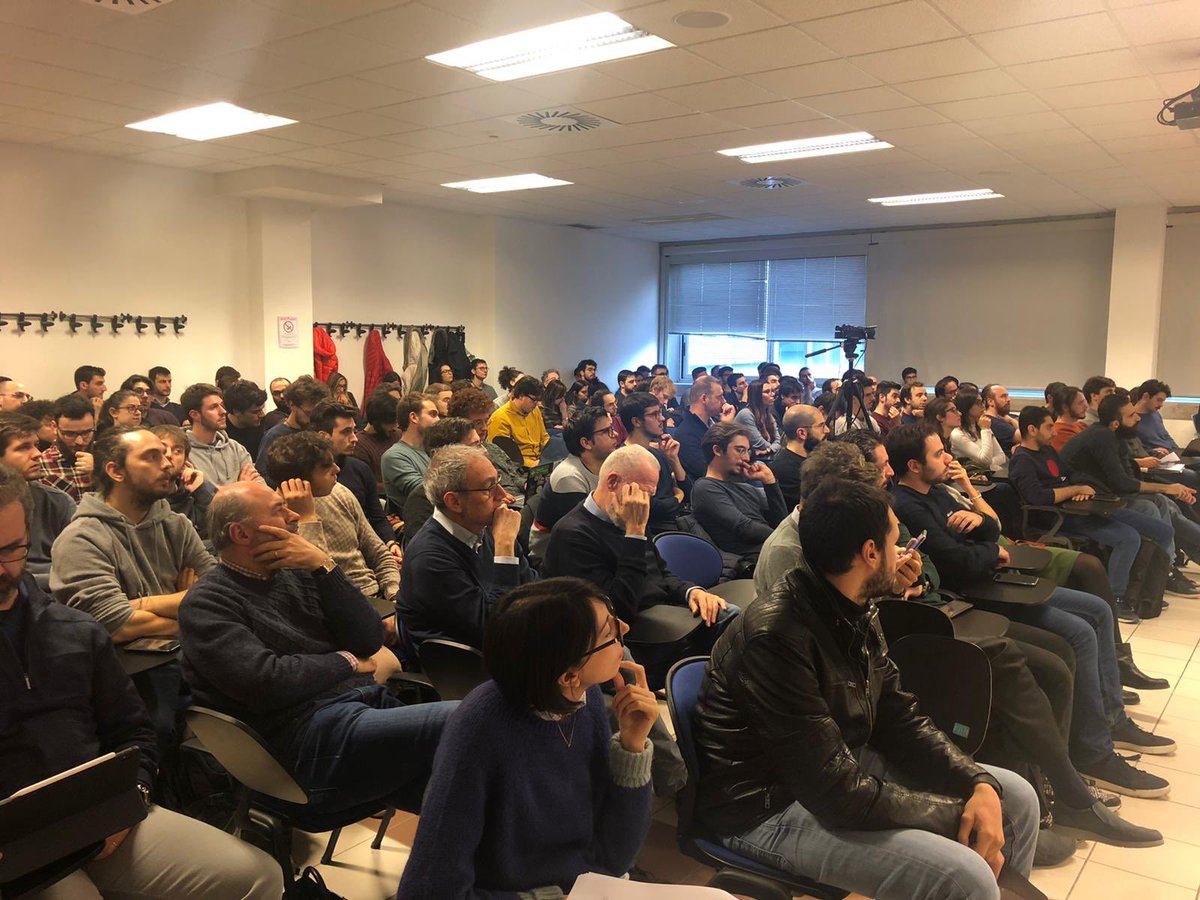
Attending THESES, a new event that brings together (young) researchers from the Department of Computer Science @DI_Unipisa of University of Pisa @Unipisa and Master’s students. https://t.co/dFE0ymFjwe
First session of #DAIS titled Innovation & Development in Sports, with speakers Colin Webster, President at International Esports Federation, Alessio Rossi, PhD (AI), Academic & Scientist, and Johannes Holzmüller, Head of #Football#Technology#Innovation Department, #FIFA
@tim_kraska Actually the first time the algorithm of Xie et al's was used for OptimalPLR was suggested in https://t.co/voF6iOi3Ki where an optimal Learned index was introduced and evaluated theoretically and experimentally against RMI and FIT-ting tree, showing its better performance.