We were deeply saddened to learn the severity of Maria Costello’s injuries following her accident at the Isle of Man TT Races.
Due to the extent of her injuries, a GoFundMe had been set up to support Maria in her recovery: https://t.co/Vsxfx4f6KB
90% of global trade moves by sea—but behind every shipment are seafarers who keep the world moving, often at great personal risk.
Ahead of #DayOfTheSeafarer, hear Chief Engineer Mkoi on why this year's theme matters.
🗣️Esta semana organizamos una jornada con 300 orientadores laborales del Servicio Público de Empleo de Galicia. En ella, representantes de @_Opagac y sus empresas armadoras compartieron las realidades y condiciones del sector atunero.
Lee la noticia: https://t.co/mKM4FgvCiD
🗓️ Ayer, Diana Torremocha, del Departamento de Metrología del CNVM del #INSST, participó en las 14ª Jornadas de Seguridad en Operaciones de Mantenimiento.
Su ponencia abordó cómo prevenir riesgos químicos en la fabricación aditiva en mantenimiento industrial.
#2026AñoSST
En 1985, el barco de Joey Dunlop se hundió de camino al TT de la Isla de Man, llevándose consigo sus motocicletas. Rescatado y reconstruido, convirtió el desastre en triunfo, ganando un histórico triplete en el TT: Junior, Fórmula 1 y Senior. El "Rey de las Carreteras" no dejó que un poco de agua lo detuviera.
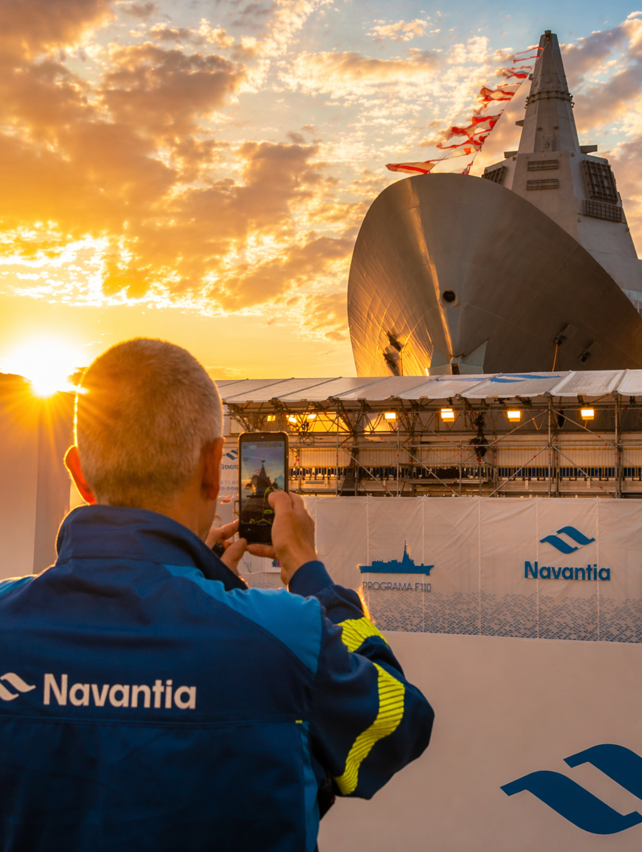
🤳Un nuevo buque deslizándose al mar, el trabajo de cientos de personas detrás, y un mismo objetivo: hacerlo posible.
🌊 Recordando la botadura de la #fragata F-111 Bonifaz: https://t.co/in9Mkf8nMn
Programa F-110. Seguimos. 🚀 #Navantia
La administración marítima aún no quiere entender que sus ordenes de gobierno acaban en la #MILLA13, que es donde empiezan las aguas internacionales. Hay gente que confunde soberanía con jurisdicción. No lo "entendieron" en el #Prestige, y...
Apostolos Mangouras, el viejo del Prestige, sabía mas de derecho marítimo que toda la Dirección General de La Marina Mercante.
https://t.co/yiCUOWjpKM
(Quien sigue la cuenta sabe por donde van las gaviotas...)
📡Gobierno de Canarias y asociación Amilobo trabajan en el reconocimiento del lobito herreño como raza autóctona
⭕️La intención es la posible incorporación del lobito #ElHierro al Catálogo Oficial de Razas de Ganado de España.
👉https://t.co/nG1AUamZFL👈
Los límites legales de tener poder jerárquico en el trabajo. Destituido de su cargo el presidente de BP por lo que la empresa califica como "conductas inaceptables" de #acoso laboral. Esto dice la ley en España, vía @elconfidencial https://t.co/1FnaNGSuk5
Safer fishing vessels, safer fishers.
The Cape Town Agreement enters into force in 2027, bringing the first mandatory global safety standards for large commercial fishing vessels.
What does this mean for the Arctic?
Join our webinar on 4 June.
Details : https://t.co/ON9pw7YqKV
📢 Don't miss this upcoming webinar: Hantavirus in Focus III: Reflections from a Border Health and Point of Entry Perspective.
When: 4 June 2026
🕐 Time: 13:00–14:00 CEST
Learn from public health and border health experts on strengthening cross-border collaboration.
⚓ FSS Code 2026 Edition now available! 🚢
A complete reference for SOLAS Chapter II-2 fire safety requirements, including all IMO-adopted standards, guidelines & unified interpretations—updated with changes in force from 1 Jan 2026. 🚢
#FSSCode#IMO#MaritimeSafety
Hi George, Bart here. I can explain international maritime law to you, and maybe you would then understand that freedom of navigation does not apply to stateless ships. This vessel is stateless as it was flying the flag of Madagascar but was not registered there. The reason? Because normally the flag state would be responsible for safety, security, and labour laws on board a ship. As the vessel is stateless, there is no flag state. As such, a port or coastal state has the authority (given by UN international maritime law) to board and detain a vessel to ascertain the nationality and basically act as a flag state. The coastal state is allowed to enforce these laws in international waters (the coastal state becomes the de facto flag state).
Why would we allow such a thing?
You see, when a ship would ground, sink, and/or get damaged and oil would spill on our coasts and kill birds, destroy the livelihood of fishermen, the tourist industry, and destroy nature, the insurance of the vessel would pay for the damages. As the vessel is stateless, there is no insurance company. So if a vessel were to flounder, the cost would fall on the citizens of the coastal state that got hit by the oil spill and not the shipping company. That's why, when UNCLOS 82 was negotiated, a lot of countries made sure that there were provisions so that a coastal state could take these vessels and remove them from our seas.
Now, concerning sanctions.
Of course, you can not enforce them in international waters on a ship flying a foreign flag. You would only be able to enforce those if the ship were flying the flag of your own country and/or if the ship were to sail in your territorial waters. (A vessel sailing through your territorial waters has to adhere to the laws of the coastal state and, as such, adhere to any sanctions, even unilateral sanctions.) But here's the thing. As I explained before, there is no flag state, so the coastal state has become the de facto flag state of the boarded vessel. And guess what... now the vessel has to adhere to unilateral sanctions. I'm really happy I could explain this to you.
Best regards