Nature lover. Bird enthusiast. Stargazer. Truth seeker. Not all who wander are lost. It is the mark of an educated mind to entertain a thought w/o accepting it.
In less than the span of a human lifetime, North America has lost nearly 3 billion breeding birds. That's 29% fewer birds in just 50 years. The #bird#conservation community is united. It's time for action. Please join us: https://t.co/Mo77Fk2ody.
#BringBirdsBack
"Love the animals, love the plants, love everything. If you love everything, you will perceive the divine mystery in things. Once you perceive it, you will begin to comprehend it better every day."
~ Fyodor Dostoevsky
The Great Meadow in Pobojka
🎨 Stanislav Zhukovsky
Water is not a commodity. It is a birthright. It belongs to the earth, to other species, and to future generations. No corporation has the right to control it.
The Tongass National Forest is the last intact temperate rainforest on Earth.
Ancient trees—some 500 years old — rise so tall they vanish into the mist.
Bear cubs learn to fish in its streams.
Salmon return to the same rivers their ancestors used for millennia.
Eagles nest in old growth that took centuries to become what it is.
Three Indigenous nations — Tlingit, Haida, and Tsimshian — have called it home since long before this country existed.
17 million acres of Southeast Alaska.
It stores 20% of the carbon held across ALL U.S. forests.
It’s North America’s Amazon.
It’s National Forest Week.
And they’re about to clearcut it.
Secretary Rollins rescinded its protections last June. Trump signed an executive order stripping federal land protections further in May. Bloomberg Law reports the formal full repeal lands this summer.
9 million undeveloped acres lose protection overnight. Triple the timber-suitable acreage opens up.
11 tribal governments have fought for this forest’s survival. One of them said it plainly: “You cannot separate us from the land.”
How much old growth has to disappear before people finally call it irreversible?
#DemsUnited
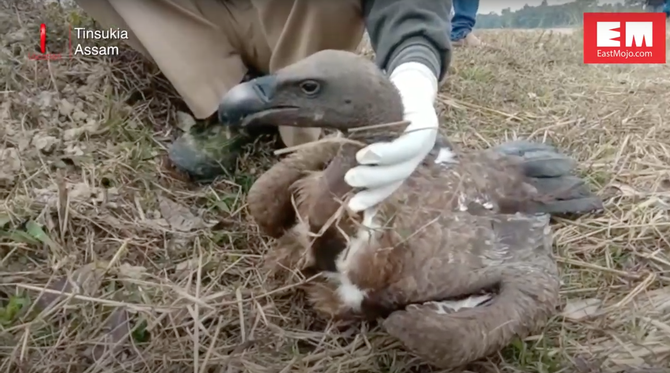
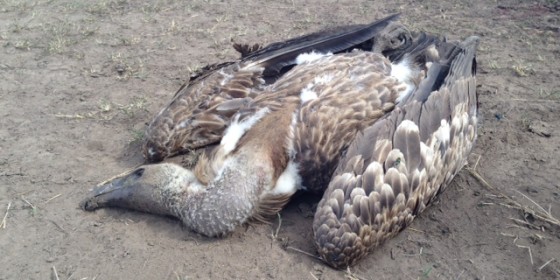
The collapse of India's vultures killed 500,000 people.
A peer-reviewed 2024 study in the American Economic Review put the toll at 100,000 extra human deaths per year for five straight years.
In 1994, Indian farmers began giving their cattle diclofenac, which is a common painkiller. The drug caused fatal kidney failure in any vulture that fed on a treated carcass. India's vulture population dropped from roughly 50 million birds to 20,000 in a decade. Three species crashed by more than 99%.
Vultures had been the country's free, invisible sanitation system. A flock could strip a dead cow in 30 minutes, sterilizing the meat with stomach acid strong enough to kill anthrax, rabies, and most pathogens that survive in rotting flesh.
When the vultures disappeared, the carcasses stayed in fields and on roadsides for weeks. Feral dog populations exploded by at least 5 million due to the extra calories they could scavenge. Rabies cases surged. Fecal bacteria in drinking water more than doubled. Farmers began dumping dead livestock in rivers. It was an ecological crisis on multiple fronts.
India banned diclofenac for veterinary use in 2006. Vulture numbers are now recovering slowly. But the death toll from those years is the price tag of erasing a single species from a single ecosystem.
It's easy to look at a "gross" animal like a vulture and wonder, 'what good is it?' But time and time again, we see that when species disappear, it creates catastrophic human consequences as well.
There are 3 billion fewer birds in North America than there were in 1970.
This data is from a 2019 Science paper that combined 48 years of citizen-science bird counts with continent-wide weather radar tracking nighttime migration.
The losses are concentrated in the birds people see most often: grassland birds (down 53%, 700 million gone), forest birds (1 billion gone), and shorebirds (down 37%). Even common species (blackbirds, swallows, warblers) are vanishing.
Habitat loss is the biggest reason, but the rest of the list is short and largely fixable for the average person.
1. Pesticides killing the insects birds eat.
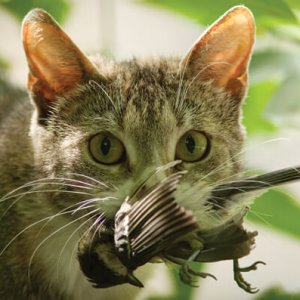
2. Outdoor cats kill an estimated 2.4 billion US birds annually.
3. Window collisions killing roughly a billion more. Lawn chemicals.
4. Light pollution disrupting migration.
What you can do, ranked by impact: keep cats indoors, treat your windows for bird strikes, plant native trees and shrubs, stop spraying pesticides, leave the leaves and seed heads through winter, and turn off outdoor lights at night during spring and fall migration.
No one person killed 3 billion birds, obviously, but your yard can be a part of the solution that rebuilds their numbers.
There are only 35,000 venus flytraps left in the swamps where they grow. Poaching is killing them off.
Venus flytraps grow naturally in only one place on Earth: a 90-ish-mile radius around Wilmington, North Carolina. Wild populations have collapsed due to habitat loss, fire suppression, and decades of poaching for the houseplant trade.
Stealing them from the wild has been a felony in North Carolina since 2014, punishable by 25 to 39 months in jail. Conviction-rate enforcement is slow, and a poacher can still dig up several hundred plants in an afternoon.
Here's how to tell a nursery-grown flytrap from a poached one (US Fish & Wildlife Service guidance):
1. Look at the tray. Nursery-grown plants are propagated through tissue culture, so they're uniform in size. If the plants in the tray vary noticeably in size, some of them probably came from the wild.
2. Look at the soil. Nursery soil is uniform, sterile peat moss. If the soil has sand, gravel, or natural debris mixed in, that's wild soil.
3. Look at the pot. Nursery-grown plants come in clean pots. If there are other small plants, mosses, or "weeds" growing in the pot, the flytrap was likely dug from a bog.
If you want one and want to do it right, buy from a specialist carnivorous plant nursery. California Carnivores, Plant Delights Nursery, and FlytrapStore (in the US) all sell exclusively tissue-cultured plants. Big-box stores and roadside vendors are the highest-risk sources.
Moths are declining faster than butterflies, and almost no one is planting for them. A third of all pollinator visits to flowers happen at night. Here's what to plant to help out the night shift:
Evening primrose (Oenothera biennis): native across eastern and central North America. A staple for sphinx moths.
Wild bergamot (Monarda fistulosa): native across most of the US. Fragrant through the evening, supports both day and night pollinators.
White phlox (Phlox paniculata): native to eastern and central North America. Fragrant late into the night, sphinx moth favorite.
Yucca (Yucca filamentosa): native to the southeastern US, with an obligate mutualism with the yucca moth. Neither species can reproduce without the other.
Common milkweed (Asclepias syriaca): moths visit at night, the plant also hosts monarch caterpillars by day.
American boneset (Eupatorium perfoliatum): native to eastern North America. Late-season nectar for migrating moths.
Skip the moonflower, jasmine, and four o'clocks. They're imported aesthetics. Plant the natives the moths actually evolved with.
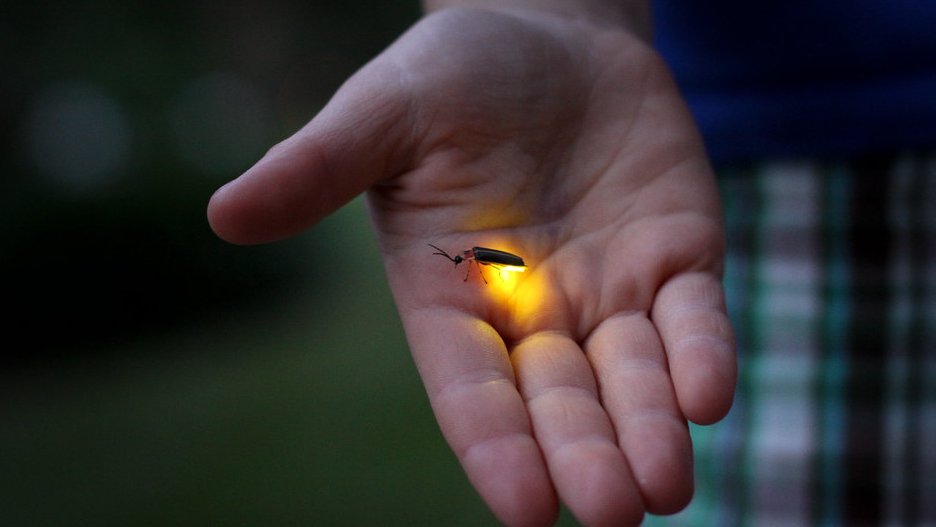
Fireflies are emerging right now. A few small changes this summer decide whether they visit your yard or skip it.
Fireflies are beetles, and they're in decline across North America for three reasons: habitat loss, pesticides, and light pollution. The good news is that all three are things you control in your own yard.
Turn off outdoor lights at night, or put them on a timer. Fireflies flash to find mates, and porch lights, landscape lighting, and floodlights drown out the signal. A male can't find a female in a lit-up yard. This is the single biggest thing you can do.
Stop spraying. Lawn pesticides and mosquito treatments kill fireflies at every life stage, and the larvae spend up to two years living in your soil before they ever light up. One season of spraying wipes out next year's show.
Leave some of the yard alone. Firefly larvae need moist, undisturbed soil and leaf litter, where they hunt slugs and snails. A corner of long grass, a pile of leaves, a damp shady spot. A perfectly manicured lawn is a firefly desert.
Lights off, no spray, a messy corner. That's the recipe for cookin' up a summer of firefly enjoyment.
THE WORST THING YOU CAN DO IS LET THIS WORLD STEAL YOUR WHIMSY. PROTECT YOUR WHIMSY AT ALL COST. DON’T LET THESE JOYLESS MOTHERFUCKERS STEAL YOUR MAGIC.
I genuinely don’t think people understand how insane this is.
In just 50 years, we’ve wiped out around 70% of animal populations on Earth.
Not hundreds of years ago.
Not ancient history.
In one lifetime.
Entire species disappearing.
Forests going silent.
Oceans being emptied.
And somehow the world treats it like just another statistic instead of a full-blown emergency.
That should scare all of us a lot more than it does.