Federal antitrust lawsuit filed against 6 academic publishers (inc. Elsevier and Wiley) alleging a conspiracy to unlawfully appropriate billions of dollars that would otherwise have funded scientific research.
https://t.co/zwYm08MSNT
Ooh, baby, I am here for this!
Ben Albritton discuss the advantage of a multi-intitution model for conservation of digital repositories. 'Changing the one-institution model is one key to sustainability and risk mitigation'
@bla222#NYSINYD
Ten months ago, we launched the Vesuvius Challenge to solve the ancient problem of the Herculaneum Papyri, a library of scrolls that were flash-fried by the eruption of Mount Vesuvius in 79 AD.
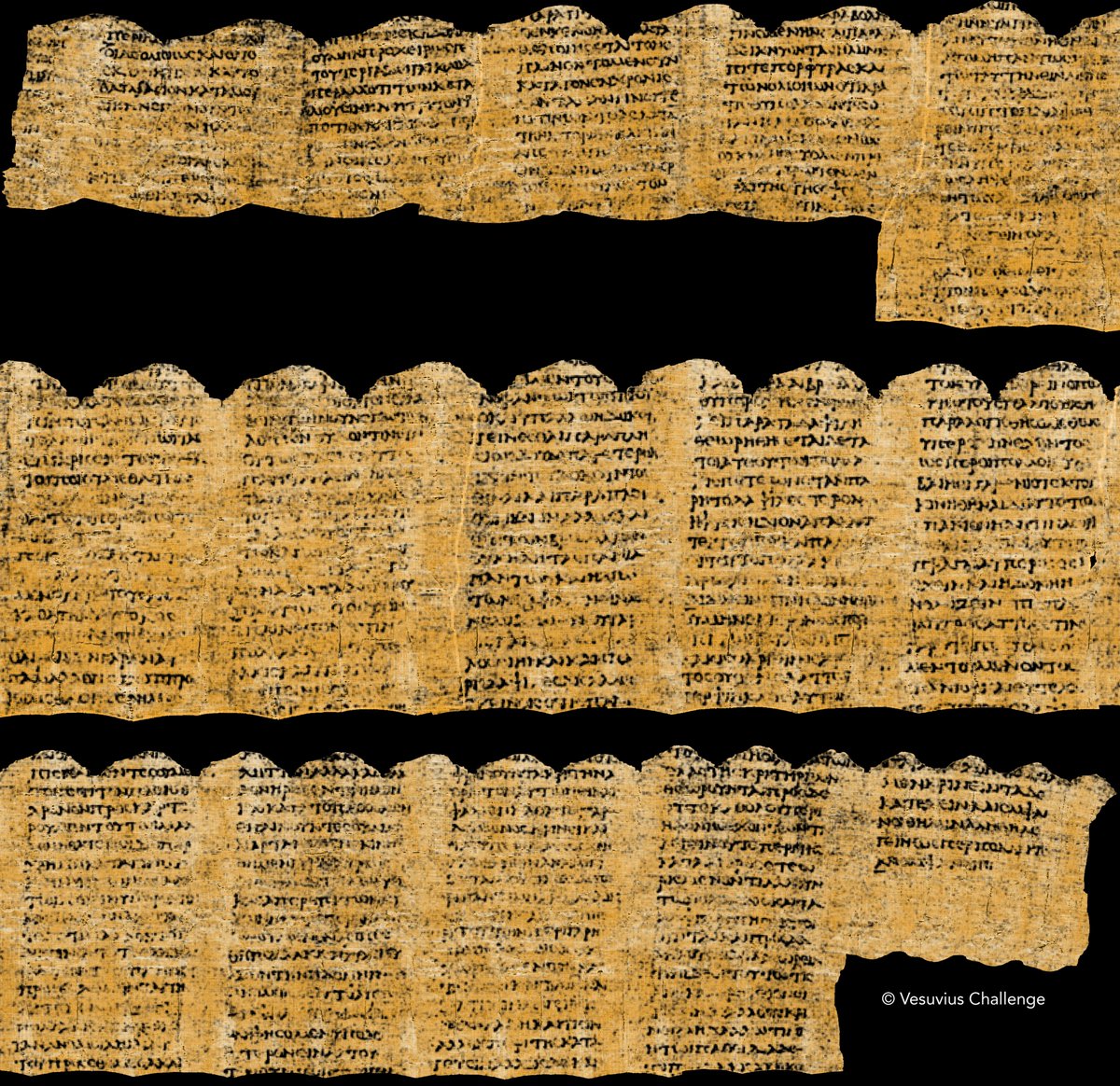
Today we are overjoyed to announce that our crazy project has succeeded. After 2000 years, we can finally read the scrolls:
This image was produced by @Youssef_M_Nader, @LukeFarritor, and @JuliSchillij, who have now won the Vesuvius Challenge Grand Prize of $700,000. Congratulations!!
These fifteen columns come from the very end of the first scroll we have been able to read and contain new text from the ancient world that has never been seen before. The author – probably Epicurean philosopher Philodemus – writes here about music, food, and how to enjoy life's pleasures. In the closing section, he throws shade at unnamed ideological adversaries – perhaps the stoics? – who "have nothing to say about pleasure, either in general or in particular."
This year, the Vesuvius Challenge continues. The text that we revealed so far represents just 5% of one scroll.
In 2024, our goal is to from reading a few passages of text to entire scrolls, and we're announcing a new $100,000 grand prize for the first team that is able to read at least 90% of all four scrolls that we have scanned.
The scrolls stored in Naples that remain to be read represent more than 16 megabytes of ancient text. But the villa where the scrolls were found was only partially excavated, and scholars tell us that there may be thousands more scrolls underground. Our hope is that the success of the Vesuvius Challenge catalyzes the excavation of the villa, that the main library is discovered, and that whatever we find there rewrites history and inspires all of us.
It's been a great joy to work on this strange and amazing project. Thanks to Brent Seales for laying the foundation for this work over so many years, thanks to the friends and Twitter users whose donations powered our effort, and thanks to the many contestants whose contributions have made the Vesuvius Challenge successful!
Read more in our announcement: https://t.co/rUlrdGXBMs
Today is the feast of St Lucy, or Lucia. According to legend, she was a young girl from Syracuse who lived during the Diocletian persecution. Lucy’s historicity is dubious. (1/n)
[Breviarium Nidrosiense (1519), p. 574]
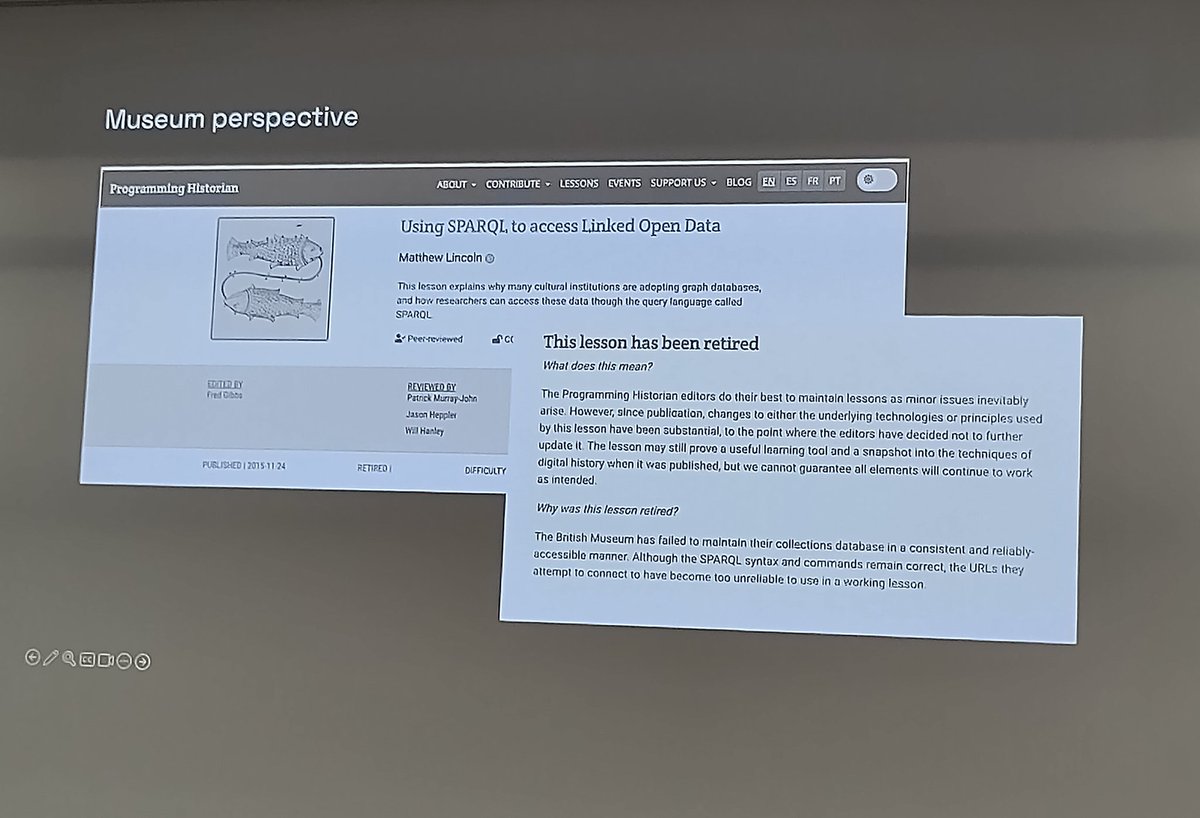
New one for me: in a paper on LOD challenges, Nanni/Freyberg/Gunther/Dork referencing the fact that we @ProgHist had to retire a SPARQL tutorial because even a large institution couldn't keep their LOD online.