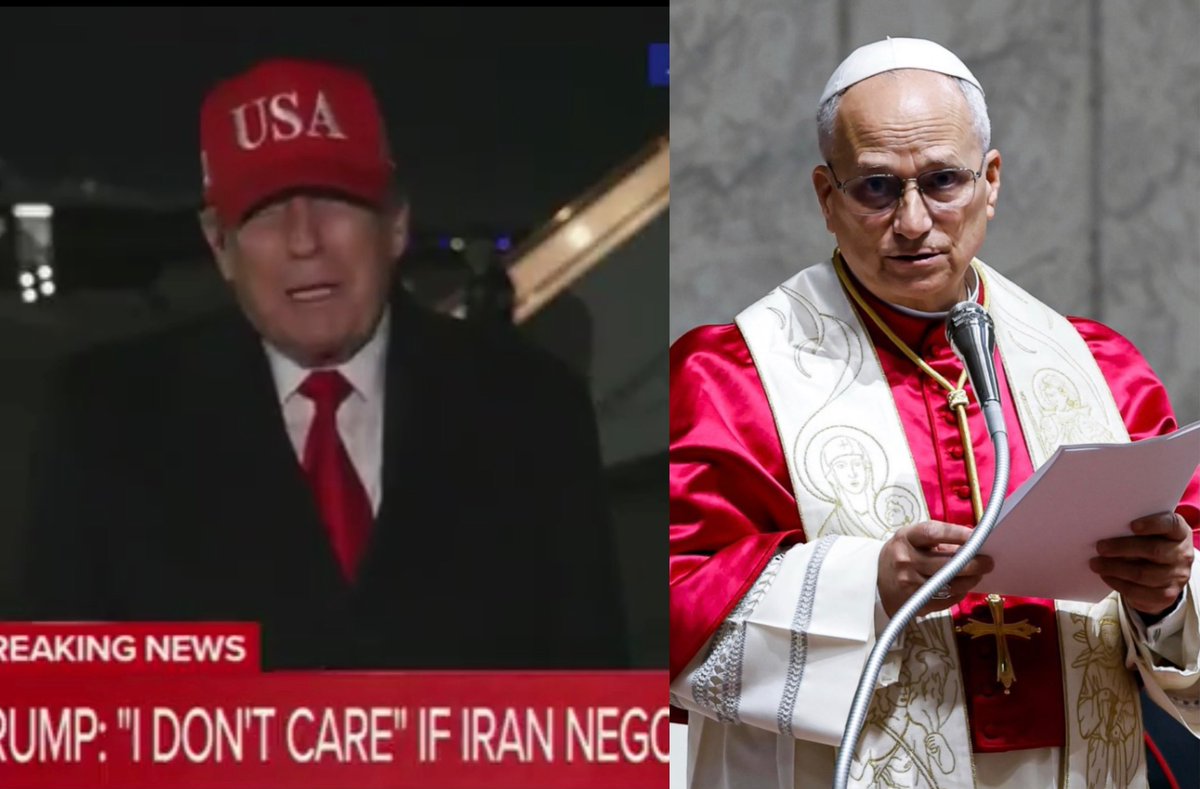
Donald J. #Trump prende di mira #PapaLeone XIV. E cosi tradisce un disagio profondo. Quando il potere politico si accanisce contro una voce morale, è perché non riesce a contenerla. Trump non discute Leone: lo implora di rientrare in un linguaggio che possa dominare. Ma il Papa parla un’altra lingua, che non si lascia ridurre alla grammatica della forza, della sicurezza, dell’interesse nazionale.
In questo senso, l’attacco è una dichiarazione di impotenza. Non potendo assimilare quella voce, il potere tenta di delegittimarla. Ma così facendo ne riconosce implicitamente il peso. Se Leone fosse irrilevante, non meriterebbe una parola. Invece viene chiamato in causa, nominato, combattuto: segno che la sua parola incide.
È qui che emerge la forza morale della Chiesa. Non come contro-potere, ma come spazio in cui il potere viene giudicato da un criterio che non controlla. Leone non risponde sul terreno della polemica, e proprio per questo resta fuori dalla presa. È libero.
E quella libertà, disarmata e disarmante , è forse ciò che più inquieta. E, nello stesso tempo, ciò che più conta.
@mcrisparlato@boni_castellane Domanda fuorviante: la scienza si studia e si verifica non "si crede"!
Solo in un discorso di fede si dovrebbe usare il verbo "credere".
In questo caso sempliciemente non dovremmo ascoltare scienziati che per loro problemi di linguaggio si dimostrano inascoltabili
♰ 🎶O Antiphons Day 2: O Adonai 🎶 ♰
🇻🇦 XVIII Decembris
O Adonai, et Dux domus Israel, qui Moysi in igne flammæ rubi apparuisti, et ei in Sina legem dedisti: veni ad redimendum nos in brachio extento.
🇺🇸 18 December
O Adonai and Leader of the House of Israel! You appeared to Moses in the fire of the burning bush and gave the Law on Mount Sinai: Come, and redeem us with outstretched arm.
🎥 The O Antiphons are a series of seven ancient Christian prayers used during the last seven days of Advent, from December 17 to December 23, in the liturgical traditions of the Western Church.
They are recited or chanted as antiphons before and after the Magnificat during Vespers (evening prayer) in the Liturgy of the Hours.
Each antiphon begins with the vocative "O" and addresses Jesus Christ with a unique Messianic title drawn from Old Testament prophecies, particularly from the books of Isaiah and Micah.
The titles are: O Sapientia (Wisdom), O Adonai (Lord), O Radix Jesse (Root of Jesse), O Clavis David (Key of David), O Oriens (Dawn of the East), O Rex Gentium (King of the Nations), and O Emmanuel (God with us).
These antiphons are significant for their theological depth and liturgical structure. Each one elaborates on a specific title of Christ, citing biblical passages to affirm its meaning.
For example, O Sapientia references Isaiah 11:2–3 and 28:29, describing Christ as the wisdom that orders all things mightily and sweetly.
The sequence of the antiphons is carefully arranged so that the first letter of each title, when read in reverse order (Emmanuel, Rex, Oriens, Clavis, Radix, Adonai, Sapientia), forms the Latin acrostic "Ero Cras," meaning "Tomorrow, I will come," symbolizing Christ’s imminent arrival.
This acrostic is a key feature of the O Antiphons and reflects the theme of anticipation and longing for the Messiah’s coming.
The O Antiphons are also the basis for the well-known Advent hymn "O Come, O Come, Emmanuel," which combines the seven antiphons into a single, meditative song.
The tradition of using these antiphons dates back to at least the sixth century, with early references found in Boethius’s The Consolation of Philosophy.
They were further developed in medieval monastic traditions and became a central part of Advent devotion.
Help Evangelize Repost and Follow Catholic Beauty
♰🎶 Today begins the O Antiphons 🎶♰
🇻🇦 XVII Decembris
O Sapientia, quæ ex ore Altissimi prodiisti, attingens a fine usque ad finem, fortiter suaviterque disponens omnia: veni ad docendum nos viam prudentiæ.
🇺🇸 17 December
O Wisdom, who didst come out of the mouth of the Most High, reaching from end to end and ordering all things mightily and sweetly: come and teach us the way of prudence.
🎥 The O Antiphons are a series of seven ancient Christian prayers used during the last seven days of Advent, from December 17 to December 23, in the liturgical traditions of the Western Church.
They are recited or chanted as antiphons before and after the Magnificat during Vespers (evening prayer) in the Liturgy of the Hours.
Each antiphon begins with the vocative "O" and addresses Jesus Christ with a unique Messianic title drawn from Old Testament prophecies, particularly from the books of Isaiah and Micah.
The titles are: O Sapientia (Wisdom), O Adonai (Lord), O Radix Jesse (Root of Jesse), O Clavis David (Key of David), O Oriens (Dawn of the East), O Rex Gentium (King of the Nations), and O Emmanuel (God with us).
These antiphons are significant for their theological depth and liturgical structure. Each one elaborates on a specific title of Christ, citing biblical passages to affirm its meaning.
For example, O Sapientia references Isaiah 11:2–3 and 28:29, describing Christ as the wisdom that orders all things mightily and sweetly.
The sequence of the antiphons is carefully arranged so that the first letter of each title, when read in reverse order (Emmanuel, Rex, Oriens, Clavis, Radix, Adonai, Sapientia), forms the Latin acrostic "Ero Cras," meaning "Tomorrow, I will come," symbolizing Christ’s imminent arrival.
This acrostic is a key feature of the O Antiphons and reflects the theme of anticipation and longing for the Messiah’s coming.
The O Antiphons are also the basis for the well-known Advent hymn "O Come, O Come, Emmanuel," which combines the seven antiphons into a single, meditative song.
The tradition of using these antiphons dates back to at least the sixth century, with early references found in Boethius’s The Consolation of Philosophy.
They were further developed in medieval monastic traditions and became a central part of Advent devotion.
Help Evangelize Repost and Follow Catholic Beauty
Pope Leo, successor of Peter, and Patriarch Bartholomew, successor of Andrew, together in Iznik to celebrate the 1700th anniversary of the first ecumenical council of the Church
@Avvenire_Nei Affascinante ... ma non "dimostrabile" tecnicamente
Siamo fratelli tutti dall'unico Padre
Lo Spirito Santo da Cristo (che soffia dove vuole) è l'artefice autentico e originale della spiritualità, i grandi uomini (ovunque) vengono GUIDATI dal suo potere
Riconoscere non dimostrare
Continuano a giungere anche in questi giorni notizie drammatiche dal Medio Oriente, in particolare da Gaza. Esprimo il mio profondo dolore per l’attacco dell’esercito israeliano contro la Parrocchia cattolica della Sacra Famiglia in Gaza City. Prego per le vittime, Saad Issa Kostandi Salameh, Foumia Issa Latif Ayyad, Najwa Ibrahim Latif Abu Daoud, e sono particolarmente vicino ai loro familiari e a tutti i parrocchiani.
Suahil abu Dawood, 21 anni, studente di Gaza city e collaboratore dell’Osservatore Romano @oss_romano . È in un letto dell’ospedale di Ashdod, nel Sud di Israele, dove è stato trasportato d’urgenza giovedì sera dopo le pressioni del Patriarcato latino di Gerusalemme. Il ragazzo è uno dei due feriti gravi dell’attacco israeliano di giovedì mattina. Video appena ricevuto da lì.
Quante conquiste dello spirito sono stinte ed estinte per superficialità, distrazione e ingratitudine. Evitiamo, allora, di dar colpa a ciò che è esterno a noi, sia il tempo o il destino, e riportiamo il primato alla coscienza, alla libertà, al cuore e alla mente dell'uomo.
@RoyDeVita Ricostruita la storia della bandiera dell'Europa: fu un omaggio alla Madonna https://t.co/gIXUOMySXi
Quando i talebani distrussero le statue del Budda fui triste, Vidi la cecità di una ideologia. Ora vedo la stessa cecità nei confronti della propria storia. È preoccupante
@LampoNero@RoyDeVita L'ottusità di non considerare il valore religioso di simboli e testi storici bimillenari è incredibile.
"O me bela madunina"
Ricostruita la storia della bandiera dell'Europa: fu un omaggio alla Madonna https://t.co/gIXUOMySXi scriva anche al Messaggero
Con la luce e la forza dello Spirito Santo, costruiamo una Chiesa fondata sull’amore di Dio e segno di unità, una Chiesa missionaria, che apre le braccia al mondo, che annuncia la Parola, che si lascia inquietare dalla storia, e che diventa lievito di concordia per l’umanità.
Non si può costruire la pace senza #verità, che per noi cristiani non è l’affermazione di principi astratti ma l’incontro con Cristo. La verità ci consente di affrontare sfide come le migrazioni, l’uso etico dell’intelligenza artificiale e la cura della Terra.
@IlNazionale Il vero volto di Cristo, il vero volto di Barabba, il vero volto di Simone ... e tutti gli uomini contemporanei di Gesù abitanti della Galilea. La ricerca scientifica è corretta. La tua comprensione della stessa è rivedibile perciò le tue conclusioni sono imbarazzanti.