🇿🇦 SONA 2026: THIS IS NOT A GOOD STORY, UNLESS YOU BELIEVE IN THE TOOTH FAIRY ‼️
By Paul Hattingh - 13 February 2026
Last night the country was told it is stronger.
Growth is back.
Stability is visible.
Momentum is building.
The tone was confident. The delivery assured.
But when confidence outruns arithmetic, something is wrong.
This was not a speech about transformation.
It was a speech about narrative control.
🔴 1.3 PERCENT IS NOT GROWTH. IT IS STALLING.
GDP for 2025 sits around 1.3 percent.
Forecast for 2026 is 1.4 percent.
South Africa needs 3 to 5 percent sustained growth to meaningfully reduce unemployment.
Unemployment stands at 31.9 percent.
Expanded unemployment exceeds 42 percent.
Youth unemployment is about 60 percent.
Population growth ranges between 1.1 and 1.3 percent.
If your economy grows at roughly the same pace as your population, per capita income does not rise.
South Africa’s real per capita income remains below 2010 levels.
Calling this acceleration is not optimism.
It is misdirection.
🔴 PRIMARY SURPLUS IS A TECHNICAL TRICK
Two primary surpluses were highlighted.
Primary surplus excludes debt servicing.
Debt servicing remains one of the fastest growing expenditures in the budget.
You can claim discipline while interest payments consume billions.
You can announce stability while borrowing still funds the state.
That is not fiscal strength.
That is controlled pressure.
🔴 2.5 MILLION “OPPORTUNITIES” IS NOT JOB CREATION
The Presidential Employment Stimulus reportedly created 2.5 million opportunities.
Most are temporary and state funded.
They are not private sector expansion.
They are not structural labour absorption.
At 1 percent growth, the economy does not generate permanent jobs at scale.
When temporary placements are framed as recovery, the public is being led toward a conclusion the numbers do not support.
🔴 WATER: 47 PERCENT LOST
R156 billion over three years was announced for water infrastructure.
National non revenue water remains near 47 percent.
Nearly half of treated water disappears through leaks, theft and inefficiency.
If half the system leaks, the problem is structural.
Committees do not repair infrastructure.
New agencies do not fix municipal incompetence.
Money allocated is not money delivered.
🔴 MUNICIPAL COLLAPSE IS REAL
More than 250 municipalities are in severe financial distress.
Parts of Johannesburg, the wealthiest city in Africa, experience water instability.
Infrastructure decay continues across local government.
The same political structure governs most provinces and municipalities.
To speak as though collapse exists in isolation is misleading.
You cannot separate renewal from responsibility.
🔴 ESKOM STABILITY IS NOT REFORM
Load shedding has reduced.
Eskom’s debt remains enormous.
Maintenance backlogs remain.
Tariffs remain high.
Improvement from crisis is not structural reform.
Framing relief as victory confuses survival with transformation.
🔴 FOOT AND MOUTH DISEASE
The outbreak was not contained early.
It spread to eight provinces.
It became one of the largest agricultural crises in recent years.
Farmers carry the loss.
Export markets absorb the uncertainty.
Acknowledging a crisis is not the same as solving it.
🔴 FOREIGN POLICY HAS CONSEQUENCES
The United States boycotted the 2025 G20 in Johannesburg.
South Africa was excluded from a major 2026 summit.
Congressional review of trade ties continues.
There was silence on Iran while human rights rhetoric was emphasised.
Israel’s senior diplomat was expelled.
Foreign policy positioning shapes investor confidence.
When diplomatic friction increases, capital hesitates.
Narrative cannot override risk pricing.
🔴 POLICY CONTINUITY WITHOUT ACCELERATION
Existing empowerment frameworks were reaffirmed.
After more than a decade of sub 2 percent growth, repeating the same economic architecture without reform raises serious questions.
When outcomes stagnate, policy must evolve.
Doubling down without acceleration signals rigidity, not courage.
🔴 THE CORE ISSUE
This was not a speech built on false numbers.
The numbers cited exist.
The issue is framing.
Selective emphasis creates an impression of progress that the broader data does not confirm.
Growth without per capita improvement.
Surplus without debt relief.
Opportunities without permanent jobs.
Committees without execution.
That is not outright deception.
But it is narrative management.
And when a nation confuses narrative for recovery, decline becomes normalized.
The danger is not collapse.
The danger is getting used to mediocrity and calling it renewal.
If arithmetic matters more than applause, share this.
Calling South African agriculture “not under siege” because output and exports have doubled since 1994 ignores the reality on the ground; farmers are exporting record volumes in spite of collapsing ports, rail and roads, rising crime, load-shedding and deep policy risk, not because conditions are benign.
On top of this, government is layering explicitly race-based rules onto core production inputs including draft water use licence rules that effectively turn access to water into a racial test, BEE and AgriBEE requirements tied to finance and market access that squeeze established family farms, while the new expropriation law allowing nil compensation hangs over long-term investment in land.
The claim that black farmers contribute only about 10% of commercial output after three decades is not a minor inclusion gap but an admission that land reform and post settlement support have largely failed, leaving the whole sector politically exposed. Meanwhile, one in five households is food insecure, so “national food security” on paper coexists with real hunger.
Compared with what’s possible on South Africa’s land base, as shown by countries with similar or worse agro-ecology that have scaled to far higher levels of output, our agricultural sector is performing well below potential.
A relatively small, highly capable core of commercial farmers is keeping the system afloat while operating under permanent political, legal and physical pressure.
Elon Musk: “Anyone who wants to make more than they take has my respect”
Elon is asked for his advice for entrepreneurs, to which he responds:
“I’m a big fan of anyone who wants to build. Anyone who wants to make more than they take has my respect. That’s the main thing you should aim for: to make more than you take and be a net contributor to society.”
He compares it to the pursuit of happiness:
“If you want to create something valuable financially, you don’t pursue that. It’s best to pursue providing useful products and services. If you do that, money will come as a natural consequence of that rather than pursuing money directly. You can’t pursue happiness directly. You pursue things that lead to happiness — fulfilling work, study, friends, loved ones.”
Elon continues:
“It sounds very obvious, but generally if somebody is trying to make a company work, they should expect to grind super hard and accept that there’s a meaningful chance of failure. Then just focus on having the output be worth more than the input. Are you a value creator? That’s what really matters: making more than you take.”
Video source: @nikhilkamathcio (2025)
🇿🇦This is a very well written piece by an African about why our country is in the state it is....
‼️ The Politics of Self-Destruction ‼️
There comes a time in a nation’s life when even the educated must admit defeat — not because they have failed, but because the system rewards failure.
That dejected look on General Mkhwanazi’s face captured that exact moment — when competence meets political deployment, and logic meets the stupidity of power.
Here is a man with a BTech in Policing, an MBA, an LLB, a National Diploma in Police Administration, and is an admitted attorney of the High Court — forced to answer questions from a Parliament that confuses noise for intellect.
What we saw in that room was not governance. It was a performance — a theater of mediocrity sponsored by the taxpayer.
This is the crisis of Africa — not lack of education, not lack of talent — but the deliberate exclusion of capable minds from positions of influence.
Political deployment has become the new apartheid — it separates the loyal from the qualified. It replaces thinkers with followers and silences those who still believe in merit.
In such a country, education no longer inspires. It humiliates.
Because the child in the township sees the truth:
that the man who read all the books sits jobless,
while the one who shouts the loudest slogan drives a government car.
When young people see that power is gained through party loyalty, not through knowledge, they lose faith in school.
They drop out, not because they are lazy, but because the system has made ignorance profitable.
How do you convince a young girl in Limpopo to finish matric when she sees her councillor can’t spell “governance” yet controls millions in municipal funds?
How do you tell a boy in Mahikeng to study electrical engineering when the tender for electricity is awarded to a DJ?
That is the economic collapse we refuse to measure — the destruction of faith in education.
It’s not just corruption of money — it’s corruption of purpose.
The economy doesn’t collapse because of lack of minerals or investors.
It collapses because of mental poverty — the kind that makes a leader think a slogan can build a road, or that a struggle song can replace sound fiscal management.
Africa’s tragedy is not that we are poor.
It’s that we are mismanaged.
We export gold and import poverty.
We have diamonds under our feet and debt over our heads.
We send our best engineers abroad, while we appoint cousins to build bridges that collapse before the ribbon is cut.
Political deployment has turned public service into personal service.
Institutions are no longer centers of excellence — they are shelters for the connected.
That is why our schools fail, our hospitals die, and our police are demoralized.
Because every appointment is political, not professional.
And every professional who dares to challenge the system is pushed out — humiliated, or silenced.
General Mkhwanazi’s look of defeat was not personal.
It was national.
He carried on his face the disappointment of every competent South African trapped in an incompetent system.
And until we replace party loyalty with national loyalty,
until we restore meritocracy over mediocrity,
we will keep watching our brightest minds fade away in despair.
The revolution Africa needs today is not just political — it is intellectual.
It is time to decolonize our thinking, not just our slogans.
It is time to value results over rhetoric, books over boots, and skill over slogans.
Because when mediocrity governs excellence,
poverty becomes permanent.
So, let the message be clear:
We will no longer clap for stupidity.
We will no longer elect the loudest voice — we will elect the most capable mind.
We will no longer let our children believe that education is useless.
Because the future of Africa depends on the restoration of merit, discipline, and dignity.
By Seako Masibi (Inspired by Wiseman Mbali
The story of Afrikaner hero Dirkie Uys (12) - 1838
After the murder of Piet Retief and his men by the Zulu king Dingaan on 6 February 1838, some Voortrekker camps were also attacked. Hundreds of women and children were massacred, and entire families were wiped out.
Other treks, such as those led by Piet Uys and Hendrik Potgieter, were asked to come help. Both treks sent out rescue commandos.
On their way to help, one of these rescue commando teams were ambushed at Italeni. The commando managed to shoot their way out and push through. 10 Boers were killed and Piet Uys was seriously wounded with an assegai spear while riding to the rescue of two of his cornered men.
Uys held on to his saddle for as long as he could but fell off as his strength diminished. He shouted to his men, “Save yourselves, lads, but fight like men!” His twelve-year-old son, Dirkie Uys, looked back and saw his father surrounded by Zulus. He was already out of danger, but Dirkie turned around his horse, shouted "I will die alongside my father!", and charged back. He shot three Zulu warriors, briefly forcing them to retreat, but they rushed at him and stabbed him off his horse. Dirkie fell beside his father, where they fought bravely until they met their end.
This act of heroism from a young Afrikaner boy is immortalized on one of the historical friezes of the Voortrekker Monument.
O koud is die windjie
en skraal.
En blink in die dof-lig
en kaal,
so wyd as die Heer se genade,
lê die velde in sterlig en skade
En hoog in die rande,
versprei in die brande,
is die grassaad aan roere
soos winkende hande.
O treurig die wysie
op die ooswind se maat,
soos die lied van ‘n meisie
in haar liefde verlaat.
In elk’ grashalm se vou
blink ‘n druppel van dou,
en vinnig verbleek dit
tot ryp in die kou!
THE EXISTENTIAL CRISIS OF AFRIKAANS MEDIA
Afrikaans media is currently facing an existential crisis.
I do not make this statement lightly, and I write it with full awareness that this year was supposed to be a centennial celebration for Afrikaans.
On 29 May 2025, it was exactly 100 years since Afrikaans became an official language of South Africa. It is also 150 years since, on 14 August 1875, the first Afrikaans newspaper, Die Afrikaanse Patriot, was published in Paarl under the leadership of young men who would later become known as the Genootskap van Regte Afrikaners (Society of True Afrikaners).
Die Afrikaanse Patriot was the first publication of what would later become Nasionale Pers and, more recently, Media24. Die Afrikaanse Patriot continues to exist in the form of Paarl Post.
This week, Media24 announced its annual financial results. The online publication Daily Investor reported that Media24’s profit before tax and interest fell from R18 million last year to a loss of R274 million this year.
Coincidentally, a year ago, news broke that Media24 would cease printing its most prominent Afrikaans newspaper brands, such as Beeld, Volksblad, Rapport, Oos-Kaap Burger, and also newspapers like City Press. It was as if the announcement by the country’s largest media company triggered a tsunami in the advertising world, dealing a severe blow to advertising revenue across all media, whether print, electronic, or broadcast.
Advertisers lost confidence in traditional print and broadcast media virtually overnight.
The SABC recently released figures regarding the profitability of its broadcasting services. Until a few years ago, the Afrikaans radio service of the SABC, namely RSG, was one of the proverbial cash cows of the national broadcaster. The general perception was that RSG was an island of success in a sea of losses, mismanagement, and failure.
According to the figures released by the SABC earlier this month, all of its radio stations are currently operating at a loss, except for Metro FM and the Zulu service, Ukhozi FM. All other SABC stations, including RSG, are now running at a loss.
If the SABC is to remain sustainable amid this reality and contribute to cost savings for the overburdened state coffers, services that cannot be operated profitably will need to be privatized.
There is also a revolution underway concerning the media preferences of ordinary users.
Over the past year, ordinary people have decisively turned their backs on media institutions that publish commentary and opinions that starkly contradict their own experiences and beliefs.
Media24’s English platform, News24, for example, deemed it appropriate to employ cyberbullying tactics against unknown individuals using independent media platforms like X (formerly Twitter) to voice their experiences and fears about corruption, mismanagement, and insecurity in the country. The news service took it upon itself to police independent users on behalf of the state, silencing voices critical of crime, expressions of fear, and calls for help. Journalists sitting behind keyboards decided what is true and what is disinformation.
The wave of anger from social media users against this news platform has not yet subsided.
A few editorial team members have single-handedly caused incalculable damage to the Media24 brand. Due to brand confusion between Media24, News24, and Netwerk24—all part of the same stable—it appears that the public outcry affects all these brands, with the sins of one brand causing equal harm to the others.
While there is a sense of excitement in social media circles among dissatisfied media users about the damage Media24 is suffering, this damage is by no means something to celebrate.
If this damage is not addressed, the snowball effect of dissatisfaction and the withdrawal of advertisers could lead to the destruction of Afrikaans brands of the former Nasionale Pers and the SABC’s Afrikaans broadcasting service.
This is certainly not something to rejoice about, as the survival of any language is inextricably linked to the vitality of the media institutions serving that language community.
Regardless of the ideological stance of any media institution, it remains essential for a language that shoulders are rubbed in editorial offices over word choices, sentence constructions, translations, and innovations. Newsrooms are often the trenches where language is forged, and that creative work must be applied through and in the media to nourish and keep the language alive.
When the founders of the GRA and Die Afrikaanse Patriot decided 150 years ago to give form to Afrikaans as a written and printed language, they launched three initiatives: Die Afrikaanse Patriot as a newspaper, the first preliminary work on a Bible translation, and the creation of an Afrikaans dictionary.
Amid the global transition from print to digital media, the challenge for language users, creators, and enthusiasts remains how our language will survive in an entirely new paradigm.
The community radio sector, of which Pretoria FM is a part, has not been unaffected by the tsunami that has hit the media world in general, and the Afrikaans media industry in particular, over the past year.
Pretoria FM is currently transitioning from a traditional radio station to a creator of Afrikaans content across various platforms, including Nuusweek as a PDF newspaper.
The vision of the station, and of Nuusweek, is to bring independent Afrikaans content to every household.
It is a laborious and often traumatic process, accompanied by losses, but in the long run, community media that remain in touch with and aligned with their audience have a far greater chance of survival and success than media houses that have declared their audiences as enemies.
Willie Spies is a lawyer and the executive chairman of Pretoria FM.
History of June 16 for Afrikaaners. These are things they won't teach you in school...
On June 16, Afrikaners reflect on a moment etched deeply in our history and our grim struggle for independence.
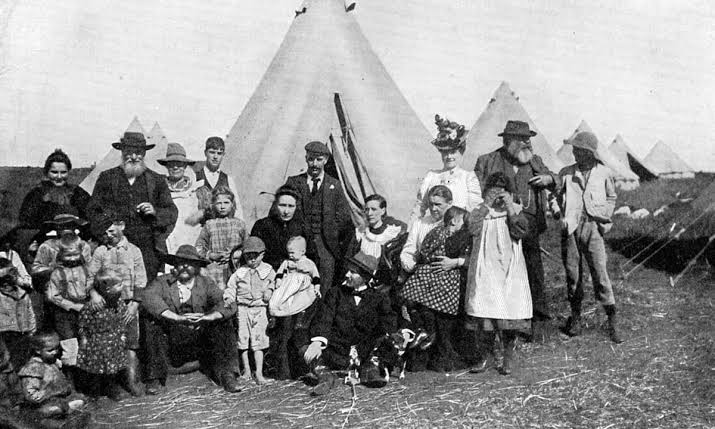
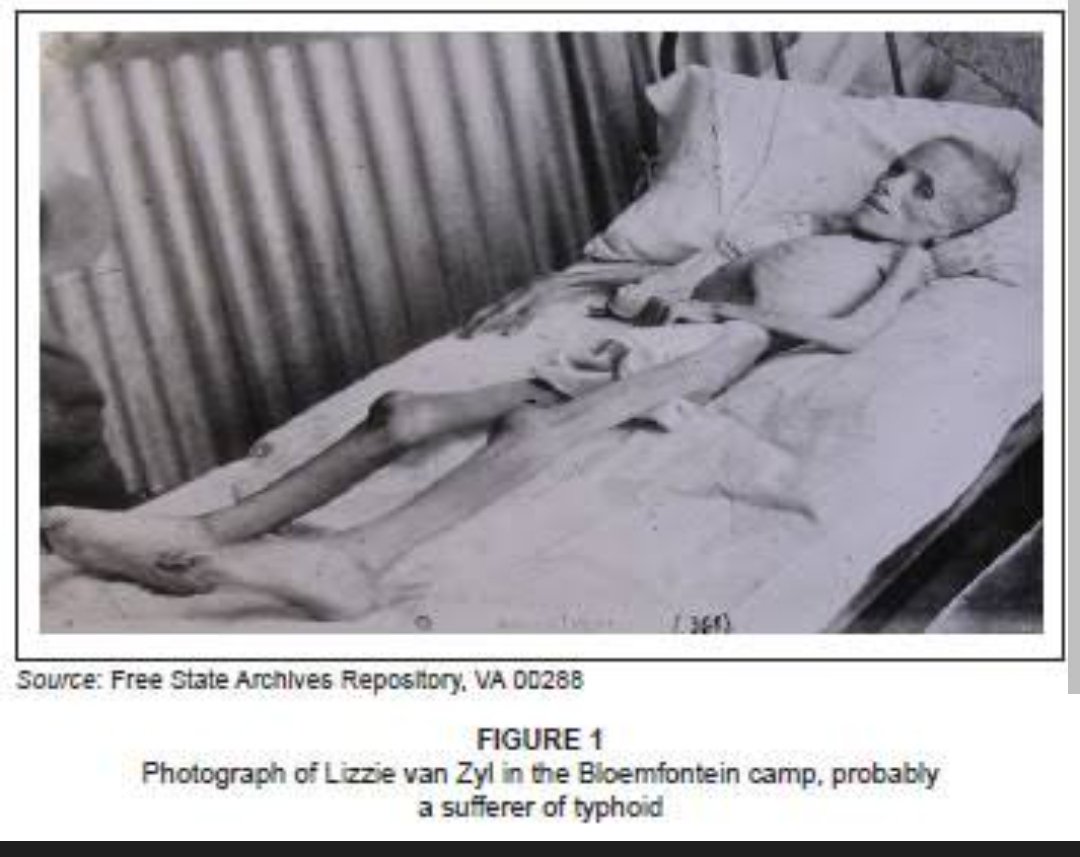
On June 16, 1900, during the Anglo-Boer War, Lord Roberts, a British cammander, formalized the scorched earth policy. This brutal strategy saw our farms burned, livestock destroyed, and families shattered as Boer women and children were forced into concentration camps to die. Thousands perished in those camps. Nearly a third of the entire population was murdered... Leaving a legacy of loss that still shapes our identity as Afrikanars.
June 16 reminds us of the resilience of our people, who faced unimaginable hardship yet rebuilt with unwavering determination. This is a history that the ANC communists have erased from teachings in schools in an effort to stamp out Afrikaans culture and legitimacy in their own genocidal intentions.
Share this to spread awareness about afrikaaner history. Don't let history be dominated by socialists who despise culture or reality.
#AfrikanerHistory #June16 #Resilience
Katie Hopkins: South Africa - The Killing Fields
I spent months living & sleeping on white farms. At night is when the monsters come
Please share. Full documentary on YouTube
This is a MUST READ article for all those who tell whites to fuck off to America. Let's hope they understand simple Economics.
Go to https://t.co/KHGtCH15aU