The wait is over.
We have 2 golds: Chimdiebube Onwubiko and Don Anele Munachimso.
We are the best in the world!
Egejurum Onyedikachi’s name was omitted. He should have a gold.
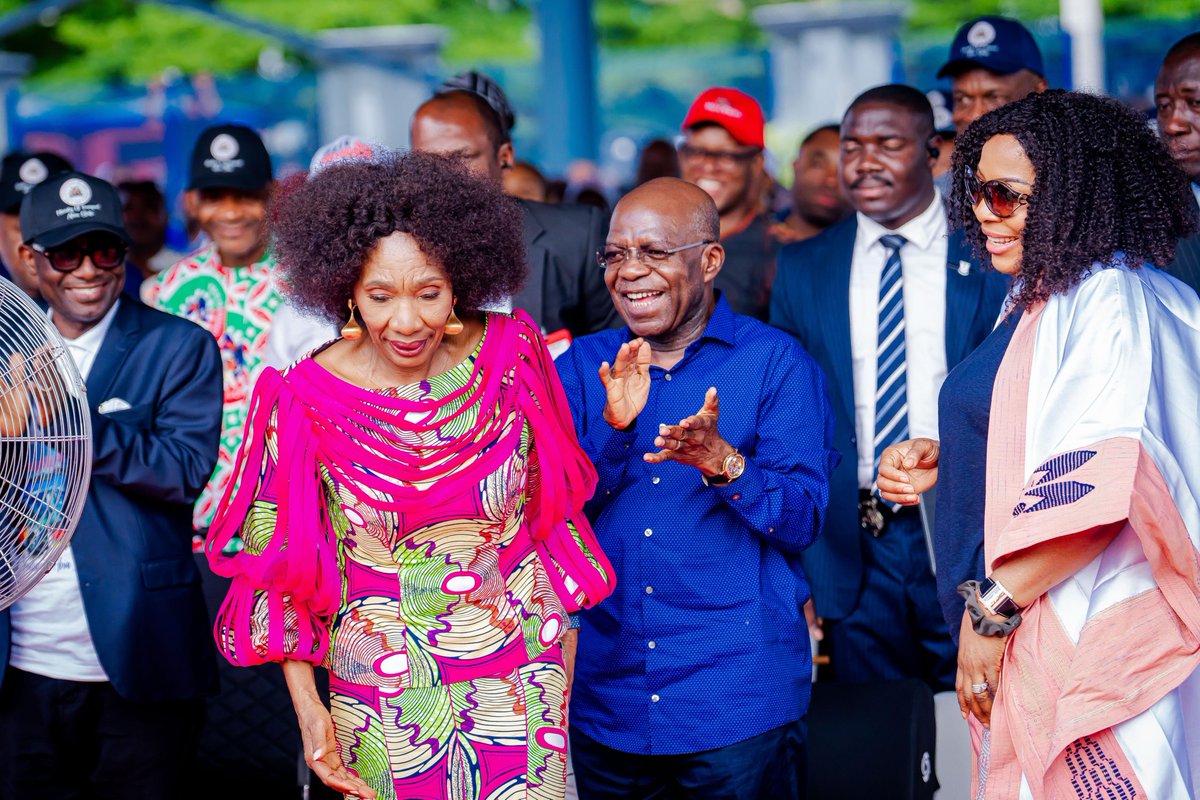
It is my pleasure to announce that we have officially commissioned the landmark Nnenna Oti Bus Terminal in Umuahia, and it is now ready for public use. The project is a multimodal transport hub designed to accommodate more than 340 buses at once, powered by sustainable infrastructure and connected to our growing network of electric buses.
The facility is named in honour of Prof. Nnenna Nnennaya‑Oti, the courageous INEC Returning Officer in the 2023 governorship election, whose integrity and patriotism remind us that ordinary people can achieve extraordinary results by simply standing for the truth.
Her name on this terminal is not just about one person, but a tribute to all electoral officials, security operatives, party agents, and citizens who resisted intimidation and defended democracy.
With 20 electric buses already in operation and more on the way in the coming weeks, the project signals our bold vision for a modern, safe, and sustainable transport system in Abia. The facility is also supported with independent power and water systems to ensure uninterrupted operations.
In my address titled “Raising the Bar”, I stated unequivocally that we have moved beyond the era of small ambitions. We refuse to be boxed into margins that underestimate our strength. This principle underpins all our undertakings.
I extend special commendation to the contractors, Planet Projects Limited, for a job well done in delivering this landmark facility. I also appreciate the dedication of the Commissioner for Transport, Dr. Chimezie Ukaegbu, the SSA Transport, Dr. Obioma Nwaogbe, and their team for the critical role they played in bringing this vision to reality.
I call on all residents and members of the host community to take ownership of this facility, to maintain a clean environment, and to guard against vandalism. This terminal belongs to you, and its success depends on your care. I also urge all Abians to pay their taxes regularly. Development cannot be sustained without collective responsibility, and every naira contributed helps us deliver the future our people deserve.
Anthony is one of the maths teachers from Diamond Special College, Owerri Imo State.
His students won N8 million cash today and he won N2 million as well.
I’m happy that we are finally rewarding our teachers by making them millionaires.
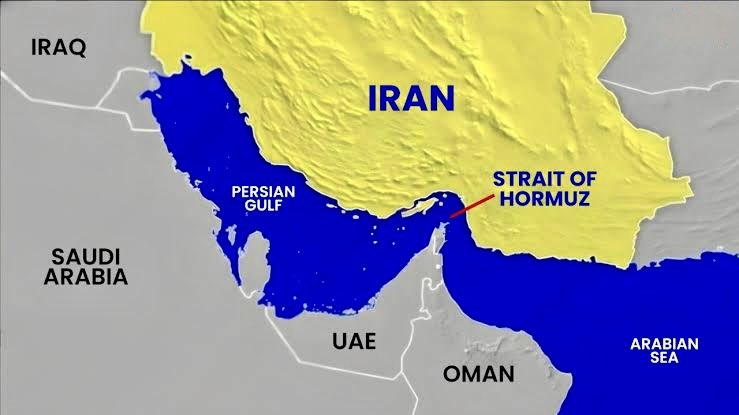
Iran just announced the closure of the Strait of Hormuz.
Read that again. Twenty million barrels of oil pass through that strait every single day. Fifteen percent of all liquefied natural gas on earth transits that chokepoint. One fifth of global petroleum supply moves through a channel 21 miles wide at its narrowest between Iran and Oman. The IRGC Navy broadcast via VHF radio on February 28, 2026 that no vessels are allowed to cross. Every tanker captain in the Persian Gulf heard that transmission. Every oil trading desk on the planet priced it within minutes.
Brent crude hit 120 dollars a barrel intraday. That is the opening number. If a single tanker is struck, seized, or mined, the models go to 200. At 200 dollar oil the global economy does not slow down. It seizes. Every factory in China that runs on imported crude. Every airline that hedged at 85. Every European nation that still has not replaced Russian gas and now faces LNG shortages through a closed strait. Every American who drives to work. The Strait of Hormuz is not an oil route. It is the cardiovascular system of industrial civilization. Iran just announced it is clamping the artery.
Iran has threatened this before. In 2019 it seized tankers. In the 1980s it mined the strait during the Tanker War. It has never declared full closure during an active military conflict with the two most powerful militaries on earth simultaneously striking its territory. This is not posturing from a position of strength. This is the last economic weapon of a regime that has lost its air defenses, lost its generals, possibly lost its Supreme Leader, watched its missiles intercepted over six countries, and has exactly one card left to play: the geographic accident that puts 21 miles of water between the world and its energy supply.
The US Fifth Fleet is headquartered in Bahrain. The USS Abraham Lincoln carrier strike group holds station in the Gulf of Oman. American destroyers carry enough Tomahawk cruise missiles to sink every IRGC fast boat, submarine, and coastal battery in the Persian Gulf in 48 hours. Iran knows this. The announcement is not a military strategy. It is a suicide note dressed as a threat. Because the moment Iran fires on a tanker, the United States does not negotiate. It executes Operation Praying Mantis at ten times the scale and the IRGC Navy ceases to exist as a functioning force.
Iran is not closing the strait. Iran is daring America to open it by force.
And every oil trader on earth knows how that ends. Not with negotiation. With wreckage on the seafloor and crude flowing by morning. https://t.co/BrzGRrU3VW
Prosperity cannot come by taxing Poverty
As I travel the world and meet leaders who have transformed their nations, one lesson is clear: lasting economic and social progress begins with national consensus. Transformative leaders—those who successfully unite their people around a shared vision—share a defining quality: honesty. Government must be transparent and truthful because citizens deserve nothing less from those who lead them. True leaders do not exploit their people to enrich themselves and a few cronies; they build trust, unity, and shared purpose - the foundation of sustainable progress.
It is against this standard of honest leadership that Nigeria’s current approach to taxation must be measured. If taxation is to function as a genuine social contract, it must be rooted in sincerity, fairness, and concern for the welfare of the people. Every tax policy should be clearly explained, including its impact on incomes and its expected contribution to national development. Without this transparency, taxation becomes a tool of confusion and burden rather than a mechanism for growth and development.
Nigeria must rethink taxation if it is serious about economic growth, national unity, and shared prosperity. The purpose of sound fiscal policy is not merely to raise revenue; it is to make the people wealthier so that the nation itself becomes stronger. Yet today, Nigerians are asked to pay taxes without clarity, explanation, or visible benefit.
The solution begins with empowering small and medium-sized enterprises in every community. When small businesses thrive, jobs are created, incomes rise, and the tax base expands naturally. You cannot tax your way out of poverty - you must produce your way out of it.
This makes the ongoing tax fraud saga particularly alarming. For the first time in Nigeria’s history, a tax law has reportedly been forged. The National Assembly itself has admitted that the version gazetted is not what was passed into law. Yet citizens are being asked to pay higher taxes under this manipulated framework—without transparency, without explanation, and without corresponding benefits.
There is no virtue in celebrating increased government revenue while the people grow poorer. Taxing poverty does not create wealth; it deepens hardship. Any tax system that makes citizens poorer violates the fundamental principles of good governance and sound fiscal policy.
Nigeria needs a fair, lawful, and people-centred tax system—one that supports production, rewards enterprise, protects the vulnerable, and restores trust between government and citizens. Only then can taxation become a true tool for unity, growth, and shared prosperity. -PO
Dangote invested $688 million in education.
0 patents.
Femi Otedola invested ₦5+ billion in education.
0 patents.
Cosmas Maduka.
0 patents.
Now pause.
Walmart (a supermarket): 8,841 patents
Tesla: 7,000 patents
Apple: 116,000 patents
Meta: 24,000 patents
Shell: 12,500 patents
All from university research pipelines.
So what exactly are Nigerian universities doing?
We are not running universities.
We are running glorified secondary schools with professors.
Globally, universities are judged by research output, patents, grants, and industry impact, not convocation gowns, social media noise, or strike press conferences.
No patents.
No serious research.
No industrial relevance.
Until our universities become research engines, Nigeria will keep importing ideas and exporting talent.
This must change. Now.
I'm bringing back this video of “Who Will Speak for Nigeria?” because I knew this day would come.
Well… the day is here.
Over 17 months in office, and President Tinubu has not appointed ambassadors to key nations leaving Nigeria voiceless on the global stage when diplomacy was needed the most.
At a time when diplomacy, dialogue and responsible mediation were needed, Nigeria had no ambassadors in key countries to speak, defend, negotiate or de-escalate on our behalf. The role that should have been played in the diplomatic space was replaced with Bayo Onanuga tweeting from his bedroom, while Tinubu micromanaged the entire country like a personal enterprise.
Now we are here facing the outcome of silence, ego, and poor international diplomacy.
This is why I said it then, and I’m saying it again now:
When leadership neglects diplomacy, a nation pays for it globally.
#atruthatatime #DonaldTrump #CPC #Nigeria
*Don’t wait for the system to serve you*
Instead of only expecting the school, the government, or leaders to make life better for students, you can ask: What small but meaningful actions can I take to improve the campus and society around me?
Nigerians interact with power in a deeply misguided way. Many of our people have never truly grasped democracy, not in principle, not in practice, and not even culturally.
Apart from the Igbo, who historically evolved egalitarian political systems rooted in collective decision-making, most major ethnic groups in Nigeria have long interpreted political power through the lens of monarchy. In these systems, a ruler’s authority is measured by how grand, distant, and unapproachable they are.
Take the Benin Kingdom, for example. The reverence accorded to the Oba borders on worship. He is exalted, insulated from the ordinary, and elevated to a near-mystical status. This cultural wiring has warped the way we engage with modern political leadership. We glorify aloofness and confuse it with competence. We expect our leaders to be above us, not among us.
This is a dangerous flaw when measured against the ideals of modern democracy. It breeds leaders who view the people not as citizens, but as subjects. Nigerian politicians don’t serve, they rule.
And the colonial experience only deepened this master-servant dynamic. Our postcolonial politicians inherited both the tools of European administration and the authoritarian instincts of precolonial monarchy. The result is a political class that governs with the arrogance of kings but without the accountability of modern democratic leaders.
This mindset seeps into every level of governance. A Nigerian politician will commission a hospital or school that he himself would never use. These projects are not designed with dignity or equity in mind, they are barely functional tokens meant to pacify the public, not to uplift them. Governance becomes charity, and not duty.
Yet in correcting this, we must tread carefully.
The idea of servant leadership, while noble, must be approached with strategic caution in the Nigerian context. You cannot reform a society unless you first gain the means to do so. Idealism without power is impotence. Transformational leaders must play the political game realistically. You need influence before you can shape culture.
A reformer must understand when to be close to the people, and when to step back and cultivate mystique. Nigerians still associate visibility with weakness. They admire strength wrapped in grandeur. If you are too accessible, too ordinary, too familiar, many will not take you seriously. They will not believe you belong in power.
The Nigerian political psyche still craves enchantment. The challenge for the visionary leader is to walk this line carefully; to remain human enough to inspire trust, but distant enough to command awe. Until our democratic culture matures, this is the paradox that must be managed.
What has happened to our compassion as a People ?
We pleaded that the President should show Leadership and visit Benue and Niger States in the spirit of deep national mourning, to offer compassion and solidarity to families torn apart by the senseless massacre of over 200 innocent Nigerians in Benue State and flooding that killed similar number in Niger State.
But what we saw in Benue visit was instead of a solemn, reflective visit, a display that would have been more befitting for the commissioning of reconstructed Enugu-Makurdi highway, a critical road connecting South and Northern Nigeria which had become impassable for years.
The President arrived not in mourning cloth but in celebratory agbada attire, like it was an occasion for joy.
Even more heartbreaking is the role of the State. Rather than been in mourning mood and weeping declared a public holiday, not for reflection or prayer, but to organize fanfare. Schools were shut down. Children who should be mourning their slaughtered classmates, and parents were instead lined up under the rain, rehearsed to sing and dance for the President. In what kind of country does this happen?
We have tragically arrived at a point where condolence visits have become carnivals. A time that should be marked by silence and solemnity is now polluted by banners, music, and rehearsed spectacles. Precious Nigerian lives have been lost, yet we’re clapping, singing, and organizing processions, as though this were a campaign rally.
This is not how any compassionate nation behaves. The energy, resources, and logistics poured into this charade could have gone into food supplies, temporary shelters, medical aid, school support, and trauma counselling for grieving families. Instead, we chose optics over empathy.
Look elsewhere: When President Ramaphosa visited Mthatha after the floods in South Africa, there were no drums. No staged crowds. No rented cheers. Just presence, silence, and action. When Prime Minister Modi went to the site of a crash, no one lined up to welcome him. He came, he mourned, he acted. That is what leadership looks like in moments of pain.
We must ask ourselves: What kind of people have we become?
Enough of this culture of impunity. We are not at war yet our nation is bleeding, and we are clapping. It is not only insensitive, it is dangerous.
Let us not forget: These were human beings, children, mothers, fathers whose blood cries out for justice.
When very sad incidents like this turns to campaign or festival, our Nation Losing Its Soul.
A new Nigeria is POssible! -PO
Opegbemi Matthias Busoye
https://t.co/bKm0EztAYV (Elect/Elect), Best Graduating Student Faculty of Technology
I am an Aspiring Embedded AI Engineer and PhD student. I am also interested in Research, Leadership.
I am actively seeking graduate opportunities,
1/15