Here's how to use Claude to find opportunities in your field everyday.
Open Scheduled in the Cowork sidebar. Select New task, then Create with Claude or Set up manually. Add your prompt, choose weekdays and set the time.
For the simplest remote setup, paste a reviewed, candidate profile into the task. Cowork can use web research, connected tools and files saved to your Claude account.
A third of all heart-related deaths may trace back to what is sitting in your kitchen cupboard.
Not cigarettes. Not alcohol. Ultra-processed food.
A 2026 study presented at the International Congress on Obesity found that 23 to 38 percent of all cardiovascular deaths are attributable to ultra-processed food consumption. Separate research from the American College of Cardiology linked ultra-processed diets to a 47 to 67 percent higher risk of heart attack and stroke.
Most people do not realize how much of it they eat. In America, 57 percent of all calories consumed by adults come from ultra-processed food. For children and teenagers, 67 percent.
Ultra-processed does not mean cooked. It means engineered. Foods designed in labs to hit your reward system like a drug. Packaged snacks, instant noodles, breakfast cereals, sodas, frozen meals, flavored yogurt, most fast food.
Your great-grandmother would not recognize half of what is in the average shopping cart today.
A Harvard study tracking 200,000 people confirmed the pattern: the more ultra-processed food in your diet, the higher your risk of dying from heart disease.
The food industry spent decades making these products cheap, convenient, and addictive.
The result is a health crisis hiding in plain sight, and most of us are funding it three meals a day.
Read the ingredients list. If it reads like a chemistry exam, your body probably agrees.
You have actually pointed out 80% of the reason people don't get there: laziness or lack of ambition.
Maybe you didn't know that those two things actually account for the majority of the reason so I want to point it out.
Now for the other minor, 20% of the reason, I will split this into two:
10% - ignorance. If you don't know that you are actually being assessed everyday then you get surprised by the result, if, at the end of a CEP exercise, you are given a Level 3. Believe it or not, some people don't even know there's such a thing as CEP! They are being judged without knowing it.
Also, ignorance that your first impressions weigh more than anything else. If you are assigned to a new project, you will likely meet new people/stakeholders, your first meeting there is paramount. During a CEP exercise, Shell will ask all these people for feedback about you. It is called 360 degree feedback. It is another well-oiled (pun intended) tool in the company's talent management toolkit.
Ignorance of your own blindspots. You pick your nose and it nauseates people but you think it is cool. Things like that will come back to bite you.
All in all, I'd say ignorance accounts for about 10%.
The other 10% is just LUCK.
You get the right first boss that understands you and things just click. They may like you because you both went to the same school or you have the same name as their favorite child or whatever. And that boss makes sure you avoid the landmines that torpedo others. They fight for you. And make sure that they come back with a Level 1 result when they go into that CEP calibration meeting with their peers and boss.
I hope this helps.
But trust me when I say laziness and lack of ambition account for about 80% of the reason.
Remember that these people are already making a lot of money...so, what else do they want?
Here’s what you’d need to invest monthly to hit $1M by age 50:
(Assuming a 10% annual return)
Age 20: ~$507/month
Age 25: ~$848/month
Age 30: ~$1,455/month
Age 35: ~$2,620/month
Age 40: ~$5,230/month
Age 45: ~$13,650/month
Time is your greatest leverage.
The child who asks too many questions is not being difficult. He is showing you the one trait no school can install and no employer can buy.
Curiosity is the earliest signal of a person who will not settle.
Most systems spend twelve years quietly beating it out of him, rewarding the quiet child who memorizes over the restless one who wonders.
If you have a curious child near you, protect that fire. It is worth more than you think.
The most valuable skill for a young African is not coding. It is the ability to write clearly in English.
Every remote job, every scholarship, every visa petition, every client abroad is won or lost on how well you put words in a row.
The world hands its opportunities to whoever can explain themselves. Learn to write. It is the cheapest leverage on earth.
I am a sucker for educational podcasts.
But there are only a handful of podcasts that have truly changed me in unimaginable ways.
Read the thread for those and the links to them.
🧵
I have friends who are older and very fit because of their lifestyle. They don't drink or smoke and exercise daily. They also have the most unfit kids who don't follow their example. This has always worried me as I am raising young children. I have also seen families with hard-working and wealthy parents who raise the laziest and most entitled children.
We always want our children to do better than us, but when and where does this go wrong for most people? I think it comes from the time and attention we personally give our kids and the lapses we allow.
My wife and I are early risers. I have a particular sleep problem I am still trying to solve, but my kids can sleep all day on vacation if you let them. A friend with an older son who had just graduated and was back home, jobless, used to tell me how alarmed he was that the son would go out all night, come back early in the morning, and sleep all day.
I told him then that if he didn't force him to change that habit, he would remain jobless and stay with his parents longer. They eventually forced him to change, and he moved out. He has a job now and struggles a lot. His parents are concerned that he isn't thriving. He is now almost 30, and I think about this all the time. At 25, I was a beast and had started many businesses.
While we want our kids and young adults to experience life on their own terms in a world vastly different from the one we grew up in, we can't help but notice that others whose children were more disciplined are thriving better. One indicator I have seen that correlates with success in younger people is fitness.
A friend’s son started going to the gym regularly, and he even inspired his cousins to do so. I checked on LinkedIn recently, and he is doing exceptionally well as a lawyer and investment banker without any family connections or assistance. His younger cousins, who are looking up to him, are following in his footsteps. I decided to get my kids to spend more time with him.
The role models our children need may be closer to their age than ours. It is why we need to amplify the lifestyles of young, disciplined, and successful people more. Not every person will make it through creative pursuits. I stress this to my kids all the time. There are billions of YouTube channels, but there is only one MrBeast or IShowSpeed.
Social media is highlighting more unrealistic role models than the most useful ones. My daughter is likely one of the most intelligent young children that I know, but because she doesn't want to be seen as a nerd, she is adapting to popular culture to blend in, in a way that scares me. This sometimes affects the way she learns. While I don't want to restrict her now from experiencing the world, I have realized that she needs different role models.
My son’s role models are nerds, and he nerds out in ways that surprise me and it is also worrying. We can be watching a movie, and he goes online to research it and summarise the plot so he can leave to code. He is not experiencing life enough outside the internet.
They will either eventually be ok in a world very different from ours or struggle in a world that becomes worse than ours, without the skills to build personal resilience and strong social skills.
I recently had a personal experience that made me realize I was fortunate to have left home early and to have different role models from my parents. Having a broken home led to different outcomes for my siblings and me, but the fact that I had strong personalities like my mother’s uncle and the uncles I grew up around helped me learn a lot more about life and priorities.
The world is a very complex place, and life is not a bed of roses. While we want the best outcomes for our kids, we have to finally admit that they will learn far more from others than they will ever learn from us. The best thing we can do for them is expose them to the right kind of people early enough, then hope and pray that we didn't misread those people.
The first big money I earned, I gave a large chunk away before I spent a kobo on myself.
People thought it was reckless. I thought it was the point.
To this day the biggest line item in my personal finances is not rent or tax. It is giving.
I am not telling you this to impress you. I am telling you because it is the single habit I would hand to my younger self first.
My money has never really felt like mine. I am just a custodian.
To grow, you have to learn to let go.
believe that this is an evolutionary instinct, perfected over time, for selecting partners. It is on a different level for both sexes and often defies logic when people only see the superficial. A woman can know who you are from observing you more than you know yourself as a man.
When it comes to partner selection, women are much more ruthless than men realize. I still remember someone telling me that she decides whether to sleep with someone within less than one minute of meeting them. This was after I had spent months chasing her, thinking I was successful because of my effort.
She had made up her mind the minute that we met. She had also planned the relationship's future and knew it was just physical because she saw I wasn't ready to commit quickly.
She said something I would never forget: "You are a firstborn, but you don't behave like one." I was still living with my uncle then. I moved out later, when another girl I was dating insisted she would stop visiting me if I didn't.
One of women's purposes in relationships is to refine men. I am better off as a man because of the many relationships I have had. I learned from the gift of feedback.
Women also have the benefit of numbers: men ask them out more, and they have a larger pool from which to assess and draw inferences. All the rejections I have had have been very helpful, as they have helped me improve myself until I found the one that I truly loved and loved me back for just being me.
The tragedy is that women rarely handle similar rejections well, as they are rare. They would rather adapt to people whom they fear would reject them, and that is how they end up in bad relationships. It is hard for confident women to end up in bad relationships, as they don't fear rejection.
Men who fear rejection are also the worst in humanity. They turn out to be monsters. Rejection and learning are all parts of character development. This is why I encourage young people to date widely and learn more about themselves before committing to any long-term relationship or marriage.
What used to be very tiring about dating in those days, when I was a bachelor, was constantly being on guard, as if the other person were an adversary. You go back and start analyzing every move.
You start thinking about every word you said and the response. What is happening at that stage, without your realization, is insecurity and distrust. Both are bad signs.
My best man, Fidelis, solved it all eventually for me. He said, "When there is too much brainwork in a relationship, forget it. "
That principle became so true and saved me a lot of headaches. It also made me know when it was the right person and the right time to get married, as there was no longer any permutation, combination, or brainwork. The trust was complete and implicit.
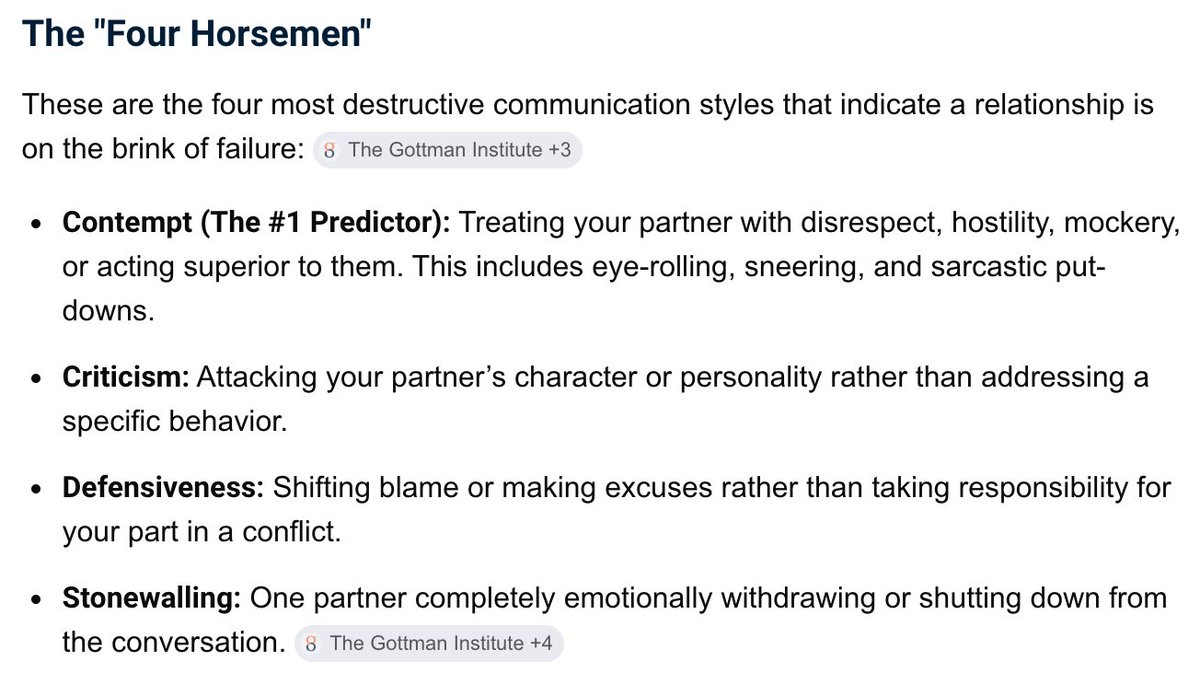
When you start wondering about the other person's motives, you should have a conversation about it instead of pretending that all is well. The book "Blink" by Malcolm Gladwell helped me a lot. Especially the part where he mentions the marriage counselor who could predict breakups by reading body language.
The first sign to know that a relationship will not survive is contempt. It only gets worse, and most relationships never recover from it. If anyone thinks they are too good for you, for any reason, please free them on time. When there is too much brainwork in a relationship, forget it.
I told someone exactly this, and she still went ahead. She was the one who had all the contempt over many red flags, but felt she had put too much effort and too much time into it to let go. Dude finally freed her. It is always tougher for women, which is why I understand when they become very ruthless at a certain age.
As a bachelor, I was served more "breakfast" breakups by women aged 28 to 30 than by any other age group. The ghosting was legendary. They moved on like machines, and I understood. I was a very unserious person. I didn't recognize myself a decade later. I became the ruthless one before 40.
If you’re hunting for a remote job, you just need to figure out how Reddit works, and you’ll never be unemployed for a long time.
Here’s a list of subreddits you should bookmark right now:
Hi Renè,
You're in luck. I'm a lawyer who works in a mortgage bank
There are four options, three of which are government empowered.
1. Nhf: As an employee, by law, a percentage of your income is expected to be remitted to your housing fund with the Federal Mortgage Bank. You can use this to access various mortgage options.
2. Family Home Funds Limited: This is an initiative backed by the FG. Their rate is between 12-15%. This is mostly accredited by Mortgage Banks. The maximum they can finance is 100 million, and they are largely focused on females as well. Once you get approved, you have a moratorium for the first 5 years (i.e., you will only start repayments after 5 years)
3. MREIF - This is a package created by ARM and the Ministry of Finance. Their rate is 9.78%. They have the lowest rates. To access this, you would also need to go through accredited banks.
4. Banks: Commercial and Mortgage Banks give this. Commercial banks have lower rates because they are allowed to carry out multiple activities. Their rates are usually between 12% and 20%. Mortgage Banks, on the other hand, have rates from between 24% to 35%.
Note that the interest rates are largely affected by the monthly MPR issued by the CBN. Also, the products financed by the government are temporary, so a stitch in time saves nine, and they are not guaranteed, which is why I advise that you just get bank products instead.
What do you need
1. Good credit rating
2. Equity: For government workers, you must have at least 33.3% of the total sum of money needed to purchase the property, while for Non Government employees, it's 50%.
3. A validly registered property.
4. Your age matters as well.
5. Management Fee (usually between 0.5% to 1% of amount to be borrowed, usually take from the sum requested) and Administrative Fee (usually between 500k to 1m)
Total Mortgage Processing time is between 3 days and 5 weeks. My mortgage bank does 2 weeks. The speed is dependent on your production of requirements.
Some of my bank's mortgage products include
1. Rent to Own
2. Home Renovation Fund
3. Equity Release
4. Normal Mortgages
Etc.
For more information, send a dm. Let's get you on your way.
Prof Osuide cured me of the "Joy Trap" with one sentence. "Nothing impoverishes a man faster than unbridled generosity." My father used to tell me that he was the most stingy when he had money. I didn't clock it until much later. We never had to support him after retirement.
The $1M conversation on Nigerian Twitter is funny because the first thing you should do when you come into money in bulk is to leave it. Pretend it doesn't exist for at least 3 months. Never jump into investing in anything you don't know very well. I am talking from experience.
An update on our TV experiment.
In May, my wife mentioned maybe it was time to get a TV again. Almost 18 months since the old one broke. I agreed, and we bought one.
Here's what surprised me. The day it arrived, the kids were excited. I set it up, tested it, turned it off. And nobody asked to put it on.
That evening, after school and homework, they went to the park like always. Same on Wednesday and Thursday. The TV just sat on the wall like a forgotten thing. It first came on that Friday for movie night, same as always, just on the TV now instead of the laptop.
Three weeks in, and life is exactly how it was before. On Friday they watched a movie, and we had a short family Mario game session. Saturday, we built a lego puzzle until it was time for the Champions League final. Sunday, they wanted to go play with their friends after our family reading time, and it was my wife and I who said no, sit back, let's watch a family movie together.
That's a new thing. Twice a month we pick something educational and talk about it after. A chance to teach them about the world, about faith, about what other people go through. The rest of the time they pick their own.
People will say it's all devices now anyway, which is true. But the kids only use their tablets one hour each on Friday, Saturday and Sunday, and have done so for years. They walk around with books instead of devices.
I'm quite happy that the habit held even after the TV came back. Screentime is STILL way down, and family time is way up.
It's still the best family experiment of all time. Let's see where we are by December.