Η Μάργκαρετ Χάμιλτον που πέθανε χθες στα 90 και ειχε γράψει τον κώδικα του Apollon 11, είχε γράψει 145000 γραμμές κώδικα για το σύνολο των υποσυστηματων και άλλες 45000 γραμμές σε assembly που έτρεχε ειδικά στο Apollo Guidance computer (AGC). Τρία λεπτά πριν τη προσελήνωση 1/3
Ήταν ενδιαφέρον το ότι σκεφτήκατε αμέσως (εκτός των άλλων που θα πούμε) την δερματοστιξία.
Πράγματι, όταν οι Οθωμανοί περνούσαν από τα χωριά για να αρπάξουν τα χριστιανόπουλα και να τα μετατρέψουν σε Γενίτσαρους, οι μανάδες ήξεραν ότι οι πιθανότητες να ξαναδούν τα παιδιά τους ήταν ελάχιστες. Ετσι, αποτύπωναν ένα μικρό ανεξίτηλο "μυστικό" σημάδι (πίσω από το αυτί, στο στήθος αλλά μέσα στην παλάμη καμιά φορά) ως "μέσον" αναγνώρισης αν κάποτε οι δρόμοι τους διασταυρώνονταν (είτε με επιστροφή είτε κατά τύχη).
Στην αρχαία Αθήνα δε, είναι γνωστή η "έκθεση" των παιδιών (έχουμε μιλήσει κάποια στιγμή γι΄αυτήν) κατά την οποία, μια οικογένεια που δεν μπορούσε να αναθρέψει ένα παιδί (κυρίως λόγω ακραίας φτώχειας), το άφηνε σε ένα δημόσιο σημείο μέσα σε ένα αγγείο ή πανέρι, ελπίζοντας ότι κάποιος θα το μαζέψει.
Όμως η μάνα είναι πάντα μάνα. Δεν μπορεί να κόψει τελείως τον δεσμό της με το σπλάχνο της. Έτσι, μαζί με το μωρό άφηναν αντικείμενα που ονομάζονταν "γνωρίσματα" ή "σπάργανα". Αυτά ήταν μικρά περιδέραια, δαχτυλίδια, σφραγίδες ή φυλαχτά, ενώ σε κάποιες περιπτώσεις χάραζαν ή σημάδευαν ελαφρά το δέρμα του μωρού.
Στο θέμα μας τώρα, πράγματι ο Οδυσσέας είχε ένα σημάδι στο πόδι του, ακριβώς πάνω από το γόνατο, που το απέκτησε όταν, ακόμη έφηβος, είχε πάει στον Παρνασσό για να επισκεφθεί τον παππού του, τον Αυτόλυκο.Εκεί συμμετείχε σε ένα κυνήγι αγριογούρουνου.Το αγρίμι τού επιτέθηκε και τον πλήγωσε στο πόδι με τον χαυλιόδοντά του, αφήνοντάς του αυτή τη μόνιμη ουλή, την οποία και φυσικά αναγνώρισε η Ευρύκλεια. Αυτό όμως δεν θα μπορούσε να αποτελεί τον "κρατητήρα" του.
Από την άλλη είχε επίσης μεγάλο ενδιαφέρον το γεγονός ότι προσδιορίσατε ως κρατητήρα τον ίδιο τον Οδυσσέα. Και θα μπορούσαμε να πούμε ότι στην ουσία ναι αυτός θα έπρεπε να είναι αν ένας κρατητήρας δεν είχε τη μορφή αντικειμένου που το φέρει κάποιος πάνω του, έστω και στη σκέψη του. Βεβαίως ο Οδυσσέας έφερε τον ίδιο τον Οδυσσέα που όμως δεν θα λέγαμε ότι θα κατάφερνε να "επιζήσει" και ας ήταν πολυμήχανος, αν δεν είχε θεϊκή βοήθεια.
Αρα λογικά στεφτήκατε ότι ίσως η Αθηνά να ήταν ο απόλυτος κρατητήρας του καθώς λειτουργούσε πάντα ως η προστατευτική ομπρέλα του. Όμως...ούτε αυτή είναι αντικείμενο!
Σκεφτείτε τώρα τι μας περιγράφει ο Όμηρος. Γιατί ακριβώς μας μιλάει. "Νόστος"! Όμως ο νόστος του Οδυσσέα δεν είναι απλώς μια γεωγραφική επιστροφή, αλλά μια διαρκής έλξη από έναν αόρατο (όσο εκείνος παλεύει, παραμένει αόρατος, αλλά υπάρχει στη σκέψη του) "κρατητήρα".
Ο Οδυσσέας παλεύει με την ίδια τη φύση και το πεπρωμένο, όχι απλώς για να επιβιώσει, αλλά για να επιστρέψει. Αν δεν υπήρχε η Ιθάκη ως "σταθερά", η επιθυμία του δεν θα είχε κανένα υπαρξιακό νόημα. Το ταξίδι αποκτά αξία μόνο επειδή η βάση του τον περιμένει άθικτη. Αυτή η βάση δεν είναι απλώς ένας τόπος, αλλά ο προσωπικός του κρατητήρας.
Εκεί λοιπόν πίσω στην Ιθάκη, ο αργαλειός της Πηνελόπης λειτουργεί σαν ένα τελετουργικό χάντρωμα προστασίας. Υφαίνοντας και ξηλώνοντας, η Πηνελόπη "κρατά" τον χρόνο παγωμένο, εγκλωβίζει την απειλή των μνηστήρων και κρατά τον οίκο ανοιχτό. Είναι ο κρατητήρας που αποτρέπει την αποδόμηση της πατρίδας του.
Όμως δεν "παίζει" μόνος του. Στον πυρήνα αυτού του οίκου, βρίσκεται το κρεβάτι. Λαξευμένο πάνω σε μια ζωντανή ελιά, βαθιά ριζωμένο στη γη, είναι ο απόλυτος κρατητήρας της ταυτότητάς του. Είναι το αντικείμενο που προσφέρει την τελική ασφάλεια: δεν μετακινείται, δεν κλέβεται, δεν αλλοιώνεται!
Και αν θέλουμε να το πάμε ένα βήμα παραπέρα, και να βρούμε το φυσικό στοιχείο που ενώνει αυτούς τους δύο κρατητήρες, καταλήγουμε στην ελιά. Η ρίζα της ελιάς κρατά το κρεβάτι, και το ξύλο της ελιάς είναι αυτό με το οποίο ο Οδυσσέας τυφλώνει τον Κύκλωπα (σώζοντας τη ζωή του) και δένει τη σχεδία του. Άλλωστε, η ελιά στην Οδύσσεια είναι το απόλυτο ιερό φυλακτό προστασίας της θεάς Αθηνάς!
Και πώς ακριβώς κατέληξα σε αυτά; Εδώ γεννιέται το μεγάλο ερώτημα: αν οι Μνηστήρες είχαν καταστρέψει τον οίκο, αν η Πηνελόπη είχε λυγίσει, αν η ελιά είχε ξεριζωθεί, θα είχε νόημα ο αγώνας του; Όχι, θα απαντήσω!
Αν όλα είχαν τελειώσει στην Ιθάκη, ο Οδυσσέας θα επέστρεφε σε ένα φάντασμα. Όμως, η ιστορία μας δείχνει ότι ο κρατητήρας του λειτούργησε απόλυτα. Όπως το δαχτυλίδι "κρατά" την εγκυμοσύνη προστατεύοντας τη νέα ζωή, έτσι ο αργαλειός και το ριζωμένο κρεβάτι "κράτησαν" την Ιθάκη ζωντανή, ασφαλή και ανέπαφη για είκοσι χρόνια, περιμένοντας τον δημιουργό της!
Τελικά, ο Οδυσσέας δεν σώθηκε μόνο από την εξυπνάδα του ή την εύνοια της Αθηνάς. Σώθηκε επειδή πίσω στην πατρίδα, τα ιερά αντικείμενα του βίου του λειτούργησαν ως αόρατοι, πανίσχυροι κρατητήρες. Κράτησαν το νήμα της ζωής του δεμένο, μετατρέποντας μια χαοτική περιπλάνηση σε έναν θριαμβευτικό νόστο!
Υ.Γ Στην εικόνα βλέπουμε ένα ομοίωμα αργαλειού της ελληνιστικής εποχής. Κάποιοι λένε ότι ίσως και η Πηνελόπη να ύφαινε με έναν τέτοιο. Και εδώ θα σας θέσω το επόμενο ερώτημα. Εσείς τι λέτε; Μπορεί να ήταν ένας τέτοιος; Προσέξτε την εικόνα καλά , τις αγνύθες (τα βαρίδια δηλαδή στο κάτω μέρος), το έτοιμο υφασμένο κομμάτι και θυμηθείτε τι μας είπε ο Όμηρος...
Καλημέρα σε όλους!
"Αυτός ο πρώτος δήμαρχος (της ελληνικής Θεσσαλονίκης), ονόματι Οσμαν Σαΐτ, ήταν Τούρκος. Τον διόρισε ο Βενιζέλος. Ήταν ένας αρχοντάνθρωπος που δεν καταδέχτηκε να εισπράξει ποτέ τον μισθό του. Έμενε στην οδό Ευζώνων, κάτω-κάτω (στο σπίτι του στεγαστηκε, μετέπειτα, το Τμήμα
Τι όμορφα λόγια ειπε ο αείμνηστος Σαρτζετάκης για τον Εθνικισμό... Για να ξερουμε τι ειναι αλήθεια και οχι αυτα που μας εχουν σερβίρει και σερβίρουν "προοδευτικοι" ολων των κομμάτων εξουσίας... Επιτέλους δεν είναι ντροπη να υπερασπιζομαστε τη χωρα μας!!!
#Εθνικά#Ελλάδα #Πολιτική
Hasta el siglo XIX, una cena de gala en Europa consistía en cubrir la mesa entera de platos a la vez, decenas de ellos. La comida llegaba fría y cada invitado solo alcanzaba lo que tenía delante. Que hoy cenemos de otra forma se lo debemos a un incendio. Tira del hilo 🧵👇🏽👇🏽👇🏽
1/2
«Οι σιωνιστές ήταν υπεύθυνοι για την εκδίωξη των Εβραίων από τις αραβικές χώρες προς το Ισραήλ.»
«Το 1950 υπήρχαν 135.000 Εβραίοι στο Ιράκ, δεν ήθελαν να φύγουν για το Ισραήλ.
Το 1951, η Μοσάντ έβαλε 5 βόμβες εναντίον Εβραίων της Βαγδάτης.
Το 1952, μόνο 10.000 Εβραίοι
Άλλη μία φωτογραφική διάταξη ντροπή!!!
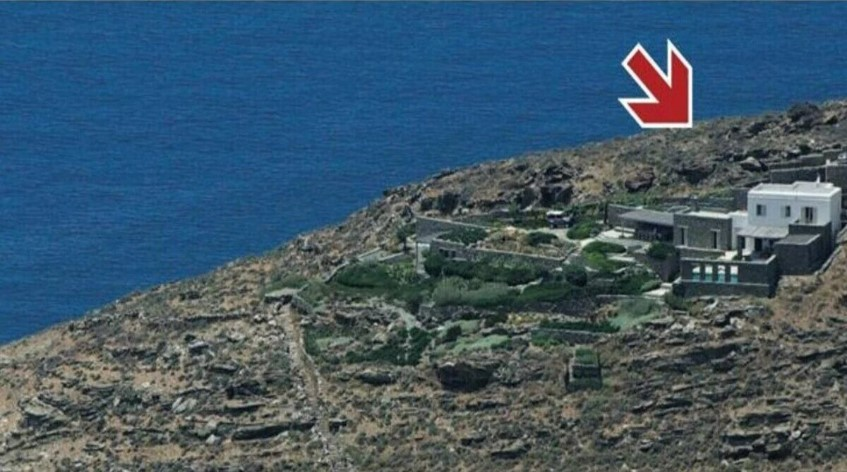
Μέσα στο κατακαλόκαιρο, κρυμμένη σε νομοσχέδιο για το νερό, η κυβέρνηση Μητσοτάκη χάρισε σε βιομήχανο «ημετέρο» το δικαίωμα να τσιμεντώσει 200 στρέμματα γύρω από εγκαταλειμμένο οικισμό στην Τήνο — δίπλα στο εξοχικό του πρωθυπουργού.
Ιδιωτική πολεοδόμηση για gated villages και resorts των ισχυρών, ενώ ο νόμος μέχρι χθες το απαγόρευε.
Παρακάμπτουν ελέγχους, επεκτείνουν την αρπαγή σε όλα τα νησιά και βαφτίζουν «αναζωογόνηση» την εκποίηση τοπίου και κοινού συμφέροντος.
Νομοθετούν κατά παραγγελία. Λεηλασία με σφραγίδα Μαξίμου!!!
UN CIRUJANO CARDÍACO DIJO UNA VEZ:
“Existe un nervio que ayuda a regular funciones como la frecuencia cardíaca y la respuesta al estrés. Activarlo puede ayudar a tu cuerpo a entrar en un estado de mayor calma”.
RESPIRACIÓN LENTA Y PROFUNDA.
Όταν ακούτε για τον Μπραντ Πιτ και τον Τζορτζ Κλούνεϊ και κάτι άλλους 60+ ετών γοητες του Χόλιγουντ, να θυμάστε πως το 2008 στην ταινία "Αυστηρώς κατάλληλο", ο Αλέξανδρος Αντωνόπουλος ήταν 61 ετών και ήταν θεογκομενος χωρίς πλαστικές, μποτοξ & υαλουρονικα
Ήταν έτσι από μόνος του
Τα μηχανικά πουλιά που τραγουδούν. Βυζαντινό χειρόγραφο του 13ου αιώνα μ.Χ., βασισμένο στα έργα του Ήρωνα του Αλεξανδρινού «Πνευματική» και «Αυτόματα». Αυτά τα μεταλλικά, μηχανικά, τραγουδιστικά πουλιά βρίσκονταν στον κήπο της Αγίας Άννας, κοντά στο Αυτοκρατορικό Παλάτι της Κωνσταντινούπολης. Χρησιμοποιώντας υδρατμούς, αέρα και τις οπές των γραναζιών τους, τα πουλιά μπορούσαν να μιμηθούν το κελάηδισμα του κάθε είδους που αντιπροσώπευαν.
Εθνική Βιβλιοθήκη Μαρτσιάνα, gr. Z. 516 (συλ. 0904).
“Courage is fear that has said its prayers.”
~ St. Thomas Aquinas
Photo: Fr. Francesco Vera, executed immediately after saying Mass (which had been outlawed), Mexico, 1927.
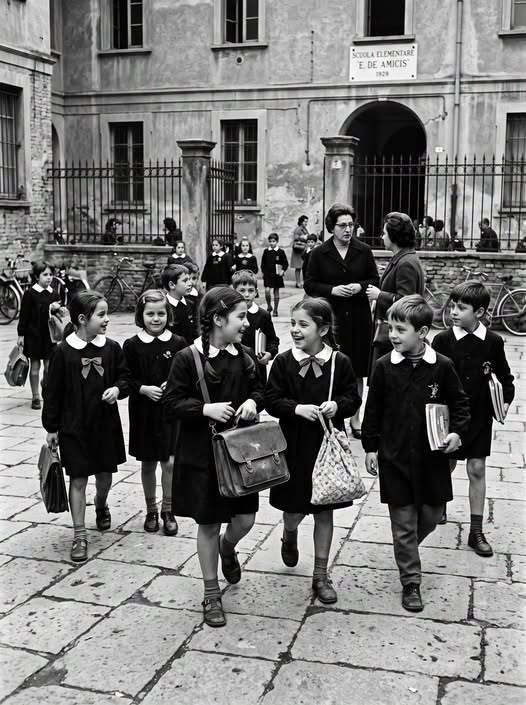
Il grembiule nero della scuola elementare di una volta era l'uniforme più democratica che esiste - quella tela nera che copriva i vestiti di tutti i bambini e li rendeva uguali indipendentemente da quello che c'era sotto, dal vestito buono del figlio del medico o dai pantaloni rattoppati del figlio del contadino.
Il grembiule nero con il colletto bianco - quello dei maschi - e il grembiule nero con il fiocco rosa o azzurro - quello delle femmine. Il nome scritto sull'etichetta cucita dentro. Il grembiule che la mamma lavava e stirava ogni settimana. I bottoni che si perdevano e si ricucivano.
L'odore del grembiule pulito del lunedì mattina. E quella foto di classe con tutti in grembiule nero allineati davanti all'obiettivo - una fila di bambini identici e tutti diversi insieme - che è la fotografia più democratica che la scuola italiana abbia mai prodotto.
Il grembiule diceva: qui siamo tutti uguali. Quella bugia bella che la scuola raccontava ogni giorno era anche il suo insegnamento più importante.
Post di Patrizia Benelli dalla pagina "Gruppo come eravamo" FB.
In 1937, the Nazi regime sent an emissary to Hollywood with an offer for Marlene Dietrich.
They wanted her back. Not just her name, her face, her voice, her mystique. Goebbels and Hitler had decided that the woman who had made "The Blue Angel" into a global sensation was exactly what the Reich's propaganda machine needed. The terms were extraordinary: she would be the most celebrated star in Germany, protected, celebrated, untouchable.
She said no.
It was not a polite refusal. Dietrich had already watched what was happening in her home country. She had Jewish friends and colleagues who were losing everything. She understood precisely what she was being asked to lend her image to.
In 1939, she became a United States citizen. She was done with Germany.
What followed was not just symbolic resistance. Dietrich went to work.
She raised money for Jewish refugees fleeing Europe. She recorded German-language broadcasts for the OSS, psychological operations aimed at cracking German soldier morale. Her voice, the same voice that had made her a star in Berlin, was now being used to undermine the regime that had tried to claim her.
Then she went to the front.
Between 1944 and 1945, Dietrich toured with the USO through North Africa, Italy, and France. She performed close to active combat zones, within range of enemy fire. She did not perform from a safe distance and call it patriotism.
During the Battle of the Bulge, in the brutal winter of early 1945, she developed frostbite. She kept performing.
She was warned, on at least one occasion, that if the Germans captured her, the reception would not be ceremonial. The regime she had refused had not forgotten the refusal.
In 1947, the United States awarded her the Medal of Freedom, one of the highest civilian honors the country could give. France made her a Chevalier of the Legion of Honor. Germany, for decades, was complicated, many of her countrymen never forgave her for choosing the other side.
She never apologized for it.
The woman they wanted for a propaganda symbol. The woman who gave up a homeland to say no. The woman who played for soldiers in the mud, in the cold, within earshot of the guns.
Marlene Dietrich did not survive the war unmarked. She survived it having chosen, clearly and at cost, which side she was on.
The regime that tried to recruit her called her a traitor after she refused. She wore that for the rest of her life. There are worse things to be remembered for.
#archaeohistories
En este día de #SanAgustin me he sentido nuevamente fascinado al releer el conocido párrafo del libro de sus Confesiones:
"¡Tarde te amé, Hermosura tan antigua y tan nueva, tarde te amé! Y tú estabas dentro de mí y yo afuera, y así por fuera te buscaba; y, deforme como era, me lanzaba sobre estas cosas hermosas que tú creaste. Tú estabas conmigo, mas yo no estaba contigo. Reteníanme lejos de ti aquellas cosas que, si no estuviesen en ti, no existirían. Me llamaste y clamaste, y quebrantaste mi sordera; brillaste y resplandeciste, y curaste mi ceguera; exhalaste tu perfume, y lo aspiré, y ahora te anhelo; gusté de ti, y ahora siento hambre y sed de ti; me tocaste, y deseé con ansia la paz que procede de ti."
🚨🚨 Un proceso simple para los dolores de cabeza...
Paso 1: Coloca una pequeña pizca de sal ñ, se recomienda sal marina natural sin refinar o sal rosada, directamente debajo de la lengua...
Paso 2: Espera unos segundos para que la sal se disuelva y sea absorbida directamente a través de la mucosa oral...
Paso 3: Inmediatamente después, bebe un vaso lleno de agua.
Resultado prometido: El dolor de cabeza o migraña desaparecerá en menos de 5 minutos.
Absorción rápida...La colocación sublingual permite que los minerales de la sal entren directamente en el torrente sanguíneo, evitando el sistema digestivo.
Equilibrio electrolítico...El contenido de sodio restaura rápidamente los niveles de electrolitos en la sangre. Detener el dolor...Este mecanismo reduce la hinchazón de los vasos sanguíneos en el cerebro, bloqueando así las señales de migraña antes de que el dolor se intensifique.
Ο βασιλιάς του Hatti (Χετταίοι) αναγνώριζε ως ισότιμους τους ηγεμόνες της Αιγύπτου, Ασσυρίας, Βαβυλώνας και του Μιττάνι και τους ονόμαζε «αδελφούς» (aḫiya).
Οπως μαρτυρεί η Επιστολή Tawagalawa του Χαττουσίλις Γ’, προστέθηκε ένας ακόμη «αδελφός» τον 13ο αιώνα π.Χ.: ο ηγεμόνας των Ahhiyawa (Αχαιών).
#Ιστορία
Anunnaki gods were worshipped by Sumerians of ancient Mesopotamia long before Greeks praised Olympian gods or Egyptians prayed to Osiris. While Zeus and the rest of Greek gods resided at top of Mount Olympus, and Osiris was god of earth and underworld, Anunnaki were winged deities who lived up in heavens and came down to Earth to decide on people’s destiny.
Sumerians had many myths involving Anunnaki gods passing judgment on humans. The gods were described as children of the Earth and sky. This indicates they were believed to interact with humans when they came down to Earth. Based on ancient carvings depicting deities of ancient Mesopotamia, some had wings, wore horned caps, and had bird faces, while others held something resembling a modern-day ladies’ purse.
Anunnaki descended from the god of heavens An and goddess of the Earth Ki. The word Anunnaki word can be translated into “princely seed” in Sumerian, but as a term, it remains poorly defined. There is hardly any evidence of an exact number of these gods and their various functions as historical texts deviate from one another. According to Sumerian beliefs, Heaven and Earth were inseparable until Enlil came along. Enlil split Heaven and Earth in two and carried the Earth away whilst his father, An, carried away the sky.
Sumer, one of oldest civilizations, estimated to have existed between 4500-1750 BC. It consisted of a small number of city-states, each organized around a temple now called a ziggurat, dedicated to Anunnaki gods’ worship. Ziggurats were layered pyramids with a flat top. Archaeologists consider those communities to be “servant-slave” populations dedicated to serving temple gods. Later, priesthood rulership was replaced by kings.
Babylonian cuneiform texts describe Sumerians as ancients. Despite their ancient origins, Sumerians had developed a sophisticated method of keeping time, dividing the day into hours, similar to way we count time today. They also invented cuneiform, one of earliest known systems of writing in human history. In addition, they invented plow. This played a great role in helping their empire grow.
Epic of Gilgamesh; so-called Mesopotamian Odyssey begins with five short poems in Sumerian language about Gilgamesh, king of Uruk. It is known from tablets that were written during first half of 2nd Millennium BC. The poems have been entitled “Gilgamesh and Huwawa,” “Gilgamesh and the Bull of Heaven,” “Gilgamesh and Agga of Kish,” “Gilgamesh, Enkidu, and the Netherworld,” and “The Death of Gilgamesh.”
The sophistication of Sumerians is demonstrated by a clay tablet translated in 2015 showing that ancient astronomers made extremely accurate mathematical calculations for the orbit of Jupiter a full 1400 years before Europeans did. These extraordinary advances in Sumerian civilization so early in antiquity that made some researchers doubt Sumerian mythology and extrapolate so-called ancient astronaut or ancient alien theories about Anunnaki. Fringe theorists believe Sumerian deities were aliens from another planet that ruled the Sumerians, sharing their advanced knowledge and intelligence with them.
Researcher and author Michael Cremo (Forbidden Archaeology), Zecharia Sitchin, Erich von Däniken (Chariots of the Gods), author and researcher Michael Tellinger, and several others argue that Anunnaki were actually aliens posing as gods.
Some of these theories also assert these aliens genetically engineered human race to be a slave species, influencing human affairs for millennia. These off-world gods brought advanced technologies that account for sophisticated megastructures such as pyramids or Stonehenge. Tellinger claimed that Anunnaki extracted massive amounts of gold using human labor and introduced the concepts of money, finance, and debt to human societies.
#archaeohistories