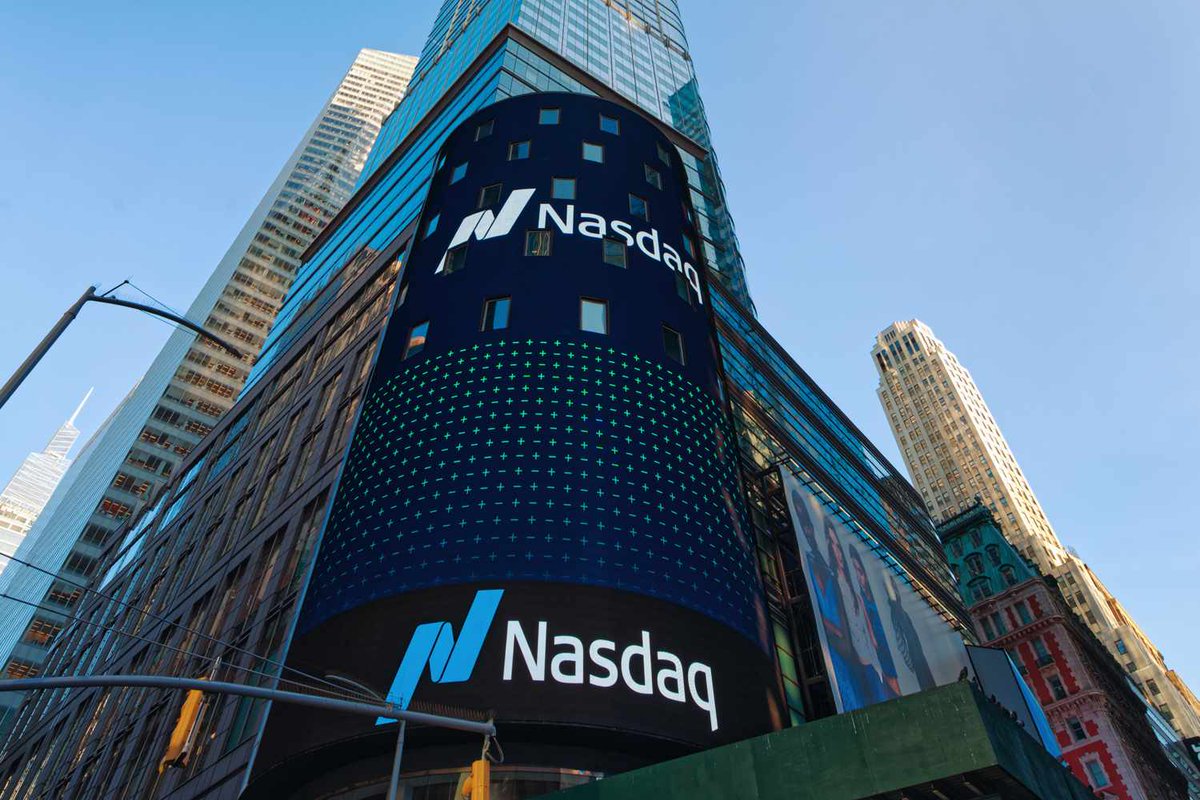
Warren Buffett just dropped a warning he’s only used once before. Right before the dot-com bubble burst.
1999: "Euphoria is the enemy." Berkshire sat on cash and refused to buy. The Nasdaq subsequently crashed 78%.
2026: Berkshire is sitting on a record $400,000,000,000 in cash. Zero major stock purchases. Buffett calls the current mania "worse than 1999."
At the exact same time, Michael Burry has reportedly positioned a massive short against the AI trade.
The two most calculated risk managers of our generation are looking at the same board and coming to the exact same conclusion: Cash is the only play.
They aren't trying to predict the exact day of the crash. They are just refusing to be the exit liquidity for the late buyers.
The warning is on the tape. Are you listening?
Follow +. I’ll keep you ahead of the cycle.
When Warren Buffett sits on $400B in cash and Michael Burry builds a massive bearish position against AI... you don't need a headline to tell you what's coming next.
Money speaks louder than words.
1999: Buffett refused to chase the dot-com bubble. Everyone called him "washed." The market eventually crashed nearly 80%.
2026: Buffett says, “We’ve never had people in a more gambling mood than now.” He isn't buying. He’s sitting on the largest cash pile in history.
Meanwhile, Burry is reportedly positioned for the AI bubble to burst.
Two legends. One message. While the crowd is chasing the hype, the GOATs are standing by the exit door.
Don't be the exit liquidity for the 1%.
Follow +.
An index near highs with less than 40% of its stocks actually participating is a house of cards.
TSLA quietly cracking without headlines is the classic warning sign of institutional de-risking. Phase 7 isn't going to be a 'healthy correction'—it's going to be a forced liquidation of the most crowded trade in history. Your macro maps are consistently ahead of the curve. Solid work.
The PLTR 2020 comparison is the perfect wake-up call.
If you're buying peak hype and panic-selling the first real post-IPO drop, you are literally volunteering to be institutional exit liquidity. Letting the weak hands get washed out in your $145–$165 zone is textbook patience.Phenomenal roadmap, keeping my alerts on for your buy trigger.
Emergency pre-market liquidity is never a sign of a healthy system.While $6.6B is small for the Fed, the urgency tells you everything about the margin stress behind the scenes in the energy sector. They’re fixing the pipes before the open so they don't burst. Thanks for keeping us updated on this flow.
Excellent historical reminder. Even the GOATs had to suffer below their IPO price before the generational run started.
But remember: NVDA didn't have a $1.5T+ valuation with a massive supply cliff ahead of it when it broke its IPO level. $SPCX has a lot of locked shares to digest first. Patience is the only play here. Solid context, man.
$SPCX is down 30% and the crowd is already trying to buy the dip. They are completely ignoring the supply math.
96% of the total share supply is still locked. What we’re seeing right now is just the market anticipating the upcoming unlock waves, even with zero bad news on the headline terminals.
If this roadmap plays out, we are going to see some incredible entry levels. I'm focusing on two scenarios:
The $130 level: A key psychological battleground.
The sub-$100 zone: Where the real, long-term value might hide if the supply pressure gets heavy.
If we get the confirmation signals at these levels, it’s going to be an absolute home run. But buying too early here is just volunteering to be exit liquidity.
I mapped the peak, now I’m patiently waiting for the floor.
Follow +
The $SPCX euphoria is officially out of control.🚨
Today, it joins the Nasdaq-100, less than a month after its IPO. Nasdaq literally changed their own rules—slashing the waiting period from 3 months to weeks—to fast-track this.
Why does this matter? Because $800B in passive money is now forced to buy.
JPMorgan estimates $4.3B of passive inflows will hit the stock regardless of the $2T valuation.
Here’s the reality most miss:
Passive funds don’t care about fundamentals.
They don’t care about Starship’s execution risk.
They don’t care if the valuation is 2x what it should be.
They are programmed to buy. And Wall Street is fueling the fire with trillion-dollar projections to keep the momentum going.
This is the classic bubble recipe: forced buying, extreme optimism, and an absolute disconnect from reality. History shows that when the index-inclusion pump reverses, the wealth destruction is brutal.
Don’t be the exit liquidity for the passive funds.
Follow +.
If CZ is betting on a supercycle, he's betting on the death of the old 'Halving-Crash' cycle. The transition from retail hype to sovereign strategy is the single most bullish signal in crypto history. Even if the path to 2026 is violent, the thesis is rock solid. People need to stop looking at 2020 models and start looking at the 2026 macro reality. Great thread.
The ¥30T wipeout is just the appetizer. The real story is the structural fragility of a market that relied on a currency that can no longer hold its own. We’re watching a decade of speculative positioning get liquidated in real-time. If you didn't have your risk hedges in place before this started, the coming weeks are going to be a brutal lesson in macro correlations.
🚨The bond market is sending a warning that equity investors are choosing to ignore🚨
The 30-year U.S. Treasury yield just hit 5.2%—the highest level we’ve seen since 2007.
Historically, every time yields cross this 5% threshold, risk assets face immense gravity. It’s simple market mechanics: when capital can get a guaranteed 5.2% risk-free return, it quietly drains out of overextended equities.
The setup is back, but the crowd is still chasing the ATH narrative. I’m not calling an immediate crash, but the structural risk right now is at a multi-decade high.
This Treasury setup is reading the exact same way it's about positioning, not guessing.
The next few weeks are critical.
Follow +.
Reality check on the AI bubble🚨
Samsung just posted some of the most mind-blowing numbers in tech history. Quarterly profit hit ₩89.4 trillion ($58.4 billion) — up an insane 1,810% year-over-year.
And yet, the stock tanked 7.7% today. It’s now down almost 24% from its recent peak in just two weeks.
If you want to understand how the AI bubble is digesting this run, this is a textbook example of "buy the rumor, sell the news." The market had been pricing in this massive earnings beat for months. Institutions built their positions early, and by the time the flawless data actually dropped, there simply weren't any marginal buyers left to push it higher.
I'm not saying the whole market is going to crash tomorrow. But it's a healthy warning. When the greatest earnings in corporate history trigger a sell-off, it means valuations at these levels are temporarily exhausted.
It’s time to play defense and manage your risk, not chase the FOMO.
Follow +.
@WhaleNoName A 64-year historical trend with zero exceptions is a statistic you simply don't bet against.
The disconnect between peak retail euphoria and consumer sentiment sitting at a 75 year low is wild. Markets don't top out when people are scared.
The $SPCX euphoria is officially out of control.🚨
Today, it joins the Nasdaq-100, less than a month after its IPO. Nasdaq literally changed their own rules—slashing the waiting period from 3 months to weeks—to fast-track this.
Why does this matter? Because $800B in passive money is now forced to buy.
JPMorgan estimates $4.3B of passive inflows will hit the stock regardless of the $2T valuation.
Here’s the reality most miss:
Passive funds don’t care about fundamentals.
They don’t care about Starship’s execution risk.
They don’t care if the valuation is 2x what it should be.
They are programmed to buy. And Wall Street is fueling the fire with trillion-dollar projections to keep the momentum going.
This is the classic bubble recipe: forced buying, extreme optimism, and an absolute disconnect from reality. History shows that when the index-inclusion pump reverses, the wealth destruction is brutal.
Don’t be the exit liquidity for the passive funds.
Follow +.
The $SPCX euphoria is officially out of control.🚨
Today, it joins the Nasdaq-100, less than a month after its IPO. Nasdaq literally changed their own rules—slashing the waiting period from 3 months to weeks—to fast-track this.
Why does this matter? Because $800B in passive money is now forced to buy.
JPMorgan estimates $4.3B of passive inflows will hit the stock regardless of the $2T valuation.
Here’s the reality most miss:
Passive funds don’t care about fundamentals.
They don’t care about Starship’s execution risk.
They don’t care if the valuation is 2x what it should be.
They are programmed to buy. And Wall Street is fueling the fire with trillion-dollar projections to keep the momentum going.
This is the classic bubble recipe: forced buying, extreme optimism, and an absolute disconnect from reality. History shows that when the index-inclusion pump reverses, the wealth destruction is brutal.
Don’t be the exit liquidity for the passive funds.
Follow +.
$SPCX: The trap is set, and it has nothing to do with the mission success.
It’s simple supply vs. demand.
Current float: 4%
Remaining: 96% (Locked)
The Catalyst: Aug 6th unlocks
By September, we’re looking at a massive expansion of the tradable float. Most buyers right now are ignoring this. They think they're buying the future; they’re actually buying the supply that insiders are about to offload.
I’ve seen this movie before. The IPO-to-unlock-cliff cycle is undefeated.
Don't be the one holding the bag when the float dilutes.
Follow +,for updates as we head toward August.
@cryptorover Fascinating breakdown. Nasdaq fast-tracking $SPCX by dropping the float requirements is the ultimate proof of how gamified passive investing has become. When index funds are legally required to buy a $2T company regardless of price, organic price discovery is officially dead.
Reality check on the AI bubble🚨
Samsung just posted some of the most mind-blowing numbers in tech history. Quarterly profit hit ₩89.4 trillion ($58.4 billion) — up an insane 1,810% year-over-year.
And yet, the stock tanked 7.7% today. It’s now down almost 24% from its recent peak in just two weeks.
If you want to understand how the AI bubble is digesting this run, this is a textbook example of "buy the rumor, sell the news." The market had been pricing in this massive earnings beat for months. Institutions built their positions early, and by the time the flawless data actually dropped, there simply weren't any marginal buyers left to push it higher.
I'm not saying the whole market is going to crash tomorrow. But it's a healthy warning. When the greatest earnings in corporate history trigger a sell-off, it means valuations at these levels are temporarily exhausted.
It’s time to play defense and manage your risk, not chase the FOMO.
Follow +.
When the ultimate bull starts warning you about a 'bear-market-like' flush, you don't debate it. You protect your capital. Tom Lee’s pivot is the loudest top signal we’ve seen all year. The narrative is finally catching up to the structural reality. Phenomenal callout, man. This is a must-read.
Diamond Tops are the silent killers of bull trends. Total compression before a violent resolution. Most retail is still waiting for a headline to tell them to panic, while the structure is already screaming 'exit.' Excellent breakdown—this matches up perfectly with the distribution I’ve been tracking. Essential roadmap for anyone still holding size here.
The index is healthy. The internals are not. 🚨
Right now, less than 40% of S&P stocks are trading above their 50-day moving average while the index sits near all-time highs. That’s not a healthy rally—it’s just 4 mega-caps dragging a corpse higher.
Under the hood, the divergence is screaming:
Volume is disappearing.
Market breadth is collapsing.
Retail sentiment is the most bullish we've seen since early 2022.
You already know how early 2022 played out. Smart money distributes into this kind of artificial strength. By the time the weakness becomes obvious to retail, the exit doors are already locked.
The real test starts next week when the corporate buyback blackout window opens. Once you remove that forced mechanical bid, this market loses its floor.
We saw this exact script in Q4 2021 and July 2024 right before the August flush. I’ve called these major macro turns for 15 years.
I’m currently watching from the sidelines, but the moment I start loading spot, I will post it here first.
Follow +. Don't play this blind.