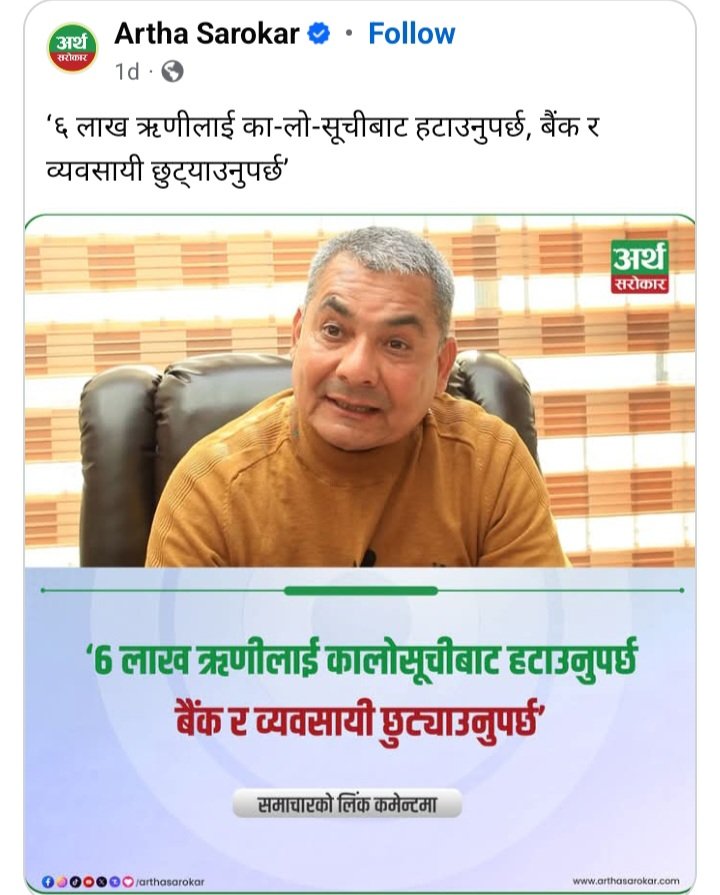
कति साह्रै हावा कुरा गरेको हाउ यो दुर्गा भाईले - शिक्षा मन्त्री भएर पैसाको अभावमा मैले धेरै शिक्षकहरुलाई स्थानिय भत्ता र महंगी भत्ता खुवाउन सकेको छैन। छाना नभएर र कक्षा कोठा नभएर सहयोग माग्न आउने विद्यालयहरुलाई खाली हात फर्काउन परेको छ। शिक्षकको अभाव भएर एक जना भए पनि शिक्षक दिन अनुरोध गर्ने स्कुलहरुलाई शिक्षक पठाउने जगेडा बजेट नै छैन। 😡😡😡 ६ लाख जनतालाई कालो सुची वाट हटाउने, सेना प्रहरीको तलव महिनाको १ लाख बनाउने र २० लाख रुपैयाँ भन्दा कमको ऋण मिनाहा गरिदिने काम कसरी गरि दिने रहेछन् दुर्गा भाईले? त्यसो गर्दा जनताले बैंकमा जम्मा गरेको जनताकै पैसा डुबी हाल्छ नि । धनको देवता कुवेर नै त होइनन नि यिनी भाई🤣🤣😂 अनी छापाखानामा किताव छापे जस्तै पैसा छाप्न पाईँदैन भन्ने कुरा सबैलाई थाहा छ होला नि। यस्ता हावा कुरा गरेर जनता झुक्याउनु हुन्न दुर्गा भाई 🙏 यो भन्दा पहिले रेल ल्याउने, पानी जहाज ल्याउने , १२ वर्षमा नेपाललाई दक्षिण एशियाको एकदमै धनी देश बनाउने र नेपाललाई सिंगापुर बनाउने भन्ने जस्ता हावा कुरा धेरैले गरेका थिए । यस्तो हावादारी कुरा गऱ्यो भने हाँसोको पात्र भइन्छ। कुरा बुझेर तथ्य कुरा गरुम । तथास्तु🙏🌹🙏
“सङ्घीयता खारेज गर” But Why?
Most give two answers: Corruption and Cost of Governance.
If your answer is Corruption. Shouldn’t the demand be directed at the corrupt politicians, and bureaucrats just like we always do, or the more logical thing to do would be to pressure the lawmaker to amend flaws in federalism.
And if your answer is cost, should we not focus on what makes federalism costly. Before federalism, there were 3,915 Village Development Committees (VDCs); now there are only 753 local government units. The country has moved from 5 Development Regions and 14 Zones to 7 provinces.
The major problem lies in the continued existence of 77 district, Unelected and very powerful CDOs who in many cases wield more power than elected mayors. It has also made citizens in most parts of Nepal still spend hours or even days traveling to district headquarters just to access basic services. These include citizenship, birth, death, marriage, and migration registration services that should ideally be handled locally but still often require district approval. filing or following up on criminal cases, issuing permissions for protests or public gatherings, mediating major disputes, handling legal and judicial services, managing land registration and transfers, approving construction or development projects, issuing licenses for vehicles, small industries, and cooperatives, distributing disaster relief and social welfare, managing teacher postings and transfers, conducting Public Service Commission exams, and verifying documents for passports or foreign employment. That has effectively created a redundant “fourth layer” of governance. Which overlaps with our 3rd pillar and has led to inefficiency, delays, and wasted resources. As a result, federalism costs more without delivering better governance, leaving citizens to fund multiple layers of government for the same work.