A 32-year-old junior doctor in Australia walked into his hospital laboratory on a Tuesday morning in July 1984, picked up a small glass beaker containing one billion live bacteria suspended in beef broth, and drank it. He had told no one in advance. He had not asked his wife. He had not asked his ethics committee. He had not asked his hospital. He had a theory that the entire global medical establishment had been treating millions of patients incorrectly for almost a century, and he had run out of other ways to prove he was right.
Three days later his mother told him his breath smelled like a corpse. Five days later he started vomiting at six in the morning. Ten days later he was endoscoped and found to have severe inflammation across the entire lining of his stomach.
He had given himself the disease he was trying to cure, in order to prove that the cure was a single course of antibiotics.
It took the medical establishment another twenty-one years to admit he was right.
His name is Barry Marshall. He won the Nobel Prize for Medicine in 2005.
I read his actual 1985 paper last night and could not stop thinking about it.
The textbook story of medicine treats stomach ulcers as a story that has always been understood. You have an ulcer, you take a course of antibiotics, you are cured. That story is true. It is also missing the part where, until almost the end of the twentieth century, this disease was considered chronic, incurable, and almost entirely caused by stress, spicy food, and personality flaws. Hundreds of millions of patients suffered with ulcers for years and decades. Tens of thousands died from complications. The entire global pharmaceutical industry built a multi-billion-dollar business selling acid-suppressing drugs that managed the symptoms while never touching the cause.
The cause was a bacterium. The cure was cheap. And one man drank the bacteria himself to prove it.
Here is the story almost nobody tells you.
In 1979, a quiet pathologist named J. Robin Warren was working at the Royal Perth Hospital in Western Australia. He was looking at biopsy slides under a microscope when he noticed something that should not have been there. Spiral-shaped bacteria, alive and active, sitting on the lining of a human stomach.
The medical world at the time was unanimous on this point. Nothing lives in the stomach. The stomach is filled with hydrochloric acid strong enough to dissolve metal. Bacteria could not survive in that environment. Every textbook said so. Every professor said so. Every pathologist who had ever looked at a stomach slide and seen something strange had assumed it was contamination.
Warren kept looking. He kept seeing it. He started photographing it. He began to suspect that what he was looking at was not contamination at all. It was a living organism that had figured out how to survive somewhere life was not supposed to exist.
For three years he could find almost no one in the hospital who would listen to him.
In 1981, a 30-year-old internal medicine trainee named Barry Marshall rotated through Warren's department. He was assigned the routine task of helping investigate twenty difficult gastrointestinal cases. Warren showed him the bacteria. Marshall, unlike everyone else in the department, did not dismiss it. He found it interesting. The two of them began a collaboration that would consume the next four years of their lives.
They biopsied one hundred patients. They cultured the tissue. Every patient with a duodenal ulcer had the bacteria. Every single one.
Marshall was 32 years old when he stood up at the 1983 Royal Australian College of Physicians meeting in Perth and presented the findings. He proposed that the spiral bacteria, now provisionally classified as Campylobacter pyloridis and later renamed Helicobacter pylori, were the actual cause of most peptic ulcers. The disease the medical world had been treating as a stress disorder for decades was an infection. It could be cured with two weeks of antibiotics.
The room laughed at him.
The senior gastroenterologists who had built their careers on the stress theory of ulcers were not interested in being told they had been wrong for thirty years. The pharmaceutical industry had just rolled out a new generation of acid-suppressing drugs called H2 blockers, beginning with Tagamet, which was on its way to becoming the best-selling drug in the world. The combined revenue of acid-suppressant drugs would peak at roughly 6 billion US dollars per year. Telling that industry their products treated the symptoms of an infection that could be cured with thirty dollars of antibiotics was not a popular position.
Marshall spent the next year trying to prove the theory with an animal model. He could not get the bacteria to infect rats. He could not get them to infect pigs. The bacteria was so well adapted to the human stomach that it apparently refused to live anywhere else. Without an animal model, the medical establishment had a perfect reason to keep dismissing him. He had no way to prove cause and effect.
In July 1984, he made a decision he later described in his Nobel lecture in language so understated it almost vanished off the page.
He decided to use himself.
The detail that should disturb every reader is what he did before he drank the bacteria.
He had himself endoscoped first. A camera went down his throat and into his stomach. The biopsy confirmed his stomach was healthy. No bacteria. No inflammation. No ulcers. He was a perfectly normal stomach in a perfectly normal 32-year-old body.
He pretreated with a single 600 milligram dose of cimetidine. This was an acid-suppressing drug intended to give the bacteria a fighting chance against his stomach's natural defenses. He did not want the experiment to fail because his acid killed the bug before it could colonize.
He took a culture from a patient with chronic dyspepsia. The patient's bacteria had been confirmed sensitive to standard antibiotics, so Marshall would be able to cure himself afterward if needed. He mixed the bacteria into about half a cup of warm beef broth. The concentration was roughly one billion live organisms per dose.
On Tuesday morning, July 12, 1984, at 10 AM, in the hospital laboratory at Fremantle Hospital in Western Australia, he drank it.
He told nobody.
He went home that evening and ate dinner with his wife and four young children. He did not tell his wife either.
For three days nothing happened. Then on the fourth day, he started to feel bloated. His appetite collapsed. He noticed that food felt strange in his stomach. His mother visited and recoiled. She told him his breath was so bad it smelled like something had died inside him. He brushed his teeth. The smell did not go away.
On day five he started vomiting. Clear watery liquid, every morning, around six AM, with no acid in it at all. The acid was missing because his stomach acid production had collapsed. The bacteria had colonized so successfully that they had shut down the very acid environment they had supposedly been incapable of surviving in.
He went back to the endoscopy lab on day ten and had another camera sent down his throat.
The footage was unmistakable. His stomach lining was inflamed across its entire surface. The biopsies showed Helicobacter pylori everywhere. Severe active gastritis. The exact pattern he had seen in hundreds of patient samples over the previous three years.
He had given himself, in ten days, the early stage of the disease the entire medical establishment had been telling him for years could not possibly be caused by a bacterium.
He still did not tell his wife.
She found out when he came home and told her over dinner. According to multiple later interviews, her response was something close to "you idiot." She made him take antibiotics immediately.
The paper appeared in the Medical Journal of Australia in 1985. It was three short paragraphs. It is now one of the most cited articles in the journal's history. It described, in dry clinical prose, a single subject who had ingested a known bacterial culture and developed the predicted clinical syndrome within the predicted timeline. The case study was one person. There was no control group. The methodology was strictly speaking against every modern principle of clinical research. The data was undeniable.
The medical world remained skeptical for another decade.
The most uncomfortable line in the entire historical record is what happened during those ten years. Senior gastroenterologists publicly mocked Marshall at conferences. He was passed over for academic positions. His career stalled. Patients across the world continued to be told their ulcers were caused by stress, spicy food, or character flaws. They continued to be prescribed acid-suppressing drugs for indefinite periods. Many of them progressed from ulcers to stomach cancer because no one was treating the underlying infection.
H. pylori is now understood to be one of the most common bacterial infections in human history. It currently colonizes roughly half of the entire global population. In countries with weaker sanitation it colonizes well over 80 percent. It is the leading cause of stomach cancer in the world, which is itself the fifth most common cancer in humans. Every case of stomach cancer that has occurred in the twenty years between Marshall's discovery and the medical establishment's acceptance of it could potentially have been prevented by a two-week course of antibiotics that already existed.
The estimate of how many lives have been saved since the treatment finally became standard is in the hundreds of millions.
By the late 1990s, large clinical trials in the United States, Europe, and Asia had replicated his findings beyond any reasonable dispute. The National Institutes of Health convened a consensus panel in 1994 and officially endorsed H. pylori as the cause of most peptic ulcers. Treatment guidelines began to change. By the early 2000s, eradication therapy with antibiotics had become the global standard of care.
On October 3, 2005, the Nobel Assembly at the Karolinska Institute in Stockholm announced that the Nobel Prize in Physiology or Medicine had been awarded jointly to J. Robin Warren and Barry Marshall.
Marshall was 54 years old. Twenty-one years had passed since the morning he drank the bacteria.
In his Nobel lecture he showed a slide that has since become famous in medical history circles. It was a comic he had drawn of himself standing in the laboratory holding the beaker, with his colleague Neil Noakes saying "Dr. Marshall you're crazy."
He included it because by the time he won the Nobel Prize, he had been called crazy professionally for so long that he had decided to make peace with it.
The most uncomfortable line in the entire historical record is the one Marshall himself has repeated in interviews many times since.
He said the medical establishment did not reject his theory because the evidence was weak. They rejected it because accepting it required admitting that they had been treating a generation of patients incorrectly, and that an entire pharmaceutical industry had been profiting from the management of a curable infection. The financial and reputational cost of being wrong was high enough that they preferred to assume the data was somehow wrong instead.
The Semmelweis reflex applies to the highest levels of modern medicine in exactly the same way it applied to nineteenth-century obstetrics.
Walk into any gastroenterology clinic today. Ask the doctors what causes most peptic ulcers.
All of them will say H. pylori.
Then ask them who proved it.
A surprising number will say his name.
Some of them will tell you the story. The 32-year-old junior doctor in Australia who could not get a senior committee to take him seriously. The Tuesday morning in July 1984. The beaker of beef broth in his hand. The mother who recoiled at his breath. The wife who called him an idiot. The decade of ridicule. The Nobel Prize.
The detail almost nobody hears in those retellings is the part of the story that should be carved into every medical school wall.
Marshall has been asked many times whether he was scared the morning he drank the bacteria. He has always said the same thing. He was not scared of dying. He was scared of being right. He knew, walking into the lab that Tuesday morning, that if his theory was correct, then the medical establishment had spent the previous half century misdiagnosing one of the most common diseases on earth. The implication was so embarrassing that the easier outcome, professionally, was for his experiment to fail.
He was hoping it would fail.
He thought he might survive being wrong.
He was not sure how the world would survive him being right.
He was 32 years old, with a wife and four children at home. He drank a billion bacteria anyway.
The thing he proved is now in every textbook.
The medicine he made obsolete is still on every pharmacy shelf, sold mostly to people who do not need it.
The infection he identified is still inside roughly half the human beings alive.
Most of them have never been tested.
Walk into the kitchen tomorrow morning. Make yourself a cup of coffee. Notice the shelf above your sink. Notice the bottle of antacids your parents kept on it. Notice that nobody ever told them that the symptom they were medicating was almost certainly an infection, and that the infection had a treatment that took two weeks and was almost always permanent.
He drank the bacteria so they would not have to.
Most of them never thanked him.
Most of them still do not know his name.
This is an urgent message from our Founding Editor @samar11. If you like our work and want to see it continue, please listen and subscribe:
https://t.co/2XjoqhVGwO
@BahramShakerin Started reading it. Very nice to read an exposition of Planck's 1900 paper. Most youtube videos don't even talk of how Planck used entropy and counting of microstates.
@WKCosmo An electron oscillating with an amplitude of 1 angstrom with a maximum speed > c would not violate causality if it emits an electron at one end of its oscillation and absorbs it at the other end.
V D Satheesan was never the obvious choice for Kerala’s next chief minister, except to the voters.
There is a photograph in my head from the Kerala Literature Festival in 2024, of Satheesan standing in the corner of a tent at Kozhikode beach, asking me about a Bulgarian novelist. Read more: https://t.co/wK4oZpf4Dg
The argument that a particle cannot travel faster than light hinges on violations of causality. But a particle can have speeds greater than light without violating causality. Imagine an electron confined to a mirrored cube with each dimension equal to 10 angstroms, say. There is no physical reason that it cannot travel faster than light since it isn't going anywhere and any photons it emits too would be confined to the container.
Kerala State Electricity Board (KSEB) is the most inefficient ineffective corrupt body in India. Its employees take home crazy salaries for no reason whatsoever. And now in the peak of summer UNANNOUNCED "load shedding" across the state for multiple hours. So conveniently AFTER the elections have been conducted, when all the KSRTC buses "proudly" display signs claiming "no power cuts for the last 5 years".
On the one hand thanks to the KSEB union aka mafia the government of Kerala does its best to deter people from installing solar power generators, on the other hand it claims Kerala is in "electricity generation deficiency" and now claims the "infrastructure cannot handle the load being demanded by the population." You'll never see this problem in ANY other part of India. Why?
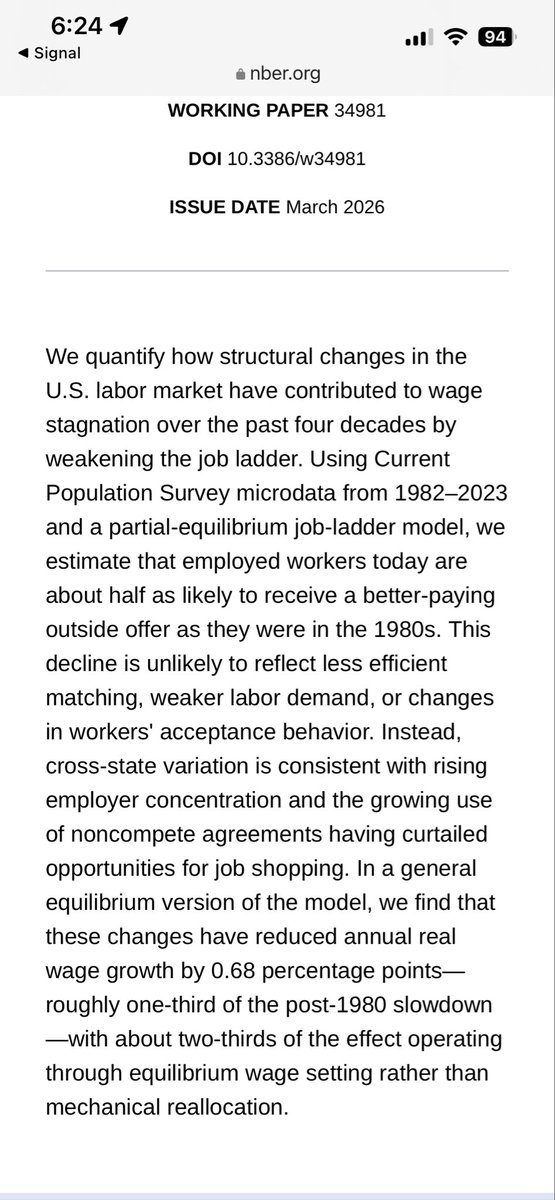
A shocking new NBER economics study finds that workers today are about half as likely to receive a better-paying outside job offer as they were in the 1980s — and that fully ONE-THIRD of this decline is attributable to “employer concentration and the growing use of noncompetes.”