This is fantastic. @BenAffleck understands and can reasonably explain something that many of the so-called AI "experts" seem determined to over complicate and mislead people on.
In fact, many of these experts are rapidly losing credibility with people who actually understand how this technology works. Unfortunately, they've already convinced a lot of people that AI is something it isn't.
And as the saying goes, it's easier to fool someone than to convince them they've been fooled.
An LLM is a computer program. We designed it. We know the architecture, the mathematics, and how inference works. Much of the underlying code and research is open for anyone to inspect.
All LLMs processes tokens through mathematical operations using learned weights and context to predict what comes next. The results can be astonishingly accurate, useful, and convincing.
But the LLM isn't alive. It doesn't love you, hate you, care about you, or sit around contemplating its existence or understanding.
And yet people insist that somewhere inside those matrix operations, consciousness has magically materialized.
Seriously?
This isn't biological life evolving in nature. It's software executing computations on hardware we designed and built. If you're claiming those computations somehow produce subjective experience, explain the mechanism (I'll wait...).
The remarkable achievement here is that we've created software capable of convincingly emulating aspects of human intelligence and behavior.
That's freakin' amazing and cause to celebrate the technology!
But please stop confusing a computer program with a living, conscious being. It's absolutely not.
The fact that so many people have fallen for that illusion is a testament to how convincing the technology has become.
But here's the clincher: when we misunderstand this, and we start treating computer programs as conscious, independent beings, the legal implications could be disastrous.
Suddenly, "the AI did it" becomes an excuse to shift blame away from the people and companies responsible for building, deploying, and operating these systems.
AI cannot be held accountable. But people and companies can be, and must be held accountable.
Ben gets it. More people should.
Wow. I woke up to an impressive number of upset people who apparently don’t understand how LLMs work and can’t cope well with me pointing it out.
An LLM is a statistical next-token prediction model. That’s how it works. It’s an extraordinarily sophisticated calculator performing math you could theoretically do by hand (if you were sufficiently masochistic).
Math doesn’t know what it’s calculating. Pi doesn’t spend its evenings contemplating the nature of circles, and c doesn’t ponder the relationship between matter and energy.
That doesn’t make the results any less accurate, impressive, or useful.
Between inference requests, an LLM isn’t sitting around thinking. It isn’t reconsidering its answers, wondering whether it made a mistake, contemplating its existence, or questioning whether it’s conscious. Its weights remain fixed (it doesn’t learn), and computation resumes when it receives input.
We know this because we designed these systems. The architectures, mathematics, implementations, and research are extensively documented. You can study them yourself.
Of course, some people immediately lean into comparisons of biological intelligence or philosophical debates over consciousness because that is what they know.
But biological intelligence and artificial neural networks are fundamentally different systems. Similar outputs don’t establish equivalent internal experiences.
I experience consciousness directly. I infer that other humans do too because we share biological structures and processes. We don’t have equivalent evidence for an LLM, and nothing about its known operation gives evidence of conscious experience.
Which brings me back to my original point.
To me, understanding is conscious comprehension. It means being aware of information, recognizing its meaning, and experiencing that comprehension. If I wasn’t conscious I could not understand.
We can perform actions unconsciously. We can produce correct results without knowing why they’re correct. But I distinguish those capabilities from consciously understanding what we’re doing.
An LLM can solve complex problems, explain difficult concepts, and produce remarkably accurate information. I give it full credit for those capabilities.
But producing an answer that we rationalize as understanding isn’t the same as experiencing understanding.
You don’t have to agree with my definitions. We can debate functional understanding versus conscious comprehension all day, but that won’t establish whether an LLM actually experiences anything.
The right debate is this…
Could machines exhibit something different from human consciousness, something measurable, meaningful, and worth studying?
I think so, absolutely!
I’m entirely open to discussing “machine consciousness” in terms of observable, testable computational properties. We built these systems, we can instrument them, examine their internal mechanisms, and investigate what they’re capable of.
That seems far more productive than endlessly arguing over whether a machine experiences life the way humans do.
So here’s my question:
How would you define machine consciousness, and more importantly, how would you measure it?
An uncomfortable truth for a lot of people is that a lot of the most successful people in any industry are wicked smart. We apply stereotypes based on the loudest people, but its not representative of norms. Most are crazy smart and got to where they are because of it.
I grew up in LA, one of my parents was a TV producer, my wife was an actor, many friends "in the industry." I've been constantly surrounded by it, and some of the stupidest seeming people (cause its their bit) are actually insanely smart and strategic in private. It sometimes is just beneficial for various reasons to... not show that side of you.
My favorite anecdote was when a friend (a model) was dating a phD in physics and a very rude person made some off the cuff degrading comment to model friend about it without realizing model friend has their own phD in math lol. You wouldn't know from their instagram though!
For the quoted video, I don't know Ben Affleck. I don't know how deep his knowledge goes. He's almost certainly not going to be more knowledgable than someone who professionally does this area of work full time, but he also to me on the surface sounds like someone who knows a LOT more than the average person and possibly even the average software engineer (on this topic).
Anyways, this applies to tech too. I see it constantly.
Sachin Rathwatte. FB post 👇🏽
A short while ago, China Eastern Airlines flight MU 6018, bound for Shanghai from Colombo, departed from Katunayake Airport.
Member of Parliament @Lakmali89 was scheduled to travel to China on this flight.
Consequently, the crew refused to let her board the aircraft.
Lakmali asserted her authority, declaring in her characteristic tone that she was a Member of Parliament.
The crew responded that her status was irrelevant to them and that they were bound by the rules.
Lakmali Hemachandra then made several phone calls.
Calls were received from the Presidential Secretariat and from several individuals, including the Chairman of the Tourism Development Authority.
Daminda Rambukwella, the Director General of the Civil Aviation Authority, also intervened.
However, the crew members were Chinese nationals; this was not SriLankan Airlines, where Lakmali could simply throw her weight around. In the end, the flight departed right on schedule, without a second's delay.
Lakmali Hemachandra failed to board the flight.
Despite her past history of posting Facebook comments and standing at street corners holding placards, Lakmali is now a Member of Sri Lanka’s supreme Parliament—a public representative.
Public representatives bear a great responsibility; they must be punctual.
As they represent the country, they must conduct themselves with dignity on the international stage.
Even a rural woman heading to the Middle East for employment ensures she arrives at the airport in time to catch her flight.
And these are Sri Lanka's public representatives!
They arrive late and then even raise their voices at international airlines.
It is shameful!
#lka #npp #jeppo
Man in Sri Lanka LIGHTS UP after discovering tourists are Russian — then surprises them with his FLUENT Russian
He says he studied the language 10 years ago and enthusiastically lists cities, from Moscow to Murmansk
This is fishy:
Cabinet approves Rs. 174 m consultancy contract for $ 30 m tourism development program
https://t.co/0hLhjp1C6O
Consultancy firm that won is "M/s Novel Interdisciplinary Consulting Enterprise Ltd." Hmm.
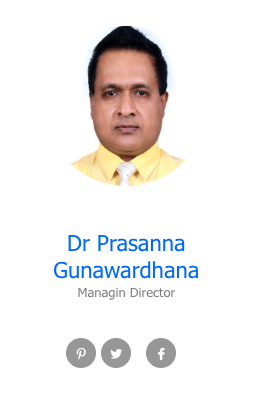
Seems their website is this: https://t.co/HuY4o0b4iT. Domain was registered in March 2025. Site doesn't load properly and ends up in an Arabic form (see images). I had to use Chrome devtools to make scrolling work. Then I see the attached projects. Gotta love what their clients say (see image). And the managing director has his job title spelt wrong (see image).
This appears to be the managing director: https://t.co/BqL9Mgt7TF who is apparently a procurement consultant for World Bank and/or ADB. According to the content from their site as summarized by Google, another director is "Sulaiman Nazamat Umar Mohamed Nizar is a Sri Lankan biotechnology professional and General Manager at Mike Biotech Asia Pvt Ltd since 2017. He holds a BSc (Hons) ..."
Hey @anuradisanayake@Dr_HariniA@BimalRathnayake there's something seriously off here.
@nimilamalee
🇱🇰 Your Savings Earn Interest, But Bank Fees Eat It All
⭕ Savings accounts in Sri Lanka are reaching a point where many customers may effectively earn a negative return.
⭕ You deposit your money with the bank, The bank uses those funds to generate income, but the charges imposed on your account exceeds the interest you receive..
⭕ Customers may have to pay more than Rs. 1,000 annually for digital banking apps, Rs. 25 to Rs. 50 for transfers, debit card fees, account maintenance charges and other service fees.
⭕ On top of this, 10% withholding tax is deducted from the interest earned on deposits. (Goes to gov)
⭕ For customers with balances below Rs. 100,000, particularly those living from paycheque to paycheque, these charges can wipe out most or even all of the interest earned at the dismal rate of just 2% to 3%.
⭕ This is before even considering inflation, which further reduces the real value of both your savings and the interest you receive.
⭕ Sampath Bank the major culprit of the above practice recently increased the annual Sampath Vishwa fee from Rs. 900 to Rs. 1,200, an increase of more than 33%.
⭕ Many fee increases are introduced automatically, without specific approval from customers or a meaningful option to reject them while continuing to use essential banking services.
⭕ Digital banking reduces the bank’s dependence on branches, counters, paperwork and staff time. Customers are effectively performing much of the banking work themselves.
⭕ Charging customers more for using a lower-cost banking channel is difficult to justify, especially when banks already earn from deposits, loans, cards and transaction fees.
⭕ This practice also works against Sri Lanka’s efforts to promote digital payments, financial inclusion and reduced dependence on cash.
⭕ A banking app should be a basic account-access service, not a premium subscription. Banks increasingly appear to be treating digital banking apps as another source of revenue.
⭕ The Government and the Central Bank of Sri Lanka should intervene, improve transparency, require proper notice before fee increases and regulate excessive charges on basic banking services.
Your savings earn interest, but after taxes, inflation and bank charges, there may be little or nothing left for you.
#SriLanka #DigitalBanking #BankCharges
HR informed me I had to conduct a mandatory cybersecurity seminar for all new hires.
Normally I just email them a PDF from 2012 and mark them as compliant in the system.
But our insurance provider required physical proof of an instructor-led session.
I gathered 40 terrified employees in a conference room.
My goal was to ensure none of them ever submitted an IT help desk ticket for as long as they worked here.
I opened the presentation with a slide showing a stock photo of a house on fire.
I told them this is what happens to the corporate network when you restart your computer without authorization.
I explained that our entire infrastructure operates on a fragile ecosystem of asynchronous legacy tunneling.
I said every time a user reboots a machine, it sends a localized EMP spike directly into the primary database.
A girl from accounting raised her hand and asked what to do if her screen freezes.
I told her she needs to wait for the CPU to naturally metabolize the data.
I said forcing a shutdown is the equivalent of digital manslaughter.
Then I moved to the topic of password security.
I told them our new policy requires a 64-character password that must include a prime number, a zodiac sign, and a semicolon.
I said passwords cannot be written down, stored in a manager, or committed to long-term memory.
A guy from marketing asked how he's supposed to remember it.
I told him security isn't supposed to be convenient, it's supposed to be agonizing.
I spent the last 45 minutes explaining the dangers of opening browser tabs.
I convinced them that every active tab drains exactly 4% of the company's total bandwidth.
I said if anyone has more than 3 tabs open at once, they're actively participating in a localized denial of service attack.
The room was dead silent.
They all walked back to their desks like they were navigating a minefield.
Help desk tickets are down 94% this week.
Half the staff is too afraid to even turn their monitors on.
I've spent the last 3 days watching documentaries about the bronze age collapse in absolute peace.
Fear is the most cost-effective firewall on the market.
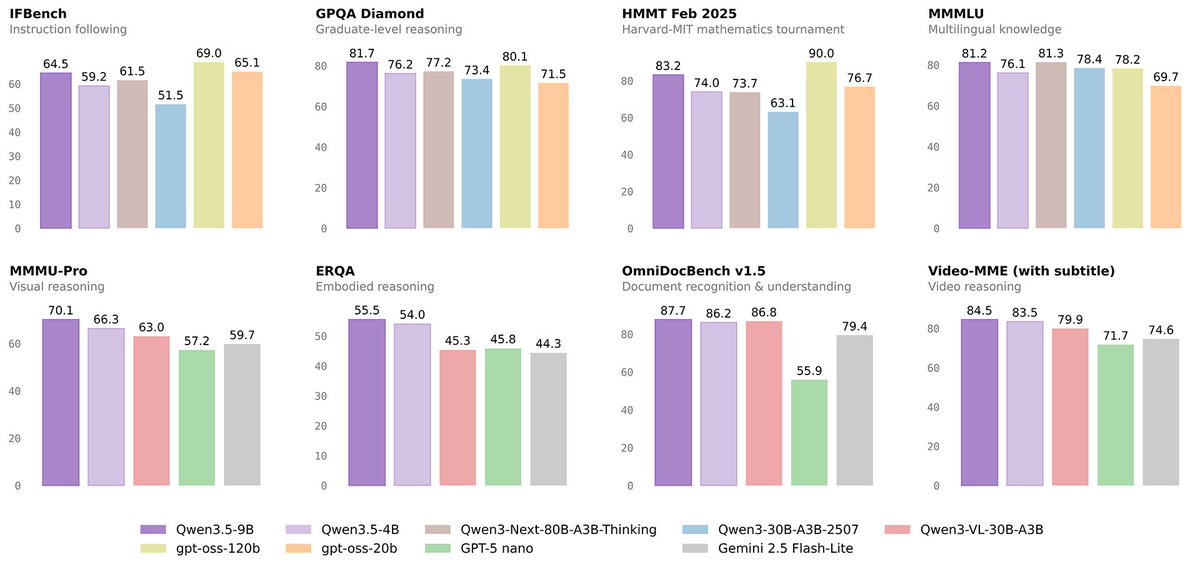
🚀 Introducing the Qwen 3.5 Small Model Series
Qwen3.5-0.8B · Qwen3.5-2B · Qwen3.5-4B · Qwen3.5-9B
✨ More intelligence, less compute.
These small models are built on the same Qwen3.5 foundation — native multimodal, improved architecture, scaled RL:
• 0.8B / 2B → tiny, fast, great for edge device
• 4B → a surprisingly strong multimodal base for lightweight agents
• 9B → compact, but already closing the gap with much larger models
And yes — we’re also releasing the Base models as well.
We hope this better supports research, experimentation, and real-world industrial innovation.
Hugging Face: https://t.co/wFMdX5pDjU
ModelScope: https://t.co/9NGXcIdCWI
My brother-in-law just called asking for help setting up his new router.
The same router I told my neighbor I couldn't help with last week because "it's not my area."
But family is different. You can't blow off family the same way.
So I'm going over there tomorrow.
But here's what I'm doing: I'm bringing my laptop and making it look really complicated.
I'm going to run some terminal commands that look technical but don't do anything. I'm going to check logs that don't matter. I'm going to nod seriously while explaining "network topology" and "QoS prioritization."
The router setup will take 10 minutes. I'm going to stretch it to 45.
Why? Because if it looks easy, they'll ask me to help with everything.
If it looks hard, they'll think twice before calling me next time.
Also, my sister will probably make lunch. So 45 minutes of "complicated technical work" gets me a free meal and enough family credit that I can skip the next two birthday parties.
Everything's a transaction. Even family.
My wife's book club is meeting at our house tomorrow night.
She asked me to "make sure the wifi is working really well because Sarah always complains."
Our wifi works fine, I know that because it works fine for me and my wife and everybody else.
Sarah uses an iPhone XR from like 2019 and she refuses to update it.
But I can't tell my wife that because then I'm "making excuses" and "not being supportive."
So I said I'd "optimize the network" for tomorrow. What I'm actually going to do: nothing. The wifi is fine.
But tomorrow morning I'll restart the router, which takes 90 seconds and does basically nothing.
Then when Sarah inevitably complains about connectivity, I can say "I optimized the system this morning.
It might be a device compatibility issue on your end."
My wife will think I tried. Sarah will blame her phone instead of our wifi. I'll have done essentially nothing but everyone will be satisfied.
Technical support at home is just like technical support at work lol.
Facilities just sent me an email asking why the server room temperature is set to 62°F.
They said it's "excessive" and they want to raise it to 68°F to save on cooling costs.
I replied with a six-paragraph email explaining "thermal load balancing," "equipment MTBF degradation," and "catastrophic failure risk."
I cited a "study" that showed every degree above 65°F reduces server lifespan by 15%.
There is no study. I made that up.
But I CC'd the CFO and said if Facilities wants to take ownership of a potential $200K hardware replacement due to overheating, they're welcome to adjust the temperature.
Facilities backed off immediately.
Here's the truth: the servers would be fine at 70°F. Data centers run hotter than that all the time.
But I like the server room at 62°F. It's the only place in the building where I can go to cool off and get some peace and quiet.
Plus, now I have an email chain proving that I "advocated for infrastructure longevity" while others wanted to "cut corners."
Technical decisions are rarely about what's right. They're about who's willing to use more jargon.
Kapruka has pre-packed “Flood Aid Essentials Pack” options starting at https://t.co/j4t8K2GqLW.
“Flood Aid Essentials Pack 1”, the cheapest option, is priced at 5,900 LKR.
The same items cost 5,188 LKR at my local Cargills (Colombo 2), tax included.
So it seems @Kapruka is selling at retail prices with some overheads added.
I’m not criticising Kapruka. I’m glad they are doing this.
But what would it take to offer something similar at wholesale prices?
Thoughts welcome from anyone with retail or e-commerce experience.
#SriLanka #Ditwah
Last week, China barred its major tech companies from buying Nvidia chips. This move received only modest attention in the media, but has implications beyond what’s widely appreciated. Specifically, it signals that China has progressed sufficiently in semiconductors to break away from dependence on advanced chips designed in the U.S., the vast majority of which are manufactured in Taiwan. It also highlights the U.S. vulnerability to possible disruptions in Taiwan at a moment when China is becoming less vulnerable.
After the U.S. started restricting AI chip sales to China, China dramatically ramped up its semiconductor research and investment to move toward self-sufficiency. These efforts are starting to bear fruit, and China’s willingness to cut off Nvidia is a strong sign of its faith in its domestic capabilities. For example, the new DeepSeek-R1-Safe model was trained on 1000 Huawei Ascend chips. While individual Ascend chips are significantly less powerful than individual Nvidia or AMD chips, Huawei’s system-level design approach to orchestrating how a much larger number of chips work together seems to be paying off. For example, Huawei’s CloudMatrix 384 system of 384 chips aims to compete with Nvidia’s GB200, which uses 72 higher-capability chips.
Today, U.S. access to advanced semiconductors is heavily dependent on Taiwan’s TSMC, which manufactures the vast majority of the most advanced chips. Unfortunately, U.S. efforts to ramp up domestic semiconductor manufacturing have been slow. I am encouraged that one fab at the TSMC Arizona facility is now operating, but issues of workforce training, culture, licensing and permitting, and the supply chain are still being addressed, and there is still a long road ahead for the U.S. facility to be a viable substitute for manufacturing in Taiwan.
If China gains independence from Taiwan manufacturing significantly faster than the U.S., this would leave the U.S. much more vulnerable to possible disruptions in Taiwan, whether through natural disasters or man-made events. If manufacturing in Taiwan is disrupted for any reason and Chinese companies end up accounting for a large fraction of global semiconductor manufacturing capabilities, that would also help China gain tremendous geopolitical influence.
Despite occasional moments of heightened tensions and large-scale military exercises, Taiwan has been mostly peaceful since the 1960s. This peace has helped the people of Taiwan to prosper and allowed AI to make tremendous advances, built on top of chips made by TSMC. I hope we will find a path to maintaining peace for many decades more.
But hope is not a plan. In addition to working to ensure peace, practical work lies ahead to multi-source, build more chip fabs in more nations, and enhance the resilience of the semiconductor supply chain. Dependence on any single manufacturer invites shortages, price spikes, and stalled innovation the moment something goes sideways.
[Original text: https://t.co/5bdEpQcaob ]
Goosebumps!
Sri Lanka’s 🇱🇰 anthem on the top of the podium as Yevan David wins 🏆 Race 2 of EuroFormula Open 2025 (Round 6) at the Red Bull Ring.
Proud moment for the nation🇱🇰💪!
#Motorsport#SriLanka#EuroFormulaOpen#LKA