Four facts:
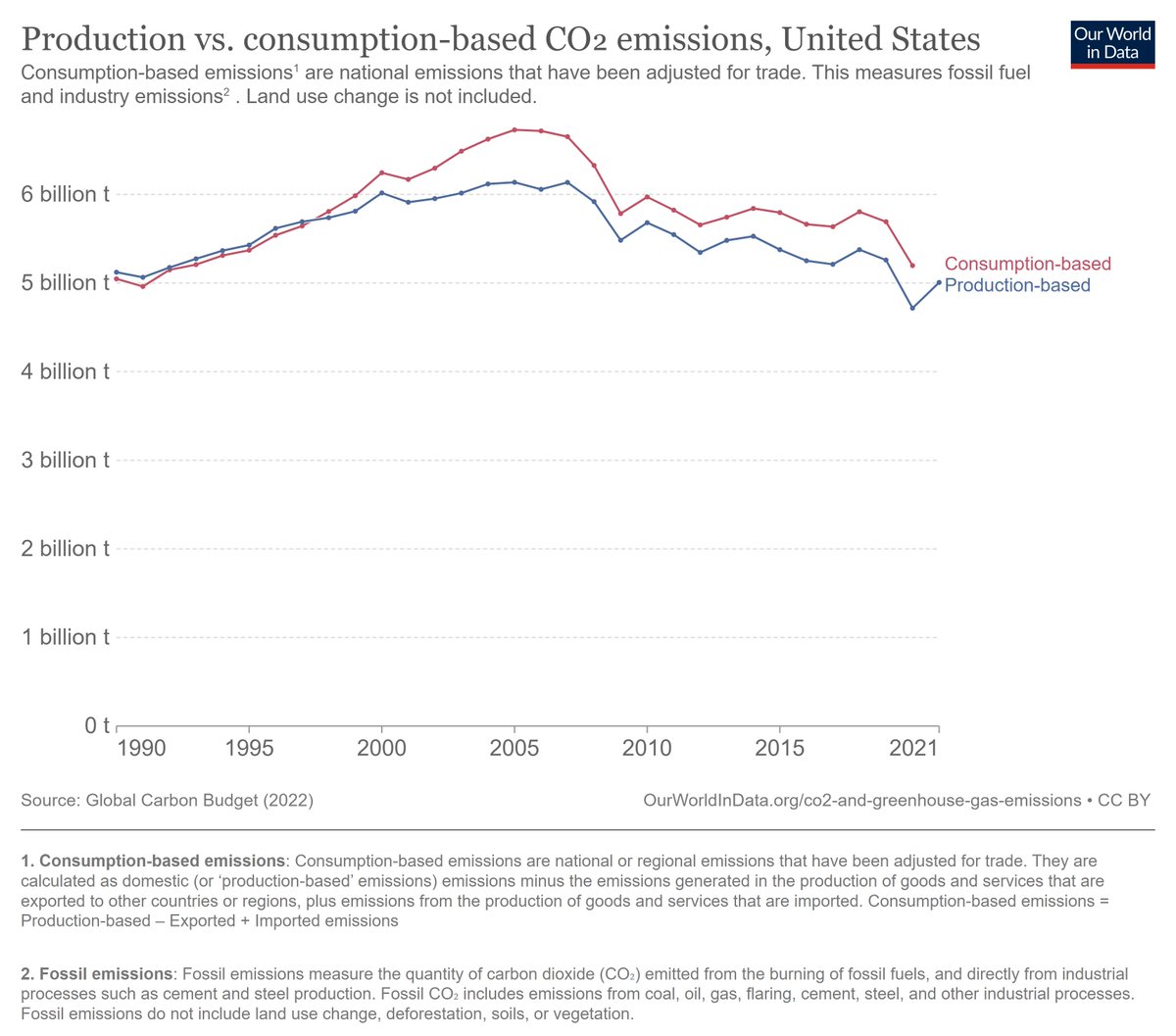
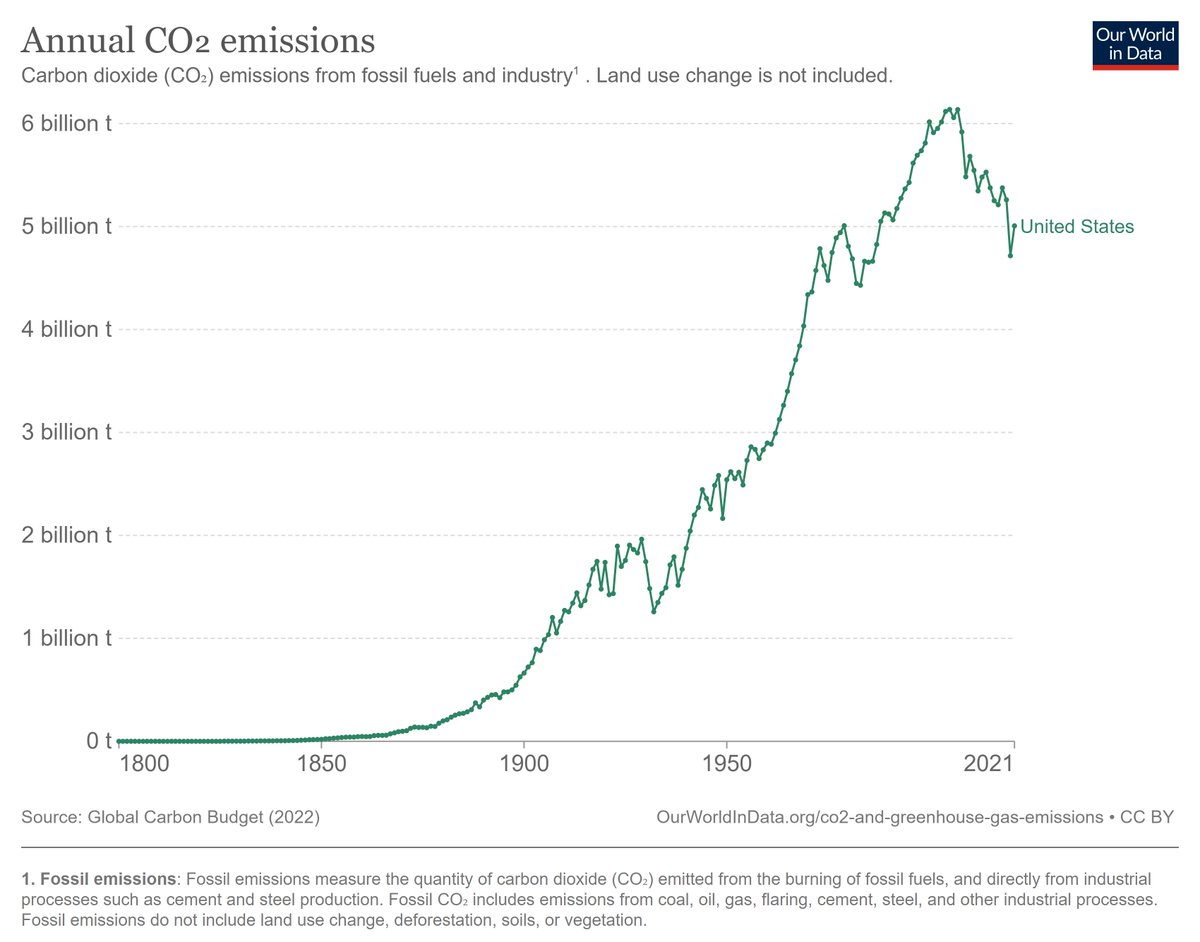
1. U.S. total carbon emissions were at the same level in 2021 as in 1979.
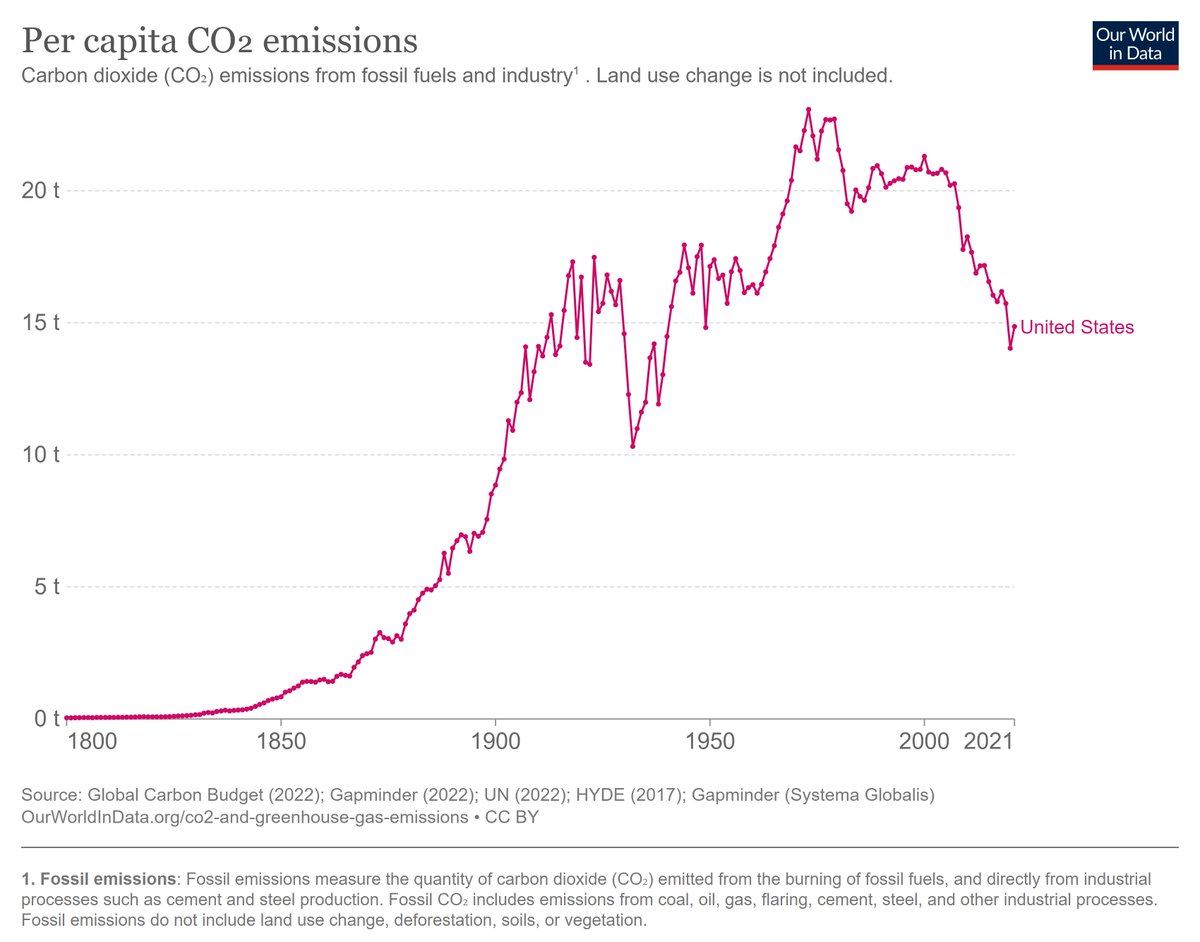
2. Per capita emissions were at the same level as 1912.
3. Outsourcing of U.S. emissions to other countries is very small.
4. U.S. emissions are less than half of China's.
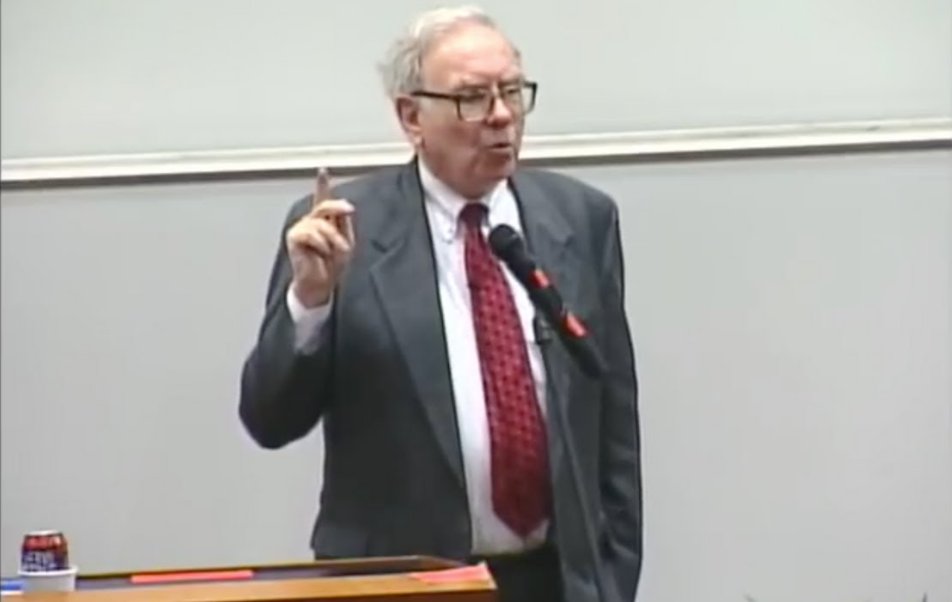
In 2001, Warren Buffett gave a talk at the University of Georgia.
He asked them the most Warren Buffett question ever:
• If you could invest in a friend and get 10% of their income for life -- who would you pick?
Once the students answered the question, he then asked this:
• Why would you invest in that person?
• What character traits do they have?
Now they have a list of character traits to adopt.
Shortly after this, Buffett asked:
If you could short a friend's earnings, who would you pick and why?
Now you have a list of character traits to avoid.
----
1. Do not think this thought experiment is only about money.
You can use it for whatever currency you value.
E.g. Happiness coin
If you could get 10% of a friend's happiness, who would you invest in and why?
If you could short someone's happiness, who would you pick and why?
You can run the same thought experiment with Fitness coin, Friendship coin, Romance coin, etc`
2. This thought experiment is genius because it hacks a bug in life's video game:
Humans are terrible at self-awareness.
But we are great at spotting things in other people.
E.g. If your friend is in the wrong relationship, you can realize in 10 minutes what may take them 10 years.
Daniel Kahneman summarised his book on cognitive biases with the following:
“The premise of this book is that it is easier to recognize other people’s mistakes than our own.” - Daniel Kahneman
3. Nuance - It has to be purely from merit.
Buffett says it can't be because someone will inherit a large sum from their parents.
It has to be based on their behavior.
E.g. If you want 10% of someone's fitness coin, it's not because of incredible genetics -- is because of the actions they take.
I’m not Dem or Repub
I personally REALLY like all the select committee members. Smart, well-intentioned with diverse constituents with diverse values.
I feel strongly funding SCIENCE––the pursuit of truth from which American🇺🇸 progress flows should be bipartisan + unpolitical
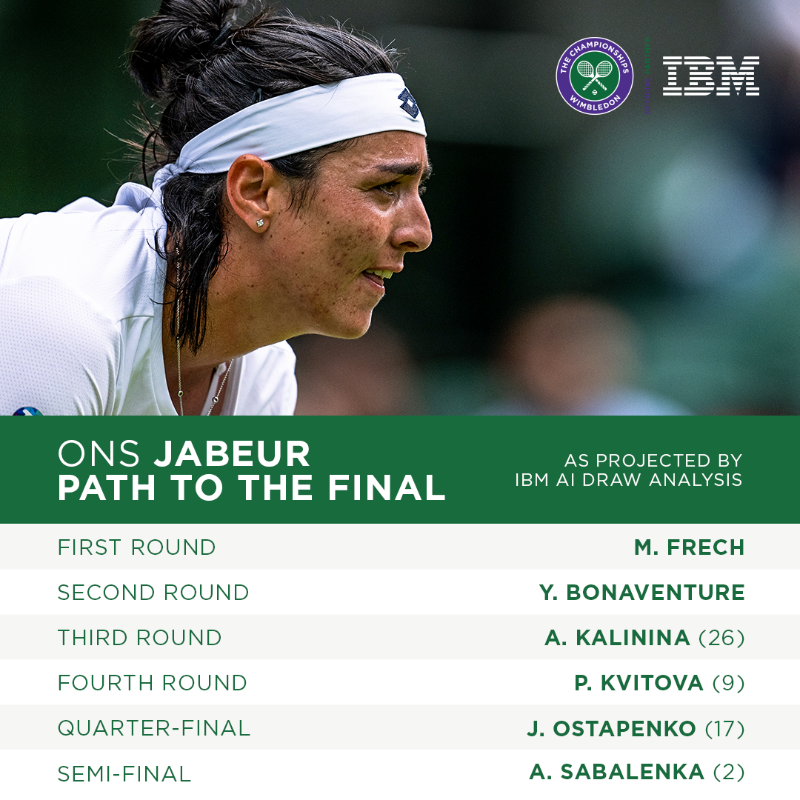
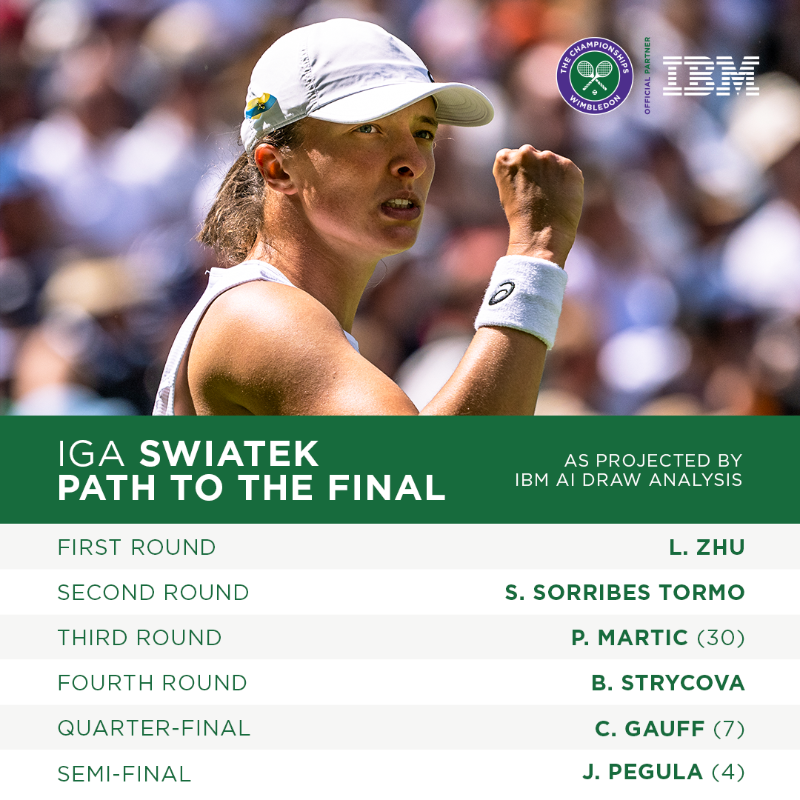
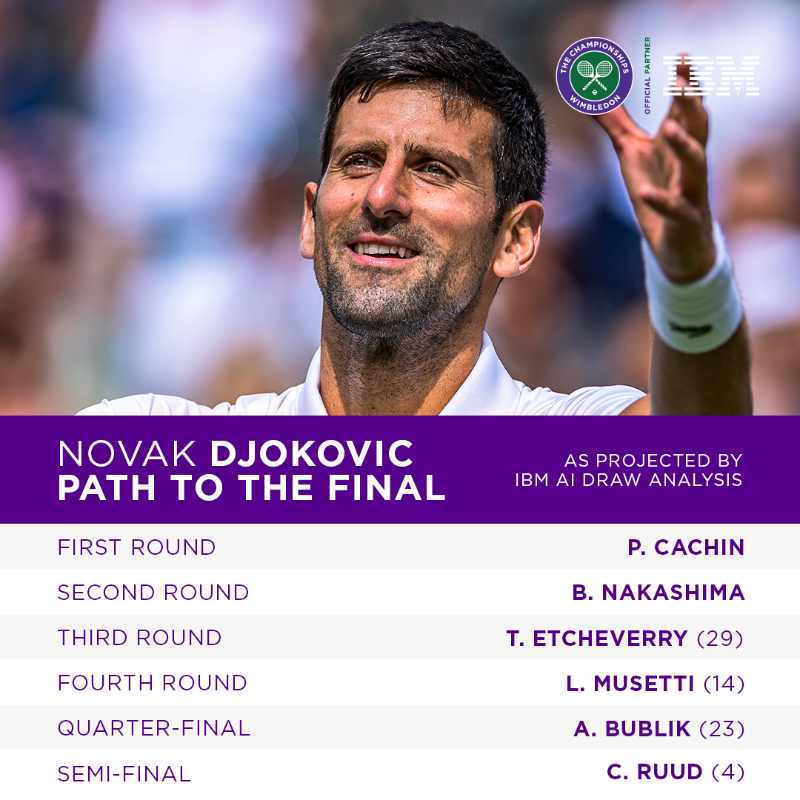
The journey to the #Wimbledon final, as projected by @IBM’s AI Draw Analysis..The journey to the #Wimbledon final, as projected by @IBM’s AI Draw Analysis..The journey to the #Wimbledon final, as projected by @IBM’s AI Draw Analysis..The journey to the #Wimbledon final, as projected by @IBM’s AI Draw Analysis..The journey to the #Wimbledon final, as projected by @IBM’s AI Draw Analysis..The journey to the #Wimbledon final, as projected by @IBM’s AI Draw Analysis...
Modern man is in a terrible predicament. He is helplessly enamored with the beauty of what the old world built, yet despises the beliefs that inspired them to build it.
For context, I am pro-science (it is sad to say that I have to declare this upfront) and our family foundation, the @PershingSqFdn, is a major funder ( ~$100m to date with more to come) of scientific research, but something has gone really wrong with science and our country when anyone who challenges currently accepted science is branded a conspiracy theorist and is censored by major media companies.
The scientific method is about constantly challenging our assumptions. It is about skepticism and deep research to understand and explain new data that are inconsistent with initial observations or conclusions.
Science is an unending search for the truth, and this ongoing search is critical, as what was once deemed to be settled science is often revised or reversed with the passage of time. For example, consider how the science of human nutrition has changed dramatically over time, or hypotheses about the causes for Alzheimer’s. And it wasn’t that long ago that doctors were quoted in ads recommending cigarettes as good for your health.
We should value those critics who challenge the status quo and continue to ask the hard questions. It is particularly important to do so when the economics of the current scientific understanding provide rewards to industry that are in the hundreds of billions of dollars, with the associated unavoidable perverse incentives.
We should seek to answer the concerns of those who challenge the current scientific wisdom. We should not simply dismiss them as conspiracy theorists. Doing so impedes the progress of scientific knowledge, and may cause us to miss opportunities to correct mistakes that continue to cause harm.
@RobertKennedyJr and others have raised important questions about the safety of some vaccines and have sought explanations for the dramatic increases in the incidence of childhood allergies, autism, and other health issues. These are good questions that have not been adequately answered. And I say this from the perspective of someone who is fully vaccinated along with my kids.
RFK may be right or wrong in his theories. That said, his concerns are ones shared by millions of parents and others. Rather than censor RFK and the skeptics, shouldn’t we instead seek to understand the causes for the massive increase in autism and allergic diseases in our children over the last 30 or so years? If vaccines are not the cause for increased autism and other allergenic conditions, then what is the cause or causes?
I think we would all greatly benefit by dropping the words ‘conspiracy theory’ from our lexicon and opening our minds to the possibility of improbable alternative explanations. When one hears something labeled a conspiracy theory, the natural reaction is to dismiss the theory. That is not a good way to get the truth. Conspiracy theories are actually just theories that are labeled as such to discourage further investigation.
I have had my own serious issues with @TuckerCarlson over the years and disagree with him on many subjects, but I have to say he gets its right in this evening’s episode which is worth a watch.
I recommend the Tucker segment at the risk of discrediting everything I have said above for certain audiences. That said, I am a strong believer in seeking the truth from a wide spectrum of observers and media participants.
I encourage you to give this approach a try. When even your worst enemy has an insight you agree with, I have often found it has a higher probability of being true. I think you will find this approach will make it easier to get closer to the truth in an uncertain world.
A world where public health officials are mistrusted is a more dangerous world. We need to restore this trust. Trust emerges from transparency, accountability, and ultimately from positive outcomes from the policies implemented.
In the fog of the Covid war, many mistakes were made by our government and our public health officials. That is to be expected and needs to be acknowledged.
But if we are to regain faith in our public health system, we need to understand what mistakes were made, and hold accountable any conflicted bad actors who caused harm.
Vaccines have saved millions of lives. A world without polio, small pox, and tetanus is a healthier, happier, and safer world. This does not mean, however, that multiple Covid vaccines should have been administered to every human being regardless of their age or condition during the crisis.
We also need to be particularly careful about assessing the risk and reward of the vaccines we give minors, particularly young children and infants as they cannot provide informed consent.
Had we listened to the skeptics of our government’s approach to vaccination or extended lockdowns for all, rather than censoring them — for example, those who suggested that the vaccine be principally given to the aged and those with co-morbidities and not to healthy children, or had we followed the recommendations of the Great Barrington Declaration — many lives may have been saved with reduced negative long-term effects on the economy, the education of our children, and our citizens’ mental health.
The opportunity for learning from our mistakes begins with transparency and accountability. Providing an open forum for the most aggressive and vocal critics of our government’s vaccine and other Covid policies to share their views and to be responded to by our most credible experts to address their concerns would be a big step forward in advancing the discussion and enabling learnings from our past mistakes.
I was, however, mistaken in encouraging a debate between @RobertKennedyJr and @PeterHotez as based on my further research Hotez does not appear to be a credible advocate for vaccine policy in light of the repeated inaccuracies of his public statements during the crisis and potential conflicts he may have.
What about RFK you might ask? RFK is not a scientist, but he has assumed the mantle as one of the most aggressive critics of vaccine policy, and he is extremely articulate and has a highly visible public profile as a presidential candidate. These are all qualities which make him a excellent choice for an antagonist in the vaccine discussion.
We can find better experts than Hotez who can help advance the discussion and address any of RFK’s potentially mistaken claims or reasoning.
And it should be a discussion rather than a debate. The goal should not be to determine who won or lost, but rather to advance knowledge and understanding.
Let’s not censor, dismiss, or run from responding to those who challenge authority, conventional wisdom or even our current scientific understanding, as doing so only serves to destroy confidence in our system, our government and our nation.
Arching through the vast expanse of fog, is a limestone bridge, almost swallowed by the mist, vertical, steep and ethereal
This is the Tiansheng Bridge, in China
https://t.co/fpqgGtXlhY