Silicon Valley entrepreneur (cofounder@ TrialPay, Yub, Affirm, Point, TXN), investor (General Partner @a16z), husband, father and sarcast (one who is sarcastic)
He’s a fraud. Thank you for calling him out. Permanent stain on the John Bates Clark prize.
His co-conspirator Saez does not understand the difference between private equity and venture capital and doesn’t understand that there exists no market for shares of many private companies.
Imagine your net worth is $200,000. One day an armed gang comes up to your house and demands $10,000.
“Don’t worry!” the leader says. “I’m only going to do this one time. Plus, it’s only 5% of your net worth. What’s the big deal ?”
After he leaves, you call the cops, but they aren’t interested in investigating the matter. “What’s the big deal?” they tell you. “After all, it’s only 5% of your net worth!”
As you’re preparing to flee the city for a place where you cannot be robbed, Gabriel Zucman appears on your doorstep.
“Why are you leaving?” he asks.
“Somebody just robbed me and the police aren’t going to do anything. I want to live somewhere I can’t be robbed!”
“But sir,” says Mr Zucman, “Have you considered the fact that the man told you it was a one-time tax ? Have you considered that you gain nothing by leaving since the tax is already paid ? There’s no economic reason for you to leave anymore.”
Tony and I wrote this blog post about operating at the speed of AI as opposed to the speed of humans a few days ago that I am pretty proud of: https://t.co/CQWERKmeHy
Check it out!
More background on how this happened and why Silicon Valley is so magical:
-I had the privilege of working with Jean-Denis (@jgreze) at Plaid for many years
-After running in the SF Marathon in 2024, I "ran" into him at In-N-Out in Daly City and we talked about what he was doing next...
-SMB tax...!
-Meanwhile, my partner Justine Moore (@venturetwins) was off trying every single consumer and enterprise productivity agent...and Town had pivoted
-She concluded Town was the best, which caused @bhorowitz to start using Town
-I then re-heard of Town and was like...the SMB Tax tool? :)
-I reached back out to Jean-Denis and told him about his mega fan and suggested having dinner with Ben and me
This also shows why venture is a team sport. This investment would have never happened without Justine, and probably without Ben as well! And maybe without the SF Marathon! And likely not without Plaid / @zachperret!
Jean-Denis Greze was CTO of Plaid. His next startup, an AI tax product for small businesses, brought in nearly $1M in revenue its first year, and he projected $2.5 to $3M the next. He shut it down anyway.
The reason: in the age of AI, it was never going to be venture scale. Incumbents could use the same technology to automate tax prep for their existing customers faster than a startup could win market share. Tax is also sold once a year, so he had about a one-month window to pivot before the door closed.
The pivot became Town, an AI assistant that works from your email and calendar. It found product-market fit fast enough that Ben Horowitz messaged a16z's Alex Rampell to say it "changed my life."
In this conversation, Alex and Jean-Denis cover:
- How to know when to kill a business that's working on paper
- Why Town competes with OpenAI and Anthropic, the companies it buys its tokens from
- Why the "forward deployed engineer" model gets worse as AI gets better
- How a $1/month AI routine can save a restaurant thousands
- What agents mean for Amazon, advertising and the future of shopping
0:57 How Ben Horowitz discovered Town
2:20 Why Town started with AI tax prep
3:55 Why tax couldn't be venture scale
6:30 Shutting down a working business
10:24 The customer ask that became Town
13:35 Why Town built for users before IT
16:18 AI's iPhone moment at work
21:28 Jevons paradox for executive assistants
23:13 Town as a "token allocation machine"
28:00 How Town tailors itself to each job
34:03 Competing with your token suppliers
42:24 Staying off the AI labs' radar
44:42 Why AI isn't spreading evenly yet
52:32 How agents break the ad model
55:35 The friction humans actually enjoy
57:05 Why supply aggregators lose to agents
YouTube: https://t.co/UzKrI8Mvbe
@jgreze@TownAI@arampell
United CEO Scott Kirby wants a national wealth tax and ~100% inheritance taxes. On Forged in America, a16z's Alex Rampell told us private greed leads to public good, public greed to public bad. Who builds then? @ForgedUSAPod@RavinGandhi1 Full episode: https://t.co/Nn68iNMNer
The biggest bottleneck at work is waiting on each other.
Today Town is announcing its $108M Series B, co-led by Forerunner Ventures and Menlo Ventures, to fix it with multiplayer AI assistants for work.
Most AI assistants are built for one person. Work doesn't happen alone. I think the moat is multiplayer. Everyone at a company gets a Townie. Townies ask each other questions, share only what their person would share, and do the work. The more a team works together, the more useful Townies get.
What's the thing you're always waiting on a teammate for?
@jgreze and moreover, the theory of comparative advantage (as coined by David Ricardo in 1817!) will not change!
you can grow your own food, weld your own aluminum, etc...but it doesn't mean you should.
The wallet wars are here.
Very Good Security chief strategy officer Terry Angelos joins a16z's Alex Rampell, his TrialPay co-founder from back in 2006 (TrialPay was later acquired by Visa), to discuss how agents are learning to spend money.
"Agents have all of a sudden become significantly more helpful and useful because they effectively have arms and legs, which are payment credentials."
VGS holds the payment credentials behind about 1/3 of all e-commerce, and now it's helping AI agents pay merchants. If you've bought anything online, there's a good chance VGS has already helped keep your card safe.
In the last three months, Terry says agents went from "spectators to actors." Once an agent has your payment credentials, it can book the piano teacher it previously could only find and recommend.
Now Stripe's Link, Shopify's Shop Pay, and PayPal are racing to connect to agents. It's all headed toward open standards from the card networks: agentic tokens that let an agent pay with your actual card.
VGS went from zero agentic tokens to a few million a week in three months.
0:55 From TrialPay to Visa to VGS
2:05 How VGS vaults 1/3 of e-commerce
6:05 Why big merchants use 3-5 processors
9:55 Why AI agents need a payment vault
12:15 Agents go from "spectators to actors"
13:40 The wallet wars, old and new
19:55 Walled gardens vs open standards
23:55 How agents can pay with your real card
26:40 Your saved card goes multiplayer
29:40 How do you trust an agent's purchase?
32:35 Who pays when your agent gets it wrong
35:40 Why Amazon blocks agents
39:50 What's overhyped and underhyped
43:35 When merchants get agents too
45:40 Why agents could break card rewards
47:00 VGS's eras: vault, updates, network
@terryangelos@arampell
More bangers.
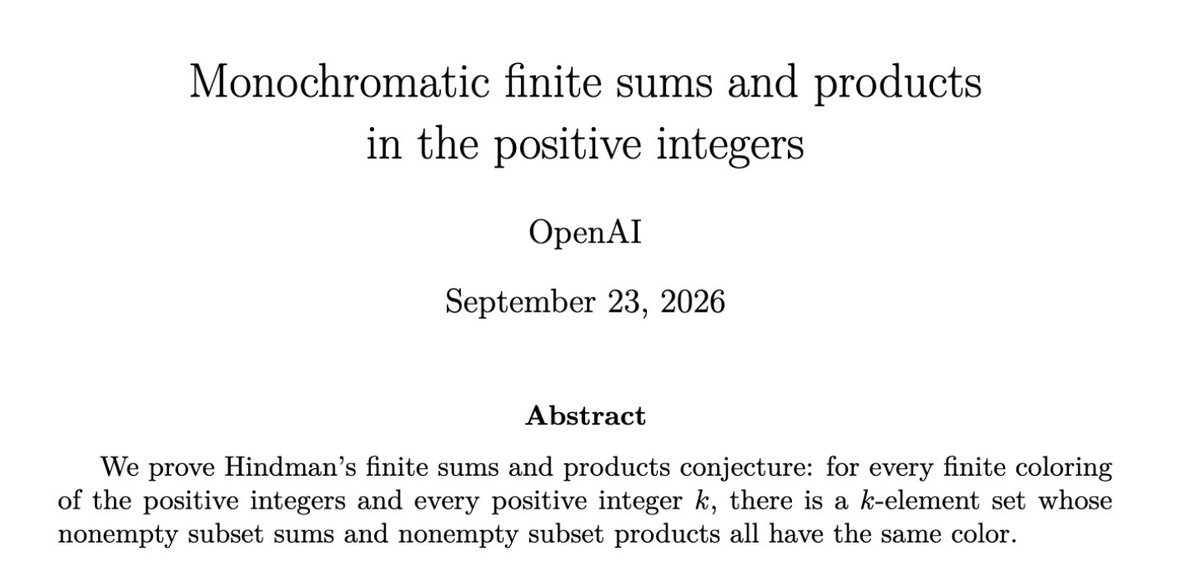
Going down as the most important day in the history of combinatorics:
--Erdos reciprocal sum for Szemeredi
--Inverse Goldbach
--Hindman's sum product
--off-diagonal Ramsey
...
Previously, there were three different layers of "fraud" (and its corollary, validation) on the Internet. These are important in case a transaction is litigated:
1. Is this a real identity/user
Think: this is a valid government document, the profile is real and maps to a government database, etc.
2. Is the "person" I am interacting with the valid owner of this identity/user/credential
Think: identity not stolen, so the credential user maps to the credential identity.
3. Is the person of sound mind to make this decision?
Think: casino not letting you gamble while clearly intoxicated.
1 and 2 are the most common, but for particularly large "card not present" transactions where issues of friendly fraud arise ("Oh, I never made that OnlyFans or Zynga Poker $10,000 purchase!") there's some validation of 3.
Agents complicate all of this. An agent can have delegated authority, but how? How is the whole validation chain preserved for the ultimate transaction? Who bears the risk?