🚨 The AI selloff could have an unexpected winner: Big Tech.
As debt-heavy AI firms struggle with rising borrowing costs, cash-rich giants could emerge even stronger.
So which AI stocks are bargains – and which are traps? 👀
https://t.co/wpST40zCIO
What you need to know about markets today 👇
1️⃣ AI tools uncovered and figured out how to exploit serious security flaws in PHP, the programming language powering much of the web, showing how AI can make cyberattacks more dangerous. But that same threat is fueling demand for cybersecurity – creating opportunities for firms protecting an increasingly AI-powered world.
2️⃣ Chinese stocks slipped into a bear market as weak consumer spending and doubts over AI investments rattled investors. The slowdown is also hurting European luxury brands like Hermès and LVMH – leaving them increasingly reliant on wealthy American shoppers to drive growth.
Anthropic’s computing costs are soaring, but revenues are increasing even faster.
According to a draft IPO prospectus seen by the Wall Street Journal, the AI giant pulled in about $16.3 billion in the first half of 2026, up from $1.1 billion a year earlier.
Over the same stretch, it spent nearly $9 billion on computing, versus $2.3 billion before. That’s already more than it spent in all of 2025.
The headline net loss of $80.7 billion looks scary, but around $72 billion came from accounting charges tied to changes in the value of convertible notes, not from day-to-day operations.
The bigger worry is the bill still to come.
Anthropic has roughly $450 billion in mostly non-cancelable cloud commitments, and total infrastructure obligations top $600 billion.
Cloud partners increasingly see it as a rival, so access to enough capacity isn’t guaranteed.
Customer concentration is another risk: two customers made up about a fifth of revenue.
Still, with a valuation of up to $2 trillion on the table, investors are betting that growth keeps outrunning the costs.
But at that price, there's very little room for error.
#Anthropic #AI
What you need to know about markets today 👇
1️⃣ Meta beat sales expectations, easing investors’ worries about its huge AI spending plans. Its ad business offers clues that AI investment is paying off, while its assistant Muse could open up a new revenue stream – though neither opportunity is a sure bet.
2️⃣ France’s unrest and mounting debt troubles are rattling markets, while stubborn inflation is squeezing Europe and Britain. With borrowing costs climbing and stocks under pressure, government bonds are starting to look more attractive to investors seeking alternatives to AI-heavy markets.
For its seconds earnings seasons since IPO’ing in June @spacex has reported some excellent numbers – see what our head analyst @Reda_Farran had to say about it 👇👇
Want to know sooner? Sign up for Finimize's free daily newsletter (where this insight went first!): https://t.co/Qy3ADKFf0q
Bill Ackman is wary of the risks AI presents – but he worries more about the US falling behind China or Russia in the race to build it. He compares the AI arms race to the race to build the first nuclear bomb, how we understood the physics of that weapon better than we understand the human brain AI is modelled on, and why we should prevent the next frontier of AI falling into the hands of a hostile power. @BillAckman@finimize
SpaceX’s Earnings Took Off Like A Rocket
SpaceX blasted past expectations in every division last quarter.
▶ The company’s rockets division saw revenue grow 6% last quarter from a year earlier.
▶ Revenue from SpaceX’s satellite internet service, Starlink, jumped 69%, fueled by a near-doubling in subscribers.
▶ SpaceX’s AI division – now dubbed "Super Intelligence", home to its new data center rental business and the Grok chatbot – saw revenue surge almost tenfold.
🔺 That growth helped the company swing from a $1.1 billion loss in the same period a year ago to a $4.4 billion profit last quarter, trouncing analyst estimates. Investors cheered, initially sending SpaceX’s shares higher.
Takeaways
1️⃣ The bigger picture: It pays to have access to cash.
SpaceX has muscled its way into the neocloud business, building and renting out data center capacity to AI customers.
This year, it struck deals with Anthropic, Google, and open-source startup Reflection AI worth a combined $28 billion in annual revenue.
No surprise that its AI division overtook Starlink as SpaceX’s biggest moneymaker last quarter.
But building data centers takes cash, and not everyone can borrow cheaply – just ask OG neocloud CoreWeave.
Yields on its unsecured bonds have surged past 15%, signaling that investors worry about being paid back. Comparable SpaceX bonds yield just 7%.
That borrowing advantage, combined with its $90 billion cash war chest, gives SpaceX considerable firepower to expand while rivals struggle to bankroll their ambitions.
2️⃣ For markets: Hold on to your hat...
Over the next few days, lockup restrictions covering roughly 35% of SpaceX’s shares are set to expire.
That means early investors and company insiders will be free to sell – and with many sitting on life-changing paper gains, they might be tempted to cash in at least part of their winnings.
⚠️ That potential wave of selling, combined with growing investor jitters around AI, could weigh on SpaceX’s shares in the short term.
$SPCX #SpaceX #AI
What you need to know about markets today 👇
1️⃣ SpaceX’s AI revenue – boosted by its booming data center business – surged almost tenfold, helping power a $4.4 billion quarterly profit. But with lockups about to expire, a wave of shares held by company insiders and early investors could be about to hit the market.
2️⃣ Nvidia-backed Nscale is reportedly negotiating a $45 billion AI computing deal with Anthropic ahead of its planned IPO. But with hefty losses, unfinished data centers, and financing still uncertain, investors are questioning how much its enormous contracts are really worth.
.@BillAckman doesn’t believe in diversification for diversification’s sake. He thinks real returns come from knowing a handful of businesses better than anyone else does.
Bill joined The Modern Investor, to discuss AI, Buffett, and more. Worth listening.
https://t.co/4xKHUd282V
Our analysts @Reda_Farran and Russell Burns unpack the growing stress in credit markets for AI companies – and plenty more – in our latest podcast episode.
🎙️ New Podcast Episode: Why This AI Sell-Off Feels Different
Every week, Finimize analyst Russell Burns and I sit down for a casual chat about all things markets – from the biggest recent headlines and under-the-radar trends to what we’re watching in the week ahead.
In this week’s episode, we look at stress in the credit market, the pressure on CoreWeave, and whether the huge sums being spent on AI can ultimately be justified.
We also unpack why Treasuries are starting to look interesting again, and what the broader market is telling us beneath the headline index numbers.
For the full conversation, check out the latest episode of Market Open on Apple Podcasts, Spotify, or wherever you get your podcasts.
You can also watch the episode on YouTube.
🎧 Apple:
https://t.co/aDJpP5S9lN
🎧 Spotify:
https://t.co/7cU7GBbbvl
📺 YouTube:
https://t.co/ubMuStFkPY
🚨 The S&P 500 has a hidden vulnerability – and most investors don’t realise how big it is.
Over 75% of its value depends on profits more than a decade away.
With bond yields surging, that’s a problem. Here’s what could go wrong – and how to protect your portfolio 👇
https://t.co/gMVWDuCFZH
What you need to know about markets today 👇
1️⃣ China’s economy grew a better-than-expected 4.5% last quarter, powered by booming exports of AI-related hardware. But with consumer spending weak and property investment slumping, China is increasingly reliant on global AI demand – leaving it vulnerable if the spending boom slows.
2️⃣ Elon Musk pledged roughly $10.8 billion in SpaceX shares to American children, while Anthropic plans to put 5% of its stock into a public benefit fund. The moves come as Anthropic prepares for a potentially record-breaking IPO, with investors weighing its soaring valuation against slowing revenue growth.
What do you need to know for the investing week ahead? 📈
The Focus This Week: China’s Growth
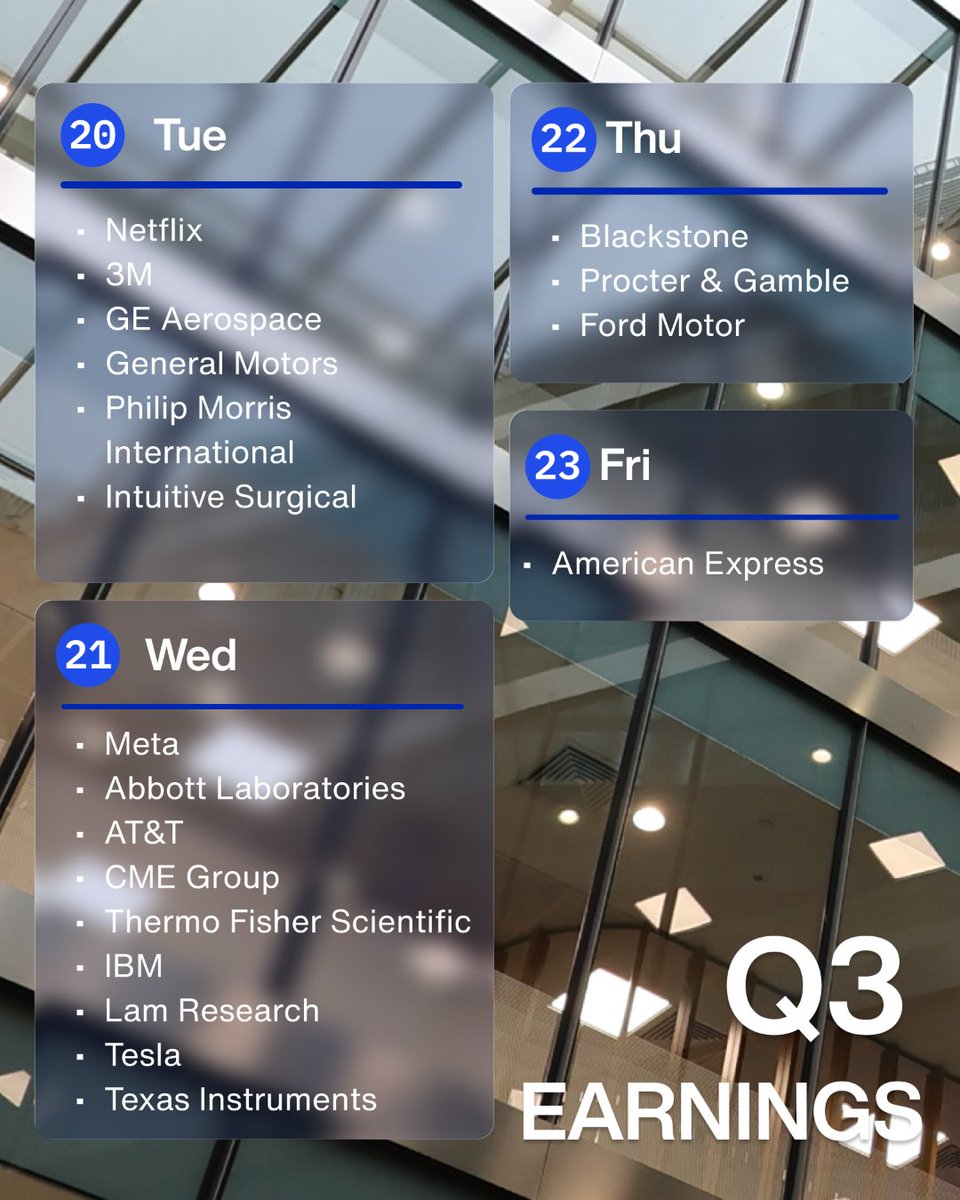
Earnings season kicks into high gear this week, with more companies – biggies, like Meta, Netflix, and Tesla – set to unveil their latest quarterly results. There’s plenty on the economic calendar too, including inflation figures from the UK and Japan, and Purchasing Managers’ Indexes from several major regions. But the biggest event could be China’s third-quarter growth figures. After all, the world’s second-biggest economy is a major engine of global growth – so any signs of trouble there could send ripples through markets everywhere.
Read the full Weekly Brief on https://t.co/rianrt7tvo, or subscribe to our free newsletter to stay in the know.
#investing
#weekly
#finance
#financeweekly
New Episode of the Modern Investor Podcast Out Now!
Why Smart Investors Still Make Bad Decisions w/ Alex Edmans
Join Finimize CEO Carl Hazeley as he interviews Professor of Finance @aedmans on why even the most seemingly rational investors make irrational choices.
📺 Watch on YouTube: https://t.co/OXJvdNOCS7
🎧 Or Listen as a Podcast ep: https://t.co/rvJzYYGWpP
The IT sector accounts for half of global earnings growth this year.
And if you thought that was impressive, just wait until 2027.
According to Citigroup, tech's contribution to global earnings growth is expected to jump from 48% this year to a whopping 68% next year.
That's despite overall earnings growth slowing from 35% to 16%.
That kind of concentration is pretty unusual.
Historically, the top-performing sector has accounted for around 40% of global earnings growth on average.
Next year's forecast would be the second-highest concentration in three decades, beaten only by the energy sector's dominance during the 2022 energy crisis.
The US looks particularly reliant on tech, with the sector expected to account for a staggering 78% of the country's earnings growth next year.
But a market relying so heavily on a single sector and investment theme to keep it afloat is standing on shaky ground.
Investors, beware...
#Earnings #Stocks #AI