Herkes ABD'nin borcunu konuşuyor. Asıl hikaye 13 yıldır Japonya'da yaşanıyor.
Dünyanın en borçlu gelişmiş ülkesi ABD değil.
Japonya'nın borcu milli gelirinin %215'i.
Herkes 30 yıldır bu ülkenin batmasını bekliyor.
Batmadı.
Ama bunun bir bedeli vardı ve o bedel hiç konuşulmadı.
Nasıl batmadığını anlarsanız, ABD'nin bu hafta girdiği yolun sonunu da görürsünüz.
Size o hikayeyi göstereceğim.
Bu batış beklentisine yıllardır pozisyon açılıyor ve pozisyonun bir adı bile var.
Japon devlet tahvilini açığa satmak, yani Japonya'nın batışına oynamak, piyasada dul bırakan işlem olarak anılıyor.
Çünkü bu pozisyonu açanlar arasında dünyanın en zeki fon yöneticileri de vardı ve hepsi kaybetti.
Peki Japonya neden bir türlü batmıyor?
Çünkü hepsi yanlış felaketi bekledi.
Japonya'nın tahviline yeterli alıcı kalmayınca devreye merkez bankası girdi ve yıllar içinde devlet tahvillerinin yarısından fazlası onun kasasına geçti.
2016'da ise iş resmileşti ve faize tavan kondu. Merkez bankası, 10 yıllık faizin belli bir çizginin üzerine çıkmasına izin vermedi.
Bu araç da Japonya'nın icadı değil.
1942'de ABD kendi faizine %2.5 tavan koymuş ve savaş borcunu o yolla eritmişti.
74 yıl sonra aynı araç bu kez Japonya'da kullanıldı ve sonuç değişmedi. Beklenen kriz hiç gelmedi. Bedel ise 13 yıl boyunca taksit taksit ödendi.
O taksitlerin kaydını Ray Dalio yeni makalesinde yayımladı.
2013'ten beri Japon tahvili tutanlar dolara karşı %51, altına karşı %76 kaybetti. Japon işçisinin ücreti aynı dönemde ABD'li işçiye göre %55 geriledi.
Yen 40 yılın en düşük seviyesini gördü.
Japonya batmadı. Japonlar sessizce fakirleşti.
Dul bırakan işlemin sırrı da bu.
Batışa oynayanlar kaybetti, çünkü bu yolun sonunda çöküş yok, halkın adım adım fakirleşmesi var.
Şimdi ABD'ye dönelim, çünkü aynı hikaye bu kez orada başlıyor.
ABD'nin borcu 40 trilyon doları aşmış durumda ve uzun vadeli tahvile alıcı azalıyor.
Yalnız bir fark var.
Japonya'da faizi bastıran el merkez bankasıydı. ABD'de bu işi Hazine üstlendi.
Hazine bu hafta uzun vadeli tahvilleri geri alma kararını açıkladı ve 30 yıllık faiz aynı gün %5.33'ten %5.19'a indi.
Ortada bir Fed kararı bile yoktu, hamle tamamen Hazine'nindi.
Üstelik bu seferki yöntem daha sessiz.
Geri alım parası kısa vadeli borçla bulunuyor, yani borç uzun vadeden kısa vadeye kayıyor.
O kısa vadeli tahvillerin en hızlı büyüyen alıcısı ise stablecoin şirketleri.
Yasa gereği topladıkları her doları bu tahvillere yatırmak zorundalar.
Sistem kendi kendini besliyor.
Uzun vadeli faiz düştükçe para riskli varlıklara yöneliyor ve kripto yükseliyor.
Bu haftaki yükselişin zemininde de bu var.
Kripto büyüdükçe stablecoin arzı artıyor ve toplanan dolarlar yeniden kısa vadeli tahvile akıyor.
Uzun vade kısaya, kısa vade kriptoya, kripto yeniden kısaya akıyor.
Japonya'nın tahvilini merkez bankası almıştı.
ABD'nin tahvilini ise telefonunda stablecoin tutan sıradan insanlar alıyor.
Trump'ın Bitcoin'i neden bu kadar istediği de bu tabloda netleşiyor.
ABD, Bitcoin için devlet rezervi kurdu ve Trump yeni alımlar yapmak istediklerini söylüyor.
Sebebi hayranlık değil, çift taraflı bir hesap.
Hesabın bir tarafı borç.
Kriptoya giren para stablecoin üzerinden ABD'ye borç olarak dönüyor.
Öbür tarafı ise Japonya'dan tanıdık.
Para eridiğinde değer ortadan kalkmıyor, adres değiştiriyor.
Yeni adres de hep arzı artırılamayan varlıklar oluyor. Çin bu yüzden yıllardır altın topluyor.
ABD ise aynı korumayı Bitcoin'le kuruyor.
Yani ABD masaya iki taraftan oturuyor.
Bir eliyle borcunu eritecek düzeni işletiyor, öbür eliyle de paranın kaçacağı varlığı şimdiden topluyor.
Peki bu yol ABD'yi nereye götürüyor?
Bugün iki ülke aynı yolda ters yönde yürüyor.
Japonya 13 yıl sonra çıkışı arıyor.
10 yıllık faizi bu ay %2.9 ile 1996'dan beri en yüksek seviyeyi gördü. Merkez bankasının eylülde yeni bir artışa gitmesi konuşuluyor.
ABD ise yolun daha girişinde.
Elbette ABD'nin sonu Japonya'yla aynı olmak zorunda değil.
Ama Japonya'nın 13 yılı geriye tek ders bıraktı.
Bu hikayede izlenecek şey çöküş değil, erimedir. Erimenin faturası önce paraya, sonunda da o parayı tutan herkese kesilir.
Son sözü bir asır öncesinin ünlü iktisatçısına bırakıyorum.
Keynes 1919'da, devletlerin enflasyon yoluyla vatandaşlarının servetinin önemli bir bölümüne el koyabileceğini yazmıştı.
Japonya'nın 13 yılı, bu cümlenin en taze kanıtı.
Bu benim kişisel analizim.
Gelişmeleri izliyorum. Sizi bilgilendireceğim.
When Dalal Street celebrated Manmohan Singh's victory in 2009.
On May 18, 2009, Markets hit 3 upper circuits. Sensex surged by 17.3% and Nifty jumped 17.33% following the decisive re-election of the UPA government.
The U.S. yield curve has steepened dramatically over the last year, and it isn't hard to see why.
U.S. federal debt has now surpassed $40 trillion.
Here's why that number is so significant:
- Roughly 1/3 of U.S. government debt must be refinanced within the next year
- Net interest: ~13.5% of total federal spending
This creates different pressures across the yield curve.
Short-term Treasury yields remain closely tied to expectations for Federal Reserve policy.
Long-term yields, however, must also compensate investors for greater duration risk, inflation uncertainty, fiscal risk, and the growing supply of Treasury securities.
That combination produces a steeper yield curve.
The 30 year was sitting at 4.88% a year ago, but now sits at roughly 5.27%.
At $40 trillion of federal debt, movements at the long end of the Treasury curve are increasingly reflecting not just expectations for the Fed, but the market’s assessment of U.S. fiscal policy.
The U.S. yield curve is steepening, and the country’s growing financing needs are an important part of the story.
WHAT MAKES EACH ORGAN HAPPY:
HEART – Daily walking
BRAIN – Proper sleep
BONES – Sunlight exposure
LUNGS – Deep breathing
EYES – Regular screen breaks
NERVOUS SYSTEM – Learning new skills
MENTAL HEALTH – Time with loved ones
BODY CLOCK – Consistent sleep schedule
KIDNEYS – Plenty of water
IMMUNE SYSTEM – Garlic in meals
🇮🇳 INDIAN ARMY’S NEW ‘#BAAZ’ DRONE BATTALION TAKES FLIGHT
The Indian Army has raised its first dedicated ‘Baaz Battalion’ under 11 Corps (#VajraCorps) at Jalandhar, Punjab, marking a major step in the Army’s transformation towards dedicated, large-scale drone warfare.
🦅 Why ‘Baaz’?
Baaz — meaning hawk — reflects the unit’s focus on persistent surveillance, long-range tracking, precision targeting and rapid battlefield response.
🎯 Core mission:
• Dedicated Remotely Piloted Aircraft (RPA) & UAV operations
• Long-range Intelligence, Surveillance & Reconnaissance (ISR)
• Persistent battlefield monitoring
• Target acquisition & targeting support
• Logistics and potentially strike/attack missions
• Integration of unmanned systems into conventional combat operations
The battalion is expected to provide a centralised specialist capability rather than dispersing drone expertise across individual formations.
Its formation comes as the Indian Army accelerates its post-Operation Sindoor transformation, recognising drones as a critical component of modern warfare.
The unit could operate a mix of unmanned platforms ranging from tactical UAVs to larger long-endurance systems. Reports have cited platforms such as Heron, Hermes and MQ-9B, while future integration of indigenous systems—including advanced Indian combat UAVs—could further expand the capability.
⚔️ Why it matters:
The creation of dedicated Baaz Battalions signals a shift from treating drones simply as supporting assets to treating unmanned systems as an organised combat capability.
With drones increasingly performing ISR, target acquisition, battle-damage assessment, logistics and precision-strike roles, dedicated formations can bring together operators, mission planners, technical specialists and unmanned platforms under a unified command structure.
The first #Baaz Battalion on the western front could eventually become a model for similar formations across other operational theatres as India expands its unmanned warfare ecosystem.
🇮🇳 New Wings. New Capability. Decisive Edge.
#IndianArmy #BaazBattalion #Drones #UAV #DroneWarfare #VajraCorps #11Corps #Defence #AtmanirbharBharat #India
Mumbai has many landmarks. Some are made of stone. Some are made of batata.
Here’s a little map of Mumbai’s iconic Vada Pav landmarks
From old favourites to suburban legends, these are places that have become part of Mumbai’s food story.
How many have you tried?
Just imagine the incredible difficulty Sardar Patel faced in August 1947!
And he united India beyond anyone's imagination. Extremely quickly..
Alas, he wasn't given a free hand in that one state at the top.. if he were, India would have a border with Afghanistan..
In 1987 America refused to sell India a supercomputer.
It then offered a weaker model instead, with conditions. Civilian use only. No technology transfer. No re-export. And an American official would be posted in India to monitor how the machine was used.
India said no, and handed the job to a man who had never seen a supercomputer in his life.
His name is Vijay Bhatkar.
He was born on 11th October 1946 in Muramba, a village in Akola district in Maharashtra. He started school directly in class 4. He took his engineering degree at Nagpur, a master's at Baroda and a doctorate at IIT Delhi.
India had wanted the machine for a very ordinary reason. Weather forecasting, which for a country of farmers is not a luxury. The Indian Institute of Science wanted one for research.
The Americans classed supercomputers as dual use technology, meaning it could also help a nuclear or missile programme. So the export was blocked.
In March 1988 the government set up the Centre for Development of Advanced Computing in Pune, and made Bhatkar its founder and executive director.
Before that, the Prime Minister asked him 3 questions.
Can we do it. Bhatkar said he had never seen a supercomputer, only a photograph of the Cray, and that yes, they could.
How long will it take. He said less time than it would take to keep trying to import one.
How much will it cost. He said the entire effort, including building the institution, would cost less than buying the Cray.
He was given about 30 crore rupees and 3 years.
The start was not glamorous. He has said that for the first 6 months he could not recruit a single person, including his own secretary, because of bureaucratic delays.
His team took a different route from the Americans. Instead of building 1 enormous processor, they linked many ordinary processors together to work in parallel, using parts that could be bought off the shelf.
The prototype was ready in 1990. They called it Param, which in Sanskrit means supreme.
Then came the part he did not expect. Nobody believed it was a supercomputer. It did not look like a Cray. He has said even his own computer science professors doubted it.
So he took it abroad, to a major international supercomputing conference, and had it demonstrated and benchmarked in public. It was formally recognised there as a supercomputer.
In 1991 they completed PARAM 8000.
An American newspaper carried the story under a headline that has stayed famous in India. Denied supercomputer, angry India does it.
Versions of the machine were later exported to Germany, the United Kingdom and Russia. India went from being refused the technology to selling it.
He has one line he repeats.
Great nations are not built on borrowed technology.
According to the SEBI report, over 90% of people incur losses in intraday and F&O trading.
Retail investors should avoid F&O and intraday trading.
More people died in France this year from not having air conditioning (7,300) than American deaths from mass shootings in all of recorded U.S. history (1,741).😬
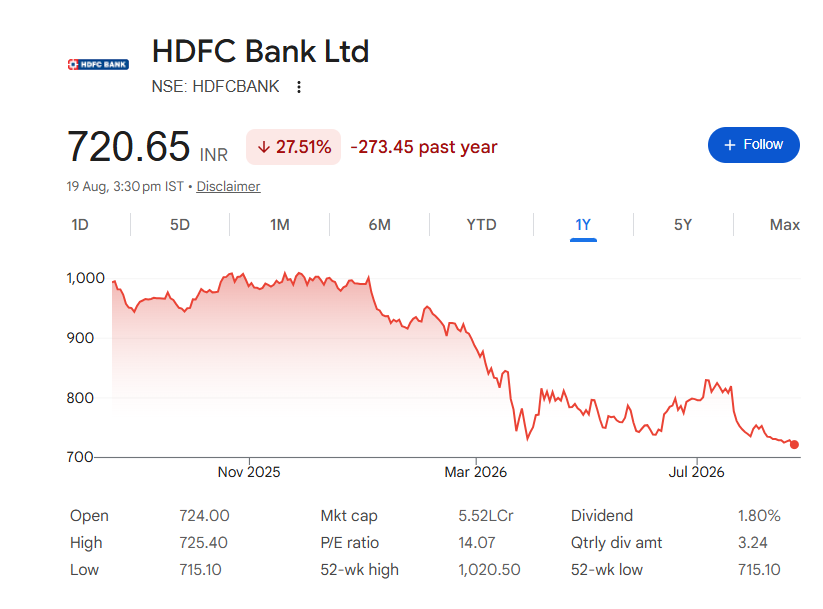
🚨 5 years. Almost zero returns.
HDFC Bank investors are losing patience.
Now trading near a 52-week low, the big question is:
Is HDFC Bank a value buy-or a value trap?
Let’s break down the business, what went wrong, and what lies ahead. 🧵👇