Most investing tools give you more noise.
We built Finplify to do the opposite:
- surface market-moving news only
- generate tailored briefings with AI
- help you research faster
- track the assets you care about
No gurus. No ads. No clutter.
Now free to use: https://t.co/cnB6vTcAI7
The biggest problem in investing today isn’t lack of information.
It’s fragmentation.
No clear way to connect everything.
So we built Finplify.
A place to:
– discover high-quality assets
– follow curated market intelligence (no noise)
– deploy AI analysts to track and synthesize what matters
All in one workflow.
If you care about long-term investing:
https://t.co/sscpL02zzX
Today has been a historical and extremely volatile day for crude oil markets. During the night from Sunday to Monday, oil prices surged dramatically as tensions in the Middle East escalated and fears of supply disruptions intensified. $WTI crude briefly climbed close to $120 per barrel, its highest level since the Russian invasion of Ukraine in 2022, as traders reacted to the risk of severe supply disruptions across the region.
However, the rally quickly reversed. During the session, prices fell sharply after rumors that the G7 could release strategic oil reserves to stabilize the market. The reversal accelerated further after comments from U.S. President Donald Trump suggesting that the war with Iran could be nearing an end sooner than expected, which significantly reduced the geopolitical risk premium embedded in oil prices.
The result was an extraordinary intraday swing of roughly 30% volatility, one of the largest reversals seen in crude oil markets in recent years. Brent crude initially surged alongside WTI but later dropped sharply as markets reassessed the situation. Much of the early spike was driven by fears surrounding the Strait of Hormuz, a critical chokepoint through which around 20% of global oil and $LNG supply flows, raising concerns about a potential disruption of global energy markets.
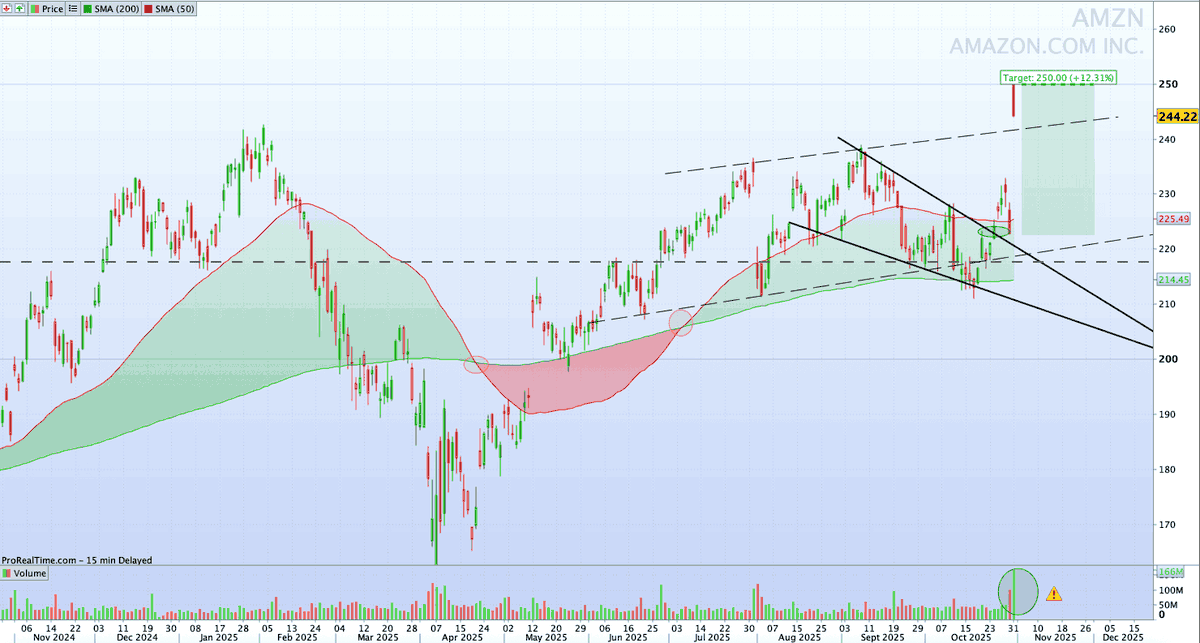
🚀 Amazon $AMZN Earnings Surprise (Q3 2025)
📈 Shares jumped +10% as results crushed expectations:
EPS: $1.95 vs $1.57 est.
Revenue: $180.17B vs $177.8B est.
☁️ AWS rebound: $33B revenue (+20.2% YoY), fastest growth since 2022.
📢 Ads: $17.7B, slightly above forecasts.
🗣️ CEO Jassy: “AWS is growing at a pace we haven’t seen since 2022,” citing AI-driven demand & +3.8 GW cloud capacity.
💡 After lagging early in 2025, this strong Q3 revived sentiment, reaffirming Amazon’s role as a core AI & cloud leader.
#Amazon #Earnings #AWS #AI #Stocks
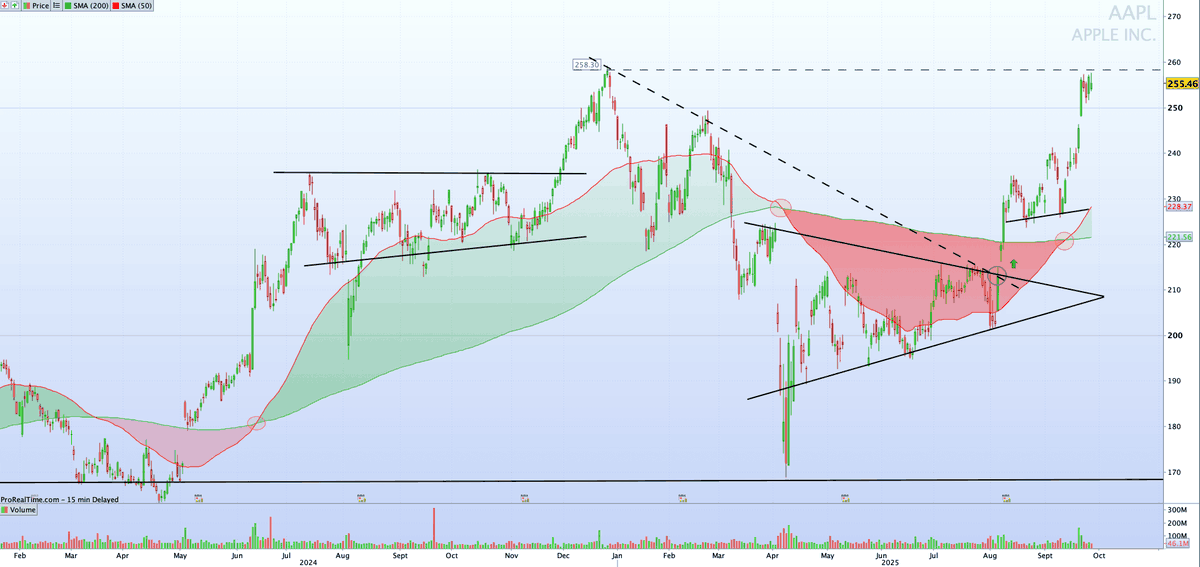
$AAPL Apple Chart Setup:
Apple’s stock took a sharp hit in the first quarter of the year, weighed down heavily by new U.S. tariffs on Chinese imports announced under the Trump administration. After sliding to the $200 area, shares eventually found their footing and staged a gradual recovery. The rebound first steadied around $230, before gaining pace in late September on the back of new product announcements and AI updates. Today, Apple is trading close to $255, essentially at record highs. This level has become a key zone to watch: whether it acts as a springboard for further momentum or a cap that keeps price consolidating.
Recent news:
- iPhone 17 unveiled (Sept 9): Apple kept pricing steady despite tariff headwinds, underscoring confidence in consumer demand
- AI features roll out (Sept 15): The company launched its long-awaited Apple Intelligence suite, focusing on privacy and seamless device integration
- Tariff costs remain a headwind: Analysts estimate tariffs could weigh on Apple’s bottom line by $1–2 billion over the coming year
Disclaimer: Technical analysis offers no guarantee of success and often contrasts with academic research. It reflects key price trends and should be used as just “one among many” other factors, when evaluating investment opportunities.
Palantir $PLTR Surges (Again)👇
Palantir Technologies posted over $1 billion in Q2 2025 revenue, a 48% year-over-year increase driven by demand for its AI-powered platforms.
U.S. government revenue rose 53% to $426 million, while U.S. commercial revenue jumped 93% and now makes up over 30% of Palantir’s business.
The company raised its full-year 2025 revenue guidance above Wall Street expectations and became one of the top S&P 500 performers as its stock reached record highs.
Palantir’s AI Platform (AIP), which integrates advanced language models with proprietary data and software logic, has established the company as an essential enterprise partner beyond government contracts.
Major deals, including a $10 billion U.S. Army contract, highlight Palantir’s growing influence in defense and AI.
However, analysts continue to warn about the company's high valuation and questions around long-term growth.
Trump’s New Chip Tariff: Apple $AAPL to win Big 👇
President Trump says he’s going to impose roughly 100% tariffs on all chips coming into the U.S., but here’s the twist: companies that commit to manufacturing in America will be exempt. And that’s a major win for Apple.
The announcement came alongside a huge $100 billion investment pledge from Apple. Now, they’re not moving iPhone assembly to the U.S., but they are ramping up domestic chip and component production.
Tim Cook says 19 billion chips for Apple products will be made here, across 24 factories in 12 states. They’re also partnering with suppliers like Broadcom, Samsung, and Applied Materials to bring more of the supply chain home.
What do earnings reports from Big Tech tell us? 👇
Aside from Nvidia, all of the "Magnificent Seven" have already released their annual results. This allows for an initial assessment and a chance to identify the trends taking shape for the rest of the year.
Among the well-received reports, investor confidence in Meta remains strong. The company continues to generate significant advertising revenue, which helps offset its massive investments in artificial intelligence. Microsoft also delivered solid results. For the first time, the company disclosed the annual revenue of its Azure cloud division: a staggering $75 billion, confirming its position as the world's number two, just behind AWS. Alphabet, meanwhile, posted solid results driven by strong growth in Google Cloud.
As for the more mixed reports, Amazon leads the way. While its report was decent, it failed to convince investors. In particular, the growth of its cloud division was seen as lagging behind that of its two main rivals, which contributed to market jitters.
Finally, Apple benefited from better-than-expected iPhone sales and a rebound in activity in China. However, the announcement of impacts linked to tariffs quickly dampened the initial enthusiasm.