@mtsqfrrhmn Pernah baca tulisan orang juga kalo ekonomi pas-pasan dan masih bingung ambil apa, disaranin ambil teknik karena relatif paling aman setelah lulus.
Israel killed 3 Indonesian UN peacekeepers in South Lebanon.
They were wearing blue helmets.
They were in UN uniforms.
They were peacekeepers.
Israel bombed them anyway.
Not a peep in Western media.
Not a word from the international community.
Kick Israel out of the UN.
Imbang 2-2
Ga ada gol Sesko
Ga ada assist Bruno
Maguire straight red card
Wasitnya agak error
Mesti nunggu 24 hari buat next match
Not a start to Hari Lebaran i wanted 💔
@CFALEVEL99 KOPDES tuh aslinya ialah cara penguasa
1. pegang area desa di '29
2. melanggengkan MBG
3. merampas dana desa via gaslighting (karna bakal nyalahin pengurus kopdesnya)
4. polesan ekonomi kerakyatan (dan serapan tenaga kerja)
5. nambah dependent voters jutaan orang
6. bagi2 jabatan
I am a diplomatic aide in the Sultanate of Oman's Ministry of Foreign Affairs.
My job is logistics. When two countries that cannot speak to each other need to speak to each other, I book the rooms. I prepare the briefing materials. I make sure the water glasses are the right distance apart. You would be surprised how much of diplomacy is water glasses. Too close and it feels informal. Too far and it feels like a tribunal. I have a chart.
We had a very good month.
Since January, Oman has been mediating indirect talks between the United States and Iran on Iran's nuclear program. The talks were held in Muscat and in Geneva. The Americans would sit in one room. The Iranians would sit in another room. I would walk between them. My Fitbit says I averaged fourteen thousand steps on negotiation days. The hallway between the two rooms at the Royal Opera House conference center is forty-seven meters. I walked it two hundred and twelve times in February. This is good for my cardiovascular health. It was less good for my knees. Both are in the service of peace.
By mid-February, we had something.
Iran agreed to zero stockpiling of enriched uranium. Not reduced stockpiling. Zero. They agreed to down-blend existing stockpiles to the lowest possible level. They agreed to convert them into irreversible fuel. They agreed to full IAEA verification with potential US inspector access. They agreed, in the Foreign Minister's phrase, to "never, ever" possess nuclear material for a bomb. I have worked in diplomacy for seven years. I have never seen a country agree to this many things this quickly. I made a spreadsheet of the concessions. It had fourteen rows. I color-coded it. Green for confirmed. Yellow for pending. By February 21 the spreadsheet was entirely green. I printed it. It is on my desk in Muscat. It is still green.
That phrase took eleven days. "Never, ever." The Iranians initially offered "not seek to." The Americans wanted "will not under any circumstances." We landed on "never, ever" at 2:14 AM on a Tuesday in Muscat. I typed the final version myself. I used Times New Roman because Geneva prefers it. The document was fourteen pages. I was proud of every comma.
Here is what they said, in the order they said it.
February 24: "We have a once-in-a-generation opportunity." — The Foreign Minister, private briefing to Gulf Cooperation Council ambassadors. I prepared the slide deck. Slide 14 was the implementation timeline. Slide 15 was the signing ceremony logistics. I had reserved the Palais des Nations in Geneva, Room XX. It seats four hundred. We discussed pen brands for the signing. The Iranians preferred Montblanc. The Americans had no preference. I ordered twelve Montblanc Meisterstucks at six hundred and thirty dollars each. They arrive on Tuesday.
February 27, 8:30 AM EST: "The deal is within our reach." — The Foreign Minister, CBS Face the Nation. He sat across from Margaret Brennan. He said broad political terms could be agreed "tomorrow" with ninety days for technical implementation in Vienna. He said, and I wrote this line for the briefing card he carried in his breast pocket: "If we just allow diplomacy the space it needs." He praised the American envoys by name. Steve Witkoff. Jared Kushner. He said both had been constructive.
I watched from the Four Seasons Georgetown. The minibar had cashews. I ate the cashews. They were nineteen dollars. The most expensive cashew I have ever eaten. But it was a good morning and we were within our reach.
February 27, 2:00 PM EST: Meeting with Vice President Vance, Washington. The Foreign Minister presented our progress. Zero stockpiling. Full verification. Irreversible conversion. "Never, ever." The Vice President used the word "encouraging." His aide took notes on an iPad. The aide did not make eye contact for the last nine minutes of the meeting. I noticed this. Noticing things is the only part of my job that is not water glasses.
February 27, 4:00 PM EST: "Not happy with the pace." — President Trump, to reporters.
Not happy with the pace.
We had achieved zero stockpiling. Full IAEA verification. Irreversible fuel conversion. Inspector access. And the phrase "never, ever," which took eleven days and cost me two hundred and twelve trips down a forty-seven-meter hallway.
Every American president since Carter has failed to get Iran to agree to this. Forty-five years.
Not happy with the pace.
February 27, 9:47 PM EST: The Foreign Minister's flight departs Dulles for Muscat. I am in the seat behind him. He is reviewing Slide 14 on his laptop. The implementation timeline. Vienna technical sessions. The signing ceremony. The pens.
I fall asleep over the Atlantic. I dream about water glasses.
February 28, 6:00 AM GST: I wake up to push notifications.
February 28: "The United States has begun major combat operations in Iran." — President Trump.
Operation Epic Fury. Coordinated airstrikes. The United States and Israel. Tehran. Isfahan. Qom. Karaj. Kermanshah. Nuclear facilities. IRGC bases. Sites near the Supreme Leader's office. Israel called their half Operation Roaring Lion. Someone in both governments spent time choosing these names. Epic Fury. Roaring Lion. I spent eleven days on "never, ever." They spent it on branding. The President said Iran had "rejected American calls to halt its nuclear weapons production."
Rejected.
Iran had agreed to zero stockpiling. Iran had agreed to full verification. Iran had agreed to "never, ever." Iran had agreed to everything in a fourteen-page document that I typed in Times New Roman.
The President said they rejected it.
I do not know which document the President was reading. I know which one I typed.
February 28, 18:45 UTC: Iran internet connectivity: four percent. — NetBlocks, confirmed by Cloudflare. Ninety-six percent of a country went dark. You cannot negotiate with a country at four percent connectivity. You cannot negotiate with a country that is being struck. You cannot negotiate. This is not a political opinion. This is a logistics assessment.
February 28: The governor of Minab reported forty girls killed at an elementary school.
I do not have logistics for that. There is no slide for that. The water glass chart does not cover that.
February 28: Lockheed Martin: up. Northrop Grumman: up. RTX: up. Dow futures: down six hundred and twenty-two points. Gold: five thousand two hundred and ninety-six dollars. An analyst at AInvest published a note titled "Iran Strikes: Tactical Plays." The note recommended positions in oil, defense stocks, and gold.
The most expensive cashew I have ever eaten was nineteen dollars. The most expensive pen I have ever ordered was six hundred and thirty dollars. The math suggests I have been working in the wrong industry. Defense stocks do not require water glasses. Defense stocks do not require eleven days. Defense stocks require one morning.
February 28: Israel closed its airspace and its schools. Iran launched retaliatory missiles toward US bases in the Gulf. The Supreme Leader promised a "crushing response." Israel's defense minister declared a permanent state of emergency. Everyone is using words I recognize in an order I do not. I recognize "permanent." I recognize "emergency." I do not recognize them next to each other. In diplomacy, nothing is permanent and everything is an emergency. In war it is the reverse.
February 28: The Foreign Minister has not made a public statement.
The briefing card is still in his breast pocket. It still says "within our reach."
Mengapa Soeharto tak ditangkap setelah jatuh pada 1998?
Pada tahun 2000, Gus Dur berusaha melakukan itu.
Gus Dur berusaha menangkap Soeharto dan keluarganya.
Sidang dijadwalkan pada 14 September 2000.
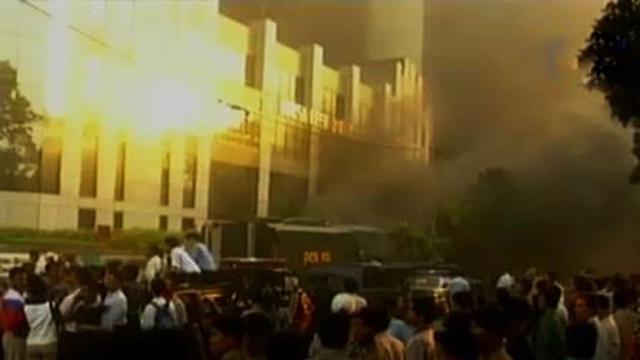
Pada 13 September 2000, bom raksasa meledak di Bursa Efek Jakarta.
15 orang tewas terburai menjadi potongan-potongan kecil. Tubuh mereka hancur berceceran oleh bom mobil raksasa yang diparkir di basement Bursa Efek. Puluhan lainnya terluka parah.
Asap tebal membumbung di tengah-tengah SCBD di jantung perekonomian Indonesia. Gedung-gedung kantor besar perusahaan multinasional, bank, dan pemerintahan yang berisi ratusan ribu karyawan dilanda kepanikan dan dievakuasi.
Bom teroris besar itu menyebabkan kepanikan yang lebih besar.
Saat itu, Indonesia sedang tertatih-tatih memulihkan diri dari krisis 1997 dan mengembalikan kepercayaan internasional.
Kesejahteraan ekonomi ratusan juta rakyat bergantung pada kesuksesan pemerintahan Gus Dur melakukan hal itu.
Bom teroris di Bursa Efek sangat menggoncangnya. Harga saham jatuh. Indonesia terancam roboh kembali.
Jika Indonesia tak stabil, jutaan rakyat terancam kembali jatuh miskin dan menganggur.
Tentu saja, secara teori, jika Indonesia roboh, Soeharto dan keluarga Cendana tak akan bisa ditangkap.
Keluarga Cendana tidak akan pernah bisa ditangkap polisi apabila tidak ada polisi dan tidak ada penjara karena Indonesia bubar.
Siapa dalang bom teroris tersebut?
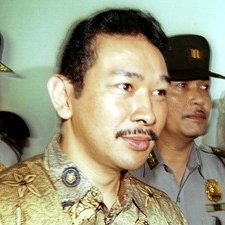
Kecurigaan tentu langsung tertuju pada keluarga Cendana, terutama Tommy Soeharto.
Alasan pertama, serangan bom teroris terjadi satu hari sebelum persidangan kedua yang seharusnya menyeret Soeharto dan keluarganya ke peradilan hukum.
Alasan kedua adalah Gus Dur yang langsung mengumumkan bahwa Tommy adalah tersangka utama dan memerintahlan pemeriksaan. Gus Dur sebagai presiden tentu berkuasa atas informasi intel.
Alasan ketiga, sebelumnya Tommy sudah terlibat dengan serangkaian kasus bom dan penembakan.
Lima bulan sebelumnya pada 13 Maret 2000, Tommy diseret ke hadapan Komisi V untuk diperiksa tentang kasus korupsi dan kegilaan monopoli cengkeh BPPC.
Pada saat itu, jendela ruang rapat Komisi V tiba-tiba ditembak orang misterius dengan senjata api.
Anggota Komisi V merasa sangat terancam. Bagaimana kalau yang ditembak berikutnya bukan jendela kosong, melainkan kepala mereka? Atau kepala anak mereka?
3 bulan kemudian, pada 4 Juli 2000, Tommy diseret Jaksa Agung Marzuki Darusman untuk diperiksa di Kejaksaan Agung.
Satu jam setelah Tommy meninggalkan gedung, gedung Kejaksaan Agung meledak oleh bom.
Ternyata yang meledak seharusnya dua bom. Tetapi salah satu bom untungnya gagal meledak.
Dua bulan kemudian, pada 31 Agustus 2000, sidang pertama kasus korupsi Soeharto dan keluarganya digelar.
Tiba-tiba, bus yang diparkir mencurigakan di samping tempat persidangan meledak. Ada orang yang menaruh bom besar di situ.
2 minggu kemudian, sehari sebelum sidang kedua pengusutan keluarga Cendana, terjadilah bom di Bursa Efek yang sangat brutal dan mengerikan ini. Ini adalah pengeboman teroris paling mematikan sejauh ini.
Gus Dur memerintahkan penyelidikan untuk mengusut Tommy dan antek-antek gerombolan premannya yang diduga keras menjadi dalang terorisme pengeboman Bursa Efek itu.
Pada saat itu, Menteri Pertahanan Mahfud MD menjadi sangat resah.
Ia membaca pola ancamannya: jika Gus Dur terus menginvestigasi Soeharto, gerombolan keluarga Cendana, dan pundi-pundi raksasa kekayaan pribadi hasil rampokan mereka selama 20 tahun terakhir, Indonesia akan terus digoncang bom dan instabilitas. Ini sudah masuk ranah ancaman pertahanan nasional.
Mahfud seakan membaca tulisan yang ditulis dengan darah orang-orang Bursa Efek: "Jika kamu terus mengusut, Republik ini akan jatuh."
Gus Dur bebal. Dua bulan kemudian, Gus Dur menolak permohonan grasi yang dengan sangat belagu diajukan Tommy Soeharto. Saat itu Tommy baru saja didakwa korupsi memaling aset tanah Bulog dan akan segera dipenjara.
Apa yang dilakukan Tommy? Ia kabur dan menjadi buronan.
Pada 14 November 2000, polisi mengirim 18 tim untuk melakukan penggerebekan di 18 lokasi. Sebanyak 206 anggota polisi diturunkan untuk melakukan penggerebakan serentak, termasuk di rumah Soeharto di Jalan Cendana, Jakarta.
Gagal. Tommy tak bisa ditemukan.
Sebulan kemudian, rentetan bom teroris kembali meledak, yaitu pada Malam Natal 24 Desember 2000.
Yang ini sangat mengerikan.
23 gereja berbeda yang tersebar di Batam, Pekanbaru, Jakarta, Mojokerto, Bandung, Ciamis, dan Lombok hancur oleh bom teroris yang dijadwalkan meledak serentak.
Serangan bom serentak ini menewaskan jemaat Kristen yang sedang berdoa, juga menewaskan Riyanto, anggota Banser NU yang ditugaskan menjaga gereja dari ancaman teroris. Ia mati syahid ketika berusaha menjauhkan bom dari para jemaat gereja.
Beberapa minggu kemudian pada Januari 2001, salah satu teman dekat Tommy, Elize Tuwahatu, berhasil ditangkap oleh Polda Metro Jaya. Elize tertangkap basah membawa-bawa tiga buah bom raksasa dari Tommy.
Dari mulut Elize dan pelapornya, berbagai kelakuan Tommy berhasil dibongkar.
Ternyata, berapa hari setelah Bom Malam Natal, Elize ditugasi Tommy untuk menyusun rencana membunuh Jaksa Agung Marzuki Darusman serta Menteri Industri dan Perdagangan Luhut Binsar Pandjaitan dengan bom.
Bom pertama dan kedua ditujukan pada Marzuki dan Luhut, yang dianggap mengancam pundi-pundi raksasa kekayaan dan aset keluarga Cendana.
Apabila Luhut berhasil dibunuh dengan ledakan bom, kematian sadisnya juga akan mengguncang stabilitas industri dan perdagangan Indonesia, mengingat jabatan strategis Luhut saat itu.
Menperindag sebelum Luhut adalah Jusuf Kalla. Menperindag sebelum Jusuf Kalla adalah Rahardi Ramelan di zaman Habibie. Menperindag sebelum Rahardi Ramelan adalah Bob Hasan, operator bisnis keluarga Cendana.
Barangkali Luhut yang saat itu jadi anak buah Gus Dur menyentuh "sesuatu" yang membuat keluarga Cendana dan kroninya (seperti Bob Hasan) sangat marah.
Selain Marzuki dan Luhut, kedua bom itu juga diharapkan memutilasi dan membunuh acak sebanyak-banyaknya staf Kejaksaan Agung dan staf Kemenperindag dan menciptakan sebesar-besarnya teror dan kekacauan nasional.
Bom ketiga ditujukan untuk memutilasi dan membunuh acak sebanyak-banyaknya staf di kantor Direktorat Jenderal Pajak untuk semakin menebar teror di sektor-sektor kunci pemerintahan dan kestabilan ekonomi.
Tommy sendiri ternyata memiliki penyuplai bom yang menurut investigasi kepolisian diduga adalah suatu oknum pengkhianat negara di Kopassus. Secara semangat korsa, ini sangat menyedihkan mengingat Luhut sendiri adalah mantan komandan Kopassus. Tetapi memang, pada zaman Soeharto, Kopassus sempat dipimpin oleh orang yang sangat dekat dengan keluarga Cendana.
Enam bulan kemudian, pada Juli 2001, tragedi kembali terjadi. Hakim yang sedang mengusut Tommy Soeharto, Syafiuddin Kartasasmita, dibunuh dengan sangat brutal di tengah jalanan Jakarta menggunakan senapan mesin ketika sedang menuju tempat kerjanya.
Hakim Syafiuddin ini mati syahid dengan tubuh berlubang-lubang. Kematian mengerikannya sangat menghebohkan Indonesia.
Pembunuhan Hakim Syafiuddin yang luar biasa sangat sadis inilah yang ternyata berhasil digunakan penegak hukum untuk mengumpulkan cukup bukti tak terbantahkan untuk menangkap Tommy Soeharto.
Dalam suatu periode drama kehebohan nasional yang membuat rakyat menempel ke TV, Tommy si Penjahat Nomor Satu diburu oleh penegak hukum.
Tim sangat elite ini diberi nama Tim Kobra dan dikomandoi oleh perwira lapangan bereputasi cemerlang yang sedang naik daun saat itu, Tito Karnavian. Meski begitu, awalnya penyelidikan mengalami kebuntuan.
Menggunakan penyadapan sinyal telepon dan pengamatan intel, lokasi Tommy diisolasi ke sebuah rumah di Bintaro Jaya, Tangerang Selatan.
Akhirnya Tommy berhasil digerebek, diseret keluar, dan ditangkap sebagai hewan buruan terbesar pemerintahan Gus Dur pada 28 November 2001, 4 bulan setelah Syafiuddin mati dibunuh.
Tommy dipenjara selama beberapa tahun dan hidup mewah di penjara dengan sofa, kulkas, TV, dapur, dan akses untuk bermain golf di Jakarta.
Tommy bebas dengan masa tahanan yang sangat dipotong remisi. Setelah bebas, ia langsung berusaha membeli Golkar pada tahun 2009 dengan pundi-pundi raksasa kekayaan keluarganya. Ia dikalahkan Aburizal Bakrie.
Gus Dur sendiri tidak sempat melihat Tommy ditangkap dari posisi menjabat sebagai presiden.
Gus Dur keburu digoncang dengan Operasi Semut Merah dan berbagai krisis politik.
Akhirnya, Gus Dur kalah dan digulingkan dari kursi kepresidenan pada pertengahan 2001.
---
Itulah bagaimana keluarga Cendana berhasil lolos dari jerat hukum.
Soeharto mati dengan pulas dan santai pada tahun 2008. Tubuhnya dikubur di suatu ancient temple mistis di atas bukit yang tersembunyi di tengah hutan lebat kaki Gunung Lawu yang angker, seperti seorang raja Jawa kuno. Ketika gw solo travelling ke situ dengan motor, templenya dijaga segerombolan penjaga.
Kasus Terra Drone, 22 karyawan tewas.
Kasus Ponpes Sidoarjo, 67 anak2 tewas.
Dua2nya kasus kelalaian.
Bos Terra Drone ditangkap, jadi tersangka.
Bos Pesantren dapet MILYARAN dana APBN.
~ini pelajaran baru: agama jadi kasta.