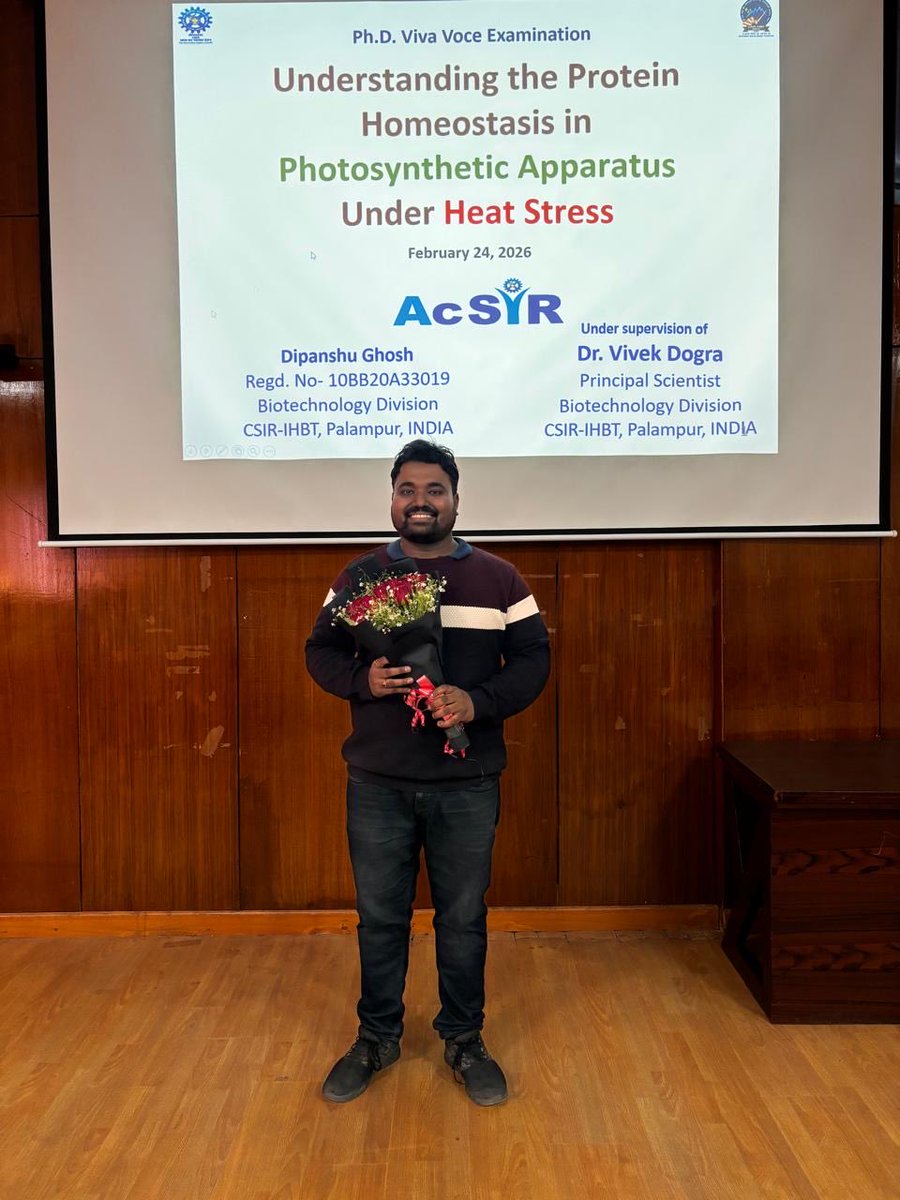
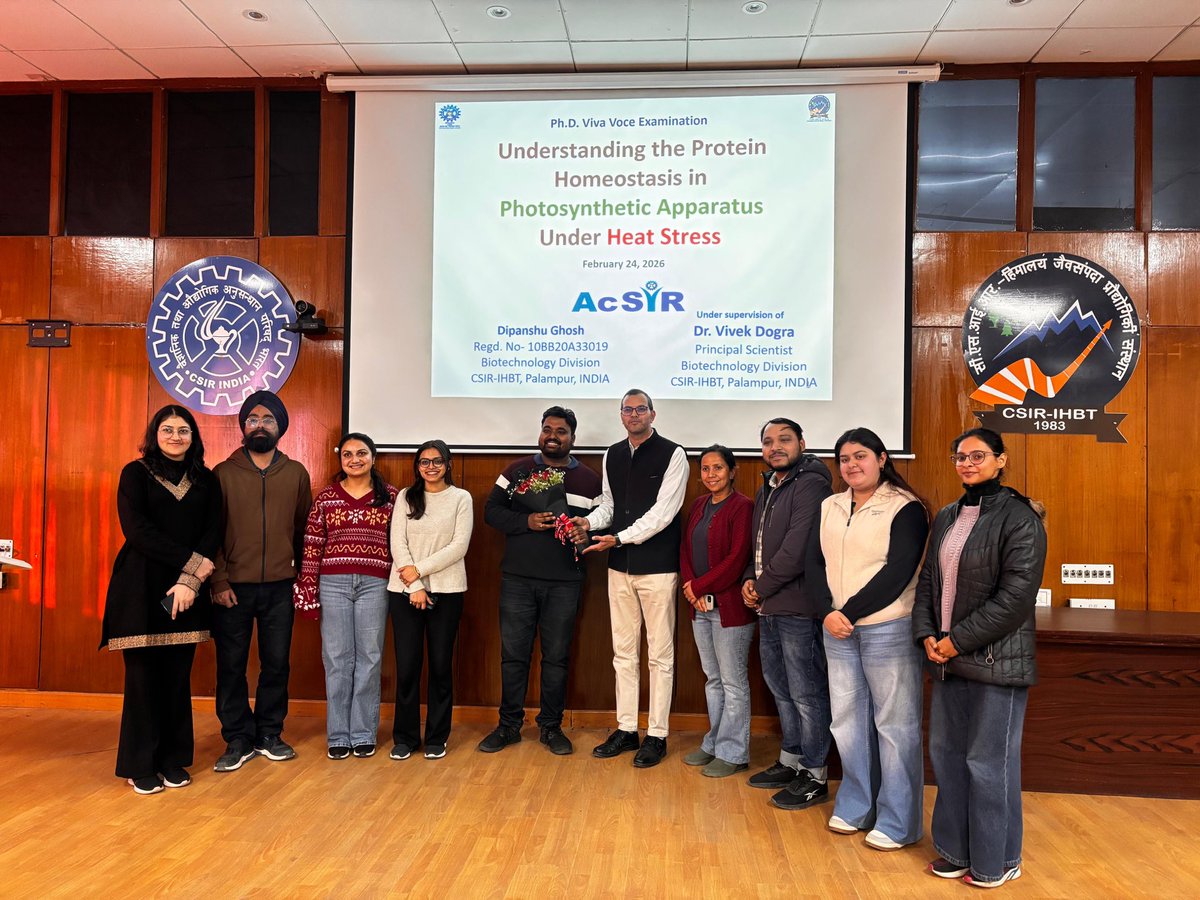
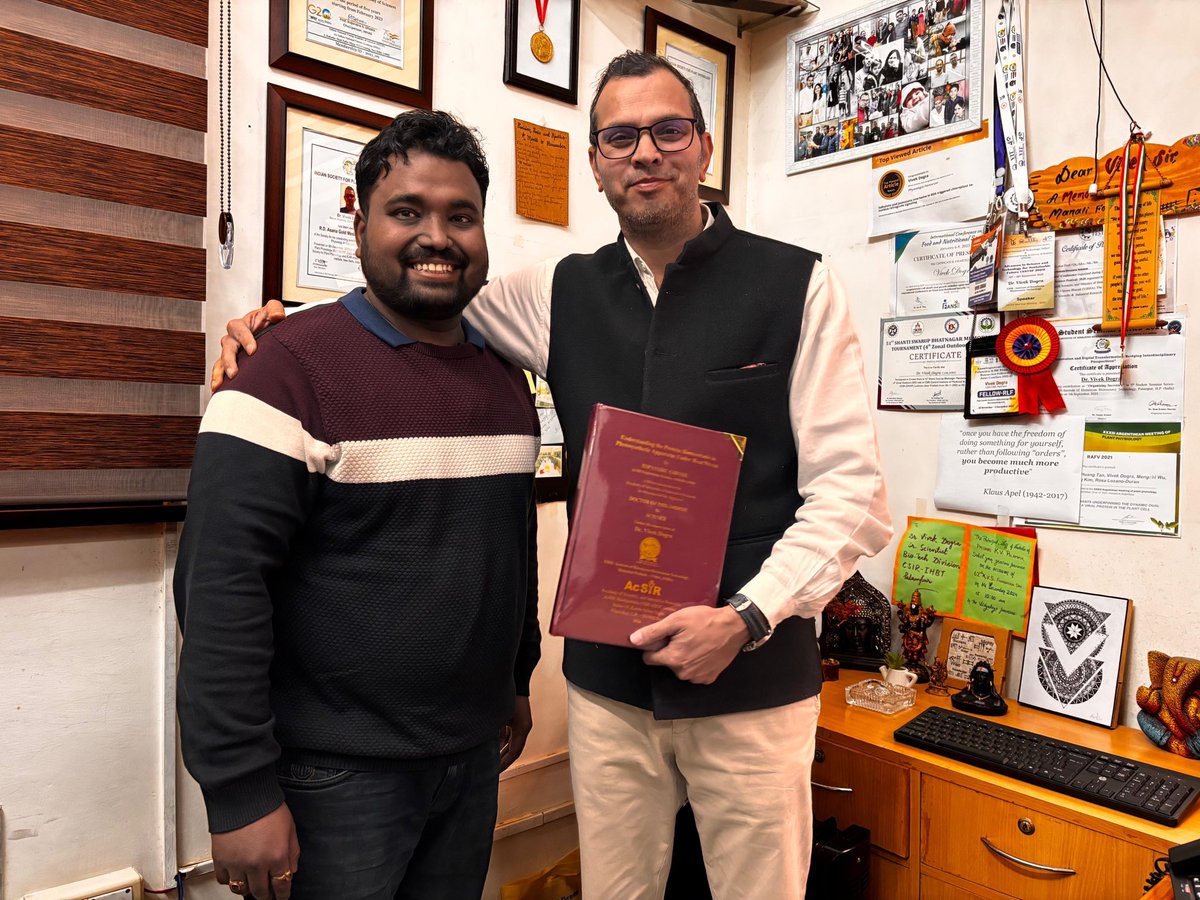
Sumanta Mohapatra (Registration No. 10BB20A33014) Ph.D. student of AcSIR will defend thesis entitled “Dissecting the role of Polyphenol oxidase (PPO) in shaping the drought stress responses in Tea (Camellia sinensis)” on February 26, 2026 at CSIR-Institute of Himalayan Bioresource Technology, Palampur Ph.D work was completed under the supervision of Dr. Vivek Dogra, AcSIR/CSIR-IHBT, Palampur @CSIR_IND@CSIR_IHBT
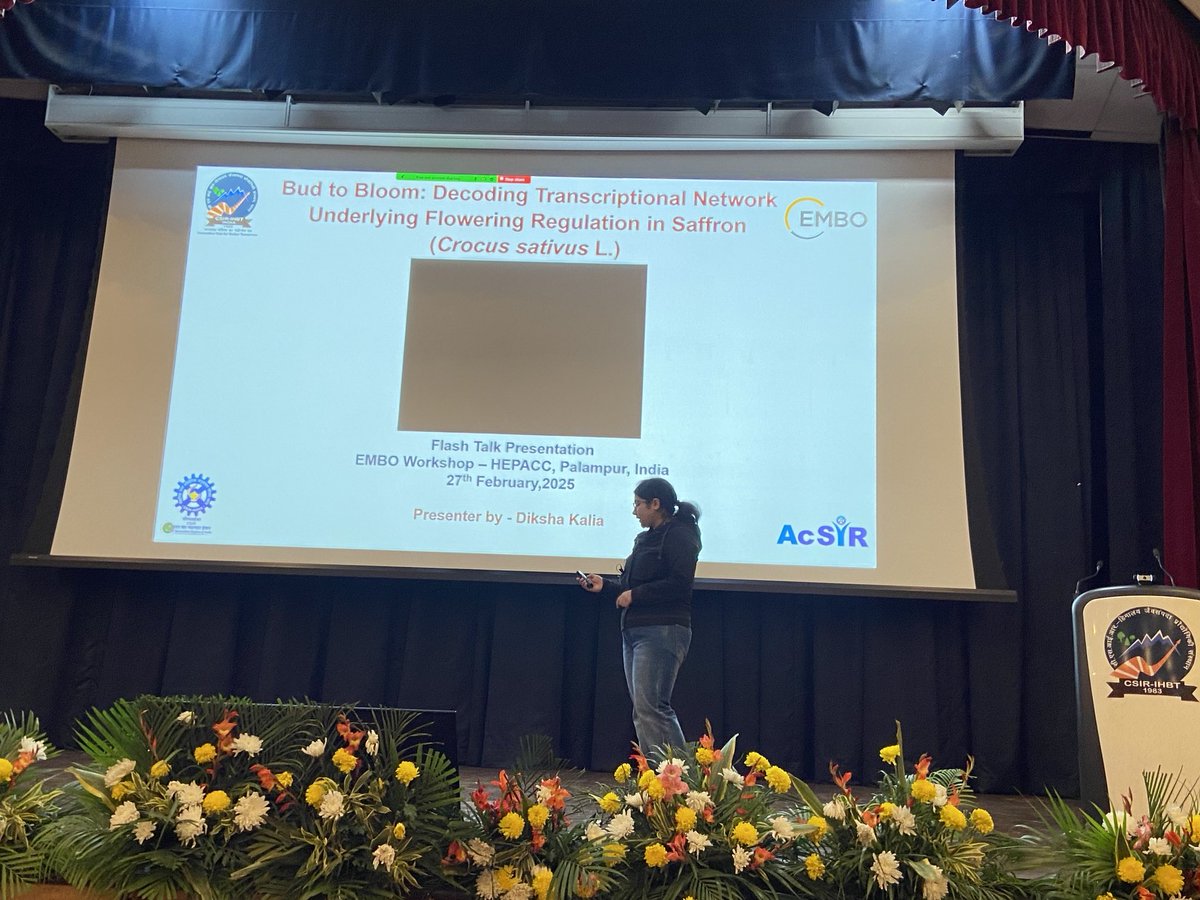
Diksha Kalia (Registration No.10BB20A33032) Ph.D. student of AcSIR will defend thesis entitled “Decoding transcriptional network underlying flowering regulation in saffron (Crocus sativus L.)” on February 26, 2026 at CSIR-Institute of Himalayan Bioresource Technology, Palampur Ph.D work was completed under the supervision of Dr. Rajesh Kumar Singh, AcSIR/CSIR-IHBT, Palampur @CSIR_IND@CSIR_IHBT
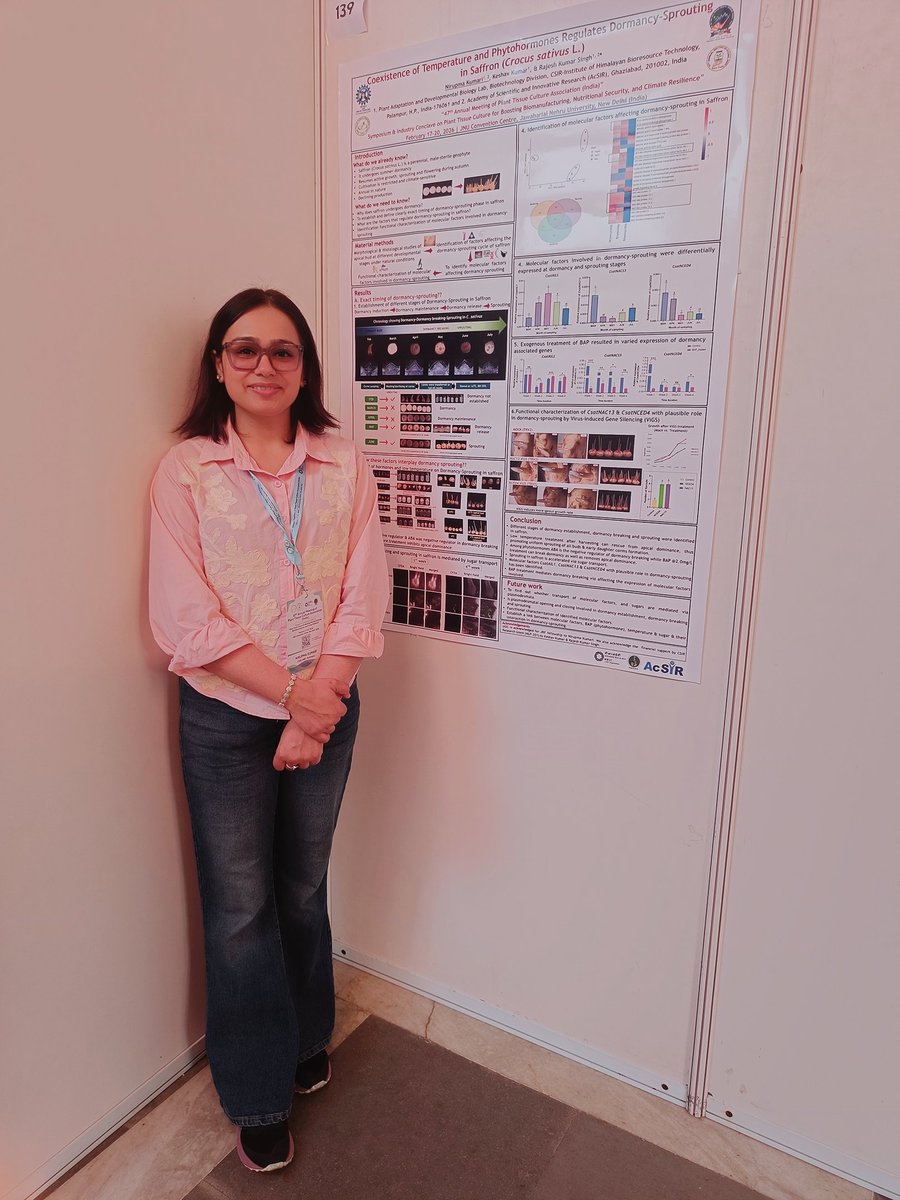
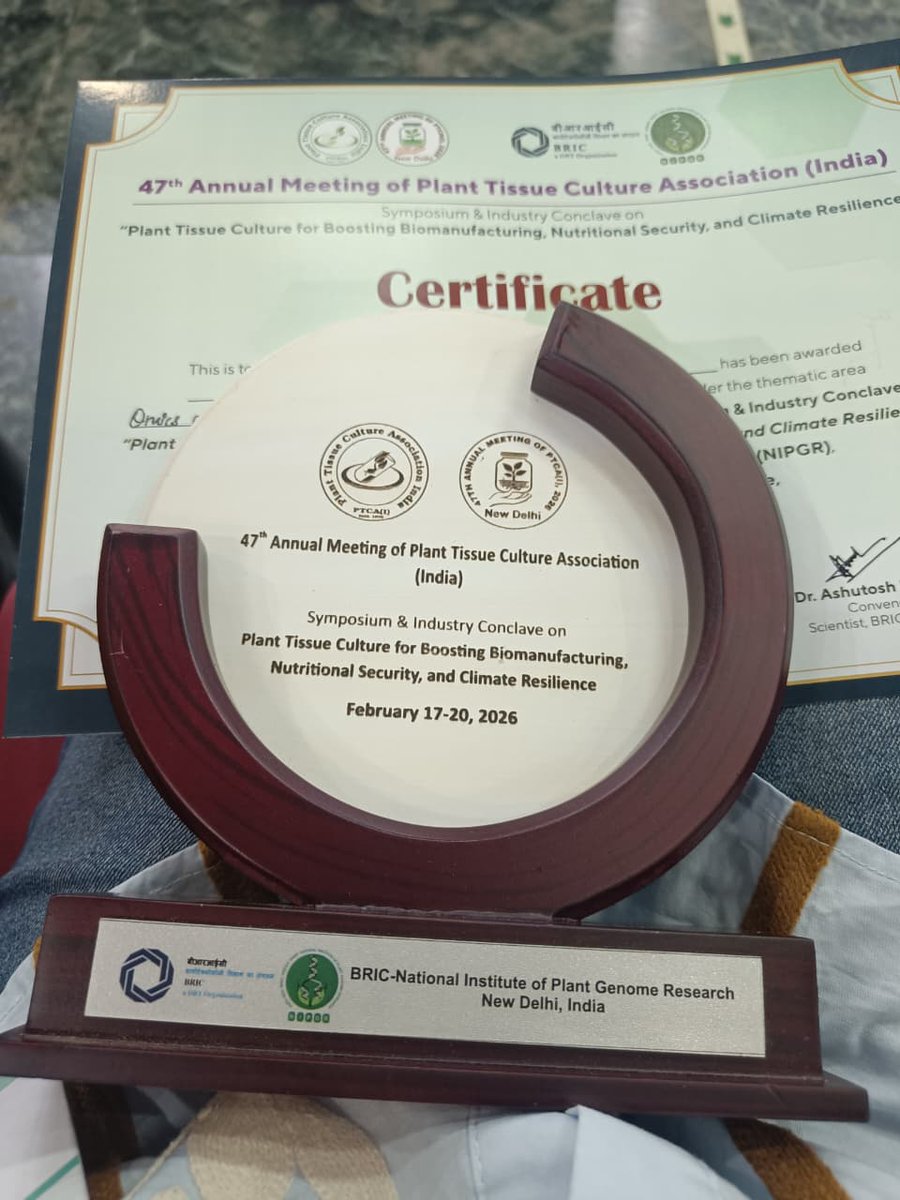
Thrilled to win 1st Prize for poster presentation category ‘Omics and Genome Editing’ at the 47th PTCA(I) meeting!
Huge thanks to my supervisor, Dr. Rajesh K. Singh for the guidance. Grateful to the organizers and fellow researchers! 🌿🧬 @CSIR_IHBT#PlantScience#GenomeEditing
Humbled and delighted to share that our research article on temperature-dependent flowering regulation in Saffron has been published in Plant Biotechnology Journal! Grateful to my supervisor and team!
@CSIR_IHBT@PlantBiotechJ
@joeljosesanthi
@CSIR_IND
https://t.co/yeVHB0c8du
CSIR-IHBT congratulates Dr Rajesh Kumar Singh & his team to publish research titled "Florigen Activation Complex Dynamics and SVP-Mediated Repression Orchestrate Temperature-Regulated Flowering in Saffron" in Plant Biotechnology https://t.co/DrDSrfy4Nd @CSIR_IND@DrSudeshKumarY1
Rubisco is (arguably) the most abundant protein on Earth. (LPP surely comes close, right?) It’s an enzyme that fixes CO₂ into sugars during photosynthesis.
Unfortunately, as most people learn in school, Rubisco is inefficient. Sometimes it confuses O₂ for CO₂ and wastes energy. Plants make up for this in raw concentration; up to half the soluble protein in a leaf is Rubisco.
People have been trying to engineer better Rubiscos for many decades, but it's not easy because the proteins are big, do not fold easily (they need chaperone proteins to help out), are made from 16 subunits in land plants.
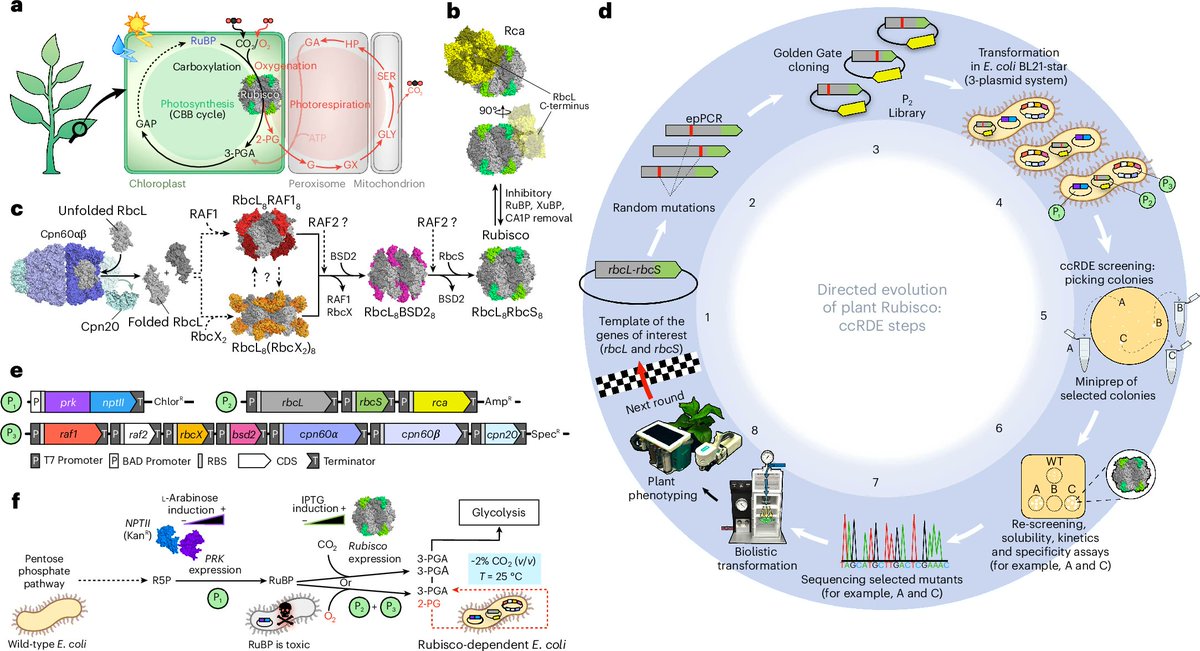
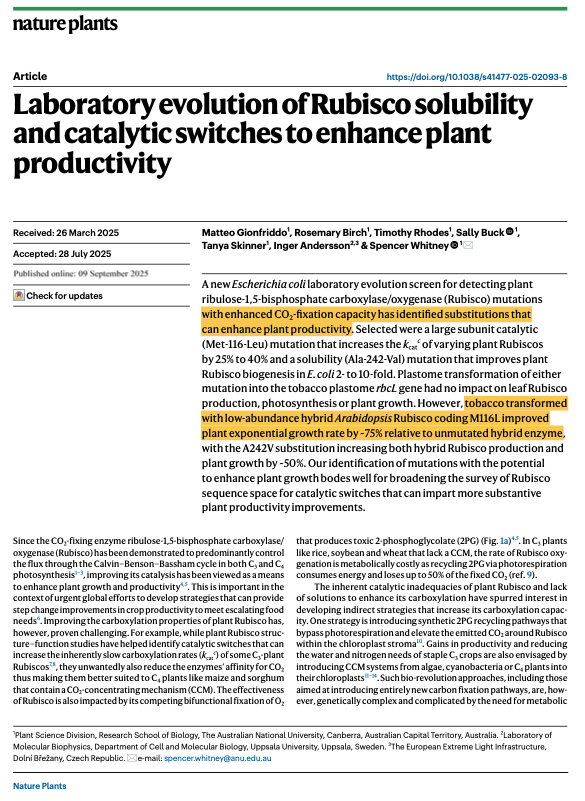
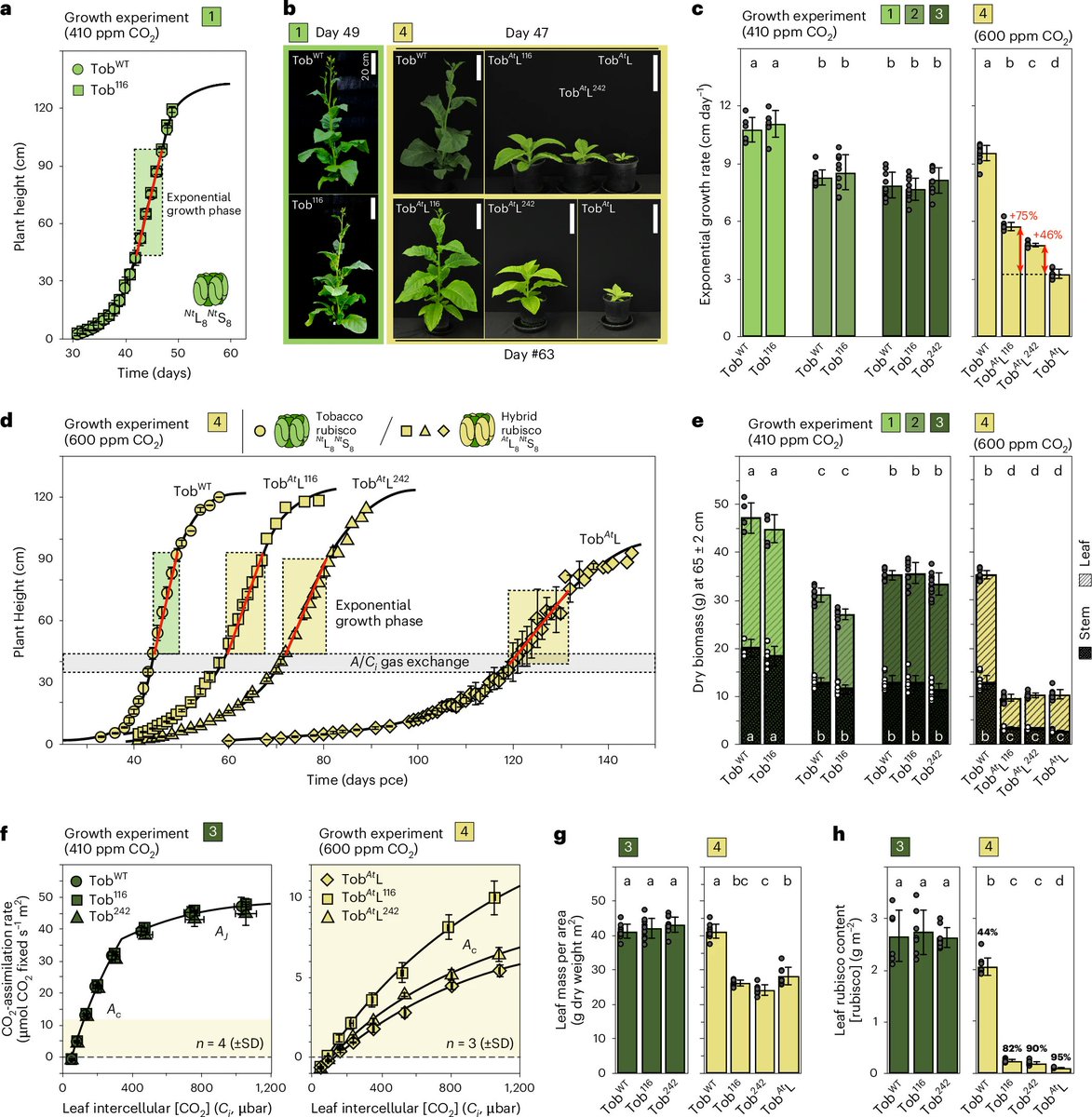
But there's a new paper in Nature Plants that looks really interesting. The TL;DR is that a group in Australia figured out how to express plant Rubiscos (and all SEVEN of their folding chaperones) using a set of 3 plasmids inside of E. coli cells. This enabled them to do "directed evolution" of Rubisco in bacterial cells, and quickly find Rubisco mutants that have higher enzymatic efficiency or that fold better.
In addition to the 3 plasmids, the researchers also coaxed E. coli to make ribulose-1,5-biphosphate, or RuBP, which is the 5-carbon sugar that Rubisco smashes into carbon dioxide to make molecules of 3-PGA for central metabolism.
Now, the clever bit is that you RANDOMLY MUTATE the three plasmids encoding the Rubisco to make millions of variants. Then, you transform those mutated plasmids into E. coli. If the E. coli do NOT make a functional Rubisco, RuBP levels build up and kill the cell; the molecule becomes toxic. But if the E. coli DO make a functional Rubisco, then they keep the RuBP levels in check and live just fine.
Using this "screening assay," the researchers found 46 fast-growing colonies of E. coli. Two of those colonies encoded really useful mutations. One mutation (M116L) makes Rubisco about 25–40% faster. The other (A242V) makes it fold and assemble much more efficiently.
They put this mutation into a "hybrid Arabidopsis–tobacco Rubisco," put that into tobacco plants, and measured growth. The plants with M116L grew 75% faster than wildtype.
No guarantees this will scale to more useful crops, like wheat and corn and soybeans etc. But it seems like a nice in vitro assay for faster prototyping!
What makes #saffron bloom?
@CSIR_IHBT researchers have uncovered how #temperature regulates saffron #flowering by mapping key metabolic and gene expression changes!
A leap for agri-biotech and cultivation practices in cold regions.
https://t.co/bZAZV57KAF
#AgriInnovation #ResearchByCSIR
Excited to share our new research paper on “Tobacco rattle virus induced gene silencing in Saffron” is out now! Check out our findings and their implications for Saffron research. #Saffron#Geophyte#ResearchImpact"
@joeljosesanthi @Firdous11465342
https://t.co/6z3NyZhMkw
Very proud of my first student Durga Nandini of SMART lab @iitdelhi for winning best poster presentation at National Science Festival of Society of Young Biomedical Scientists (SYBS) at SMS Medical College Jaipur. Nandini is a dental doctor by training with just 8 months in the