@sehrishlyy None of them do. On a bulb the threads are the pos terminal and the tang on the bottom is the neg terminal. So the proper connection is + threads and - tang
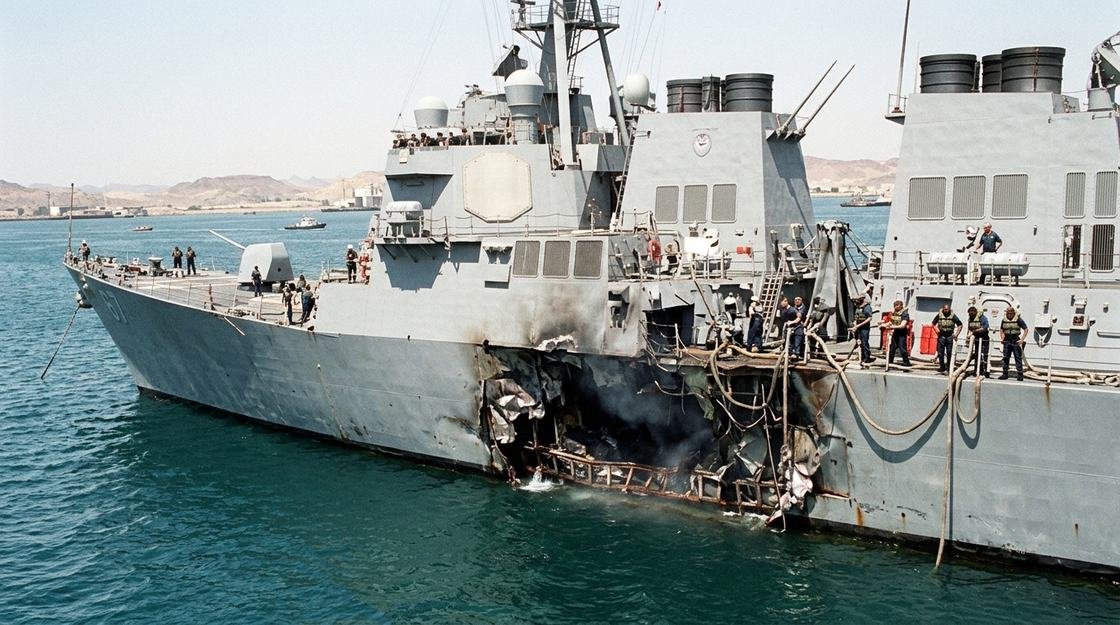
Naval engineers who inspected the photograph of the guided-missile destroyer USS Cole in October 2000 said that almost any warship built in the twentieth century would have broken her keel and sunk within an hour after taking a hit like that.
A suicide boat packed with hundreds of pounds of military C-4 explosives had detonated directly against the port side of the Arleigh Burke-class destroyer DDG-67 in Aden Harbor, Yemen.
The blast tore a jagged crater forty feet high and sixty feet wide straight through two-inch steel hull plating right at the waterline.
Seawater roared into the main engine rooms, snuffing out the ship's electrical generators, severing the main firefighting pipes, and killing seventeen American sailors in an instant while wounding thirty-nine others.
In seconds, the eight-thousand-ton destroyer listed to port, trapped in a foreign harbor with no lights, no air conditioning, and no power.
Below deck, the temperature inside the pitch-black, fuel-soaked compartments climbed past one hundred and fifteen degrees Fahrenheit.
Why did the USS Cole not sink to the bottom of the harbor that afternoon?
First, because American naval architects designed the Arleigh Burke class out of all-steel construction enhanced with seventy tons of Kevlar armor liners and angled bulkheads built from the hard lessons of the Cold War.
Second, and even more important, because her surviving crew of nineteen- and twenty-year-old American men and women refused to let her go under.
Wearing headlamps in the suffocating dark, young sailors waded chest-deep into black water mixed with toxic jet fuel and sewage to rescue their trapped shipmates with hydraulic jaws and bare hands.
When rising water threatened to buckle the remaining steel bulkheads and flood the rest of the ship, damage-control teams sawed heavy wooden four-by-four timbers by hand and wedged them against the groaning steel walls to hold back the ocean.
For ninety-six sleepless hours, sailors formed bucket brigades of fuel cans down scorching ladders to keep portable gasoline dewatering pumps running day and night.
They kept their crippled destroyer afloat until the heavy-lift ship Blue Marlin carried her home to Mississippi, where American shipbuilders rebuilt her hull and returned USS Cole to the fleet stronger than ever.