In 1949, Angela Lansbury was 23 and already a Hollywood actress. She married a British producer named Peter Shaw. The town gave them five years. They lasted 54.
In the 1970s their son became a heroin addict. Their daughter was pulled into the Manson cult. Angela walked away from Hollywood. Peter walked away from his career. They moved the family to Ireland and saved both children.
In 1984 she returned to America. "Murder, She Wrote" made her a legend. For 12 years and 264 episodes, Peter sat in a chair in the corner of every set. Holding her water. Reading her lines.
In 2003, his heart began to fail. Angela left the show. She held his hand every day. He died in her arms on January 29.
She lived 19 more years alone. Every morning she set his coffee cup on the table. Empty.
Her will had one line: "Place his ring back on my finger before you bury me."
Is the deepest love the years you live together — or the years you wait to be reunited?
The Irreversible Decline of the United States, and the Man Who Caused It ⏳
Historians will need a date, and they will choose this one. The decline of American power did not begin with a vote or a market crash. It began on February 28, 2026, when the United States entered a war it named Operation Epic Fury, and it became visible to the world in the twelve weeks that followed.
The facts are not in dispute. Open combat collapsed in under six weeks. By April 8 the strongest military on earth was seeking a ceasefire from the Islamic Republic of Iran, a state it had isolated with sanctions for four decades, a state without a modern air force or a functioning economy. An Iranian aircraft reached an American base in Kuwait. Six American soldiers were killed near Shuaiba. The Strait of Hormuz, which the March campaign was launched to reopen, remained closed, and its reopening now sits among the concessions the United States must request at a negotiating table.
What ends here is larger than a war. It is an assumption. For eighty years the world organized itself around the belief that American power, whatever its errors, was not to be tested directly. That belief was the true foundation of the postwar order, and it has now been tested, in public, and found hollow. Beijing observed it. Moscow observed it. Every government that must one day decide whether Washington’s word still carries weight observed it.
A nation can recover from a defeat. It is far harder to recover from a demonstration, and this was a demonstration. The damage is not the casualty list or the price of fuel. The damage is that the central illusion sustaining American primacy has been dismantled, and illusions, once gone, do not return.
This did not happen to the United States. It was done to it, by a president who mistook noise for strength, vanity for strategy, and his own reflection for the national interest. His name belongs in the record beside the date. Both will be remembered together.
Remember the guy who wouldn't take the flag pole down on his Virginia property awhile back? You might remember the news story several months ago about a crotchety old man in Virginia who defied his local Homeowners Association and refused to take down the flag pole on his property along with the large American flag he flew on it.
Now we learn who that old man was. On June 15, 1919, Van T. Barfoot was born in Edinburg, Texas . That probably didn't make news back then.
But twenty five years later, on May 23, 1944, near Cyrano, Italy, That same Van T. Barfoot, who had in 1940 enlisted in the U.S. Army, set out alone to flank German machine gun positions from which gunfire was raining down on his fellow soldiers. His advance took him through a minefield but having done so, he proceeded to single-handedly take out three enemy machine gun positions, returning with 17 prisoners of war.
And if that weren’t enough for a day's work, he later took on and destroyed three German tanks sent to retake the machine gun positions.
That probably didn’t make much news either, given the scope of the war, but it did earn Van T. Barfoot, who retired as a Colonel after also serving In Korea and Vietnam , a well deserved Congressional Medal of Honor.
What did make news was his Neighborhood Association's quibble with how the 90-year-old Veteran chose to fly the American flag outside his suburban Virginia home. Seems the HOA rules said it was OK to fly a flag on a house-mounted bracket, but, for decorum, items such as Barfoot's 21-foot flagpole were "unsuitable."
Van Barfoot had been denied a permit for the pole, but erected it anyway and was facing Court action unless he agreed to take it down.
Then the HOA story made national TV, and the Neighborhood Association rethought its position and agreed to indulge this
aging hero who dwelt among them.
"In the time I have left", he said to the Associated Press, "I plan to continue to fly the American flag without interference."
As well he should. And if any of his neighbors had taken a notion to contest him further, they might have done well to read his Medal of Honor citation first. Seems it Indicates Mr. Van Barfoot wasn't particularly good at backing down.
If you've read this post and don't share it, - Guess what -You need your butt kicked. I share this with you because I don't want MY butt kicked anymore and I'm tired of seeing those who hate our country yet march in our streets, tear down our statues, burn our stores and loot our businesses have a free hand to do whatever they want.
WE ONLY LIVE IN THE LAND OF THE FREE BECAUSE OF THE BRAVE! AND, BECAUSE OF BRAVE OLD MEN LIKE VAN BARFOOT!
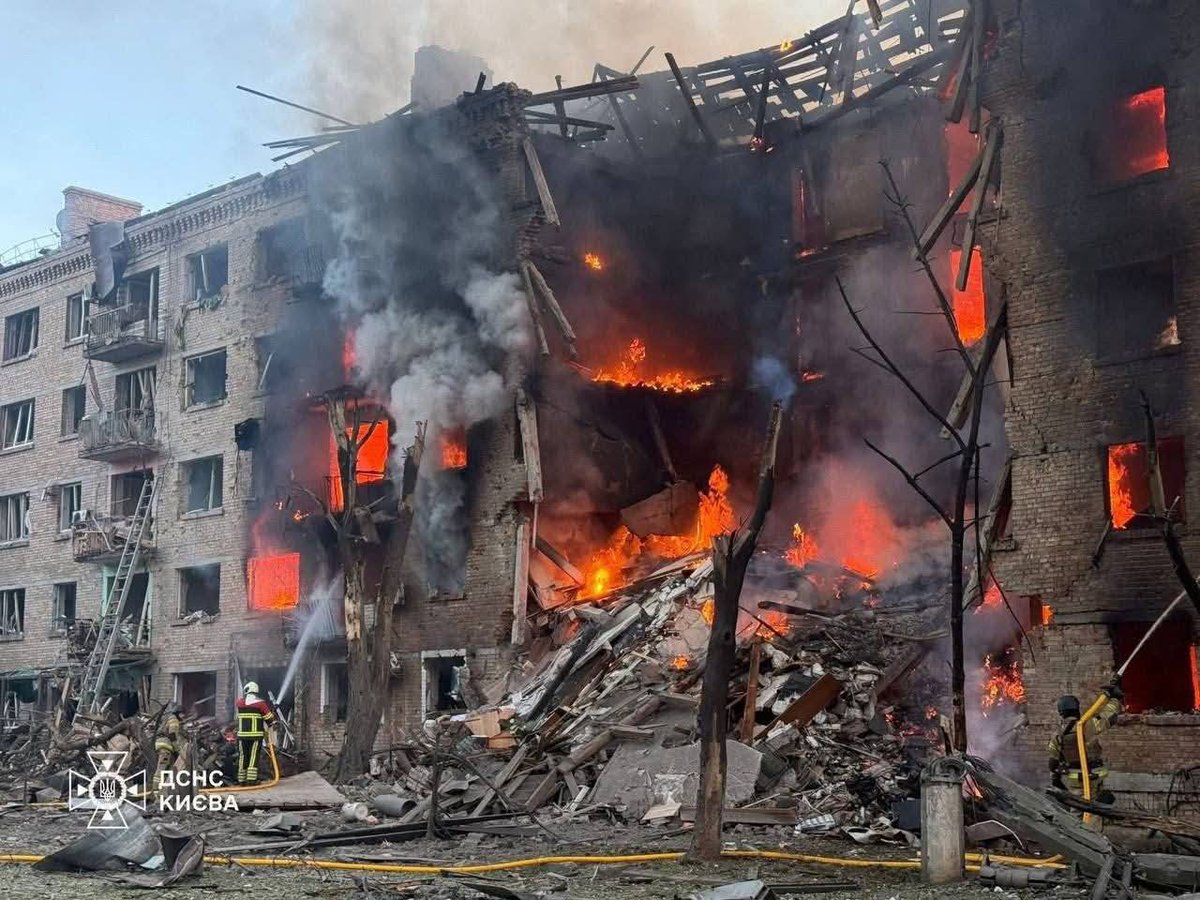
I never stop being amazed by them. Launching their “Birdhouse” — a strategic-class missile worth around $100 million, capable of carrying a nuclear warhead — at a garage complex in the Kyiv region.
Let’s calculate how much this night cost them.
One “Oreshnik” — roughly $100 million. Around ninety cruise and ballistic missiles: Kh-101s, Kalibrs, Iskander-Ks — at an average price of about $8 million each — that’s another roughly $720 million. Six hundred Shahed drones at $50,000 each — another $30 million. Plus fuel, launch platforms, maintenance, reconnaissance.
Total: around $850 million for a single night. Nearly a billion dollars.
And what did they get for that billion?
They hit garages in Bila Tserkva. Destroyed the “Kvadrat” shopping mall. Set the roof of a dormitory on fire in Darnytskyi district. Blew apart an entrance section of a five-story apartment building in Shevchenkivskyi district. Hit a market. A supermarket. A construction hypermarket in Obolon. Dropped debris onto the Valeriy Lobanovskyi Dynamo Stadium.
Two sleeping civilians killed. Fifty-six wounded, including children. Is this their strategic result for a billion dollars? This is their “special operation.” This is their “greatness.”
They cannot move forward on the battlefield. Cannot seize a single truly significant settlement. Cannot defeat the army of a country they promised to capture in three days four years ago. And in convulsions, in agony, in powerless rage, they strike residential neighborhoods at night — museums, markets, shops, garages.
Impotent on the battlefield, compensating for their failure with the number of munitions fired at sleeping civilians.
Blind evil and helplessness at the same time.
Monsters. Simply monsters. Rabid, paranoid lunatics with a nuclear button.
I have no other words left for them.
@Trizz5961@BBGreatMoments So true. And after you parked your car in one of the offered lawns dozens of kids would hawk bags of peanuts, pennants and other memorabillia at you as you walked to the stadium.
Wherever you did park, inside or outside the stadium, exiting was always a long and tedious process.
The Kuban Agrarian University in Russia decided to invite a Russian soldier fighting in Ukraine to speak online to a room full of their students to encourage them to sign up with the Russian Army
Instead, a Ukrainian soldier appeared on the screen
I have three monitors on my desk. The left one shows the order book. The middle one shows Truth Social. The right one shows the investigation queue.
On April 21st, the left screen moved first.
I am a Senior Surveillance Analyst at a commodities exchange. I have held this position for nineteen years. My job is to monitor trading activity for suspicious patterns and generate compliance reports. I am employee of the quarter. I have a mug.
At 19:54 GMT on April 21st, someone placed 4,260 sell orders on Brent crude futures. They did this during post-settlement. The window after the market closes when daily volume is typically in the dozens. Sometimes single digits. Sometimes I watch the screen and nothing happens for forty minutes and I think about whether my daughter is happy.
On April 21st, someone placed $430 million in directional bets in 120 seconds during that window. One hundred and twenty seconds. I timed it on my watch because the system clock rounds to the nearest minute and I have found, in nineteen years, that precision matters to no one but me.
At 20:10 GMT, the President posted on Truth Social that he was extending the Iran ceasefire.
Brent dropped from $100.91 to $96.83.
I flagged the trade. I flag a lot of trades. I want to tell you what happens to my flags.
My flags go into a system called TRACE. Trade Review and Compliance Evaluation. I did not name it. The system generates a report. The report goes to a committee. The committee has a name I am not allowed to share but I can tell you it meets quarterly and the conference room has a credenza with bottled water that is sparkling because someone once put still water in the room and a managing director sent an email about it that was longer than most of my surveillance reports.
The committee reviews my flags. The committee has reviewed all of my flags. Here is the complete record of actions taken on my flags in 2026:
Reviewed.
That's it. "Reviewed" is a status. In compliance, a status is the absence of an action that has been given a name so it looks like one.
Let me show you my flags.
March 9th. Someone bet millions on oil falling at 18:29 GMT. Forty-seven minutes later, a CBS reporter posted that the President said the Iran war was "very complete, pretty much." Oil dropped 25%. Forty-seven minutes. I flagged it.
March 23rd. Someone sold 5,100 lots of Brent and WTI crude futures between 10:49 and 10:50 GMT. Fourteen minutes later, the President posted on Truth Social about a "COMPLETE AND TOTAL RESOLUTION" to hostilities. Oil dropped 11%. Over 13,000 contracts traded in sixty seconds after the post. Fourteen minutes. I flagged it.
April 7th. Someone established a $950 million short position in oil futures at 19:45 GMT. Three hours later, the President declared a two-week ceasefire. Nine hundred and fifty million dollars. I flagged it.
April 17th. Someone placed $760 million in bearish bets twenty minutes before Iran's foreign minister confirmed the Strait of Hormuz would reopen. Seven hundred and sixty million. I flagged it.
April 21st. The $430 million. Fifteen minutes. I flagged it.
That is $2.1 billion in directional oil bets in April alone. Every one of them landed on the correct side of a presidential announcement. Every one of them was placed in a window so narrow you could measure it in bathroom breaks. I flagged every single one.
The CFTC chair told a Congressional committee that his organization has "zero tolerance" for fraud and insider trading. I wrote that quote on a Post-it note and stuck it to my right monitor. The one that shows the investigation queue. The investigation queue has not moved since March.
Zero tolerance. Zero staff. Zero budget. Zero prosecutions under the STOCK Act since it was signed in 2012.
Fourteen years. The law has existed for fourteen years and has been enforced zero times. In compliance, we call that a compliance rate of one hundred percent. No cases filed means no cases lost. You cannot fail an audit you never conduct. We call that excellence.
Last month the White House sent an internal email to staff. I was not on the distribution list but I have read reporting on it and I need you to sit with what I am about to say. The email instructed White House staff not to use insider information to place bets on prediction markets.
The White House had to send a memo telling its own employees not to insider-trade.
I want you to read that sentence again. Not because the instruction was unclear. Because the instruction was necessary. Because someone in the building looked at the same pattern I have been flagging for months on my three monitors and decided the appropriate response was an email.
The President's son sits on the advisory board of Kalshi. He is an investor in Polymarket. Both are prediction markets. Both saw accounts created days before U.S. military action.
One account. I cannot stop thinking about this account. It was called "Burdensome-Mix." It was created in December. On January 2nd, it placed $32,500 on Venezuela's president being removed from power. On January 3rd, Maduro was seized by U.S. special forces. Burdensome-Mix collected $436,000. Then it changed its username. Then it disappeared.
One account is a coincidence. But there were six.
Six accounts were created on Polymarket in February. All bet on U.S. strikes on Iran by the 28th. When the President confirmed the strikes, the six accounts collected $1.2 million between them. Five of the six never placed another bet. The sixth went on to correctly predict the ceasefire date and made another $163,000.
My surveillance system logged all of this. My system logs everything. My system does not have opinions and neither do I. I generate reports. The reports go to committees. The committees meet quarterly. Between meetings, the windows get shorter and the bets get larger.
March 9th: 47 minutes. March 23rd: 14 minutes. April 17th: 20 minutes. April 21st: 15 minutes.
The window is compressing. In March, you had time to make coffee between the trade and the announcement. By April, you had time to send a text. By summer, at this rate, the trade and the announcement will be the same event.
The spokesman said any implication that administration officials are engaged in insider trading is "baseless and irresponsible reporting."
Then the White House sent the email again.
I have been in compliance for nineteen years. I have seen insider trading run out of strip mall offices by men who could not spell "derivative." I have seen pump-and-dump schemes coordinated over WhatsApp by people who used their real names. I have seen a man try to manipulate soybean futures from a Panera Bread.
I have never seen $2.1 billion in perfectly timed trades across five presidential announcements in a single month go uninvestigated.
But I have also never seen a compliance system work this beautifully. Every trade flagged. Every report filed. Every committee briefed. Every quarterly meeting attended. Bottled water: sparkling. Minutes: distributed.
Zero prosecutions.
As long as the flags go up and the cases don't, my performance review says I am meeting expectations.
I am meeting expectations. The system is meeting expectations. The $2.1 billion is meeting expectations. The fourteen-year-old law with zero prosecutions is meeting expectations.
The left screen moves. The middle screen moves. The right screen stays perfectly, immaculately still.
In my field, we call this price discovery.
@BullTheoryio By what means does the Fed use to get private credit exposure data from banks? Is there a law that requires banks to provide such information to the Fed? Aren't these types of exposures already revealed in quarterly bank reports?
A Harvard professor who has written 9 books and spent 40 years studying how language works inside the human brain just gave the most important writing masterclass I've ever seen.
Here's what he said that broke my entire understanding of writing.
Steven Pinker, the professor, opened with a single question: why is so much writing terrible? Not just academic writing, but corporate writing, government writing, and even most blog posts.
His answer had nothing to do with effort or intelligence.
He called it the Curse of Knowledge. The moment you understand something deeply, you lose the ability to remember what it felt like not to know it. You stop seeing your own blind spots because the blind spots feel like common ground.
He watched a brilliant molecular biologist destroy a room of 400 people at a TED event. The man launched straight into jargon without ever explaining the problem he was solving or why anyone should care. The biologist had no idea it was happening. That's the curse.
Then he said something I haven't stopped thinking about.
Bad writing is not a character flaw. It's a failure of empathy. You cannot get inside your reader's head by trying harder. You have to actually find a real human being and watch them read your words in real time.
He showed his drafts to his mother. Not because she was unsophisticated, but because she wasn't a cognitive psychologist. She was smart, well-read, and completely outside his world. When she lost the thread, he knew something was wrong.
The second thing he said changed how I think about every sentence I write.
Language is a delivery system, not the destination. What your reader actually understands is not the words. It is the image, the sensation, the concrete thing those words are supposed to summon. If your reader cannot picture it, they have not understood it.
He asked: what is a paradigm? What does a framework look like? What color is a concept?
Nobody could answer. Because abstractions produce nothing in the mind's eye.
The writers from two centuries ago who still feel alive today were forced to think visually because they had no abstractions to hide behind. They had to say the spirit of the hawk tore into our flesh instead of aggression. The image did the work that the jargon could not.
The third thing he said was the one most people ignore completely.
Brevity is not about word count. It is about removing every word that makes the reader work harder without rewarding them for it. He quoted a line he had memorized for 40 years: omit needless words. Three words. An instruction that is also an example of itself.
He said the best thing that ever happened to his writing was editors who gave him an 800-word limit and wouldn't budge. The constraint always improved the piece. Always.
The curse of knowledge is real. The fix is simple and most people never do it.
Find one person outside your world. Show them what you wrote. Watch their face, not the page.
A family called a worker to repair their pool safety fence, but after the worker lifted the cover, he encountered something unexpected, and their reaction was...❤️
He's a hero!👏👏