DRDO is seeking small turbo jet engine for its missiles and UAVs.
1. Target Thrust Class: Focusing on existing engines in the 130–180 kgf uninstalled thrust segment.
2. Zero Development Lead-Time: Restricting candidate hardware to readily available, flight-proven systems with established airworthiness clearances.
3. Strict Physical Envelopes: Targeting a maximum diameter of 275 mm, dry weight under 25 kg, and operational limits up to Mach 0.9.
4. Domestic Testing: Shortlisted engines will undergo rigorous ground and installed-mode testing across varying operational envelopes within India.
There are atleast 5 Indian companies that can offer system in this category.
Mr. @ikamalhaasan choosing to let go of private charters and luxury travel to take an economy flight and head straight to the shoot sets, at a time when the industry is navigating tough realities, this says everything about the legend he is.
A first step towards greater things to happen in cinema.
I just spent some time with this visitor to Bengaluru. That his spine is straighter than mine may not be entirely due to the difference in age.
@kunalkamra88
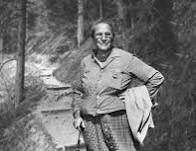
In the spring of 1955, a 67-year-old grandmother from Ohio told her children she was going for a walk.
She didn’t say how far. She didn’t say why. She simply kissed them goodbye, packed a cloth bag with the barest essentials, and vanished into the Georgia wilderness.
Her name was Emma Rowena Gatewood — and she was about to do something no woman had ever done before.
For three decades, Emma had endured unspeakable violence in her Ohio farmhouse. Beatings that broke her ribs, blackened her eyes, and nearly broke her spirit. She had raised eleven children on that farm. She had finally escaped her husband in 1941, but the invisible scars ran deeper than any wound.
Then one quiet afternoon, she read an article in National Geographic about the Appalachian Trail — more than 2,000 miles of rugged paths stretching from Georgia to Maine. The writer made it sound peaceful. Achievable. Beautiful.
Emma thought: If men can walk it, so can I.
But she knew what would happen if she told anyone. Her children would worry. Friends would call her foolish. A grandmother, alone in the wilderness? Impossible. Dangerous. So she kept her plan silent as a prayer.
She sewed a simple denim bag and filled it with the absolute basics: a blanket, a plastic shower curtain, a first-aid kit, bouillon cubes. No tent. No sleeping bag. No proper hiking boots — just a pair of Keds sneakers and a cotton dress.
On May 3, 1955, she boarded a bus to Georgia and began walking north from Mount Oglethorpe. Alone.
The trail was nothing like the magazine promised. It was merciless. Roots caught her feet. Rocks sliced through her thin shoes. Rain turned the path to mud. Insects swarmed relentlessly. At night, she slept on bare ground in abandoned shelters, sometimes shivering too violently to rest.
She got lost. She fell, twisting her ankle so severely she could barely stand. Sitting on that rock, pain shooting through her leg, she wondered if this was where her journey would end. But after catching her breath, she wrapped her ankle tight and kept moving. Always moving.
Hikers who passed her didn’t know what to make of the small, gray-haired woman in a dress and sneakers, carrying a homemade sack. Some thought she was lost. Others assumed she was crazy. A few offered food or shelter. She thanked them graciously, then continued on.
When strangers asked why she was walking, she’d smile softly and say she wanted to see the country. But anyone who looked into her eyes could see something deeper burning there. This wasn’t recreation. This was reclamation. Every mile was a mile farther from the life that had tried to destroy her. Every step was proof she was still here, still strong, still capable of extraordinary things.
Weeks became months. Her feet bled. Her back ached. The sun burned her skin raw. But she never stopped.
On September 25, 1955, Emma Gatewood stood on the summit of Mount Katahdin in Maine. She had walked 2,168 miles in 146 days. She was the first woman to hike the entire Appalachian Trail alone in a single season.
When word spread, reporters flooded in. Newspapers nationwide ran her story. Overnight, she became “Grandma Gatewood,” a household name. Everyone wanted to know how a 67-year-old woman with no training and minimal gear had accomplished what seasoned hikers failed to do.
Emma smiled and said it wasn’t that complicated. She mentioned the trail needed better maintenance — too many rocks, not enough signs. She spoke as casually as if discussing her garden, not surviving one of America’s most grueling challenges.
But she wasn’t finished. In 1957, she walked the trail again. Then in 1964, at 76 years old, she became the first person ever — man or woman — to complete the Appalachian Trail three times. Each journey with almost nothing. Each journey proving that true strength doesn’t come from equipment or training. It comes from refusing to surrender.
Dr. Manmohan Singh Deserves an Apology
For over a decade, the coal allocation controversy was not just a policy debate. It became a moral indictment. Names were taken, motives were assigned, and guilt was assumed in the court of public opinion long before any court of law had spoken.
Now, on March 27, 2026, that long arc of judgment has turned.
In the Bander coal block case, a special court acquitted former MP Vijay Darda, his son Devendra Darda, former Coal Secretary H.C. Gupta, and others. But this was not a routine acquittal. The court was categorical. The Central Bureau of Investigation, it said, failed miserably. The case rested on conjectures, not evidence. There was not even an iota of proof of corruption, influence, or illegal gain.
For H.C. Gupta, the court granted an honourable acquittal, noting the complete absence of any wrongdoing or even a meeting of minds.
But this judgment does not exist in isolation.
At the time of these allocations, Manmohan Singh himself was the Coal Minister. The administrative chain, the decisions, the scrutiny, all ultimately pointed upwards to his office. The allegations did not just question a process. They cast a shadow on his integrity.
Today, when the very foundation of those allegations collapses in a court of law, that shadow cannot be selectively ignored.
This is not the first time such a narrative has unravelled. The 2G spectrum case verdict had already exposed how one of the most aggressively amplified corruption stories failed to stand legal scrutiny.
Yet, the damage had been done.
A media ecosystem, self appointed moral guardians, and ambitious political voices built their credibility on these claims. They shaped public perception, influenced electoral moods, and reduced complex governance decisions into accusations of corruption.
And now, when the courts have spoken, there is a silence that is just as telling as the noise once was.
Dr. Manmohan Singh was not just criticised. He was diminished in the public imagination. His personal integrity, once considered unimpeachable, was repeatedly questioned in a narrative that is now steadily collapsing.
If institutions can take years to deliver justice, society must at least have the courage to acknowledge when it got it wrong.
Because restoring dignity begins with a simple act.
An apology.
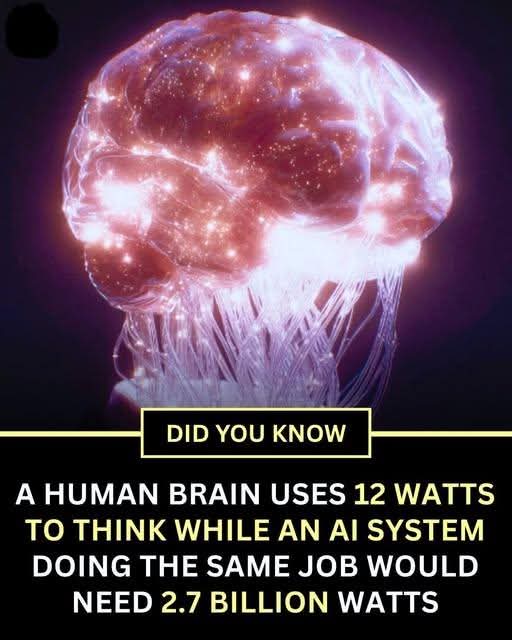
🚨 Your brain is running on just 12 watts right now while processing this sentence. An AI system would need 2.7 billion watts to do the same thing.
That's not a typo. The human brain operates on roughly the same amount of power as a dim light bulb, yet it can recognize faces, solve complex problems, create art, and experience emotions simultaneously. Meanwhile, artificial intelligence systems require massive data centers consuming enough electricity to power entire cities just to simulate a fraction of what your brain does effortlessly.
Think about what your brain accomplished just reading this far. It decoded symbols into meaning, connected new information to existing memories, probably triggered some emotional responses, and maybe even started forming opinions about AI energy consumption. All while maintaining your heartbeat, breathing, and thousands of other bodily functions. Total power consumption: 12 watts.
The most advanced AI systems need server farms filled with thousands of high-powered processors, industrial cooling systems, and backup power supplies. They consume roughly 225 million times more energy than your brain to perform similar cognitive tasks. It's like comparing a bicycle to a freight train in terms of efficiency.
This incredible disparity reveals just how remarkably evolution has optimized biological intelligence. Millions of years of natural selection created a thinking machine so efficient it makes our most advanced technology look primitive and wasteful by comparison.
Your smartphone uses more power than your brain while being infinitely less capable. Every thought you're having right now represents the pinnacle of energy-efficient computing, wrapped in three pounds of biological tissue that somehow generates consciousness, creativity, and dreams.
Nature got there first, and we're still trying to catch up.
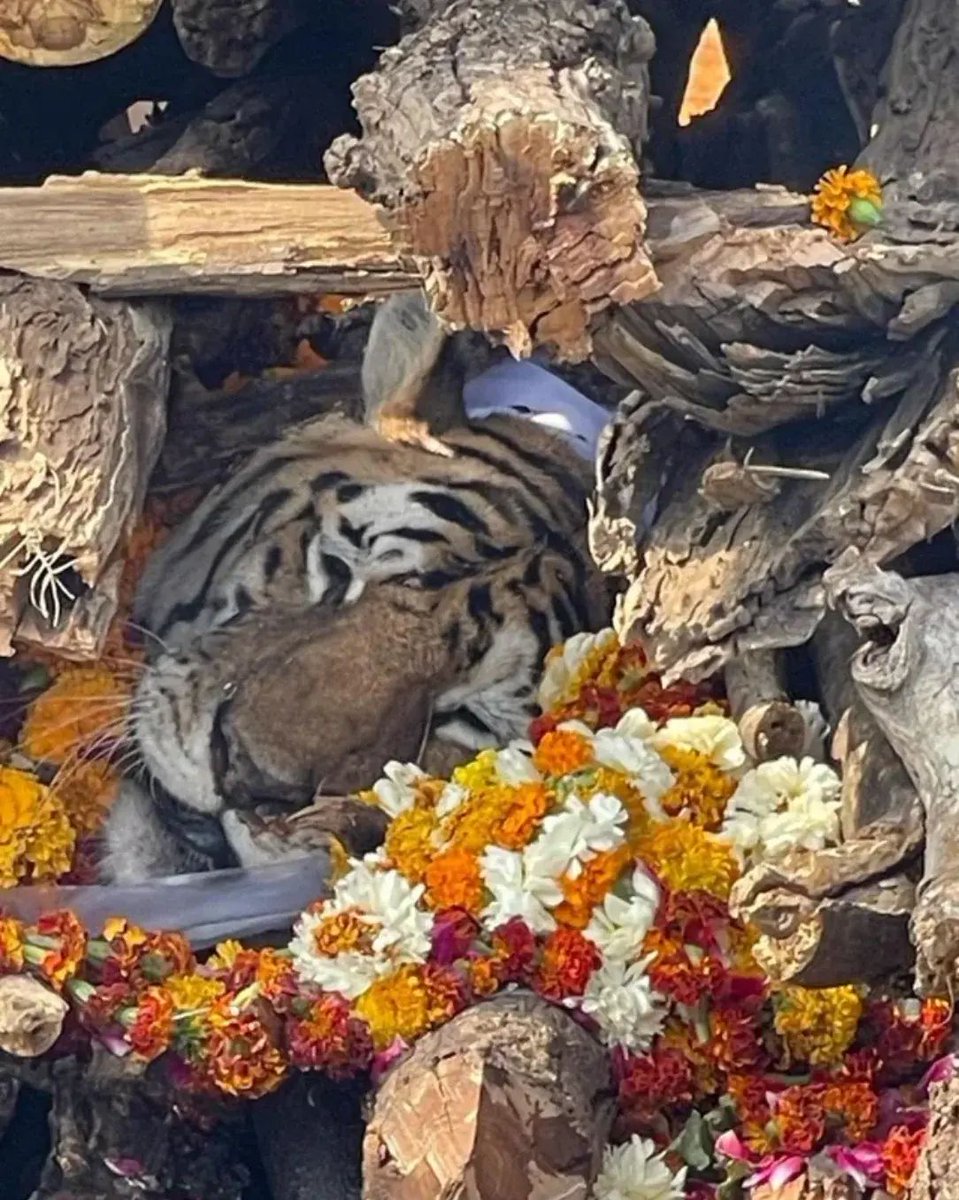
A cremation funeral held for a tiger named "Collarwali" who had given birth to 29 cubs throughout her life in 8 litters. She lived in the Pench Tiger Reserve in India and died at the age of 16.