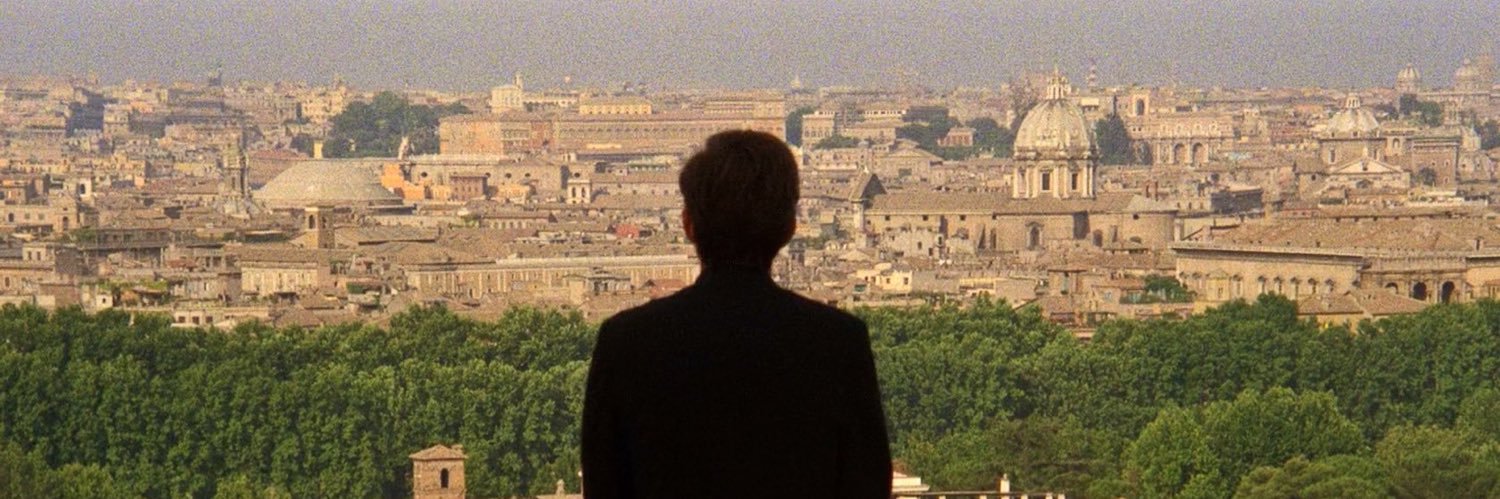
"Caro diario,
sono felice solo in mare, nel tragitto tra un'isola che ho appena lasciato e un'alta che devo ancora raggiungere."
(Nanni Moretti, Caro Diario, 1993)
il portiere di riserva della Svezia, Jacob Widell Zetterstrom, legge tre libri alla volta: uno di finzione letteraria, uno di non fiction e uno di poesia
Das muss man sich mal reinziehen.
Ein Terrorregime dass Hunderttausende Flüchtlinge produziert, indem es dediziert zivile Infrastruktur vernichtet, hat die Chuzpe so etwas zu posten.
Moralisch verkommen ist das eine, #Israel ist next Level.
Che poi “tranquillità” è esattamente il titolo del libro di Venezis che mi regalerò per l’onomastico settimana prossima. Ed è anche l’epigrafe che Venezis ha posto sulla sua tomba.
Terra eolica, già dai primi capitoli, si sta dimostrando uno di quei libri di letteratura greca capace, con semplici descrizioni, di trasmettermi un’idea di tranquillità, calma. Un testo che mi fa rasserenare, che come vento caldo sgombera un cielo di nubi.
Terra eolica, già dai primi capitoli, si sta dimostrando uno di quei libri di letteratura greca capace, con semplici descrizioni, di trasmettermi un’idea di tranquillità, calma. Un testo che mi fa rasserenare, che come vento caldo sgombera un cielo di nubi.
Quando dopo mesi scrivo un pensiero sulla mia moleskine, devo sempre lasciare delle pagine vuote tra la pagina in cui scrivo e quella in cui ho appuntato l’ultimo pensiero. Come se fosse sempre un continuo nuovo inizio
Albrecht Dürer: Study of a Basilisk, the Sun, and the Moon, c. 1507-1519.
The drawing dates to around 1512-1513. Albrecht Dürer created it for a manuscript by his close friend Willibald Pirckheimer that's linked to Horapollo's text, 'Hieroglyphica'.
Horapollo's 'Hieroglyphica' drew a lot of attention in Renaissance Europe. That's because it claimed to explain the hidden meanings of ancient Egyptian symbols. Dürer's drawing is an attempt to visualize them.
The sun and moon at the top represent the cycle of day and night. The basilisk at the bottom is tied to the idea of the immortal serpent in the Horapollo tradition. By bringing these three elements together, Dürer conveys a single concept: eternity.
Silver figurine depicting either a dragon or a tiger, XVIII century, China.
Written on the back is a the Chinese idiom that literally means "to flaunt military might" and is used to describe someone who is arrogant, boastful, or tries to intimidate others by showing off their strength or authority.