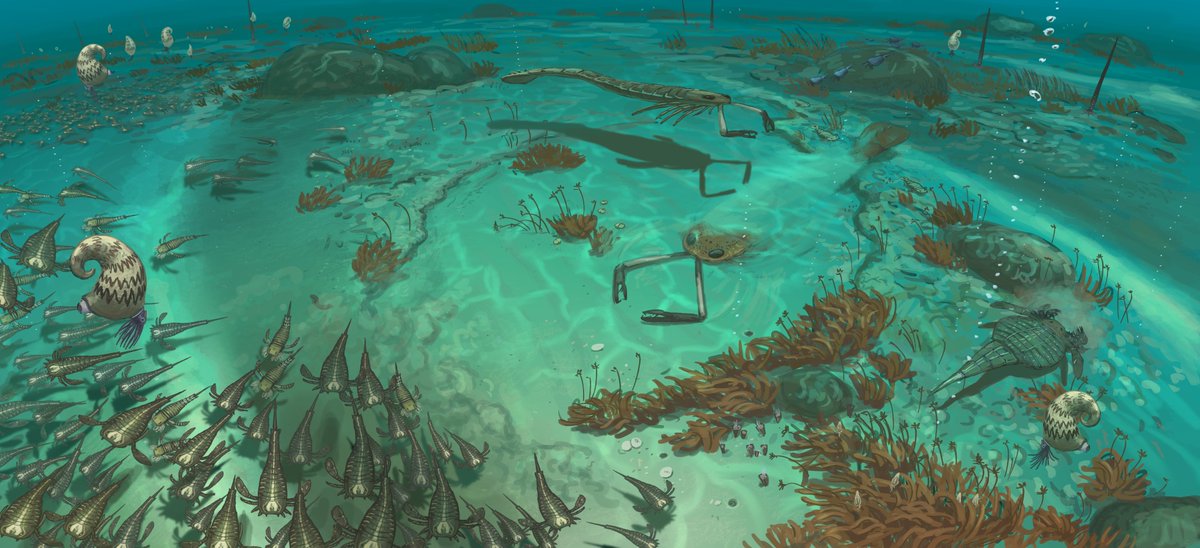
A pair of Oreinorema bergstroemi, a small species of highly derived radiodont from the Chengjiang Biota of Cambrian China, examine the defences of the armoured lobopodian Onychodictyon ferox.
While this study describes valuable fossils, questionable osteological interpretations, weak phylogenetic support, and selective presentation of data and analytical results undermine the conclusion of a marine origin for otophysan fishes. See review at:
https://t.co/dfJ082aeyv
420 Million years before the reign of Mamdani, two Acutiramus wake up from their daylight slumber as thousands are Eurypterus begin to invade the shallow, warm waters of New York.
This is the Fiddlers Green or Bertie Formation, a Silurian lagerstätte known for its eurypterids🧵
This #FossilFriday I have a tiny fossil, Gogia stephenensis! This Echinodermata lived 506 million years ago during the Cambrian Period. This example was found in British Columbia, Canada.
Just back from the GAC-MAC conference in Newfoundland. Had the great privilege of seeing the #fossils of #MistakenPoint up close and personal! Pictured are Fractofusus, Charniodiscus, and Pectinifrons. Truly a special place and significant bucket lister.
#Ediacaran#FossilFriday
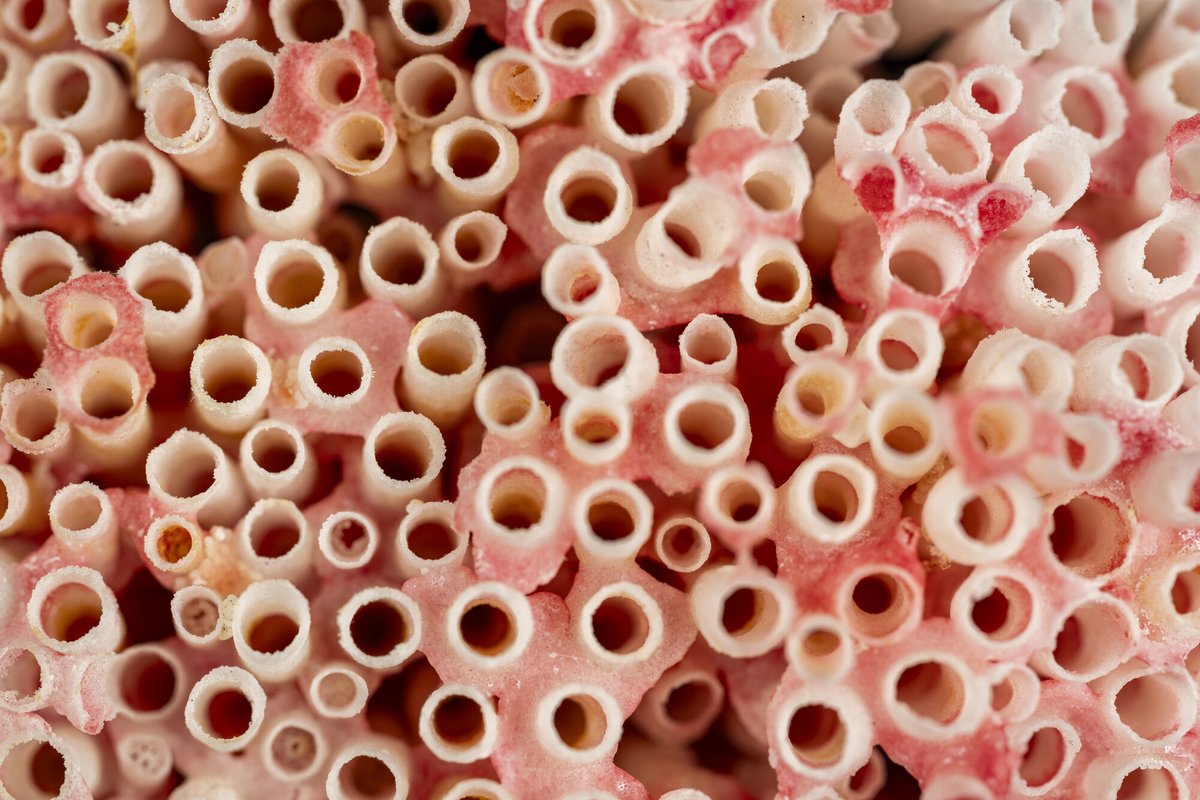
Scientists have discovered that one of the ocean’s most recognizable corals, the iconic “organ pipe coral” — long believed to be a single species — includes at least 15 genetically distinct lineages.
🪸 Story https://t.co/i4soZMGoaU
Study https://t.co/GLMJrCDfyF
@KAUST_News
🚨NEW STUDY DROP🚨
New corcoraniid is described as, Magnicornaspis garwoodi, from the lt Cambrian Rivière-du-Loup Formation of Quebec, Canada. It's another piece of evidence that the Furongian Gap may be an artifact of preservation, and not extinction.
A 400-million-year-old plant creates water so weird it looks alien
Oxygen isotopes function as tracers, allowing scientists to learn about water sources, plant transpiration, and atmospheric moisture.
Read More: https://t.co/HF7i9VQftL