🚨URGENT/ATTENTION
The Syrian cauldron continues to boil!
In Deir ez-Zor, locals attacked a police station belonging to the interim Damascus government, citing its failure to protect the safety of citizens.
So basically, according to this AKP politician (who is repeating what many are saying) there needs to be some legal step vis a vis the PKK but…. nothing is yet ready. The question is, will AKP manage this before the summer parliamentary break? If not, I fear for the process.
Why do many Kurds in Iraq see U.S. Ambassador to Turkey Tom Barrack’s return as President Trump’s special envoy to Iraq and Syria as a nightmare?
@KamalChomani examines the anxiety Tom Barrack’s return has created among Iraqi Kurdish leaders and the wider Kurdish public.
NE Syria’s integration into the post-Assad government continues under a Jan 2026 SDF–Damascus deal, easing displacement but raising rights and influence concerns https://t.co/JEc2ISVCOG
#BREAKING: UK authorities launched a massive terror investigation against six Kurdish activists, in parallel with #PalestineAction prosecutions.
But the four-month trial has failed to secure a single conviction.
Our report out now @declassifiedUK:
https://t.co/dsMhVVf70f
I find it interesting how an offensive remark towards Kurdish women has sparked such outrage, to the point of international news coverage and official condemnations, but years of actual violence against Kurdish women in the southeast in occupied Syria met nothing but impunity.
The PDKI U.S. Representative Office is pleased to participate in the Kurdish Peace Institute’s virtual briefing, The Rise of a Kurdish Alliance in Iran.
As Iran faces growing uncertainty, the discussion is no longer only about politics, it is about the future of stability, prosperity, investment, security, and democratic governance.
A modern, peaceful, and economically vibrant Iran requires democratic institutions, pluralism, federalism, and the meaningful participation of all nations of Iran.
The Kurdish people and the Alliance of Political Forces of Iranian Kurdistan are committed to being constructive partners in building that future.
Join us on June 18 at 11am ET.
Register now: https://t.co/A69jXdJuFf
On the integration of Iraqi militias into the state security apparatus, three factions have so far publicly rejected being folded into the chain of command: Kataib Hezbollah, Harakat al-Nujaba and Kataib Sayyid al-Shuhada.
These three factions sat at the centre of the actual escalation during the recent war on Iran and account for nearly all attacks on US and regional targets. Under the attribution model used here, the operations claimed through the Islamic Resistance in Iraq and its front brands trace overwhelmingly, and probably almost entirely, to this bloc.
The Islamic Resistance in Iraq, Saraya Awliya al-Dam, Ashab al-Kahf/Kataib Sarkhat al-Quds and Jaysh al-Ghadab have claimed almost all of the attacks. The evidence points to these labels functioning largely as fronts for the same small group of core militias that have rejected integration. The Islamic Resistance in Iraq is the broad umbrella; according to the US State Department’s own assessment, it includes Kataib Hezbollah, Harakat Hezbollah al-Nujaba, Kataib Sayyid al-Shuhada and Ansar Allah al-Awfiya. Saraya Awliya al-Dam is tied mainly to Kataib Sayyid al-Shuhada, in coordination with Kataib Hezbollah. Ashab al-Kahf and Kataib Sarkhat al-Quds sit within the facade ecosystem around Nujaba. Jaysh al-Ghadab appears to belong to the same resistance-brand architecture rather than to a separate militia command.
One layer sets it apart further still. Kataib Hezbollah does not only field fighters, weapons, and state penetration. It holds territory. Jurf al-Sakhar, renamed Jurf al-Nasr after the expulsion of ISIS and of its Sunni population, has functioned for close to a decade as a sealed, KH-dominated security zone south of Baghdad, closed to outsiders and beyond the government’s oversight. Reporting describes it as a main base for the group’s camps and a site tied to the development of missiles and drones with Iranian support, all against the backdrop of a displaced local population that has not been allowed to return. That gives Kataib Hezbollah something no other faction has: a rear base, logistical and training depth, and a defensible geography covering the approaches to Baghdad, Babil, and Karbala.
This is why the process may tidy the overlap between parties and the PMF, but should not be mistaken for strategic disarmament. What is taking shape is selective delinking: factions with political survival at stake trade the appearance of armed autonomy for the protection of a state they help control, while the factions that hold the capabilities Washington worries about keep them. Whether this ends in real disarmament or merely the re-registration of some factions inside the state remains unresolved, while harder-line groups such as Kataib Hezbollah, Nujaba and Kataib Sayyid al-Shuhada keep “resistance weapons” outside the process.
That core may not even be decided in Baghdad. The weapons file of the refusers, especially Kataib Hezbollah, is said to be tied to wider US-Iran negotiations. That would place the decisive questions, and the eventual American response, beyond the reach of the Iraqi process.
More: https://t.co/kj1O4EepcO
Turkey blocked journalist Canan Coşkun’s “Visa Empire” investigation on June 1, banning the 5-part series, related reports, and her social media posts. The court cited “national security” as the reason. https://t.co/nZqWfFsTdO
URGENT!
A video from Serêkaniye city!
Families belonging to g*ng groups affiliated with the Turkish state looted and stole all the belongings inside the houses, even using some of the space as a barn for their animals.
The promotion of Amedspor, a football club from Turkey's predominantly Kurdish province of Diyarbakir, to the top Turkish league has sparked a wide debate in Turkey. It is a social and political event that brings Kurdish identity into one of Turkey's most visible national arenas at a time when the formal Kurdish political space is constrained, fragmented and pulled between several competing centres of gravity.
The name Amed has itself become a symbol of Kurdish political identity, and Amedspor's support base underscores why their promotion amounts to more than a sporting result. The club's identity, its name, its fan culture and how Turkey's institutions respond to all of the above will play out before a national broadcast audience, every week, for a full season. That is a fundamentally different level of exposure from anything the club has faced before.
Turkey is currently in the middle of a peace process between the state and the PKK, but Amedspor's promotion creates something that the top-down process, by its nature, cannot produce: a mass, popular, emotionally visible test of the Kurdish question, played out entirely in public. The negotiations between the state, Ocalan and Qandil, the mountain range in northern Iraq where the PKK leadership is based, and the pro-Kurdish DEM Party involve a very small number of actors, proceed under conditions of opacity, and generate communiques that both sides interpret according to their own needs. Amedspor is the opposite. Its results are broadcast to tens of millions of people.
The way the club is treated in away stadiums, by commentators, by the federation and by political figures will be visible to everyone, and it will be difficult to manage the optics of a stadium displaying banners of 1990s killers or a broadcaster stumbling over whether to say "Amed." In that sense, the Super Lig season ahead is a more demanding and more legible test of where Turkey stands on the Kurdish question than anything currently emerging from the formal process.
More: https://t.co/t2rBnQx45q
My latest for @inkstickmedia: "In the end, the Peshmerga reform process failed because the technocratic aims of the reform process were fundamentally incompatible with the political realities of the Kurdistan Region."
https://t.co/9WqShjSIri
In the Kurdistan Region, long-held hopes for reforming the Peshmerga have been dying a slow death for years, denied, and disputed with flagging sincerity by those responsible for carrying it out. If it was once ambitious, urgent, and vital, it is now time to write its obituary.
YPJ Commander Rohilat Afrin about the latest developments in Syria and the ongoing discussions about the future of YPJ
To Watch the Full Video: https://t.co/jPUh2pLCzz
#WeAreAllYPJ
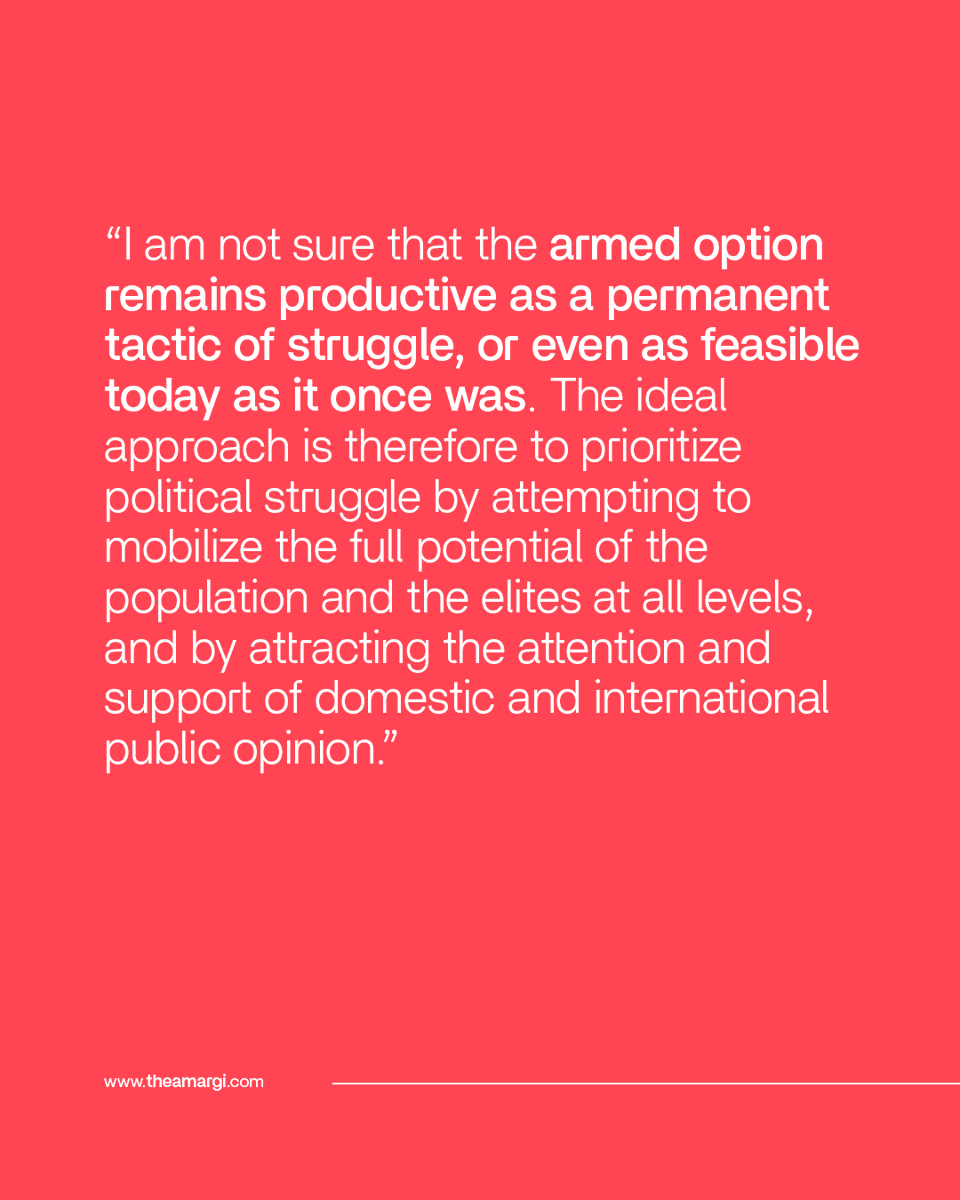
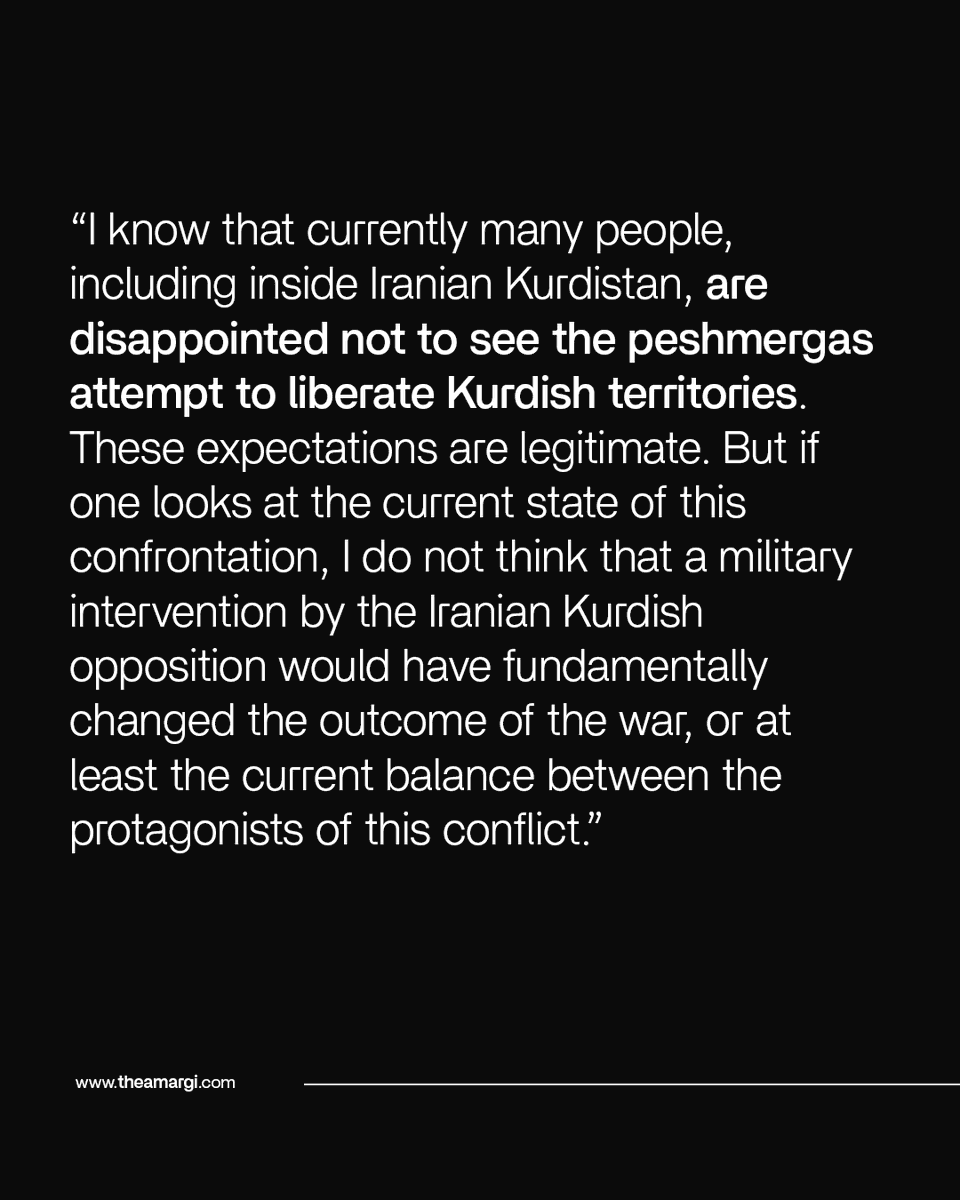
EXCLUSIVE: Former PDKI leader Abudallah Hassan Zadeh: "As frustrating as the current situation may be, seizing opportunities must not mean making strategic miscalculations."
"You have a generation of Kurdish people who grew up knowing self-determination. It's very difficult to then ask them to call themselves Syrian Arabs."
My @the_amargi interview with @_____mjb
https://t.co/y0D3fGk21V
Meghan Bodette of the Kurdish Peace Institute says a recent agreement in northeastern Syria stopped mass displacement, but civil and political rights, especially for women, remain at risk.
Full interview here: https://t.co/JgKv6Ed1z6
Interview by @elifxeyal