Current RL post-training may not suit open-ended research. What would it take to train AI researchers to develop the research taste needed to decide what to pursue, when to pivot, and where to invest next?
Read my blog on AutoResearch: https://t.co/HcjL7g6Lur
Jev has attracted many attention by treating decision-making as a first-class model problem.
I wrote about where it fails, what its probabilities actually mean, and why it may matter for enterprises and long-horizon agents for open-ended tasks.
https://t.co/Ek4cv6lCt0
(4/4)
The results speak for themselves:
◆ 5x speedup at the same report quality
◆ 4.1x throughput improvement
◆ 3.39x cost reduction via early pruning
Long-horizon agents need efficiency as much as intelligence.
See you in Rio 🇧🇷 come find me at the workshop or just say hi!
I made Deep Research 5x faster — without sacrificing quality.
Excited to share that ParallelResearch, my internship work at Adobe Research, was accepted as a 🌟 Spotlight at the ICLR 2026 Workshop on Agents in the Wild (AIWILD).
Here’s the idea 👇
(3/4)
Here are the keys:
🌳 Adaptive planning: expand only when information gain justifies the cost
⚡️ Real-time orchestration: prune low-value branches mid-research, reallocate compute on the fly
🚀 Fully async execution: no more waiting on slow dependencies
@jiefengchen1 Hi Jiefeng! I'm a CS PhD at UT Austin, with focus on agent workflow orchestration & code intelligence (https://t.co/o26tuauadk). I have passed the general interview and am currently on Google's team match phase. Just sent you my CV in email. Would love to talk more!
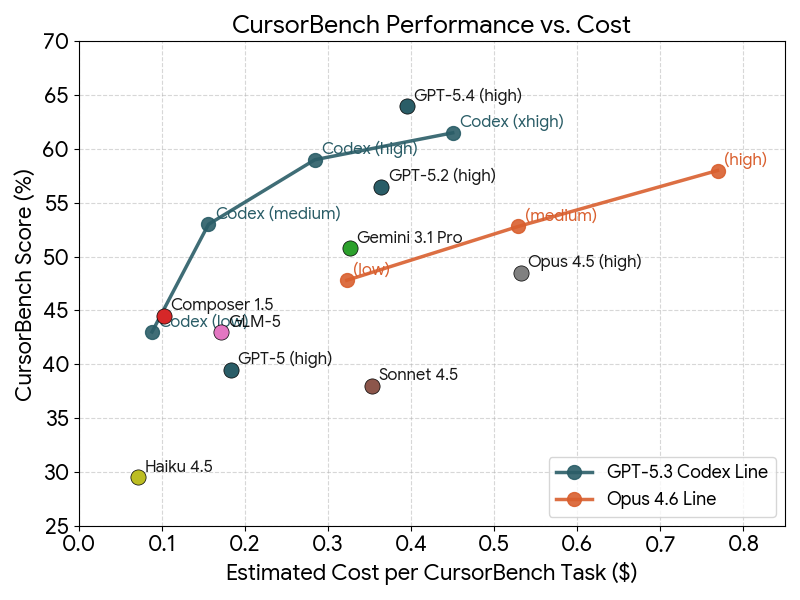
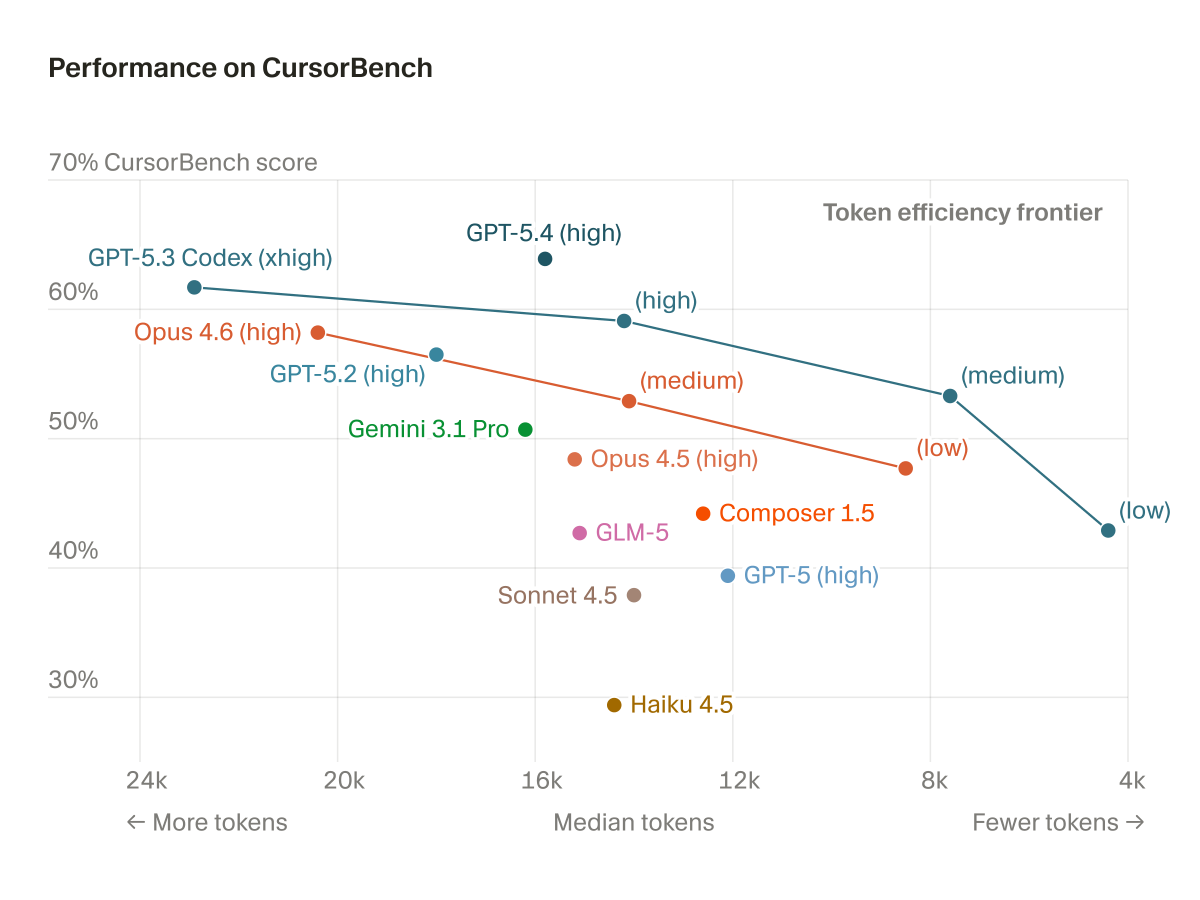
I re-plotted the CursorBench results against current API pricing. GPT becomes the new coding king?
Calculation: (Median Tokens / 1M) * Blended Rate.
Assumes a 3:1 input/output ratio plus reasoning token overhead. Analysis via Gemini.
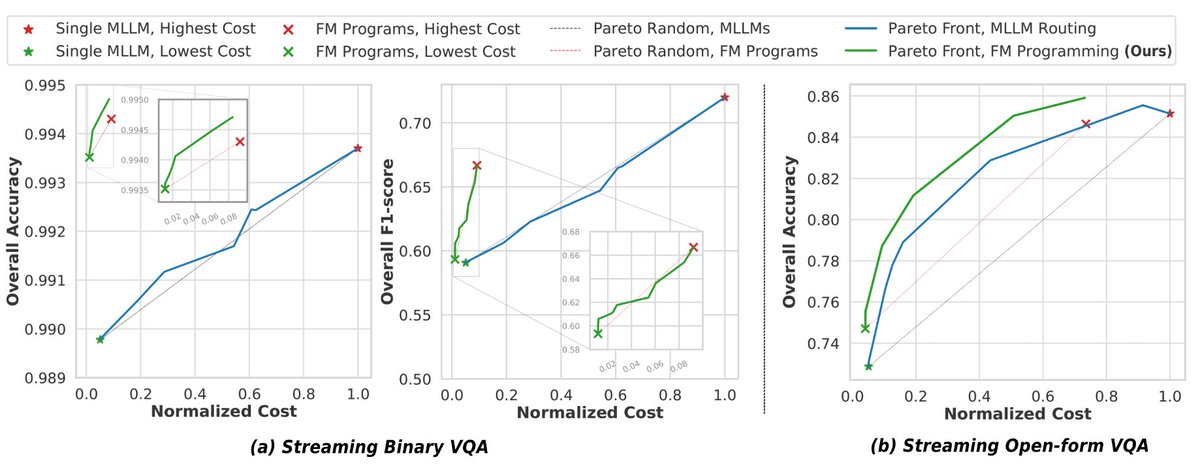
1/2 Excited to share our @COLM_conf paper on making Agentic AI systems more cost-efficient in real-world deployments.
We break multimodal reasoning tasks into Foundation Model Programs that learn to dynamically route subtasks to the best backends.
📄 https://t.co/eBVYhv17Ds
2/2 Results: up to 98% cost savings with minimal loss in task performance — without locking into one monolithic model.
We also release new benchmarks for streaming VQA on resource-constrained settings. Check it out on our website.
🔗 https://t.co/1J5B26XisQ
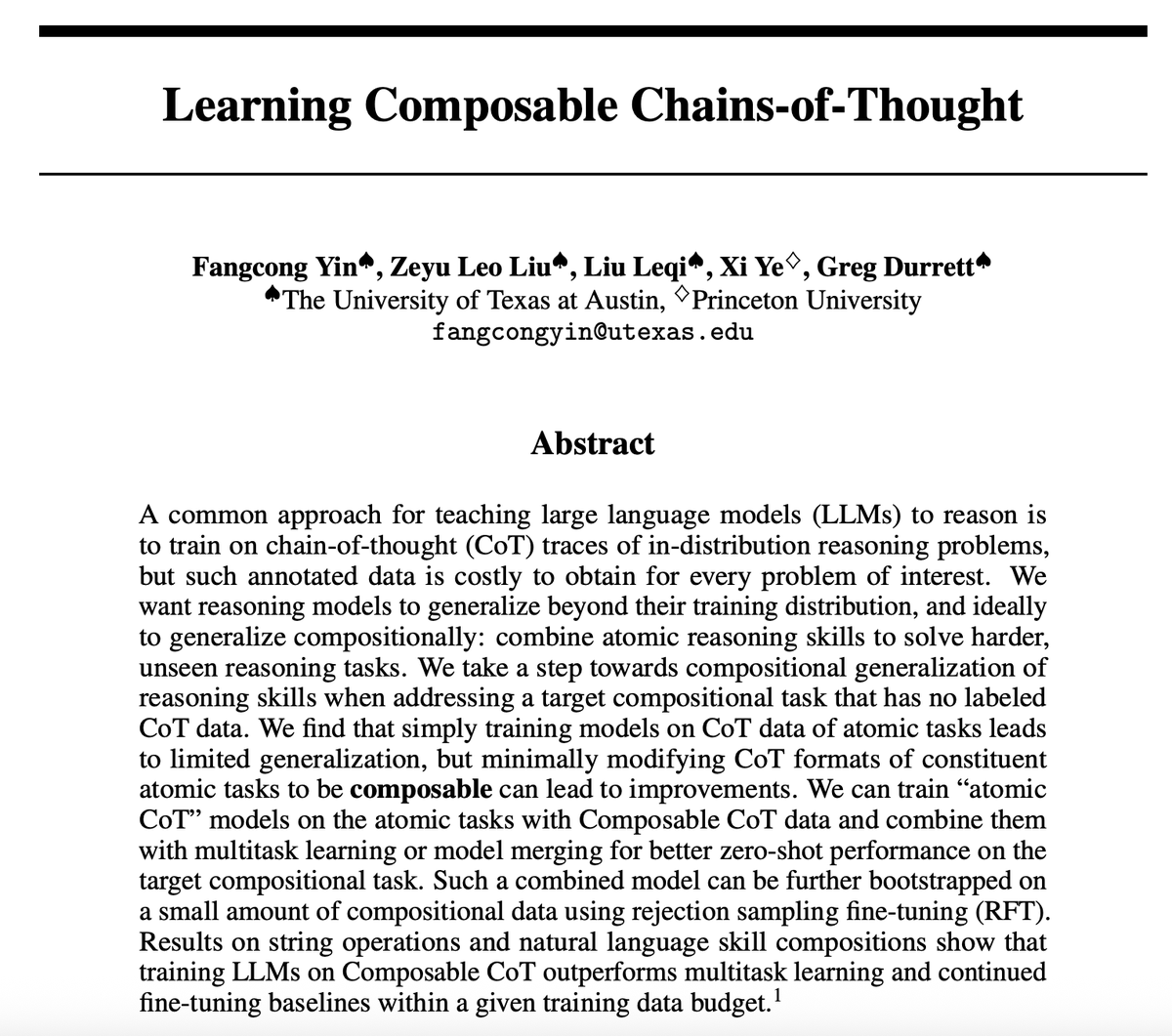
Solving complex problems with CoT requires combining different skills.
We can do this by:
🧩Modify the CoT data format to be “composable” with other skills
🔥Train models on each skill
📌Combine those models
Lead to better 0-shot reasoning on tasks involving skill composition!
🙌 Big thanks to my amazing co-authors @ZMDing99, Erdong Hu, Christopher Jermaine, and my advisor @swarat for their incredible support and contributions to this research!
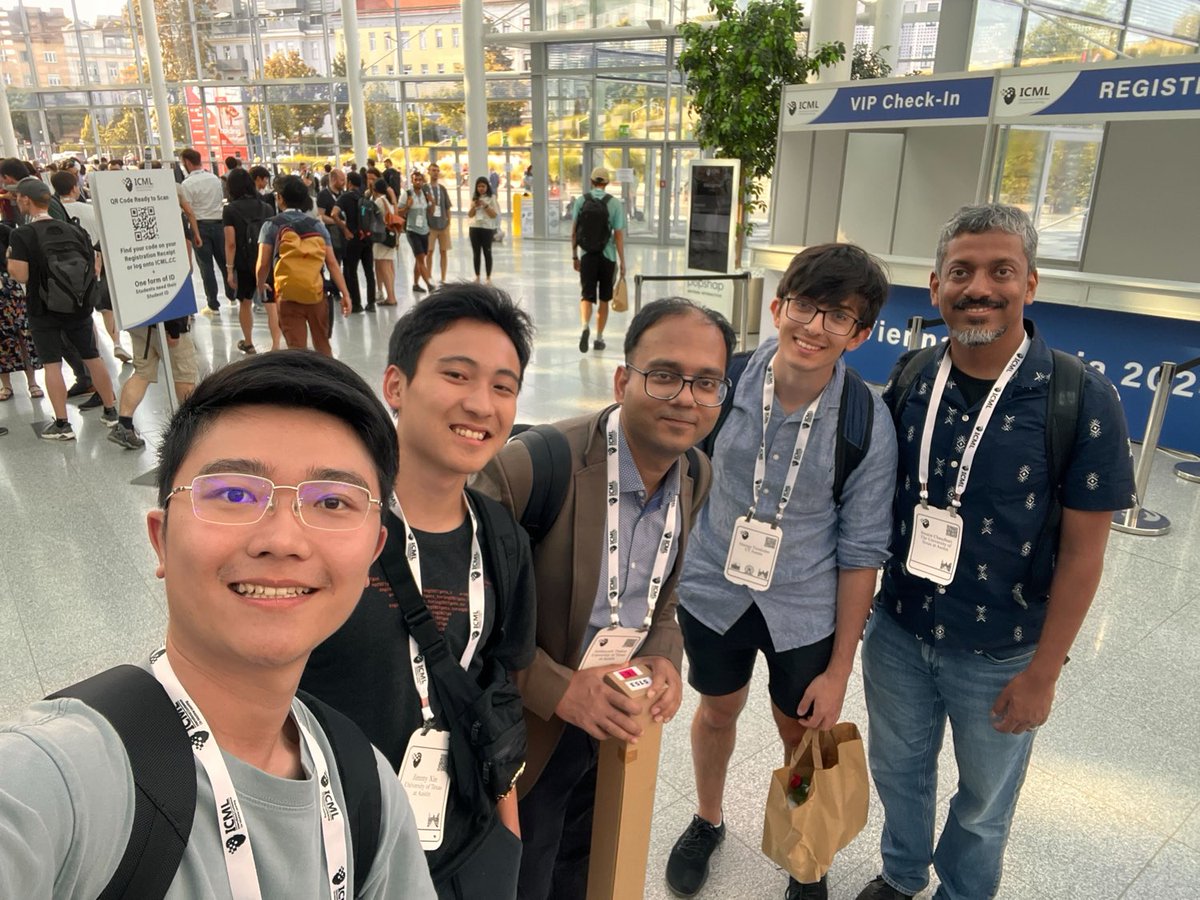
🚀 Thrilled to present our paper "Online Cascade Learning for Efficient Inference over Streams," to appear at #ICML2024! 🎉 We've crafted a new way to switch between LLMs and cheaper models learned online, significantly reducing inference costs. https://t.co/0jYBknUCyF
🌍 We believe this work opens a door for stream applications where *cost and efficiency* are crucial. In long run, we are building a system that can optimize the coordination architectures among models/agents under cost constraints, for complex reasoning. Follow us for updates!