¡ENRIC MAS GANA EN AITANA! 🚀
El líder de 🇪🇸 #LaVuelta26 responde a lo grande y se lleva la victoria en la 9ª etapa.
¡Qué manera de estrenar el maillot rojo!
¡QUÉ GRANDE! 🔴
#RodamosJuntos | @movistar_es
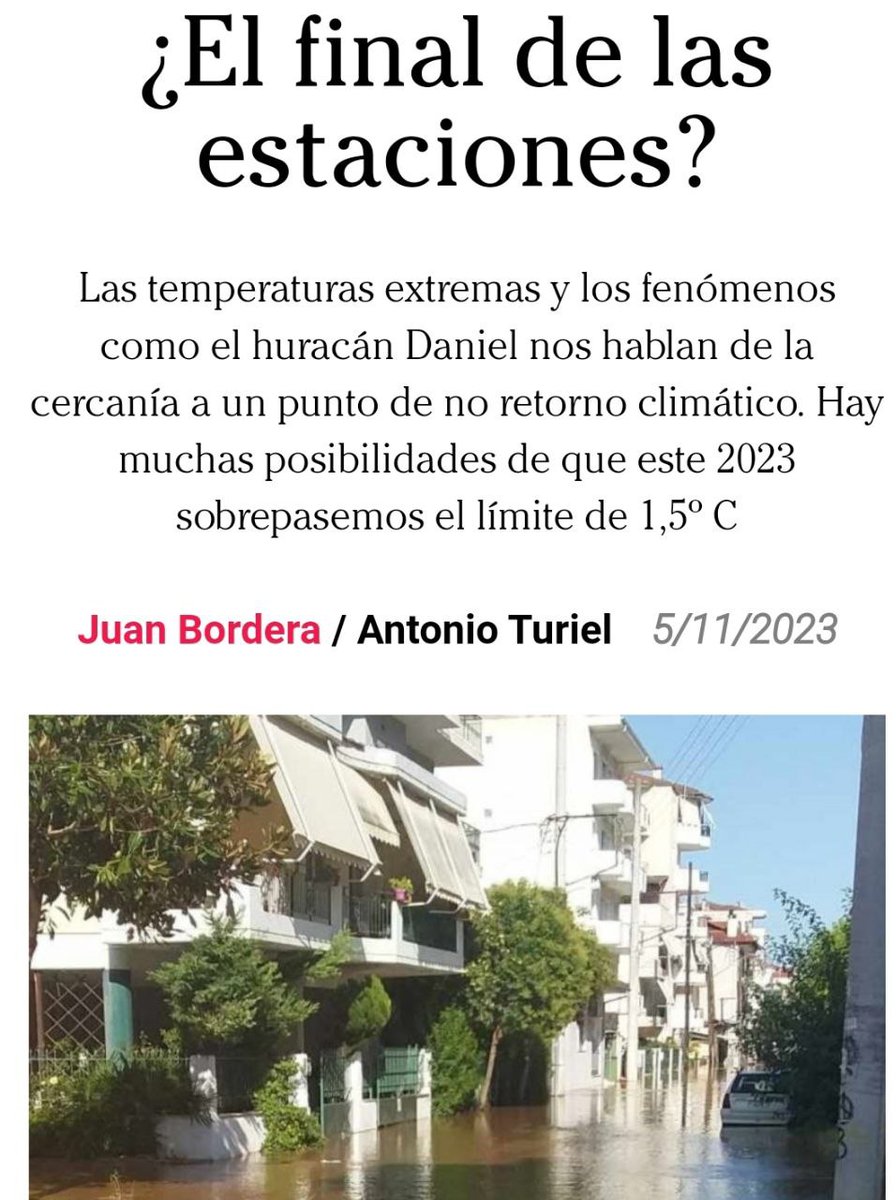
Tres historias sobre El Niño:
Su origen, en las costas de Perú. Su momento más dañino hasta la fecha, hace 150 años. Y el terrorífico estado actual.
El Niño de 1877 mató al 4% de la población del planeta: 50 millones de personas. El que está ya en marcha será aún más fuerte.⌛️
Olas de calor, huracanes, inundaciones e incendios golpean más lugares, con más frecuencia y fuerza.
Tras semanas trabajando sobre las causas del aumento de los fenómenos extremos, por fin podemos contaros que...
El🧵más importante que he hecho nunca.
➡️https://t.co/TsOaYMZxpF
Imagina que una noche vas paseando por Portonovo, en la calle suena una canción de Carlos Ares... y está el mismísimo Carlos Ares cantándola con unos músicos callejeros. 🤩
📹 María Mouriz
¡DATO ESPECTACULAR!
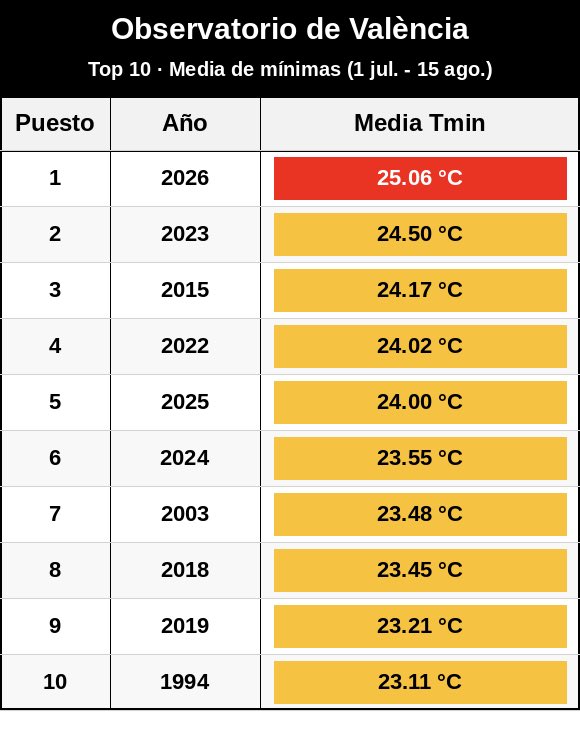
La media de las mínimas en #Valencia entre el 1 de julio y el 15 de agosto de 2026 es de 25,06 °C (MEDIA TÓRRIDA) la más alta de toda la serie histórica, por delante de 2023 (24,50 °C).
De las 46 noches del periodo, 26 ya han sido “tórridas” ≥25 °C
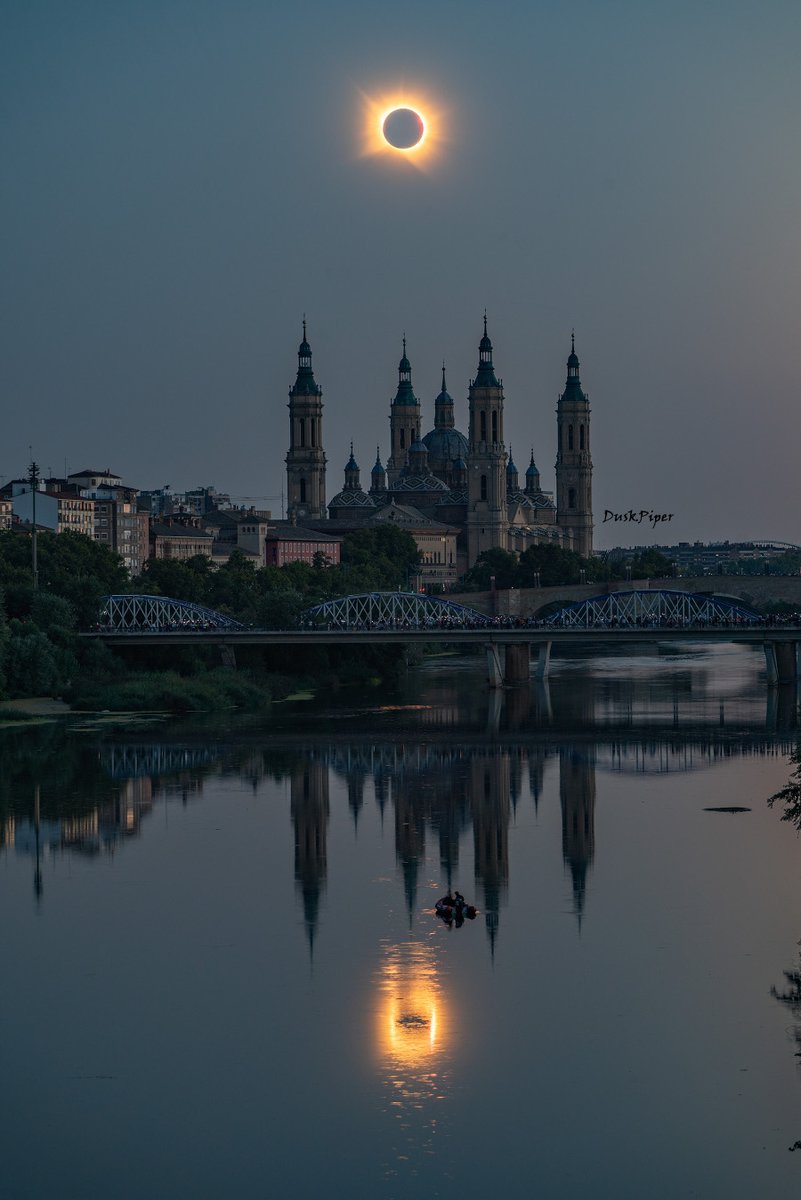
On August 12th, 2026, the Moon totally eclipsed the Sun and cast its shadow across Siberia, Greenland, Iceland, Spain, and Portugal. Today’s image features two total solar eclipses viewed from Zaragoza, Spain, one over the Cathedral-Basilica of Our Lady of the Pillar and the other reflecting in the Ebro River. For a few moments, Spain saw its first major total solar eclipse since 1905. Those witnessing totality may experience a chill in the air, the quieting of birds, the confused chirps of insects, and the shared awe of many. It’s the corona’s time to shine as the Sun’s bright disk is blocked by the Moon. Among other reasons to study eclipses, they help scientists understand why the corona is millions of degrees hotter than the Sun’s surface. Enthusiastic citizens can contribute to these studies by recording how wildlife responds, imaging the corona, and monitoring air temperature and clouds.
Image Credit & Copyright: Ruiyu Zhang Text: Keighley Rockcliffe (NASA GSFC, UMBC CSST, CRESST II)
¿Son realmente las noches más cálidas hoy en día en la ciudad de #Valencia o es “es calor de siempre”?
Esta tabla compara del 1 de julio al 12 de agosto en 1946, 1966, 1986, 2006 y 2026.
El resultado salta a la vista…