@TexasAustyn I woke up super early once just to go watch the chaos. I also woke early to see sunrise on Haleakalā on Maui. I’ve seen the peak and valley of this earth.
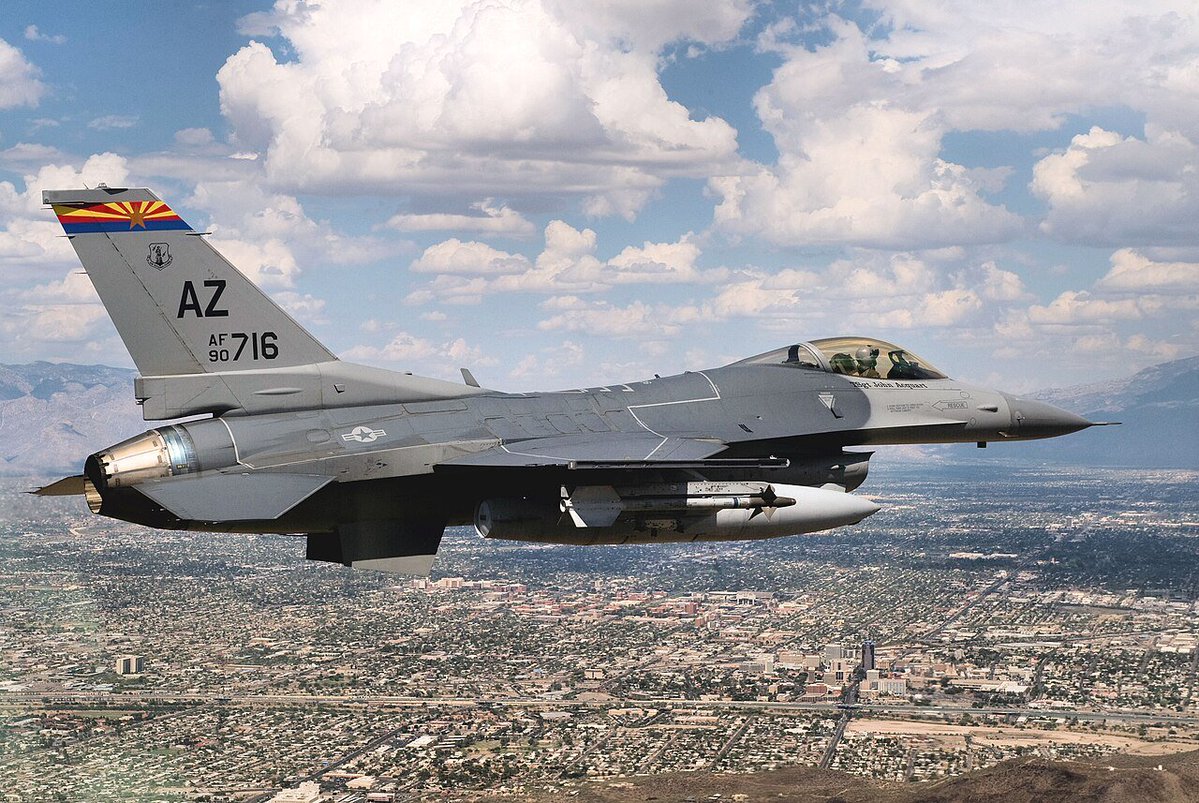
On May 5, 2016, more than three miles above the Arizona desert, a student fighter pilot pulled an 8.3-G turn in an F-16 Fighting Falcon and blacked out cold with his afterburner roaring.
His hands went limp in his lap.
Unmanned at the stick, the jet rolled upside down and pitched into a fifty-degree dive toward the rocky desert floor, accelerating past six hundred knots, nearly seven hundred miles per hour.
Flying in a second F-16 nearby, instructor pilot Major Luke O'Sullivan of the Arizona Air National Guard watched the altitude numbers unwind on his radar and shouted into his radio, "Two, recover!"
No voice answered from the diving cockpit.
When extreme G-forces drain the blood from a pilot's brain, medical studies show a human being stays completely unconscious or disoriented for roughly twenty-eight seconds.
From seventeen thousand feet in full afterburner, this F-16 had less than twenty seconds to live.
Why did that fighter jet not slam into the Arizona sand?
Just months earlier, engineers from NASA, the Air Force Research Laboratory, and Lockheed Martin had finished installing a quiet piece of software called the Automatic Ground Collision Avoidance System, or Auto-GCAS, across the F-16 fleet.
Hundreds of times per second, the onboard computer compares the jet's speed and dive angle against a digital three-dimensional map of the mountains and desert below, waiting until the exact last instant a conscious human pilot could still pull out.
As the plummeting F-16 screamed below nine thousand feet with its pilot still out cold, Auto-GCAS seized the flight controls on its own.
The computer snapped the inverted wings level and hauled back into a crisp five-G climb, bottoming out below forty-four hundred feet before jolting the student awake to grab the stick again.
That thirty-year engineering project won the 2018 Collier Trophy and has already brought more than a dozen unconscious pilots back home alive to their families.
On March 26, 2012, at the Nuclear Security Summit in Seoul, South Korea, President Barack Obama was caught on an open microphone speaking with then-Russian President Dmitry Medvedev. The exchange concerned U.S. missile defense plans in Europe, which Russia opposed. Medvedev was to relay the message to incoming President Vladimir Putin.
The widely reported transcript of the audible portion is:
Obama: “On all these issues, but particularly missile defense, this, this can be solved but it’s important for him to give me space.”
Medvedev: “Yeah, I understand. I understand your message about space. Space for you…”
Obama: “This is my last election. After my election I have more flexibility.”
Medvedev: “I understand. I will transmit this information to Vladimir.”
Slight wording variations appear across reports (e.g., “I transmit this information to Vladimir”), but the substance is consistent across ABC News, Reuters, The Guardian, and others.The Guardian
Obama later explained that he meant political constraints from the U.S. election cycle made major negotiations harder at the time, and that he had more room to work on nuclear/missile issues after the election. The comment drew criticism from Republicans as suggesting potential post-election concessions to Russia.