The first book of a new two-volume set on flowmeter technology by Dr. Jesse Yoder is now available from CRC Press. The set, Advances in Flowmeter Technology, now available https://t.co/8oLVVcwuEI
We recently posted about clamp-on ultrasonic flowmeters. We’re trying to find out how much trust there is out there for clamp-on meters. Some experts say that clamp-on ultrasonic meters can measure flow in pipes with a diameter of 320 inches (DN 8000). Th…https://t.co/uSMDk05euc
Let’s talk about clamp-on ultrasonic flowmeters
Clamp-on ultrasonic flowmeters have some important advantages:
· They clamp on to the pipe and don’t require penetrating the pipe
· They are portable and can be moved from one pipe to another
· …https://t.co/jaJ3b1jim3
Look at this! Someone has finally done a market study on variable area flowmeters! Flow Research has just completed our brand new market study on variable area (VA) meters. These meters continue to be very popular.
Additionally, we discuss frontiers of research for VA meters, such as transmitters, communication protocols, and design innovations. The study includes market size worldwide and by region, market shares, growth factors, company profiles, and forecasts through 2024.
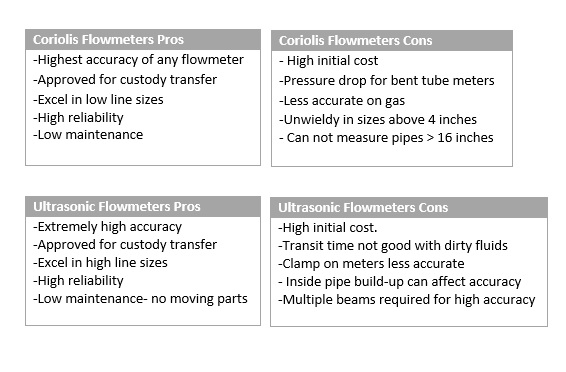
example, someone said “Coriolis for liquids;ultrasonic for gas.”This is a good answer, since Coriolis meters do a better job on liquids than gases. This is because liquids are denser than gases,and liquids have more inertia to modify the motion of an oscillating tube than gases.
What we need is a unit of measurement other than r squared which is the area of a square and we all know you can’t put a square peg in a round hole.
For more information on calculating the area of a round pipe go to Conventional Flowmeters: Volume 2, https://t.co/cZ8KfHJIj2
There is a connection between geometry & flow measurement. Pipes are round, and the areas of pipes are calculated by using the formula for the area of a circle. This formula is pi*r squared.
This rope experiment shows that we should be able to measure the circumference of a circle without using pi. If we can do this, we should also be able to measure the area of a circle without using pi. This should also apply to measuring the area of round pipes.
There is a connection between geometry & flow measurement. Pipes are round, and the areas of
There is no need to use pi to describe the length of a straight line. The length in this example is about 6.28 inches, where pi equals 3.14 inches.
But do we really need the value of pi? Consider the formula for the circumference of a circle. This is a distance around it. Imagine a rope in the shape of a circle with a radius of one inch. The formula for the circumference of this circle is 2*pi*r.
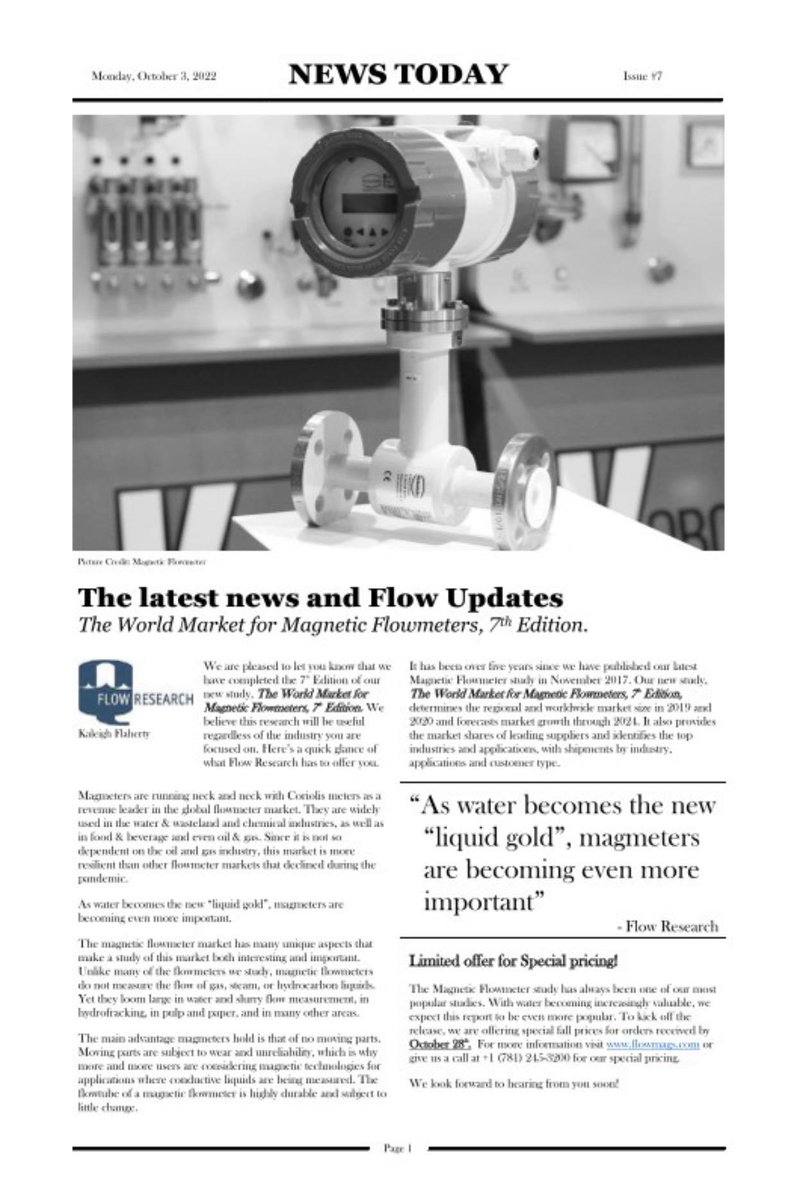
The Magnetic Flowmeter study has always been one of our most popular studies. With water becoming increasingly valuable, this report to be more popular. To kick off the release, we are offering special fall prices for orders received by October 28th. Visit https://t.co/vc0wU6pexW
first, let’s look at why Coriolis meters are limited in size to 16 inches? Coriolis may be limited because they operate on the inertia created by fluid flowing through a pipe.
One possible solution is to build a smaller meter body and, through calibration, correlate the mass flow in the smaller tube with the flow in the larger tube.