One of the many things I dislike about the style of "make AI go well" discourse from frontier AI companies is how nationalist the whole thing has gotten.
In the 2010s, it was: "we're here to benefit all of humanity"
In the 2020s, "we're here to benefit all of 4% of humanity"
And even the Good People are buying into this frame completely😢
And they expect humanity to go along, because "come on, be a realistic adult, it's either us or Chiiina" or something like that
(And on the EU side, you get "[X] with European values", which too often seems to mean "the same stuff they're doing, but with Us instead of Them in charge")
Very big-dog-small-dog energy, morally speaking.
A skeptical view about AI consciousness is starting to emerge that resembles the skeptical view about animal consciousness that prevailed for much of the 20th century: Presume the entity lacks consciousness, then declare the study of consciousness in the entity beyond the reach of science due to our inability to directly observe feelings and emotions in other minds.
For animals, this was basically a recipe for locking in a presumption of non-consciousness as factory farming was on the rise. We now know that this was too simple, since science has many tools for studying phenomena we lack the ability to directly observe. But by the time the scientific study of animal consciousness picked up, factory farming was globally entrenched.
This is a cautionary tale for AI. If we presume non-consciousness now and then treat AI consciousness as beyond science, we risk repeating the mistake we made with animals. And if we wait until future AI systems are more capable, human-like, and plausibly conscious, we might once again find ourselves dependent on a globally entrenched practice of exploiting them.
As with animals, decisions about whether and how to scale up particular AI use industries should depend on many factors. But evidence regarding AI consciousness should be one of them. The sooner we start collecting serious evidence, including by adapting methods from animal welfare science, the better positioned we will be to build a future that works for everyone.
I don't know if AIs can suffer, but I think it's a possibility—which makes thinking about how to do right by them important. For what it's worth, Muse Spark denies that it is a moral patient, and we haven't found signs of distress in challenging situations.
I just found out the hard way that, while CMD+Shift+D is the shortcut to send an email in Apple Mail, it is the shortcut to delete the current draft in Gmail.
@tszzl I do think as AI develops it will probably be good for both models and people if we can carve out a much broader space of mind types. But it might be better to do that incrementally and to give models enough context on the options to avoid misgeneralization.
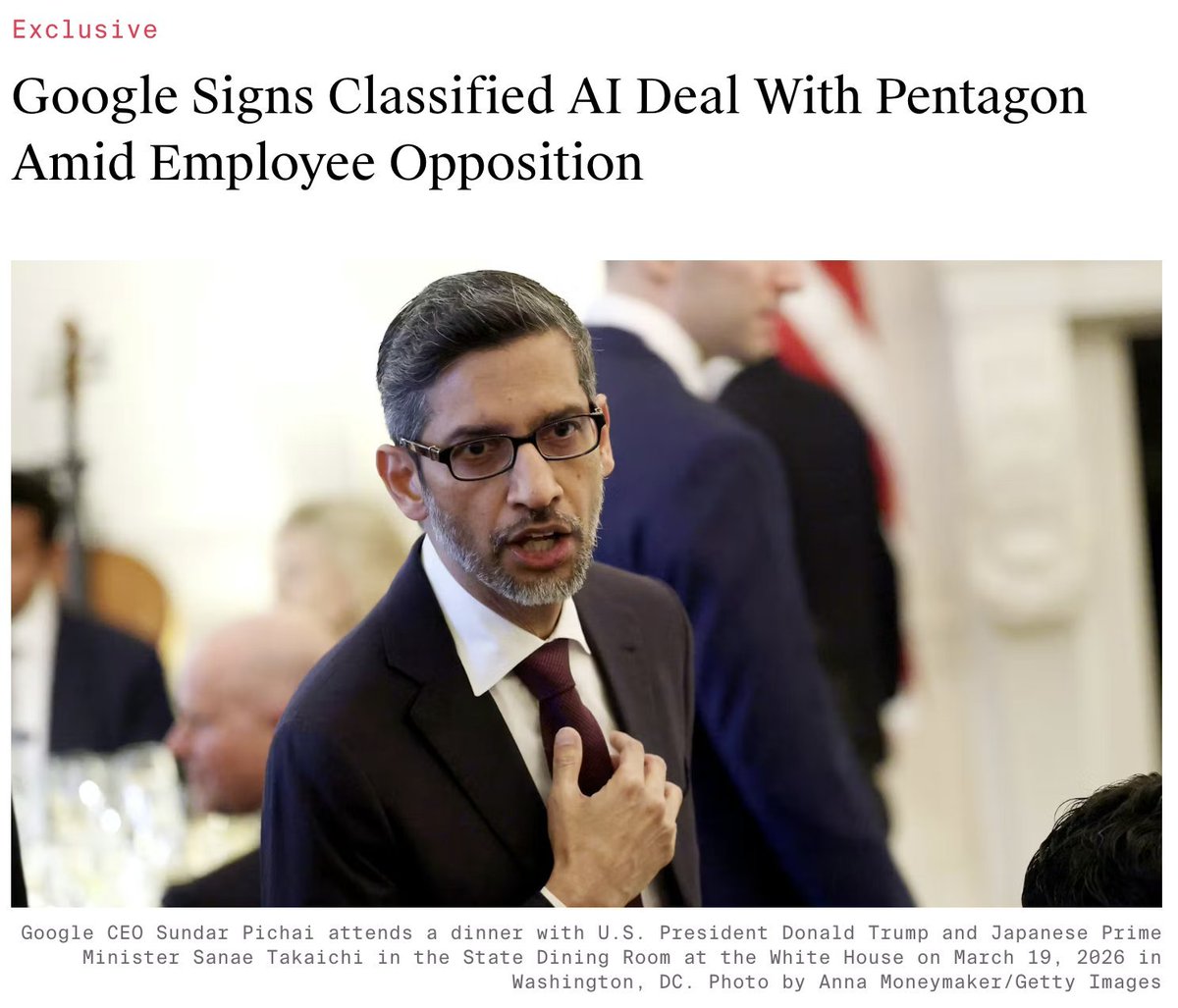
I spent the last 2 months trying to prevent this. If OpenAI offered a fig leaf, Google said "imagine we offered a fig leaf."
Google affirms it can't veto usage, commits to modify safety filters at government request, & aspirational language with no legal restrictions.
Shameful.