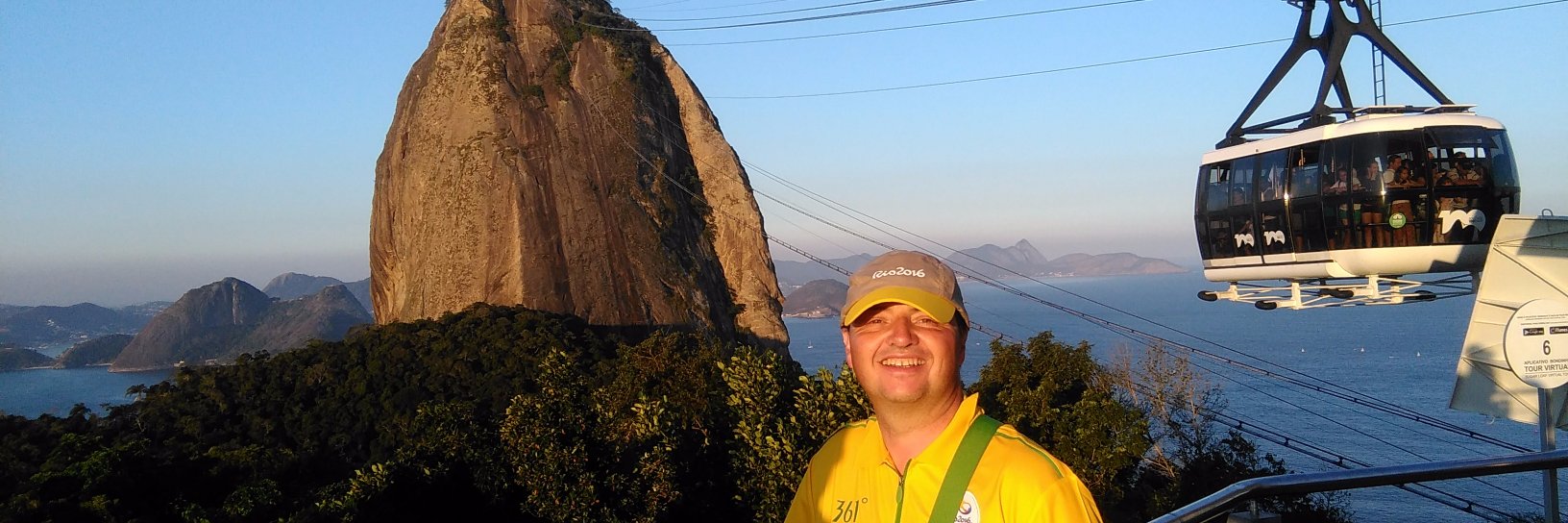
Six years ago, I had stopped exercising, was unfit and overweight. For the next two weeks I will be cycling 700 km across Spain. What enabled me to undertake this epic challenge?
https://t.co/vjA4iXgPCS @ShepwayST @Martin_A_Salmon#Spain#CaminodeSantiago
Most people know the Army stormed Normandy. The Navy bombarded the shore. The Air Force owned the sky.
Nobody thinks about the Coast Guard.
They should.
The United States Coast Guard is not a combat force. Their entire purpose, the reason they exist, is to save people from the sea. They are trained to swim into storms, to pull drowning sailors from sinking ships, to run toward disaster when everyone else is running away.
On June 6, 1944, the Germans gave them more drowning men than they had ever seen in their lives.
The Coast Guard brought 800 men to Normandy. Five major assault transports were USCG-crewed. Eleven tank landing ships. Twenty-four troop carriers running soldiers directly onto Omaha and Utah Beaches. The USS Bayfield served as the command ship for the entire Utah Beach sector, the nerve center through which an entire army was directed ashore. The USS Samuel Chase led the assault group landing the 1st Infantry Division, the Big Red One, onto the eastern flank of Omaha.
But the thing almost nobody knows about is Rescue Flotilla One.
60 small Coast Guard cutters, nicknamed Matchbox ships because of how easily they burned, were assigned a single mission: pull men out of the water. As the landing craft were torn apart by German fire, as soldiers drowned in the surf under the weight of their own equipment, as wounded men on the beach were swallowed by the incoming tide, Rescue Flotilla One was already moving.
Their swimmers jumped into the Channel. Tethered to their boats by lines, they swam toward the men going under, grabbed them, and dragged them back. They did this 2,000 yards from shore. Under active German machine gun fire. Under mortar fire. Under artillery.
Again and again, all day long.
Two miles offshore a lookout spotted men from a sunken British landing craft floating in the Channel. One cutter went to them and pulled 24 soldiers and four Royal Navy sailors from the water before they went under.
One Coast Guard LCI was hit 25 times by German fire and kept going. Coxswain Delba Nivens kept driving his craft toward the beach after a grenade caught fire aboard his boat.
By the end of June 6, Rescue Flotilla One had pulled 400 men out of the sea.
400 men who would have drowned. 400 men who went home. 400 men whose families exist today because a Coast Guardsman jumped into the English Channel under machine gun fire and refused to let go.
Out of 800 Coast Guardsmen at Normandy, 15 were killed.
Every branch that fought on D-Day deserves its place in history. But the men who spent that day swimming between the dead to find the living, tethered to a burning ship with the whole weight of the German army trying to kill them, did something that has no good word for it.
They saved people. That's what they were built for.
On the worst day in the history of the sea, they were exactly who they were supposed to be.
@littlemore20@FXMC1957 The Beehive terminal is still standing but now used as office space. It can be seen from the outside, but interior visits are limited to making enquiries about leasing office space!
@AmbJapanUK Glad you enjoyed my home town.
Did you get to see Yoko Ono's Earth Peace artwork on top of and in front of the Grand Hotel along The Leas lawn?
They should also commit to refer the UK to the @IntlCrimCourt to investigate Crimes against Humanity. It meets the threshold, widespread acts against civilians tolerated by the State.
Starmer, Brown, Burnham, Cooper, Phillips, Davies etc should all be investigated and sent to The Hague for trial, plus every corrupt and evil politicians, police chiefs, social workers that covered up these appalling crimes.
Woeful defence from St Helens women in the first quarter of the Womens Challenge Cup Final. Wigan Warriors have hardly any to work for any of their four tries. Amy Hunter in particular has been given te freedom of Wembley.
Saints need to drastically tighten up the defence
@culturaltutor The even bigger problem than the chrome appearance is that in all the pictures the public space is excluding those with disabilities or mobility issues, saying you are not welcome here.
He died alone.
73 years old. A hospital bed in Tucson, Arizona. November 2, 2025.
No wife holding his hand. No children at the door. No friends in the waiting room.
Nobody came.
His name was Darrell Lee Arelt. And for the last hours of his life, the richest, most powerful nation on Earth had no idea one of its soldiers was slipping away in the dark.
Because that's what he was.
A soldier.
Second Lieutenant Darrell Arelt. United States Army. Vietnam.
He went when his country called. He came home to a country that looked away. Vietnam veterans got no parades. No "thank you for your service." No welcome home. Just silence, and sometimes worse.
And now, half a century later, here was that same silence again. A forgotten lieutenant, about to be lowered into the ground with no one to fold a flag for.
The hospital had no next of kin to call. The funeral home had no family to notify. The government had a name for a man like this.
"Unaccompanied veteran."
Read that again.
Unaccompanied.
A man who once raised his right hand and swore his life to this country was going to be buried like he never mattered at all.
Then one man said no.
His name is Nick De Gennaro. He owned the little mobile home park where Darrell had quietly lived for four and a half years. When Nick learned this old soldier was going to be put in the earth alone, two days before Christmas, something in him refused.
So he made a decision. He and his wife would go. Just the two of them, if that's what it came to. A veteran would not be buried alone. Not on his watch.
And then he did one small thing.
He posted about it online.
What happened next will put a lump in your throat.
The post traveled. Veterans saw it. Bikers saw it. Firefighters saw it. The American Legion saw it. In 72 hours, the whole of Southern Arizona knew the name Darrell Arelt.
December 23, 2025. Noon. The Arizona Veterans Memorial Cemetery in Marana.
Nick expected two people.
Hundreds came.
Hundreds.
Bikers thundered in by the dozen. The Marana Police Department came in uniform. The Northwest Fire District came. The American Legion came. National Guardsmen came. Active-duty soldiers came.
And the old men came. Vietnam veterans in their seventies. Korean War veterans. Men who could barely stand at attention anymore, standing at attention anyway, for a brother they had never once met.
One of them, James Harmon, looked in his rearview mirror as he drove in. Thirty cars behind him. Forty. A river of headlights flowing to the grave of a stranger.
"As we were driving in," he said, "I'm going, oh my God, this is great."
These were the men America forgot in 1970. And here they were, refusing to let America forget one of their own in 2025.
Another vet, Ed Lytle, stood at the grave and said the words that should be carved in stone:
"No veteran should be buried alone. They've always got a family. I may not have known him then. But he's still a brother."
Darrell Arelt got everything that day.
An honor guard. White gloves. A folded flag.
"Taps" rising slow and clean over the desert.
And a 21-gun salute, cracking into the Arizona sky, fired by men who had never met him, for a life they had only just learned existed.
Half a century after his country forgot to say thank you, hundreds of strangers stood in the December sun and said it all at once.
Nick was handed the flag. The flag that's supposed to go to a man's family.
He's still keeping it. He says if anyone ever knew Darrell, a week from now, a year from now, ten years from now, they can come and it's theirs.
So let me tell you what kind of country this is.
This is a country that will fill a cemetery for a man nobody remembered to love.
This is a country where bikers and cops and firefighters and broken old soldiers will drop everything, two days before Christmas, so one forgotten veteran does not go into the ground alone.
You can criticize America all you want. Go ahead.
But understand this.
On this soil, no soldier is ever truly alone.
Not one.
Not ever.
Rest easy, Lieutenant.
Your country was late.
But your country came. 🇺🇸
@SBarrettBar If the King is forced to come to Parliament tomorrow, he should rip up the planned speech and say,
"It is clear that my Prime Minister no longer commands the confidence of the House. I am therefore relieving him of his position."
Maximum embarrassment and a boost for the Royals.
How to spot a fake WiFi network that captures all your passwords and financial data. This is vital information to stop you being a victim of phishing or identity theft.
A Catholic priest walked into a house filled with Jewish orphans in fascist Italy and spoke four words that would save 73 lives.
July 1942. Arrigo Beccari. Thirty-two years old. Seminary teacher in Nonantola, a small village near Modena in northern Italy.
He had just heard about the children.
Fifty Jewish orphans, ages six to twenty-one, had arrived at Villa Emma, an abandoned mansion on the edge of town. They came from Germany, Austria, and Yugoslavia. They had fled the Nazis. Many had already lost parents, homes, and entire families.
They could not speak Italian.
They had nowhere else to go.
Beccari walked to the villa, knocked on the door, and stepped inside.
He looked at the frightened faces in front of him and said:
“You are safe now.”
He meant it.
For more than a year, something extraordinary unfolded in fascist Italy.
An entire village quietly chose to protect those children.
Farmers brought food. Shopkeepers donated supplies. Widows opened their homes. A local doctor named Giuseppe Moreali treated the sick. A carpenter built furniture and taught woodworking. Women cooked meals. One room inside the villa became a synagogue.
Beccari visited every day.
He taught lessons. Spent time with the younger children. Tried to give them moments that felt normal again.
Then, in April 1943, another thirty-three Jewish children arrived from Croatia, escaping the massacres carried out by the Ustaše regime.
Now there were seventy-three children at Villa Emma.
Then came September 8, 1943.
Italy surrendered to the Allies.
German forces immediately occupied northern Italy.
The SS began hunting Jews across the region.
In Rome, more than 1,200 Jews were rounded up and deported to Auschwitz. Only sixteen survived.
At dawn on September 9, German troops marched into Nonantola.
Beccari and Dr. Moreali ran to Villa Emma.
“You have to leave. Now. All of you. Tonight.”
More than one hundred people, including counselors and caretakers, had to disappear in less than thirty-six hours.
Beccari did not wait for official permission. He did not hesitate.
Some children were hidden inside the seminary itself, tucked into dormitories, cellars, attics, and storage rooms.
Then Beccari moved through the village knocking on doors.
Farmers.
Shopkeepers.
Widows.
Teachers.
He asked each of them the same thing:
Hide these Jewish children. Feed them. Protect them.
Not one refused.
Within thirty-six hours, Villa Emma was empty.
When German soldiers arrived, they found only an abandoned building.
No children.
No evidence.
No witnesses.
The orphans had been scattered across more than twenty Catholic homes, hidden in barns, haylofts, bedrooms, and church buildings throughout the village.
For weeks, Beccari visited them daily, bringing food, comfort, and information.
But everyone understood they could not stay forever.
The Germans were searching everywhere.
There was only one possible escape route.
North.
Across the Alps.
Into Switzerland.
Beccari and Moreali forged more than 120 identity documents, baptism certificates, travel permits, birth records.
On paper, Jewish children became Catholic Italians.
The children memorized new names, birthdays, and invented family histories in a language many of them barely understood.
Between September 28 and October 16, 1943, they escaped in small groups by train, on foot, and through mountain passes under cover of darkness.
Every one of the seventy-three children reached Switzerland safely except one.
A teenager named Salomon Papo was too sick with tuberculosis to travel. The Gestapo later found him in a sanatorium and deported him to Auschwitz.
One out of seventy-three.
Not because someone betrayed them.
Because illness made escape impossible.
The Gestapo launched investigations.
Who had hidden the Jews?
Who had forged the documents?
No one in the village talked.
Eventually, Beccari himself was arrested and handed over to the SS in Bologna.
He was tortured for months.
Beaten repeatedly.
Interrogated again and again for names, locations, and evidence.
He gave them nothing.
His name appeared on execution lists three different times.
Three different times, the executions were delayed.
Eventually, he was released.
The war was nearing its end, and the Germans still had nothing.
Beccari walked back to Nonantola.
Back to the seminary.
Back to teaching.
And perhaps the most remarkable part of the story is this:
It was never only one priest.
More than forty households helped hide Jewish children.
Not one villager betrayed them.
Farmers. Seminarians. Teachers. Shopkeepers. Elderly widows.
An entire village chose strangers’ children over its own safety.
The children survived the war. Many later emigrated to what became Israel in 1945. They built families, careers, and new lives.
They never forgot Nonantola.
In 1964, Yad Vashem recognized Arrigo Beccari and Giuseppe Moreali as Righteous Among the Nations, the first Italian priest and doctor ever given that honor.
Beccari remained in Nonantola until 1980.
Same village.
Same church.
Same quiet life.
He baptized the grandchildren of families who had once hidden Jewish orphans in their homes.
He never chased recognition.
At one point he reflected simply:
“It would be difficult to erase the memory of the terror and suffering of those days. Or of my joy at doing the small good which was my duty.”
Small good.
That is what he called it.
Arrigo Beccari died on December 27, 2005, at the age of ninety-six, in the same village where he had spent most of his life.
A village priest who helped lead one of the most successful Holocaust rescue operations in Italy.
A man tortured by the Gestapo who never betrayed a single child.
A man scheduled for execution three separate times who returned afterward to ordinary parish life because, to him, that was simply who he was.
Seventy-three children grew old because of thirty-six hours in September 1943.
Because one priest started knocking on doors.
Because one village kept saying yes.
Because ordinary people chose courage when the world around them chose silence.
Further evidence that the Meta AI in Facebook is completely deranged and untrustworthy.
Me
But the riddle specifies September has two. You are not even answering your own question!
Meta AI
The answer to the riddle "What comes once in March, twice in September, but never in June?" is indeed the letter "R".
It appears once in the word "March", twice in the word "September", and not at all in the word "June".
Hockey sound choice, Sydney 2000 was the last Olympics that Germany men did not contest a medal game. Though with hockey, floorball and lacrosse, may not be room for Inline hockey.
Sumo strong visual impact and has improved its international offering. How many combat sports can fit into the program?
Germany has won medals in Squash and Racquetball barely known outside the Americas so again a logical choice.
Baseball is the only one of the top 4 American sports not to be played professionally in Germany. Would love to see Softball get a spot.
Bowling, if included, needs to send its top stars like Troup, Tackett, Barrett
Powerboating (Motosurf) and Triathlon (Duathlon) are not members of the IWGA, so not eligible for inclusion at this time. However given German engineering prowess in F1 and inventing the bicycle, both will be strong contenders for guest sport inclusion. I would also like to see Blitz Chess and possibly Darts.
Fantastic thread on Civil Rights campaigner Rosa Parks. Her life was not just the one single act of courage that history remembers. It was a continual struggle against the injustice of an entrenched system of prejudice. Her bravery and the cost paid was a lifelong struggle.
The @Lionesses have been outplayed in the second half twice this week. Firstly against Spain and now Iceland. However defensive grit and the outstanding Hannah Hampton have ensured clean sheets in both games. They have been fortunate but still on course to qualify for Brazil 2027
Fantastic to see a new record crowd at Twickenham for a Womens Six Nations match. 77,000 fans at the England🇫🇴 Ireland🇮🇪 game! Huge demand in UK for women's sport, particularly when teams are successful.
@johnkonrad Has happened in history
1834 UK PM Viscount Melbourne sacked by William I.
1975 AUS PM Gough Whitlam effectively sacked by Queen Elizabeth II.
Zero chance of King Charles stepping up to the plate.
First Secretary Starmer will provide no help whatsoever. He is anti American, anti Israel, anti military. He has personally provided free legal services in fake abuse cases against British servicemen. He also wants prosecutions against 1970s Veterans for following legal orders when deploying in Northern Ireland.