FMI appreciates the Trump Administration’s revisions to EPA refrigeration regulations — preserving efforts to reduce HFCs while avoiding unnecessary costs for food retailers and grocery shoppers. https://t.co/nOBeLfatGC
A smarter, more transparent food safety system is long overdue.
We’re proud to support the FRESH Act & grateful to @RepKatCammack for leading efforts to create clear national standards, strengthen transparency, & restore trust in America’s food supply.
FMI applauds the House of Representatives for passage of the bipartisan Combating Organized Retail Crime Act, which takes important action to designate organized retail and supply chain crime, including cargo theft, as a federal crime. https://t.co/drqbqCc7OE
Today, FMI commented on the April CPI numbers from BLS, which shows a 0.7% increase in food-at-home prices for April and a 2.9% increase over the last 12 months. https://t.co/x9lxWrk56w
It is critical that Congress works collaboratively to deliver a modern, bipartisan Farm Bill that provides stability and certainty across the food supply chain, while also supporting nutrition programs, promoting agricultural innovation, strengthening rural economies, and keeping food affordable and accessible for all Americans. https://t.co/oQswjVqsUI
FMI condemns in the strongest terms action taken by the Office of the Comptroller of the Currency (OCC) to issue two interim final rules that override the Illinois swipe fee reform law and to prohibit other states from enacting swipe fee reform laws. https://t.co/5kJfbfCXoT
The CPI numbers released today showing a decrease in grocery inflation should be welcome news for consumers following notable increases in recent months. https://t.co/qdromi9Nd4
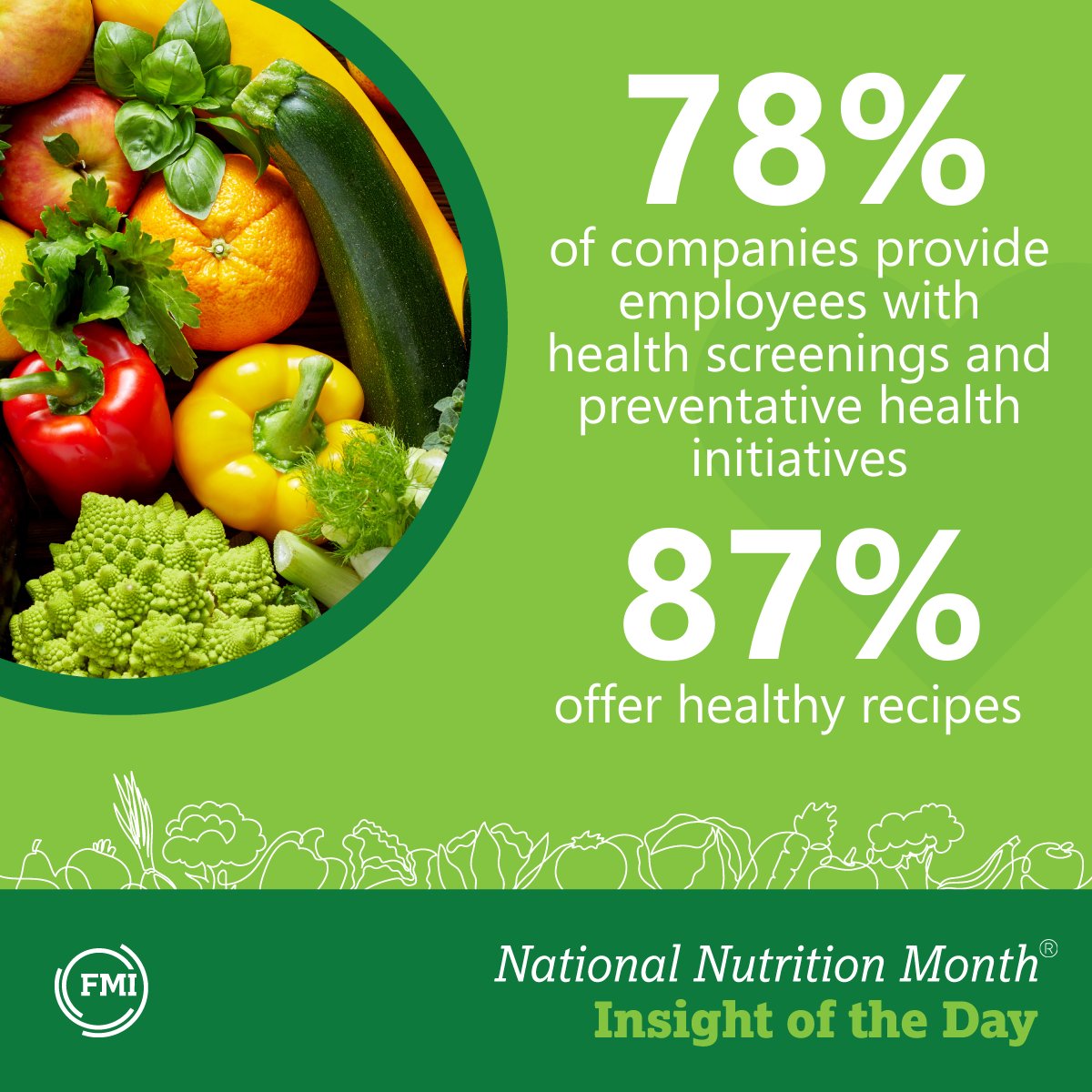
Food industry companies aren’t just supporting their consumers – they’re supporting employees as well. Over 78% of those surveyed provide employees with healthy recipes, preventative health initiatives and screenings. #NationalNutritionMonth
🔗 https://t.co/nmw7HmdrvU
Within food suppliers and retailers, registered dietitians work alongside other health professionals, such as culinary experts, registered nurses, medical doctors, and health coaches to develop and implement nutrition programs and strategies.
🔗 https://t.co/a24i0pjCbs
Food industry respondents say they no longer face as many challenges to operationalizing health, nutrition, and well-being initiatives – instead, 94% of those surveyed have established nutrition and health strategies to address consumer demands.
🔗 https://t.co/FIjYh3tZLX
Today’s CPI numbers reflect an uneven grocery price environment and underscore the challenge in bringing down food inflation across all categories to more historical averages. https://t.co/e7Goc9vPyz
FMI applauds the court decision today that preserves this first-in-the-nation law to prohibit charging retailers and consumers swipe fees on the sales taxes portion of a credit card transaction. https://t.co/dyaDw7TD4r
FMI enthusiastically endorses the reintroduction of the Credit Card Competition Act and praises Sens Marshall and Durbin and Reps. Gooden and Lofgren for their steadfast leadership in bringing credit card swipe fee reform to the broken market. https://t.co/9rBoRm8nap
Today’s CPI numbers reflect the ongoing challenge of bringing food inflation under control. FMI is hopeful that a portion of this month’s number is likely tied to the holidays and may stabilize in 2026. https://t.co/UNnpFxaHkf
Many Americans have understandingly expressed concern, frustration, and opposition to how the Biden EPA, through its Technology Transitions Rule for refrigerants, was implementing the American Innovation and Manufacturing (AIM) Act to phase out hydrofluorocarbons (HFCs). The AIM Act is a federal law that requires EPA to phase down HFCs by 85% by 2036.
In practice, the Biden EPA’s Technology Transitions Rule established more aggressive restrictions than required by law, resulting in higher grocery costs, reduced access to residential AC units and supplies, and far more complicated maintenance of equipment. It also hurt semiconductor manufacturing in our country. At the Trump EPA, we are taking action to fix this mess we inherited, which includes proposed flexibility on compliance deadlines while staying within the boundaries of the law. We will do EVERYTHING in our power to assist! If finalized, our proposed rule would correct what many have raised as a grave mistake by the Biden Admin. And for those who just want to directly eliminate (or amend) the federal law altogether, I’d note that would obviously require an entirely new Act of Congress.
The bottom line is this: The Biden EPA Technology Transitions Rule for refrigerants is simply unworkable, and the Trump EPA is committed to fixing as much of it as permitted under the law.
FMI welcomes the updated Dietary Guidelines for Americans intended to provide science-based guidance for healthy eating.
With more consumers seeking health solutions at the grocery store, retailers and registered dietitians are helping meet personalized health goals, and 80% of shoppers see their store as a health partner. https://t.co/rlD2hoMwnr
FMI’s December U.S. Grocer Shopper Snapshot survey shows a large majority of shoppers (70%) tell us they agree that grocers try hard to provide them with options to help them stay within their grocery budget. https://t.co/F5AstVvl5v
The only way to preserve the viability of supermarket pharmacies and patient access is through comprehensive PBM reform that includes ensuring fair pharmacy reimbursement and banning PBM spread pricing. https://t.co/uubPbr9Azm