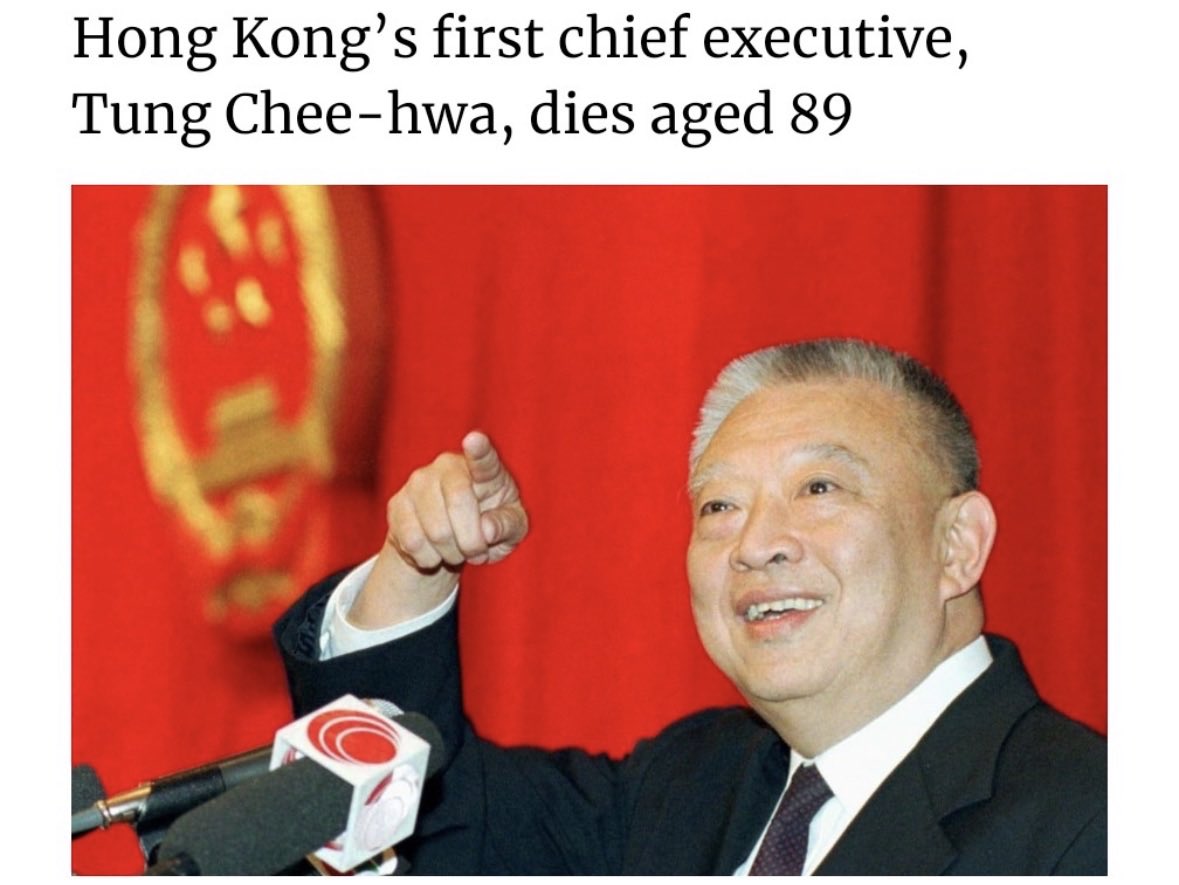
The Hon. Tung Chee-hwa served as Hong Kong’s first Chief Executive from July 1, 1997 to March 12, 2005.
A great CE, an honorable man, and a consequential figure in HK’s history.
愿董建华先生安息。🫡
@kaskaide1 Forget the Mirage 2000. It's an old aircraft. The scary thing for the West is that the Rafale's EW system also failed to detect the missile.
At 200Km, the missile should have been way past the no escape zone. And yet it still killed the Rafale.
PL-15E Radar is an AESA therefore after going Active it used LPI Mode (Low Probability of Intercept "LPI" signals) Mirage-2000 RWR Failed to detect them hence Mirage-2000 was still climbing worry free.
india Spent $2.2B to upgrade Mirage fleet which included French ICMS Mk4
VI. The Common Pattern
Although Japanese policies differed from one territory to another, several recurring mechanisms can be identified.
First, political restructuring.
Japan abolished, subordinated, or replaced existing political institutions and incorporated territories into its imperial system, either directly or through Japanese-controlled governments.
Second, language assimilation.
Japanese was promoted through schools and administration, while local languages were pushed out of important areas of public life.
Third, educational assimilation.
Schools were used to teach Japanese history, Japanese national identity, loyalty to the Emperor, and imperial ideology.
Fourth, identity transformation.
The colonial population was increasingly expected to identify itself as part of the Japanese imperial order rather than as members of an independent Korean, Taiwanese, or Ryukyuan political community.
Fifth, religion and state ritual.
Shinto shrines, imperial ceremonies, and Emperor-centered rituals were used to reinforce political loyalty.
Sixth, name Japanization.
This became particularly prominent in Taiwan and Korea during the wartime period.
Seventh, demographic and economic restructuring.
Japanese migration, land policies, corporations, railways, mines, factories, and colonial development transformed local economies and social structures.
Eighth, military and labor mobilization.
As Japan’s wars expanded, Taiwan, Korea, and Manchukuo were increasingly required to provide labor, resources, industrial production, and military manpower.
The historical pattern is therefore clear:
Japan first established political or military control, then used administration, education, language, religion, names, population policies, and military mobilization to integrate the controlled territory into the Japanese imperial system.
6/end.
V. The Four Cases in One Timeline
When placed together, the chronology of Japanese expansion becomes remarkably clear:
1872: Japan begins formally incorporating the Ryukyu Kingdom into its state system.
1879: Japan abolishes the Ryukyu Kingdom and establishes Okinawa Prefecture.
1895: Taiwan becomes a Japanese colony.
1910: Korea is formally annexed by Japan.
1931: Japan’s Kwantung Army occupies Manchuria.
1932: Manchukuo is established under Japanese control.
1934: Puyi becomes Emperor of Manchukuo.
1937: Japan launches full-scale war against China, dramatically intensifying Japanization, militarization, and wartime mobilization in Taiwan, Korea, and Manchukuo.
1937–1945: Kōminka and related Japanization policies reach their most intensive stage in Taiwan and Korea, while Manchukuo is increasingly integrated into Japan’s wartime imperial system.
1945: Japan surrenders. Japanese colonial rule ends in Taiwan and Korea, Manchukuo collapses, and Okinawa enters a period of U.S. military administration.
5/
II. Taiwan: Japanese Colonial Rule and Assimilation, 1895–1945
Taiwan was different from the Ryukyu Kingdom because it became a formal Japanese colony following the First Sino-Japanese War.
On April 17, 1895, the Treaty of Shimonoseki was signed, under which Qing China ceded Taiwan and the Pescadores to Japan.
Japan subsequently established the Taiwan Governor-General’s Office and ruled Taiwan for fifty years, from 1895 until Japan’s defeat in 1945.
During the early colonial period, Japan concentrated on establishing administrative control through the police, education system, land administration, and centralized colonial government.
1895–1910s: Establishing colonial rule
Japan built a highly centralized colonial administration under the Governor-General.
Japanese-language education became one of the major instruments of colonial rule. Schools were used not only to provide education but also to introduce Japanese language, culture, history, and political values.
During the early decades, Japan generally maintained a distinction between Japanese settlers and the Taiwanese population. Complete assimilation was not initially achieved.
1910s–1930s: Assimilation becomes more important
During the 1910s and 1920s, Japanese policy increasingly emphasized assimilation.
The goal was gradually to absorb the Taiwanese population into the Japanese imperial system while maintaining Japanese political dominance.
By the 1930s, however, the situation changed dramatically.
In 1936, the Japanese government adopted a more openly militarized colonial policy in Taiwan.
After the outbreak of the full-scale Second Sino-Japanese War in 1937, Japan launched the Kōminka, or “Imperialization,” movement.
This was not simply a campaign to teach Taiwanese people Japanese. Its broader objective was to transform colonial subjects into loyal subjects of the Japanese Empire and the Emperor. Academic studies describe the 1937–1945 Kōminka campaign in Taiwan and Korea as a comprehensive Japanization campaign tied directly to wartime mobilization.
The major elements included:
1. Japanese-language policy
Japanese was increasingly imposed as the principal language of education and public life. Local languages and Chinese-language cultural institutions were increasingly restricted.
2. Japanized education
Schools emphasized Japanese history, Japanese national identity, loyalty to the Emperor, and wartime ideology.
3. Religious Japanization
Japanese authorities promoted Shinto shrines, imperial rituals, and practices intended to strengthen identification with the Japanese state.
4. Japanese-style names
During the wartime period, Taiwan’s population was encouraged to adopt Japanese-style names as part of the broader process of imperial subjectification.
5. Political identity
The central objective of Kōminka was not simply language acquisition. It was to transform Taiwanese colonial subjects into loyal imperial subjects who identified themselves with the Japanese Empire.
6. Military and labor mobilization
After 1937, Taiwan was increasingly incorporated into Japan’s wartime economy and military system. Taiwanese people were mobilized as laborers, auxiliary personnel, and eventually military personnel.
Thus, Japanese rule in Taiwan can be summarized as:
1895 colonial rule → Japanese-language education → Japanese administrative and school systems → increasing militarization after 1936 → Kōminka after 1937 → Japanization of language, education, religion, names, political identity, and wartime mobilization.
2/
🧵Everyone on X, let’s take a look at the differences between Japan’s “Greater East Asia Co-Prosperity Sphere” and China’s Qing dynasty in East Asia.
The Japanese Empire was a colonial power built on imperialism, territorial expansion, and the assimilation of foreign populations. The Qing, by contrast, emerged from a multiethnic military and political confederation based in Liaodong, in what is now Liaoning, a historic frontier region of China. Its leaders had for generations received titles and recognition from the Ming emperor. The Qing’s entry into China was ultimately a process of integrating into and ruling within the Chinese civilizational and political order, not a project of simply entering Beijing to massacre the population or assassinate the Ming Chongzhen Emperor.
The historical record shows that the Qing forces that entered China in 1644 were already a multiethnic coalition that included Manchu, Mongol, and Han Chinese Banner forces, along with Ming defectors.
I. The Ryukyu Kingdom: Japanization from 1872 onward
The Ryukyu Kingdom was one of the earliest territories to be directly incorporated into the Japanese state.
In 1609, the Satsuma domain invaded the Ryukyu Kingdom. The kingdom remained formally intact, however, and continued its relations with China for centuries.
The decisive transformation came under the Meiji government.
In 1872, the Japanese government abolished the Ryukyu Kingdom’s previous diplomatic status and redesignated King Shō Tai as the “Ryukyu Domain King.” This marked the beginning of Japan’s formal incorporation of the kingdom into the Japanese state.
In March 1879, Japan formally abolished the Ryukyu Domain, established Okinawa Prefecture, and forced King Shō Tai to leave Shuri Castle for Tokyo. Japanese officials, police, and military forces took control of the local administration. The Ryukyu Kingdom ceased to exist as an independent political entity.
Japan subsequently began systematically promoting the Japanization of the Ryukyuan population.
Beginning in the 1880s, Japanese authorities expanded Japanese-language education in Okinawa. Schools became an important mechanism for replacing the traditional Ryukyuan political and cultural identity with a Japanese national identity.
After the 1890 Imperial Rescript on Education, the educational system increasingly emphasized loyalty to the Japanese state and the Emperor.
During the late nineteenth and early twentieth centuries, standard Japanese increasingly became the language expected in schools and official life. Ryukyuan languages were gradually pushed out of formal education and public institutions.
The famous “dialect tag” (hōgen fuda) later became a symbol of this linguistic pressure. Students who spoke Ryukyuan languages rather than standard Japanese could be punished by being forced to wear a tag marking them as having spoken a “dialect.”
The basic pattern was therefore:
Abolition of the Ryukyu Kingdom → establishment of Okinawa Prefecture → dismantling of the old political order → Japanese-language education → marginalization of Ryukyuan languages and culture → promotion of Japanese national and imperial identity.
1/
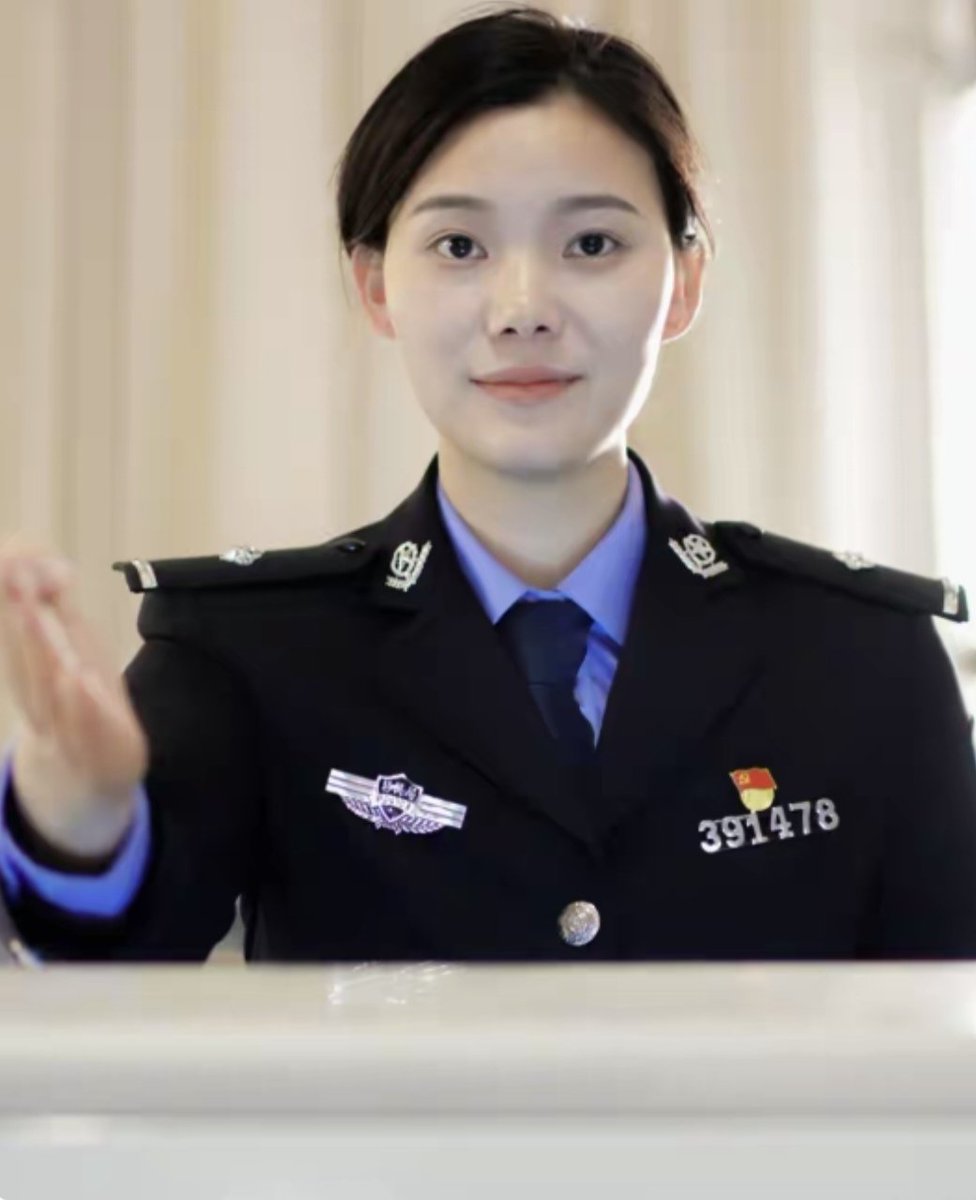
A female mountain porter at a scenic area struggled to get back on her feet under the weight of a large load of goods. Seeing her in difficulty, several passersby immediately stepped forward to help steady the boxes and lift her up.
Sometimes, kindness is simply lending a hand when someone needs it most.
Former Shanxi governor Jin Xiangjun was sentenced to death with a two-year reprieve for accepting more than 148 million yuan (US$20.8 million) in bribes.
A exposição ''Um Vislumbre da Cultura Chinesa'' decorrerá de 22 de agosto a 12 de setembro na Estação de São Bento Metro do Porto. Todos são bem-vindos para a visitar!
그런걸 원한다면 침략전쟁을 일으키지 말던가. 그것도 아니라면, 소총과 함대기에 온통 전쟁의 상징으로 국화 문양을 새겨넣는다거나 '천황폐하' 만세 따위를 외치면서 옥쇄를 강요한다거나 자살돌격을 한다거나 하지를 말았어야지.
실제로 일본군 보병은 제식소총을 연합군에 압수당하면서 국화 문양을 일일히 지우는 수고를 해야만 했지. 당시 미국 여론은 '천황의 처형'이 대세였기에 온갖 곳에 사용된 천황가의 흔적 때문에 전쟁의 책임이 천황으로 향하지 않을까 두려웠던 거야.
Today I visited the China National Special Olympics Delegation, as they just arrived in Malta today to participate in the 'Beyond the Waves' European Swimming Open. They were warmly welcomed by the organizer Special Olympics Malta and its National Director Ms. Anna Calleja.
I am delighted for our Chinese athletes🇨🇳.who represent our young people with disabilities, giving their best in competitive sports in this international event.
We are also very thankful for Malta🇲🇹 for providing this inclusive platform of sports exchange as we united as one humanity.
Wish them good luck in the upcoming games!🎉
#ChinaMaltaFriendship #SpecialOlympics #InclusiveSports
Tambien recomiendo "Market and Violence. The Functioning of Capitalism in History" de Heide Gerstenberger que trata temas muy relacionados a los que se ven en "A Brief History of Commercial Capitalism." Esos dos libros se acompañan bastante bien:
🔴 اگر دیر بجنبیم سرنوشت انصارالله یمن به سرنوشت حزبالله و سوریه دچار میشود!
🔹جنگ داخلی یمن وارد فاز تازهای از تشدید شده است؛ نیروهای وابسته به عربستان سعودی و امارات، با پشتیبانی هوایی سعودی، عملیات زمینی خود را علیه مواضع انصارالله آغاز کرده و چندشهر و روستا را به تصرف درآوردهاند. انصارالله نیز با پاسخ موشکی به خاک عربستان، آشکارا اعلام کرده که در مقابله با دشمن، هیچ «خط قرمز» از پیش تعیینشدهای نمیشناسد.
🔸واقعیتِ معادله روشن است: فروپاشی «جبهه یمن» یعنی زوال یکی از ارکان توازن راهبردی (Balance of Power) ایران در برابر محور غربی - عبری و عربی، بهویژه در بُعد نظامی–بازدارندگی. انصارالله تا امروز عملاً مانع همکاری کامل نظامی عربستان و امارات در جنگ علیه ایران بوده. کارکردی مشابه آنچه سوریه و جبهه مقاومت در لبنان علیه اسرائیل ایفا میکرد. آنچه بر سر حزبالله و سپس سوریه گذشت نباید در یمن با همان الگو و همان غفلت و انفعال تکرار شود. در سیاست بینالملل، خلأ قدرت پر میشود؛ اگر شما آن را پر نکنید، رقیب پر خواهد کرد!
🔹بعد ژئواکونومیک جنگ نیز حیاتی است: اگر حوثیها کنترل جنوبغرب یمن را از دست بدهند، «بابالمندب» به مسیر امنِ صادرات حداکثری نفت سعودی و امارات تبدیل میشود و ارزش اهرم تنگه هرمز کاهش پیدا میکند. به زبان ساده: آنچه در یمن رقم میخورد، مستقیماً سهم بازدارندگی ایران را در مذاکرات آینده و در قیمتگذاری تنش تعیین میکند.
🔸تجربه سوریه درس روشنی برای ما دارد؛ بعداز شهادت حاج قاسم، انفعال ما در منطقه کلید خورد؛ بیشک مقصر اصلی سقوط سوریه، خود دولت سوریه و ارتش آن کشور بود اما سهم ما بعنوان محورِ محورِ مقاومت هم ویژه بود. انفعال، تصمیمات دیرهنگام، گزارشهای ناقص و تهی از واقعیت، عدم همراهی دولتها، اعتماد به وعدههای دشمن و ... منجر به بازتعریف معادله از سوی دشمن شد و نتیجه شهادت سیدحسن و تضعیف حزبالله، خیلی زود خودش را در سقوط سوریه نشان داد و جنگ مستقیم علیه ایران آغاز شد. آنچه امروز میپردازیم، تاوان همان کندیها و ملاحظهکاریهاست.
🔹حذف اسرائیل از دایره آتش، منجر به پیشروی در جنوب لبنان شد و حذف عربستان سعودی و امارات از دایره پاسخ منجر به پیشروی به سمت مواضع انصارالله شده است. وحدت ساحاتی را که امام شهید بنیانگذاری کرد و رهبر جوان انقلاب هم بر آن تأکید دارد، باید به صورت عینی و عملی به اجرا درآید.
✅ #داود_مدرسییان
JAPAN JUST BROKE THE MARKET
Over ¥15T wiped from Japanese stocks today
The biggest yen intervention in history has failed
Japan is now selling U.S. Treasuries to defend the yen
Global markets should be watching this closely
Chinese Foreign Minister Wang Yi held talks with Prime Minister and Minister of Foreign Affairs of Qatar Sheikh Mohammed bin Abdulrahman Al Thani in Beijing on Tuesday. Read more: https://t.co/yDxgSWnbUd