اللهم مالك الملك تؤتي الملك من تشاء، وتنزع الملك ممن تشاء، وتعز من تشاء، وتذل من تشاء، بيدك الخير إنك على ڪل شيء قدير، رحمٰن الدنيا والآخرة ورحيمهما، تعطيهما من تشاء، وتمنع منهما من تشاء، ارحمني رحمة من عندك تغنيني بها عن رحمة من سواك.
بسم الله الرحمن الرحيم 🖊️
You see no problem when harsh words, slander and sweeping hostility are directed towards Arabs, but the moment Arabs defend themselves against European Muslims who repeatedly incite resentment against them, you suddenly discover the language of “betrayal”, “division” and concern for the unity of the Ummah.
This is precisely the Shuubi mentality at work. The criticism is rarely confined to a particular ruler, government or policy. It repeatedly spills over into contempt for Arabs themselves, their societies and their religious standing. When confronted with that double standard, rather than addressing the substance of the argument, some retreat into anti-Arab hostility and ethnic resentment.
The Sneako case has exposed this contradiction even further. He has repeatedly used inflammatory rhetoric and sweeping political narratives, yet when Arabs object to being collectively vilified, their response is portrayed as treachery against Muslims. Apparently Arabs are expected to absorb every accusation silently, while those attacking them are permitted to hide behind the language of “speaking truth”.
And this obsession with portraying Arabs as uniquely corrupt or responsible for every failure of the Muslim world increasingly resembles resentment rather than principled criticism. Some cannot tolerate facts that contradict their narrative, so they reach for anti-Arab rhetoric to mask envy, grievance and an inferiority complex.
The standard is simple. If collective hatred towards European Muslims, Africans, Turks, Pakistanis or any other people is unacceptable, then collective hatred towards Arabs is unacceptable too. You cannot preach Islamic brotherhood when defending your own people and then conveniently abandon it when Arabs become the target.
And perhaps that is ultimately the problem. When evidence becomes uncomfortable, anti-Arab rhetoric becomes the escape route. That is not courage, scholarship or speaking truth to power. It is prejudice dressed up as political commentary.
Maybe take Khabibi’s advice for once. Step away from livestreaming for hours on end, study properly, sit with people of knowledge, learn the principles of the religion and verify matters before speaking about entire peoples and societies. A microphone, an audience and endless hours of livestreaming do not transform ignorance into knowledge.
If your arguments cannot survive without sweeping ethnic generalisations, then the problem is not that Arabs “cannot handle the truth”. The problem is that your argument cannot handle scrutiny.
This exposes the hypocrisy perfectly. Generalising, insulting and demonising Arabs is apparently acceptable, but the moment Arabs respond, suddenly the Quran, Hadith and “unity of the Ummah” are remembered. Were those divine principles revealed only for Arabs to follow while everyone else gets a free pass? Spare us the selective religiosity. Apply the Quran and Sunnah to your own tongue before weaponising them against the people responding to your double standards.
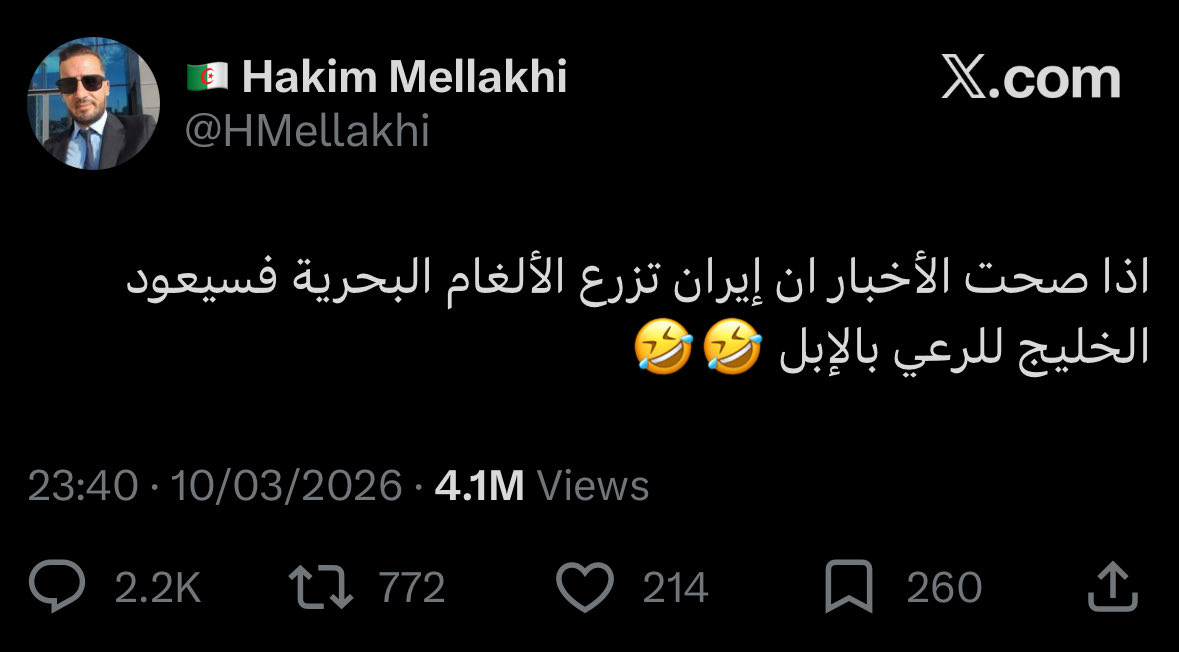
هذا بالضبط ماقاله كسرى حين وصلت له رسالة الإسلام فعير العرب برعي الإبل وأخذ يستهزء هكذا، ولم تمضي سنوات إلا وخرج له رجال على ظهر الإبل ونزعوا ملكه واخذوا اساوره ولبسوها لسراقة بن مالك
واليوم نرعى الإبل ونقود اقتصاد العالم ونتحكم به، وعينتك لا انجزوا ما انجزنا ولا ما انجزت ناقتنا