Three key trends I am increasingly excited about...
1: Our industry has started caring much more about the security and reliability of the infrastructure, standards and oracles/dependencies that it is built on top of. This shift in focus towards security is already massively benefiting Chainlink because it is built with security and reliability in mind from the start e.g. 16 nodes vs 1 of 1 or 2 of 2 (which is actually often just a 1 of 1 in disguise). This focus on reliability and security makes a better system for everyone in the DeFi/TradFi industry to transact with less risk and also leads to more overall Chainlink adoption over time. The way Chainlink became the leading data oracle is through security and reliability, I think that will happen across all categories where Chainlink deploys services for the same reasons.
We are now clearly seeing this dynamic take place in cross-chain interoperability, with many large users migrating onto CCIP after conducting deeper security reviews of bridging providers, more and more of which are now being published, some telling quotes below:
https://t.co/7ANpmqIlPn
Kraken chose Chainlink CCIP because it offers enterprise-grade infrastructure with strict security & risk management requirements, including:
• ISO 27001 and SOC 2 Type 2 certifications
• Secure by default architecture
• 16 independent nodes
• Native rate limits, and more.
https://t.co/hPnqT7CFcT and https://t.co/QHXnyjO2fp
The analysis covers how Chainlink CCIP delivers strong decentralization, native safeguards, and issuer control as default protocol-level guarantees, which insulates wstETH from a number of attack vectors behind the Kelp / LayerZero exploit.
https://t.co/AObyg1Nunx
Chainlink CCIP has emerged as the standard in cross-chain infrastructure, providing an enterprise-grade framework to secure high-value assets
With over $4Billion migrated in just a few weeks and more on the way, I am clearly seeing the industry's clear preference for security and reliability being a key trend leading to accelerated adoption of Chainlink and CCIP.
2: Chainlink has always continued to build and added many of its best features during down markets, when there is less noise to distract top teams from building. Because Chainlink already has clear product market fit, being able to focus on building the future is a powerful accelerant for future progress and is actually what I and many of the people building Chainlink are here for.
I am very excited about both the use case specific features e.g. collateral management and the increasing number of reusable primitives e.g. verifiable confidential compute in CRE, which are now actively being built, refined and launched with top users. In my experience, during the down market lulls is when the best things get built, and I am truly thrilled to see Chainlink being built to better serve its existing users and entirely new users.
3: The RWA, TradFi Tokenization and Digital Assets industry has now decoupled from crypto prices as a determining factor of its success and is a rapidly growing market of its own. Great news for the technologies, standards and infrastructures that can serve this new and growing demand, of which Chainlink is at the very top of the list. By having the relevant certifications; https://t.co/PlGDKLrJDi, being the historically most secure/reliable option with the largest amount of value enabled and being able to compose multiple key primitives (Data + Interoperability + Identity/compliance + verifiable off-chain orchestration) into full end-to-end solutions like no other platform can, puts the Chainlink platform/ecosystem in a unique place to be adopted by this new and growing market.
This is now becoming increasingly clear in practice through Chainlink's adoption in various parts of the capital markets; from collateral management with some of the most recent examples being...
DTCC using CRE and Data for their production plans; https://t.co/IiXXFfUwJu + https://t.co/sHe6QvquYR
Data providers like SGX using DataLink for key data; https://t.co/P7uPeOzliY
Top asset managers like State Street; https://t.co/Jh08KBnCvN and Fidelity International; https://t.co/06noNUEbEt, being powered by Chainlink on the backend.
The above are just a small number of recent examples, with many more being worked on all across the TradFi ecosystem, from payments, to tokenized equities, to tokenized funds; all of these on-chain finance use cases need multiple Chainlink components working together.
I can't wait for the next stage, where the leading DeFi applications and the top TradFi institutions start interoperating through their use of shared on-chain standards, interoperability connections and data/identity oracles, all of which are being provided by Chainlink, together with existing infrastructures. Solving each of these market's individual problems is already exciting, but helping them merge into the new global financial system is something that I and many others in our ecosystem have been working towards for a while.
If the above sounds like something worth spending many late nights on, and you can see the future I am talking about, this is the best time to join a top team like Chainlink Labs... if you're the best of the best, excited about the future of the blockchain industry, DeFi, TradFi and building the future of the new global financial system, we are excited to work together with you: https://t.co/zhTgEzBUm0.
Been working from home for a long time, wife and I were incredibly frustrated with each other years ago:
- She interrupted me all day and it drove me nuts
- I responded like a jerk to everything
Fix was easy, I moved my desk to a room with a door and then we had two rules
1. Door closed? No interruptions. She had to call or text me as if I was at an office if she or kids needed me
2. If I was at my computer OUTSIDE of the office, and somebody starts talking to me, I close the lid and listen because my work is interrupting the family
Fixed everything
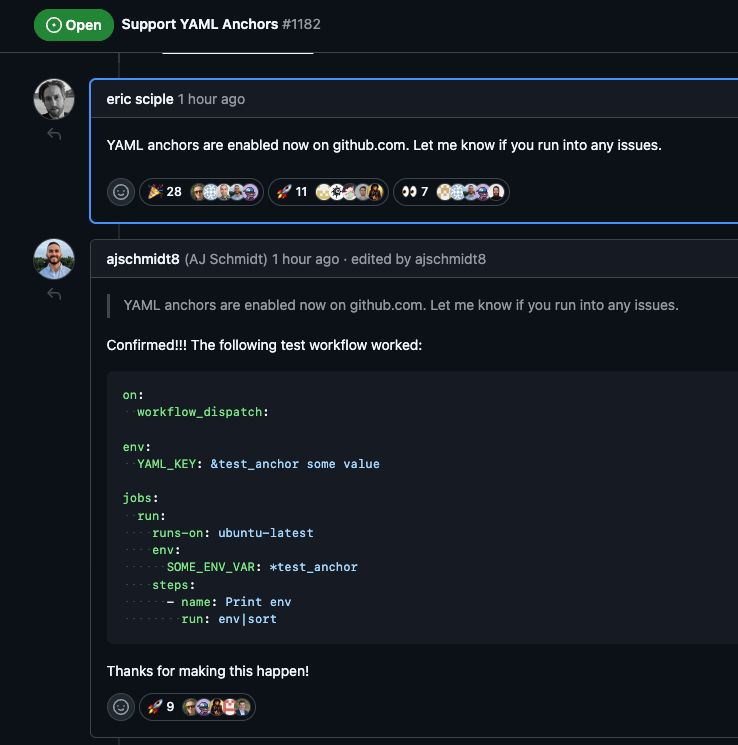
OMG - GitHub Actions now supports Yaml anchors 🤯
This somehow means you can create Yaml variables and reuse common values in CI jobs
I thought this day would never come, been waiting for years
when React says you need to wrap your code in a component
SAY NO
I've wrapped all of react's code in components so it never yells at you again.
Goodbye rules of hooks
Hello conditional state
Have you ever rendered a list of items and been forced to componentize it just because you wanted one little useState in there?
No more. WithState works great in loops
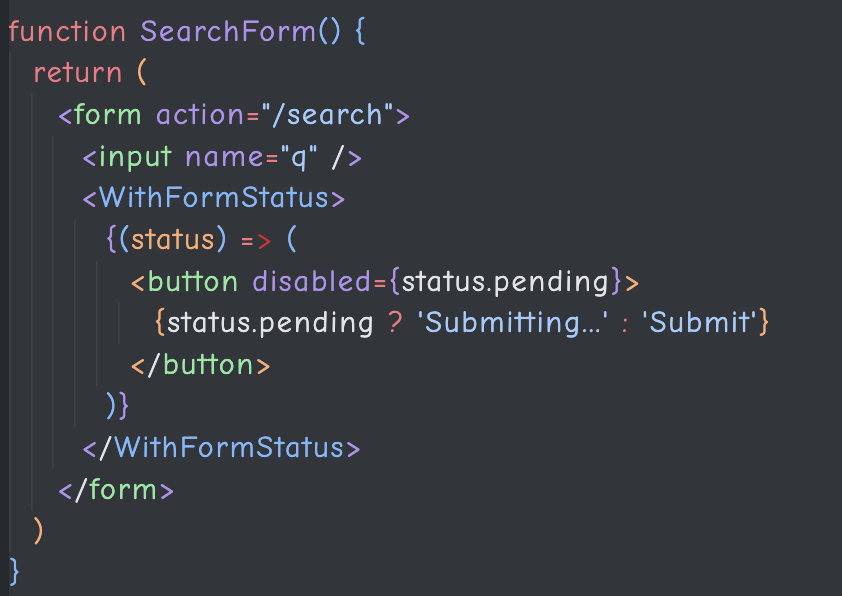
Want to useFormStatus in the same component as your form? Are you sure? React says people like you don't exist
I see you. I hear you. And I've solved it for you
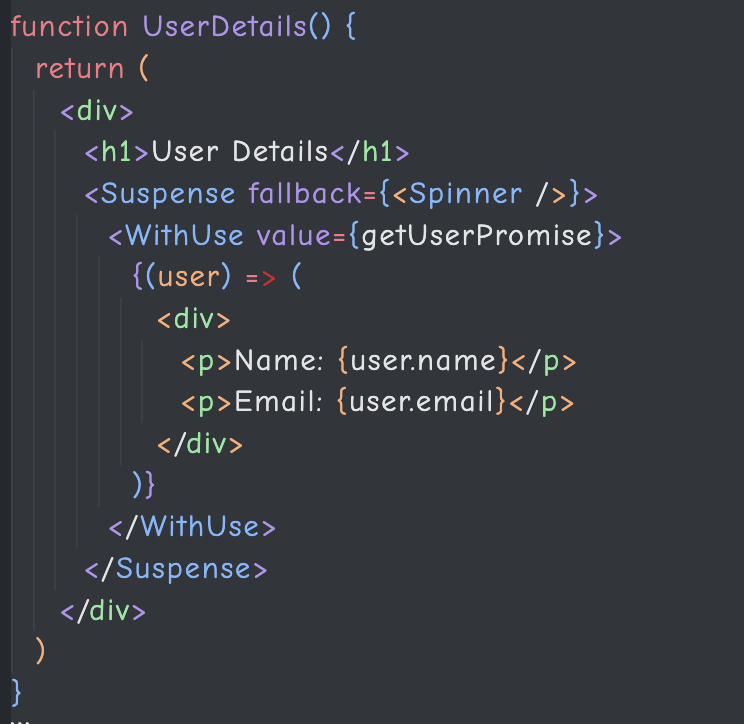
Or maybe you want to show a spinner while you're fetching data. That's easy, you can use(promise)
But wait
EVERYONE says to lift your data fetching as high as possible in the component tree
yet REACT says use() must be downstream of your suspense boundary??
well lets just wrap that in a component too
I have few principles but I stand by them.
NEVER bet against composition
@_georgemoller You still have the same amount of code without the indentation which actually makes it easy to see which provider is a parent of the other providers… KISS
@zeeg Its really easy to integrate into Nextjs (and probably other frontend full-stack frameworks) and give you a type-safe backend. Kind of like a slimmer TRPC
Miles de euros gastados en politicas de uso y banners de cookies que no sirven para nada para que el gobierno se lo pase por el forro de los cojones en la web de https://t.co/viKHkzl8TM y me encasqueste las cookies de google analytics sin que me salte el banner de los cojones