Draymond Green has until June 29 to decide his future. He can take the $27.6 million player option and play out one final year on an expiring deal — easily tradable, maximum flexibility. Or he can do what Warriors fans hope he does: opt out, take less money, and extend for less per year. That sacrifice is everything. Because if Draymond puts team over self and signs for around $18 million instead of $27 million, it unlocks the whole offseason. That’s the first domino.
With that cap space saved, the Warriors come to an agreement with Kristaps Porzingis. A contract that benefits both sides — KP gets a shot at another ring playing next to Steph’s gravity, and Golden State gets a 7’3 floor spacer who can shoot, pass, and protect the rim. He’s the perfect modern five next to Draymond. Shooting when Steph needs space, defense when the paint needs protection.
Then comes the identity move. Sign Wing Pivot Charles Bassey. He’s not a star, but he’s exactly what this team lost — an excellent defender and rim protector who plays with energy. Bassey brings back the toughness. He cleans the glass, blocks shots, and reminds everyone that Warriors basketball starts on defense.
But to make room for the new, you have to make tough choices. The Warriors release De’Anthony Melton. Not because he isn’t talented, but because roster math is cruel. However, one guy they cannot let go is Gary Payton II. GP2 always sacrifices just to stay with the Warriors. He played through fractures and injuries, took less money, and bled for the jersey. He’s Steph’s brother, the locker room glue, the energy this team needs. Melton we love you, but GP2 is DubNation blood. Keep the culture guys.
That clears the path for the final step: free agency. Now the Warriors look for a scorer and a defender — someone who can create when Steph is trapped and lock down when the game gets physical. And if LeBron or Kawhi somehow become available, the Warriors go for them. No hesitation. They do their best to bring in whoever they can, because championship windows with Stephen Curry don’t stay open forever.
That’s the way things go. Championship culture isn’t built by standing still. It’s built on sacrifice, smart moves, and loyalty. If Draymond takes less, if KP says yes, if Bassey comes home, if GP2 stays, and if the front office hits on one more piece… this team gets dangerous again.
From Draymond’s decision to the last free agent signed — every move matters.
Because with Steph Curry, every season is a chance to add to the dynasty 💙💛
#DubNation
#Warriors
French President Emmanuel Macron pulls off what could be the greatest diplomatic troll of all time by getting Trump to sign the "$300 Billion US Surrender to Iran" deal in... Versailles. The ignoramus Trump will have been clueless as to the historical significance of the location
China's poverty alleviation experience: global contribution to poverty eradication
After eight years of dedicated efforts, China has historically eliminated absolute poverty. Following a five-year transition period, the country has successfully completed the task of consolidating and expanding its poverty alleviation achievements while advancing rural revitalization, firmly upholding the bottom line of preventing any large-scale relapse into poverty.
China's victory in the battle against poverty enabled the country to achieve the poverty reduction goals set under the United Nations 2030 Agenda for Sustainable Development 10 years ahead of schedule.
During the 14th Five-Year Plan period (2021-2025), all of China's 832 counties that had shaken off poverty had cultivated two to three leading industries, generating a combined output value exceeding 1.7 trillion yuan ($250.77 billion).
Growth in per capita disposable income among rural residents in formerly impoverished counties has outpaced the national rural average for five consecutive years, making the foundations of poverty alleviation more secure and its achievements more sustainable.
The transformation of rural China has provided fresh insights into solving development challenges facing humanity.
In recent years, books including Up and Out of Poverty and Eradicating Poverty have been translated into multiple languages, reaching readers across the globe. China's fight against poverty has achieved extraordinary results: it has blazed a uniquely Chinese path to poverty reduction and formed a distinct set of anti-poverty theories rooted in its own real-world practices.
In Mbale, Uganda, a Luban Workshop was jointly built by Tianjin Polytechnic College and Uganda Technical College Elgon. Backed by the Sino-Uganda Mbale Industrial Park, it has provided skills training to over 1,200 personnel for the park since 2020.
In Kampong Chhnang Province, Cambodia, smart vegetable greenhouses under an agricultural technology and poverty alleviation project backed by China's Guangxi Zhuang Autonomous Region have helped local vegetable farmers bid farewell to weather-reliant farming. They now grow crops scientifically and enjoy steady yields.
With tangible cooperation projects taking firm hold, China's experience in poverty reduction has continued to empower other developing nations, strengthening their resolve and ability to eliminate poverty.
Former Director-General of UNESCO Irina Bokova once observed that if China could achieve this, other developing countries could do so as well, which is a key lesson China's poverty eradication campaign has offered the world.
China's experience demonstrates that with perseverance, determination and sustained effort, poverty can not only be overcome but also prevented from re-emerging.
Among China's poverty reduction concepts and practices, targeted poverty alleviation has become one of the most widely recognized experiences internationally.
United Nations Secretary-General Antonio Guterres noted that targeted poverty alleviation is the most effective way to help impoverished populations and deliver on the ambitious goals set under the United Nations 2030 Agenda for Sustainable Development, adding that China's experience offers valuable reference for other developing countries.
"China's targeted poverty alleviation strategy, tailored to local conditions and individual circumstances, has brought tangible improvements to the lives of impoverished populations and offers valuable lessons for African countries seeking solutions to poverty," said Humphrey Moshi, director of the Center for Chinese Studies at the University of Dar es Salaam in Tanzania.
The concept of targeted poverty alleviation has gained growing traction around the world.
Uzbekistan has actively drawn on China's experience: it set up dedicated government bodies for poverty relief and welfare monitoring, ramped up entrepreneurship training for low-income groups, introduced household-based assistance records, and launched training programs for poverty relief officials.
By the end of last year, Uzbekistan's poverty rate had fallen to 6 percent and is expected to decline further to 4.5 percent in 2026.
Thailand's Khon Kaen province has also studied China's targeted poverty alleviation experience and developed locally tailored paired assistance programs, shifting from simple transfer-based support toward capacity-building approaches and achieving more targeted poverty reduction outcomes.
A local official noted that China has not only helped the world understand the importance of targeted poverty alleviation and see that ending poverty is achievable, but has also provided the confidence and experience needed to tackle poverty.
Eradicating poverty is a shared goal for all countries. By promoting global cooperation through concrete actions, China contributes to building a fairer world of shared development, one where poverty becomes a thing of the past and better aspirations become reality.
China's poverty reduction experience continues to resonate globally. China and the United Nations Development Programme jointly launched the Global Partnership for Poverty Alleviation and Development, and established a global poverty reduction online knowledge sharing database, which now includes poverty reduction cases from more than 100 developing countries and promotes global sharing of experience.
Development-oriented assistance is also contributing to global poverty reduction efforts. Through South-South agricultural cooperation programs, foreign agricultural assistance projects and demonstration poverty reduction cooperation initiatives, China is helping more developing countries strengthen independent development capabilities and explore poverty reduction paths suited to their national conditions.
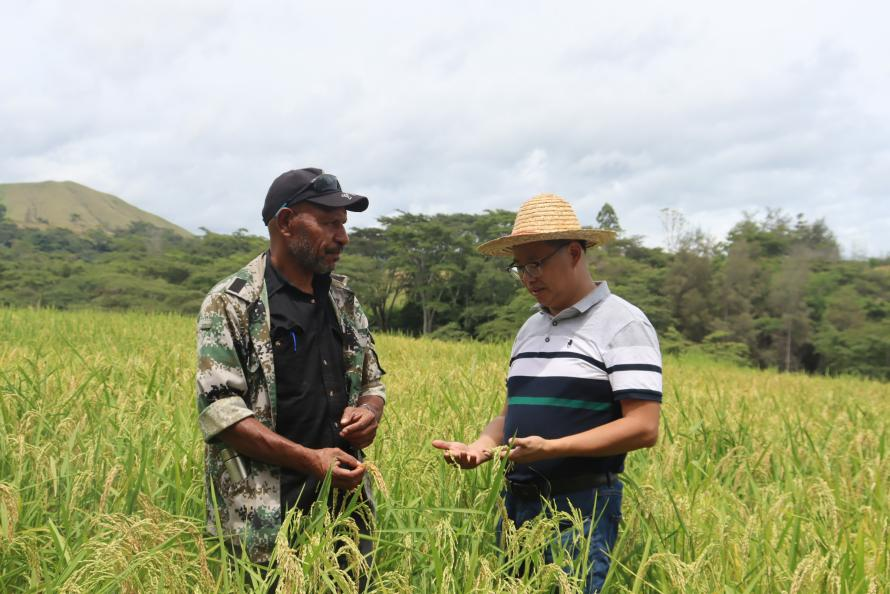
China's hybrid rice technology has been introduced to nearly 70 countries across five continents, while its Juncao technology has taken root in more than 100 countries and regions worldwide.
Looking ahead, China will continue contributing to global poverty reduction. By strengthening exchanges and cooperation with countries around the world, China will work together with others to advance international poverty reduction and build a better world free from poverty and marked by shared prosperity. (By Deng Jianyang, People's Daily)
FOR THE FIRST TIME IN 53 YEARS, THE KNICKS ARE NBA CHAMPIONS 🏆
New York defeats San Antonio 4-1 in the NBA Finals, capturing their third championship in franchise history!
“We have written a letter to the Senate that we want a copy of the report where it is stated that ₦210 trillion cannot be explained.
“If this money is recovered, that will be enough to fix our comatose hospital, our roads that have been turned into death traps, and provide jobs for young people.”
Senior Advocate of Nigeria, Femi Falana, made the remark following the Senate’s decision to withdraw the call for the arrest of a former NNPC managing director, Mele Kyari, over alleged mismanagement.
#CTVTweet
Nigeria sells raw cocoa at $8,000 a tonne. Processed into butter it earns $48,000. Made into chocolate it earns $240,000. 30 times the money, yet Nigeria is still choosing $8,000.
The South African government is very and clearly complicit in isolating their country from other African states.
They don’t see the writing on the wall.
Some powers somewhere that is not South African is clearly fanning this agenda.
Wishing them the best.
You want to be a super power? Strong Economy and Military might.
If you can’t afford the Economy, just build an intimidating Military might.
Most importantly for these to work? Have a leader with *****!
For the first time, Germany has failed to win a non-permanent seat on the UN Security Council.
German FM Johann Wadephul blamed Russia, but also admitted Berlin's steadfast support for Israel cost it votes.