Ruben Abati Reaction to Supreme Court Judgement, he said, “Public opinion is kilometers and kilometers away from the law, law is not about emotion and sentiment…,Atiku and Peter Obi’s Lawyers mislead their clients”
Bro the amount of misinformation is crazy! Baba is capping, big time ! . If that industry was that lucrative why are there no investors trooping in and out. People wey get license self, to attract investor self na die!
Even the only commercial gold mine (Segilola) in Nigeria cannot produce gold worth that value in 2 decades.
Femi Falana, a Nigerian all-timer (who I respect so much) has no idea what he is talking about.
I have found that Nigerians have a warped grasp of numbers. Shocking!
Nigerian Embassy in Niger Republic has been set ablaze
Niger’s military junta has threatened to kill deposed President of Niger if ECOWAS invades the country.
Tinubu can attempt to set West Africa ablaze but he MUST still be DISQUALIFIED!
Nigeria’s military successive interventions in Africa :
1990: Liberia
Charles Taylor led a militia against the Liberian government, leading to the outbreak of civil war there. Consequently, the regional bloc made an unprecedented move to intervene in 1990. The initial 3,000-man ECOMOG contingent was formed with personnel drawn from Nigeria, The Gambia, Ghana, Guinea, and Sierra Leone with additional soldiers contributed by Mali.
1997: Sierra Leone
Nigeria’s next military intervention was in 1997, when we led the ECOMOG contingent to Sierra Leonean capital, Freetown, in 1997 following the overthrow of the elected civilian government of Ahmed Tejan Kabbah by Major Johnny Paul Koroma in a military coup.
1999: Guinea Bissau
The next stop for Nigeria and ECOMOG was a ceasefire mission in Guinea Bissau after hostilities broke out following an attempted coup in 1998. The fight was between government forces backed by neighbouring Senegal and Guinea against coup leaders who had control of the armed forces
2003: Côte d’Ivoire
After Ivorian armed forces and rebel groups came to a ceasefire agreement in 2003, Nigeria and ECOWAS deployed troops as ECOWAS forces in Côte d’Ivoire (ECOMICI) to complement the United Nations and French troops.
2003: Liberia
While the first civil war brought Charles Taylor to power, the second civil war between 1999 and 2003 led to his exit.
This time, Nigeria and ECOWAS deployed troops under ECOWAS Mission in Liberia (ECOMIL) with some 3,500 soldiers, with the most coming from Nigeria. They served as an interposition force, keeping the warring parties apart and facilitating the arrival of the United Nations Mission in Liberia (UNMIL).
2013: Mali
A 2012 coup in Mali led to a breakdown of order and armed groups immediately took advantage of the coup that followed to overrun the north of the country. Nigeria and ECOWAS led the Africa-led International Support Mission in Mali (AFISMA) to support the Malian government in the fight against rebels in 2013.
2017: The Gambia
Codenamed “Operation Restore Democracy”, an ECOWAS operation led by Nigeria and Senegal sent troops into Banjul to force Yahya Jammel who had refused to concede an election loss to Adama Barrow in the 2016 election.
All missions were largely successful and contained with no spill over making the recent heightened tension unfounded and meaningless.
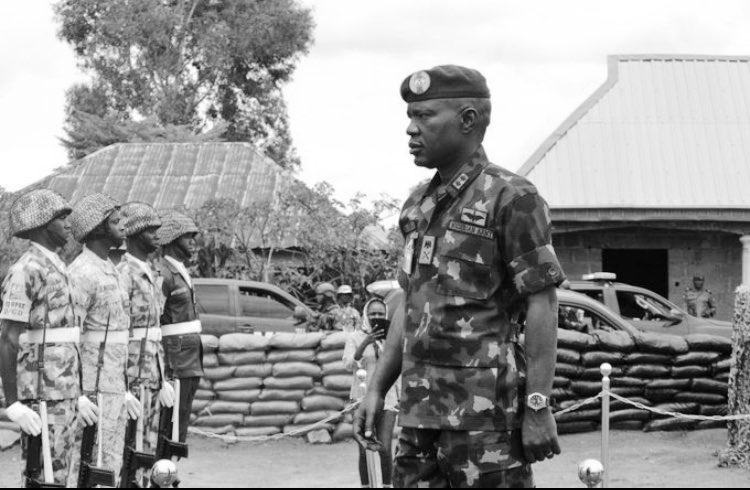
Nigeria’s military has always written it name in gold and glory when called upon for continental mission. There is no military in Africa that is as battle prepared and exposed to all the nuances of both conventional and non conventional warfare as the Nigerian military.
Whenever the history of peace keeping and conflict resolution in Africa is told, the Nigerian military will continue to feature prominently.
If there is one reason I am a proud Nigerian, it is because of the Nigerian military.
Nigeria’s military successive interventions in Africa :
1990: Liberia
Charles Taylor led a militia against the Liberian government, leading to the outbreak of civil war there. Consequently, the regional bloc made an unprecedented move to intervene in 1990. The initial 3,000-man ECOMOG contingent was formed with personnel drawn from Nigeria, The Gambia, Ghana, Guinea, and Sierra Leone with additional soldiers contributed by Mali.
1997: Sierra Leone
Nigeria’s next military intervention was in 1997, when we led the ECOMOG contingent to Sierra Leonean capital, Freetown, in 1997 following the overthrow of the elected civilian government of Ahmed Tejan Kabbah by Major Johnny Paul Koroma in a military coup.
1999: Guinea Bissau
The next stop for Nigeria and ECOMOG was a ceasefire mission in Guinea Bissau after hostilities broke out following an attempted coup in 1998. The fight was between government forces backed by neighbouring Senegal and Guinea against coup leaders who had control of the armed forces
2003: Côte d’Ivoire
After Ivorian armed forces and rebel groups came to a ceasefire agreement in 2003, Nigeria and ECOWAS deployed troops as ECOWAS forces in Côte d’Ivoire (ECOMICI) to complement the United Nations and French troops.
2003: Liberia
While the first civil war brought Charles Taylor to power, the second civil war between 1999 and 2003 led to his exit.
This time, Nigeria and ECOWAS deployed troops under ECOWAS Mission in Liberia (ECOMIL) with some 3,500 soldiers, with the most coming from Nigeria. They served as an interposition force, keeping the warring parties apart and facilitating the arrival of the United Nations Mission in Liberia (UNMIL).
2013: Mali
A 2012 coup in Mali led to a breakdown of order and armed groups immediately took advantage of the coup that followed to overrun the north of the country. Nigeria and ECOWAS led the Africa-led International Support Mission in Mali (AFISMA) to support the Malian government in the fight against rebels in 2013.
2017: The Gambia
Codenamed “Operation Restore Democracy”, an ECOWAS operation led by Nigeria and Senegal sent troops into Banjul to force Yahya Jammel who had refused to concede an election loss to Adama Barrow in the 2016 election.
All missions were largely successful and contained with no spill over making the recent heightened tension unfounded and meaningless.
Nigeria’s military has always written it name in gold and glory when called upon for continental mission. There is no military in Africa that is as battle prepared and exposed to all the nuances of both conventional and non conventional warfare as the Nigerian military.
Whenever the history of peace keeping and conflict resolution in Africa is told, the Nigerian military will continue to feature prominently.
If there is one reason I am a proud Nigerian, it is because of the Nigerian military.